 Popular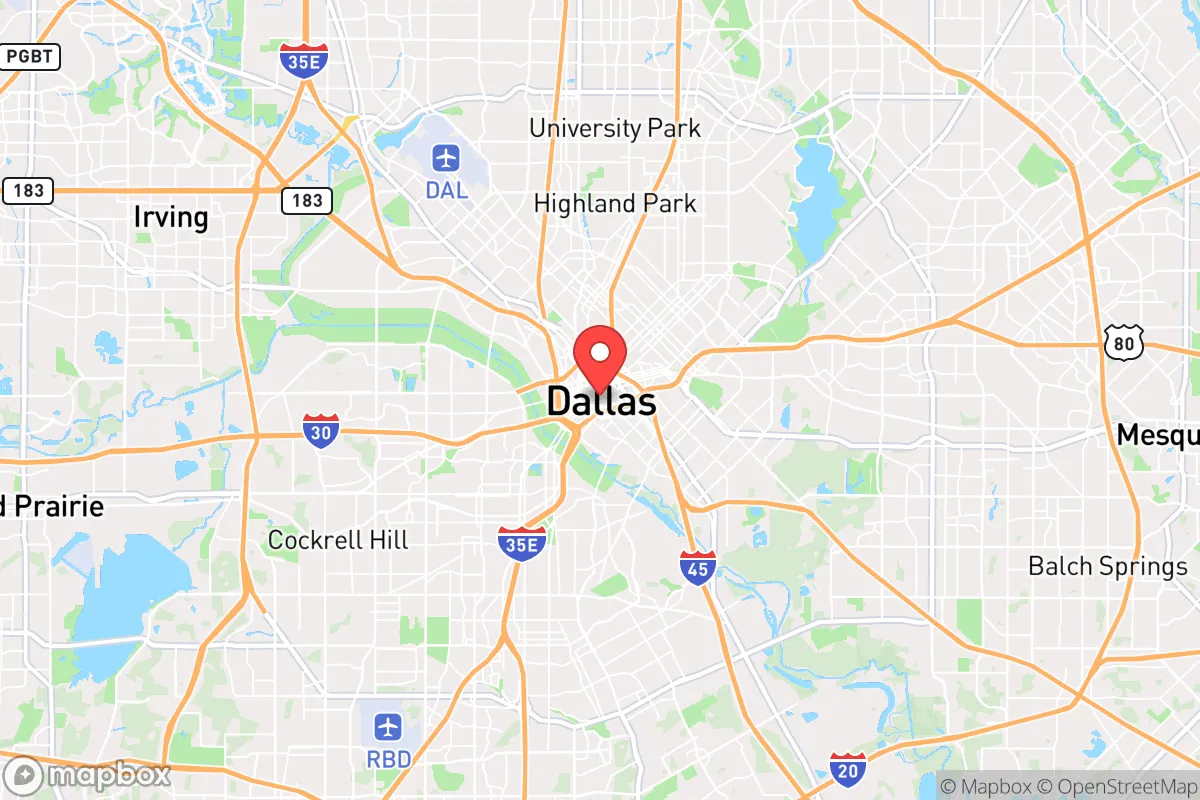
Photo by Ryan Duffy on Unsplash
Quality of Life in Dallas, TX
Above-average quality of iife. The area offers a reasonable cost of living, decent mobility, and a mix of neighborhood amenities.
What does Quality of Life tell us?
Quality of Life blends cost of living, nearby amenities, socioeconomic signals, and neighborhood character. City-level scores represent the whole municipality; individual neighborhoods can differ.
What does this tell us?
Quality of Life blends cost of living, nearby amenities, socioeconomic signals, and neighborhood character. City-level scores represent the whole municipality; individual neighborhoods can differ.
Cost of Living
14% above national average
The Real Cost of Living in Dallas, TX for 2026
| Tier | Individual | Family (4) |
|---|---|---|
| Survival | $22k | $42k |
| Comfortable | $57k | $84k |
| Luxury | $122k+ | $190k+ |
| Elite (Top 5%) | $195k+ | $302k+ |
80%
The Area Signal
A metric tracking the socioeconomic signals of the area.


Hobbies
Explore the areaGroceries
8 within 10 miles
Gas
20 within 10 miles
Hospital
20 within 20 miles
Airport
DFW — Dallas/Fort Worth International
Post Office
USPS — Dallas, TX
Critical Amenities
Quality-of-Life Analysis
Dallas, Texas, presents a quality of life defined by a blend of urban opportunity and suburban comfort, attracting a diverse population of young professionals, growing families, and established executives. With a cost of living index of 114 (100 being the U.S. average), the city sits above the national norm but remains significantly more affordable than coastal hubs like San Francisco or New York. The median home value of $295,300 and median rent of $1,403 reflect a market that is pricier than neighboring Fort Worth but notably cheaper than Austin or Houston’s inner-loop neighborhoods, drawing residents who seek career growth without the financial strain of other major metros.
Cost of living, housing, and how Dallas compares to nearby areas
Dallas’s overall cost of living is 14% above the national average, driven primarily by housing and transportation. The median home value of $295,300 is roughly 10% higher than the Texas state median, yet it undercuts the Dallas-Fort Worth metro average of $310,000, making the city proper a relative bargain for buyers. Renters face a median of $1,403 per month, which is about $200 less than in nearby Plano or Frisco, though higher than in southern suburbs like DeSoto or Lancaster. The average commute of 26 minutes is slightly shorter than the DFW metro average of 28 minutes, thanks to the city’s dense highway network and expanding DART light rail system. Compared to Austin (COL index 120) or Los Angeles (COL index 150), Dallas offers a tangible affordability edge, especially for those willing to live in established neighborhoods like Oak Lawn or East Dallas rather than the pricier Uptown corridor.
What daily life is like: amenities, schools, and the local rhythm
Daily life in Dallas balances big-city energy with accessible green spaces and strong public amenities. The Dallas Independent School District (DISD) serves over 130,000 students, with magnet schools like Booker T. Washington High School for the Performing and Visual Arts earning national recognition, though many families opt for suburban districts like Highland Park ISD or Richardson ISD for higher test scores. The city’s 406 parks, including the 66-acre Klyde Warren Park built over a freeway, provide walkable recreation, while the Dallas Arts District—the largest contiguous arts district in the U.S.—hosts the Dallas Symphony Orchestra and the Nasher Sculpture Center. The average commute of 25.97 minutes means most residents can reach downtown or the Design District within half an hour, though rush-hour congestion on I-35E and US-75 can push that to 40 minutes. The local rhythm is fast-paced but punctuated by weekend farmers’ markets, neighborhood festivals like the State Fair of Texas, and a thriving restaurant scene that spans Tex-Mex, barbecue, and global cuisines.
This quality of life best suits professionals and families who value economic opportunity, cultural density, and relative affordability over the slower pace or lower costs of smaller Texas cities. Those working in finance, technology, or healthcare will find ample job options at major employers like AT&T, Texas Instruments, and UT Southwestern Medical Center. However, the higher-than-average cost of living and variable school quality mean newcomers should research specific neighborhoods—such as Lakewood for families or Deep Ellum for creatives—to align with their priorities. Dallas rewards those who embrace its mix of urban ambition and Southern hospitality, offering a dynamic environment where career growth and lifestyle amenities coexist without the extreme price tags of other U.S. metros.

Crime in Dallas, TX
WARNING: The crime statistics are unreliable for this jurisdiction. Local authorities have either not reported or under reported their data to the FBI. This could be due to bad intentions, incompetence or technical issues. Regardless, we suggest skepticism.
Significantly higher crime rates than 86% of comparable U.S. locations.
Violent CrimeViolent Crime Analysis
Property CrimeProperty Crime Analysis
Crime Analysis
Dallas, Texas, presents a challenging safety landscape for potential residents, with crime rates that significantly exceed both state and national averages. The city recorded a violent crime rate of 576.5 incidents per 100,000 residents and a property crime rate of 3,077 per 100,000 in the most recent reporting period. These figures place Dallas among the higher-crime large metros in the United States, a reality shaped in part by the area's progressive judicial policies that prioritize offender rehabilitation over public safety.
Crime in context
Dallas's violent crime rate is roughly 50% higher than the national average of approximately 380 per 100,000 and significantly above the Texas state average of about 445 per 100,000. Property crime in Dallas is similarly elevated, exceeding the national average of roughly 2,000 per 100,000 by more than 50%. The city's crime index places it in the bottom 10% of U.S. cities for safety. These statistics reflect a systemic issue: Dallas County's elected district attorney and many local judges have pursued progressive criminal justice reforms, including reduced bail requirements and diversion programs for repeat offenders. While intended to reduce incarceration, these policies have contributed to a revolving-door effect where known criminals are quickly returned to the streets, undermining deterrence and victim justice.
What residents experience
For those living in Dallas, the elevated crime rates translate into tangible daily risks. Property crime—particularly vehicle theft, burglary, and larceny—is the most common concern, with residents reporting frequent break-ins and stolen packages. Violent crime, including aggravated assault, robbery, and homicide, is concentrated in specific corridors but can spill into adjacent neighborhoods. The city's response is hampered by a police force that has faced staffing shortages and morale issues, partly due to progressive policies that limit proactive policing. Residents often report feeling unsafe walking alone after dark in many central and southern districts, and gated communities or private security patrols have become common in higher-income areas as a workaround.
Neighborhood-level variation is stark. Uptown, Highland Park, and University Park (the latter two are independent cities) enjoy crime rates comparable to safe suburbs, with violent crime near zero in some pockets. In contrast, South Dallas, Fair Park, and parts of Oak Cliff experience violent crime rates two to three times the city average. West Dallas and the Stemmons Corridor see elevated property crime due to commercial density. Prospective residents should research specific zip codes and block-level data, as a few blocks can separate relatively safe areas from high-risk zones. The city's progressive judicial environment means that even in safer neighborhoods, residents are not insulated from the broader regional trend of lenient sentencing and early release of offenders.
* Values derived from national, state, county, city and local statistics and may differ in a specific area. Last updated: 2026-09-23T21:08:41.000Z
Narrative content on this page is AI-generated and may contain mistakes. Verify any details that matter before acting on them.
ReloMaps may earn a commission from affiliate links at no extra cost to you.

