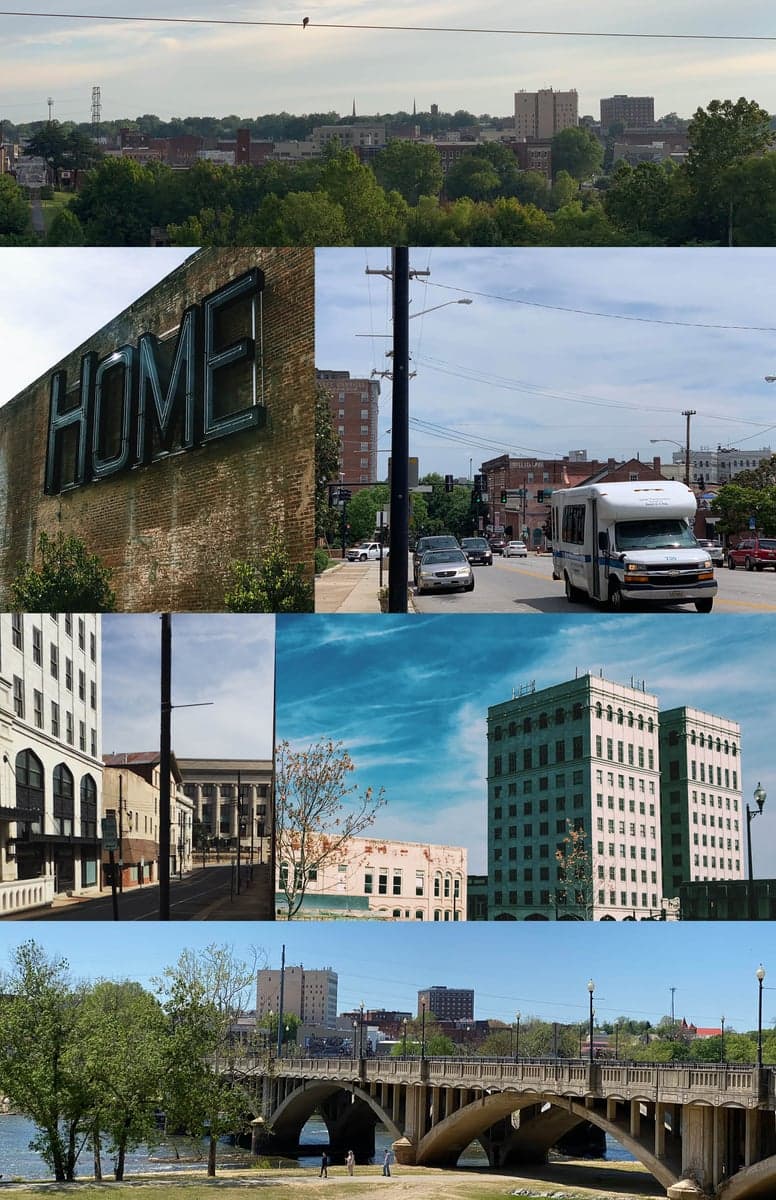
Photo: Wikipedia
Political ClimatePolitical Climate in Danville, VA
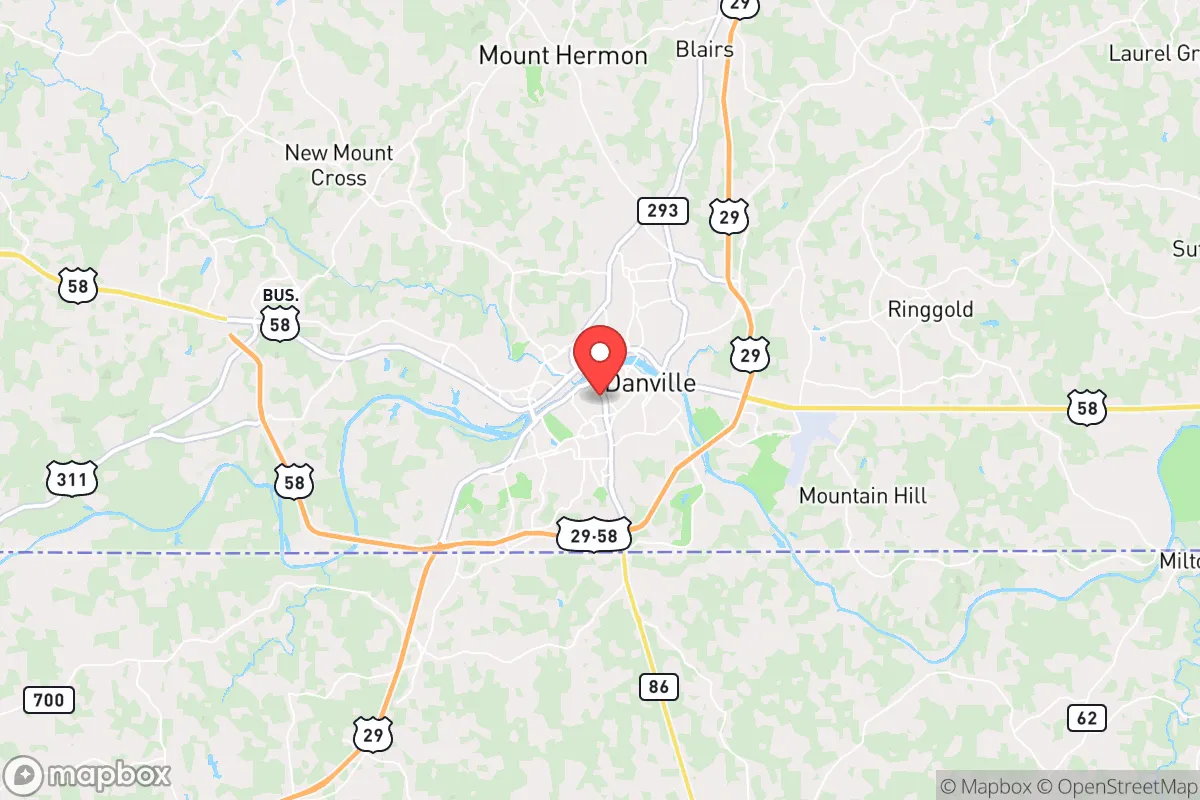
District shown is the primary district for this city’s centroid. Cities may span multiple districts.
Local Political AnalysisPolitical Analysis of Danville, VA
Danville, Virginia, has long been a reliably conservative community, and the numbers back that up with a Cook PVI of R+6, meaning the area votes about six points more Republican than the national average. But if you've lived here as long as I have, you know the political climate isn't just about election results—it's about a deep-seated belief in personal responsibility and keeping government out of your business. That said, there's a quiet undercurrent of change creeping in, especially as younger folks and some newcomers from places like Greensboro or Raleigh start to settle here, bringing with them ideas that feel a bit too progressive for a town that's always prided itself on minding its own business.
How it compares
When you look at the surrounding region, Danville stands out as a conservative anchor compared to its neighbors. Head north to Charlottesville or east to Richmond, and you're in deep blue territory where government overreach—whether it's zoning restrictions, mask mandates, or tax hikes—is often welcomed as "progress." Even nearby Lynchburg, while still conservative, has a more mixed political vibe thanks to its growing university population. Danville, though, remains a place where folks are skeptical of any policy that feels like it's telling you how to live your life. The contrast is stark: drive 45 minutes south to Greensboro, North Carolina, and you'll see a city that's swung hard left in recent years, with higher taxes and more regulations that make you grateful for Danville's slower, more independent pace.
What this means for residents
For those of us who call Danville home, the political climate means a lighter touch from local government. You won't see the kind of aggressive code enforcement or business licensing headaches that plague more progressive towns. Property taxes stay reasonable, and there's a general understanding that your rights—whether it's how you use your land, what you teach your kids, or how you run your small business—aren't up for debate at city hall. That said, there's a growing concern among longtime residents that the city council's recent push for "revitalization" grants and outside development could open the door to more strings attached. If we're not careful, the same folks who promise economic growth might start telling us how to achieve it, and that's a slippery slope toward the kind of government overreach we've always avoided.
One thing that sets Danville apart culturally is its fierce independence from state-level politics. While Richmond tries to push through gun control measures or energy mandates, Danville's local leaders often push back or simply ignore them. You see it in the way the sheriff's office operates, the way schools handle curriculum choices, and the general attitude that local problems need local solutions. The long-term trajectory depends on whether we can keep that spirit alive as the town grows. If we hold the line, Danville will stay a place where freedom isn't just a talking point—it's how we live. But if we let the progressive wave from the cities wash over us, we'll lose what makes this corner of Virginia worth fighting for.

State Political ClimatePolitical Climate in Virginia
State Political AnalysisPolitical Environment in the State
Virginia has long been a political battleground, but over the past 20 years it has shifted from a reliably conservative-leaning state to a purple state with a distinct blue tilt, driven almost entirely by the explosive growth of Northern Virginia. The state’s overall partisan lean is now roughly D+5 to D+7 in statewide elections, with Democrats controlling the governorship, both legislative chambers, and both U.S. Senate seats as of 2026. However, this is a tale of two Virginias: the urban crescent from Northern Virginia down through Richmond to Hampton Roads votes solidly Democratic, while the rest of the state—the Shenandoah Valley, Southside, and Southwest—remains deeply Republican. The 2021 gubernatorial race saw Republican Glenn Youngkin win by 2 points, but 2023 legislative elections gave Democrats full control again, showing the state’s volatility. For a conservative considering relocation, the key question is whether the blue tide is permanent or if there’s still room for red strongholds to push back.
Urban vs. rural divide
The political map of Virginia is starkly divided. The entire state’s Democratic majority is generated by three metro areas: Northern Virginia (Arlington, Alexandria, Fairfax, Loudoun, Prince William), Richmond (Henrico, Chesterfield, and the city itself), and Hampton Roads (Norfolk, Virginia Beach, Newport News). Northern Virginia alone accounts for about one-third of the state’s population and votes roughly D+30 to D+40 in most elections. Loudoun County, once a conservative stronghold, flipped from red to blue in the 2010s and now votes D+15. Meanwhile, Virginia Beach is a purple city that leans slightly blue but has a strong military and conservative presence. Outside these bubbles, the state is overwhelmingly red: Roanoke, Lynchburg, Staunton, Harrisonburg, and Danville all vote reliably Republican. The rural counties of Southwest Virginia—like Wise, Lee, and Scott—vote R+40 or more. The divide is so sharp that you can drive 30 minutes west of Richmond and go from a D+15 precinct to an R+30 one. This geographic polarization means that a conservative moving to Virginia must choose their county carefully—living in Fairfax County means living under Democratic governance, while settling in Spotsylvania or Fredericksburg offers a more balanced or red-leaning environment.
Policy environment
Virginia’s state-level policies have shifted leftward significantly since Democrats took full control in 2020. The tax structure is moderately competitive: the state income tax is a flat 5.75% (down from 5.75% under Youngkin’s proposed cuts, but still higher than many southern states), and the sales tax is 5.3% (higher in Northern Virginia with local add-ons). Property taxes are set locally and vary widely—Loudoun County has high rates due to school spending, while Bedford County is much lower. The regulatory posture is mixed: Virginia is a “right-to-work” state, which is a plus for conservatives, but the state has adopted aggressive climate mandates (the Virginia Clean Economy Act) that drive up energy costs. Education policy has become a flashpoint: Democrats passed the “Model Policies” for transgender students in 2021, which require schools to affirm gender identity without parental consent—a major concern for conservative parents. Governor Youngkin tried to roll these back with executive orders, but the courts blocked him. Election laws are moderately restrictive: Virginia has no-excuse absentee voting and same-day registration, but also requires photo ID. The state has not adopted ranked-choice voting or open primaries. Healthcare policy is dominated by Medicaid expansion (passed in 2018 under Democratic control), which has added hundreds of thousands to the rolls but also increased state spending. For a conservative, the policy environment is a mixed bag—some protections exist, but the trend is clearly toward progressive governance.
Trajectory & freedom
Virginia’s trajectory over the past decade has been toward less personal freedom in several key areas. Gun rights: Virginia was once a shall-issue state, but after the 2019 Democratic sweep, the legislature passed universal background checks, a “red flag” law (extreme risk protective orders), and a one-handgun-per-month limit. These laws were passed despite strong opposition from rural counties, many of which declared themselves “Second Amendment sanctuaries.” Parental rights: The 2021 “Model Policies” on transgender students effectively removed parents from decisions about their child’s gender identity at school, sparking massive protests and lawsuits. Medical autonomy: Virginia has not passed any broad medical freedom legislation; vaccine mandates were allowed during COVID, and the state has not enacted any protections for medical conscience rights. Property rights: The state’s land-use regulations are strict in urban areas, and the Virginia Clean Economy Act forces localities to allow solar and wind projects, sometimes overriding local zoning. Taxation: While Youngkin proposed a 1% income tax cut, the Democratic legislature blocked it, and the state’s overall tax burden remains moderate but rising. The net effect is that Virginia is becoming less free for conservatives, especially on cultural and Second Amendment issues, though it remains more free than states like California or New York.
Civil unrest & political movements
Virginia has been a hotbed of political activism on both sides. The 2017 “Unite the Right” rally in Charlottesville was a national flashpoint, leading to violence and a lasting stigma on the city. Since then, left-wing activism has been more visible: Black Lives Matter protests in Richmond in 2020 led to the removal of Confederate statues on Monument Avenue, and the city’s progressive mayor has pushed for police reform. On the right, the “Second Amendment Sanctuary” movement in 2019 saw over 100 counties and cities pass resolutions opposing new gun laws—a rare show of local resistance. Immigration politics are tense: Northern Virginia has several “sanctuary” jurisdictions (Arlington, Alexandria, Fairfax) that limit cooperation with ICE, while rural counties demand stricter enforcement. Election integrity was a major issue after 2020, with Republicans alleging irregularities in mail-in voting, though no major fraud was proven. The 2021 gubernatorial race saw Youngkin win by focusing on parental rights and education, but Democrats quickly regained control in 2023. Visible flashpoints for a new resident include the constant debate over school policies (especially in Loudoun and Fairfax), the presence of armed protests at the state capitol, and the stark cultural divide between urban and rural areas.
Projection
Over the next 5-10 years, Virginia is likely to become more Democratic due to demographic trends. Northern Virginia continues to grow faster than the rest of the state, driven by federal jobs, tech companies (Amazon’s HQ2 in Arlington), and immigration. The state’s population is becoming more diverse, younger, and more educated—all groups that lean left. Rural areas are shrinking, losing population to the urban crescent. The 2030 redistricting cycle could lock in Democratic advantages for another decade. However, there are countervailing forces: the influx of remote workers from blue states (New York, California) into places like Fredericksburg, Winchester, and Harrisonburg could bring some conservative-leaning migrants. The parental rights movement could galvanize suburban voters, as it did for Youngkin in 2021. But realistically, a conservative moving to Virginia today should expect the state to be solidly blue in statewide elections by 2030, with the only red strongholds being rural counties and a few exurban pockets. The state’s freedom index will likely continue to decline on gun rights, education, and taxation.
Bottom line for a new resident: If you’re a conservative, Virginia is a state where you can still find a good life—especially in the Shenandoah Valley, Southside, or Southwest—but you will be living under a state government that is increasingly hostile to your values. You’ll pay moderate taxes, deal with progressive school policies, and see your gun rights erode. The best bet is to choose a red county like Bedford, Augusta, or Rockingham, where local governance is more aligned with your views, but you’ll still be subject to state-level laws. If you want a state that is trending toward freedom, Virginia is not it—look to Tennessee or Florida instead. But if you need to be on the East Coast for work or family, Virginia offers a decent compromise, provided you pick your county wisely and stay engaged politically.
* Values derived from national, state, county, city and local statistics and may differ in a specific area. Last updated: 2026-05-01T03:48:06.000Z
Narrative content on this page is AI-generated and may contain mistakes. Verify any details that matter before acting on them.
ReloMaps may earn a commission from affiliate links at no extra cost to you.

