 Popular
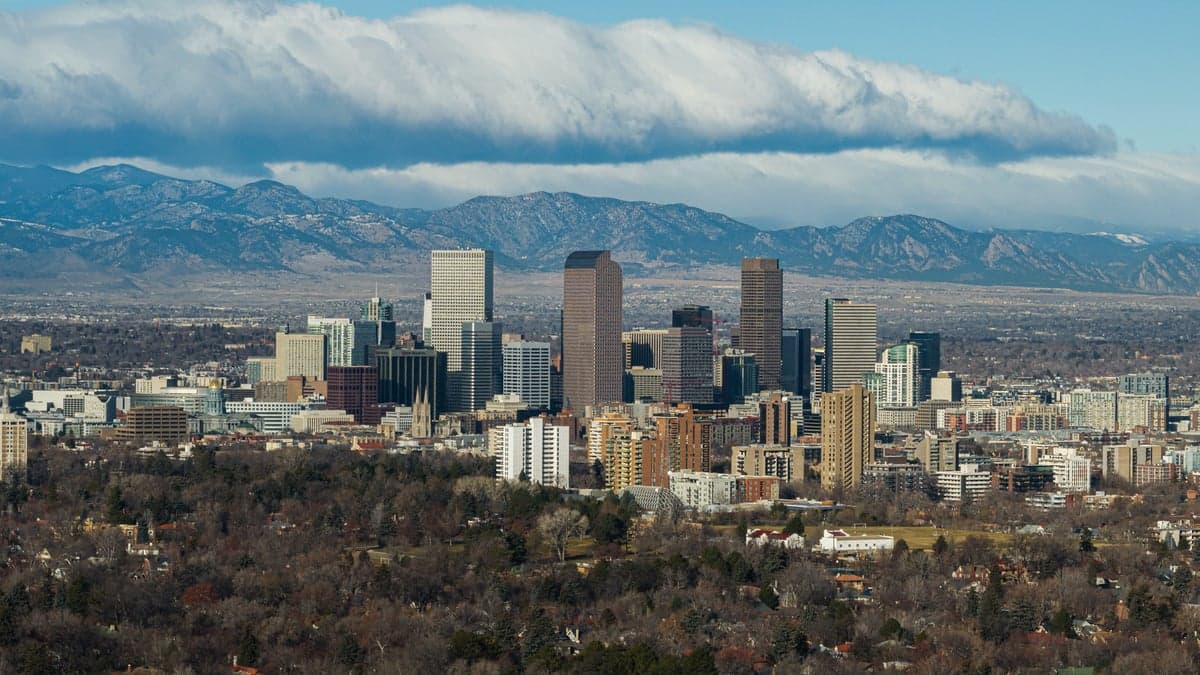
Photo: Wikipedia
Strategic Assessment of Denver, CO
Multiple tactical vulnerabilities. Population density, target proximity, or disaster risk are likely compounding. A retreat property and exit planning is required.
What does the Strategic Assessment tell us?
Our Strategic Assessment grades tactical survivability of an area. Major population centers, military targets, fallout zones, natural disasters, and border exposure all drive risk — lower exposure means a more defensible position in a crisis.
This is heavily inspired by Joel Skousen's Strategic Relocation book. Highly recommended you checkout the book ($)What does this tell us?
Our Strategic Assessment grades tactical survivability of an area. Major population centers, military targets, fallout zones, natural disasters, and border exposure all drive risk — lower exposure means a more defensible position in a crisis.
This is heavily inspired by Joel Skousen's Strategic Relocation book. Highly recommended you checkout the book ($)Strategic Pillars

Key Distances
Regional Safe Places
Below is our recommended "safe zones" in Colorado and the surrounding area based on our strategic heuristics. For most people, it's unrealistic to live in a “safe zone” full-time due to work, family or other personal reasons. They tend to be more rural. However, many of these areas are perfect for second homes and retreat properties that double as a vacation home or even a short-term rental.
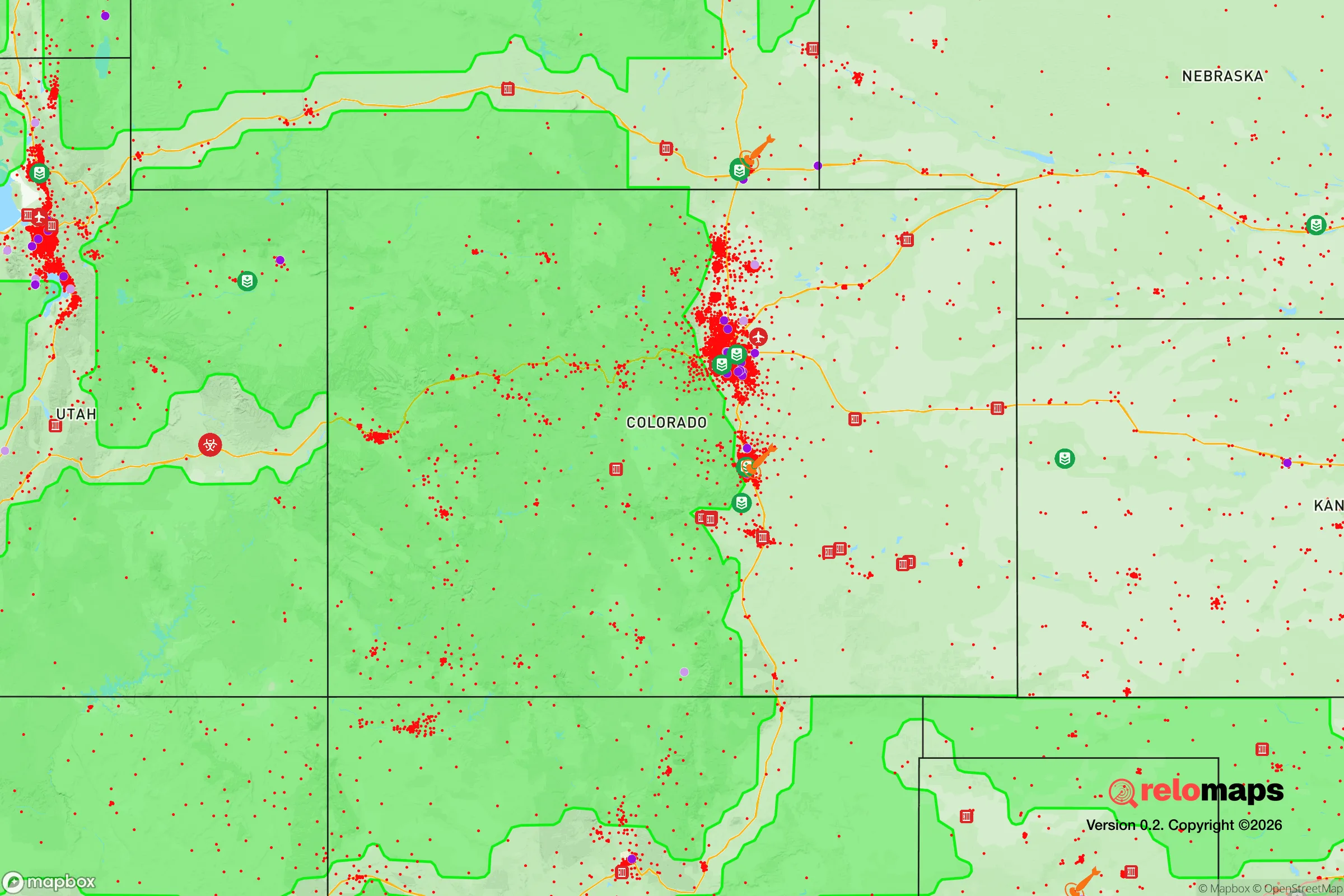
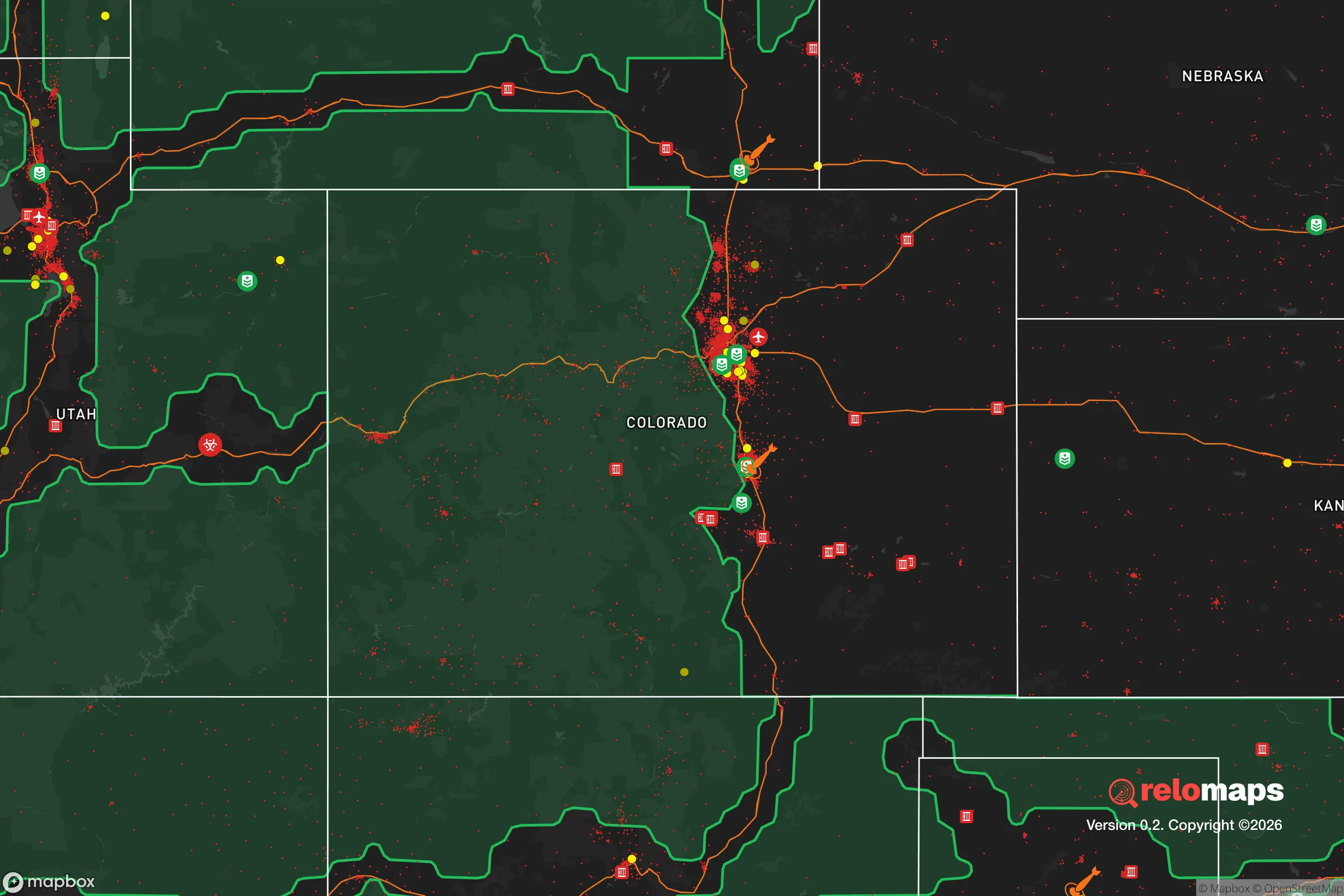


Important Note: For informational purposes only. This does not mean nothing bad ever happens in the green zones. Please use common sense. This is based on public data and modeled with AI. We tried to take a conservative approach but mistakes happen. We update this regularly as new information becomes available.
Solar Generator Recommendations
Backup power matters more here than in safer locations. We've picked three solar generators across budgets and capacity tiers — start with the budget unit if you only need a few essentials, or step up if you want to run a fridge and HVAC for days at a time.

Jackery Portable Power Station Explorer 300
Budget OptionPower on the Go: Weighing only 11 lbs, it's convenient to set up and store with book-sized foldable solar panels

BLUETTI Portable Power Station AC180
Designed for both indoor and outdoor scenarios, AC180 is highly capable as it has a robost capacity and continuous output power.

EF ECOFLOW DELTA Pro Ultra Power Station
Upgraded PickEcoFlow DELTA Pro Ultra is a whole-home energy system designed to grow with your family. Integrated with the Smart Home Panel 2, it scales to meet your evolving energy needs — keeping your home powered, intelligent, and secure through every stage of life.
We earn a commission, at no additional cost to you.
Strategic Assessment Analysis
Denver offers a mixed bag for the strategic relocator. Its position as a major transportation and logistics hub provides genuine economic resilience, but its status as a densely populated, politically progressive urban center introduces significant vulnerabilities in a crisis scenario. For the conservative prepper, Denver is less a sanctuary and more a high-value target with some useful natural buffers—if you know where to look and are willing to live on the periphery rather than in the core.
Geographic position and natural advantages for long-term survival
Denver sits at the eastern edge of the Rocky Mountains, giving it a dual character. The city itself is on the high plains at 5,280 feet, which means a dry climate with low humidity—less mold, fewer pests, and longer food storage life compared to humid regions. The Front Range urban corridor stretches from Colorado Springs to Fort Collins, and Denver is the anchor. That corridor concentrates population, infrastructure, and political power, which is both an asset and a liability. On the plus side, the region has abundant fresh water from snowmelt via the South Platte River and the Denver Basin aquifer system. The mountains to the west provide natural defensible terrain, with limited choke points like I-70 and US-285 that could be monitored or controlled. The high altitude also means cooler summers and less reliance on air conditioning, though winters require serious heating fuel planning. The area's position as a continental crossroads—intersecting I-25 and I-70—means supply chains are robust in normal times, but those same highways become evacuation chokepoints or invasion routes during unrest.
Risks, exposures, and proximity to fallout-relevant landmarks
Denver's proximity to critical infrastructure is a double-edged sword. The city is home to the Denver Federal Center (Lakewood), which houses numerous federal agencies including the Bureau of Land Management, the U.S. Geological Survey, and the Department of Energy's National Renewable Energy Laboratory. Buckley Space Force Base in Aurora is a major space operations and intelligence hub. The Denver International Airport (DIA) is one of the busiest in the world and a known FEMA logistics hub—meaning it's a likely staging area for federal response, which also makes it a target for civil unrest or foreign disruption. The city's political leanings (Denver County voted +65 for Biden in 2020) mean that in a scenario of widespread civil unrest, the urban core could become a flashpoint for ideological conflict. Additionally, the Rocky Mountain Arsenal National Wildlife Refuge, a former chemical weapons manufacturing site, is just northeast of the city—while remediated, it's a reminder of the region's industrial military history. For the prepper, being within 50 miles of these assets means you're in a potential fallout zone for both literal radiation (if a dirty bomb or attack targets Buckley or DIA) and figurative fallout (mass migration, supply disruption, and law enforcement diversion). The I-25 corridor is also a natural disaster risk zone: tornadoes are common on the plains, and the mountain foothills see wildfires that can cut off escape routes.
Practical resilience for a relocator: food, water, energy, and defensibility
For a relocator looking at Denver as a base, the practical resilience picture is mixed. Water is the strongest asset: the city's water system draws from multiple reservoirs (Dillon, Gross, Cheesman, Strontia Springs) and the South Platte, giving it more redundancy than many Western cities. However, the system is heavily centralized and vulnerable to contamination or sabotage. A well on private land outside city limits is a major advantage. Food security is a challenge: Colorado produces only about 5% of its own food, and Denver relies on trucked-in supplies from California and the Midwest. In a prolonged disruption, grocery shelves empty fast. Local gardening is possible at altitude but requires season extension techniques (hoop houses, cold frames) and careful soil management. Energy is a bright spot: Xcel Energy's grid is relatively modern, and the region has abundant solar potential (300+ sunny days per year). Natural gas is common for heating, but a prepper should have backup propane or wood. Defensibility is where Denver falls short for the urban dweller. The city's layout is sprawling, with few natural barriers. Suburbs like Aurora, Lakewood, and Thornton are dense and interconnected, making them hard to secure. The best bet for a relocator is to look at the exurban ring: towns like Conifer, Bailey, or Woodland Park to the west, or Elizabeth and Kiowa to the southeast. These areas offer mountain or prairie terrain, lower population density, and better lines of sight. But they also come with longer commutes and higher fire risk. Medical resilience is decent: Denver has world-class hospitals (UCHealth, Denver Health, Children's Hospital) but they will be overwhelmed in a mass casualty event. Rural clinics in the exurbs are thin. Stockpiling trauma kits and antibiotics is non-negotiable.
The overall strategic picture for Denver is one of high potential reward with equally high risk. The city's economic base is diversified across tech, aerospace, energy, and healthcare, meaning it will likely recover faster than single-industry towns after a disaster. But its political climate, population density, and concentration of federal assets make it a likely epicenter of unrest or targeting. For the conservative prepper, the smart play is not to live in Denver but to use it as a regional hub for supplies, medical care, and intelligence—while maintaining a primary residence in the exurbs or foothills where you can control your perimeter. If you can afford the land and the commute, the Front Range offers a rare combination of water, defensible terrain, and access to resources. Just don't mistake the city's amenities for safety. In a crisis, Denver will be a place to pass through, not to hunker down in.

* Values derived from national, state, county, city and local statistics and may differ in a specific area. Last updated: 2026-04-20T08:04:19.000Z
Narrative content on this page is AI-generated and may contain mistakes. Verify any details that matter before acting on them.
ReloMaps may earn a commission from affiliate links at no extra cost to you.

