 Popular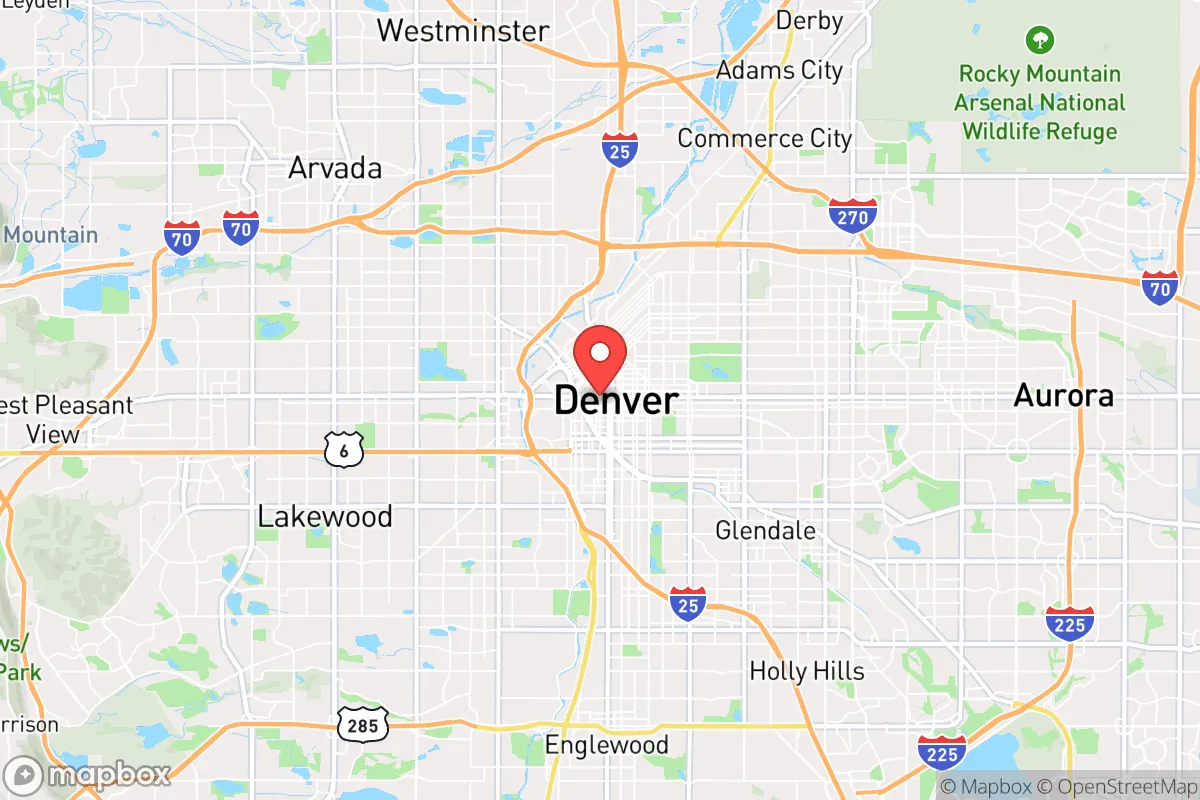
Photo: Wikipedia
Political ClimatePolitical Climate in Denver, CO
District shown is the primary district for this city’s centroid. Cities may span multiple districts.
Local Political AnalysisPolitical Analysis of Denver, CO
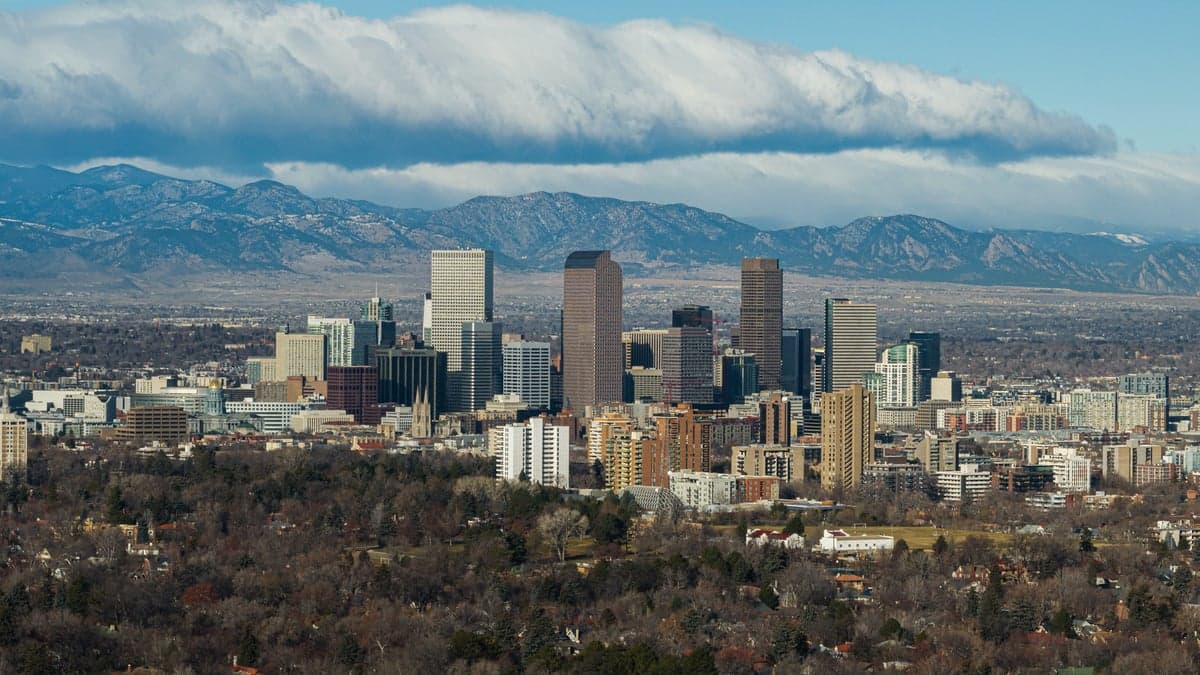
Denver’s political climate has shifted hard and fast over the last decade, and if you’re looking at it from a conservative perspective, the numbers tell a story that’s hard to ignore. The Cook PVI for Denver County sits at D+29, meaning the city votes nearly 30 points more Democratic than the national average. That’s not just a blue dot—it’s a deep blue ocean. In the 2024 presidential election, Denver County gave Kamala Harris over 76% of the vote, while Donald Trump barely cracked 20%. That’s a far cry from the more moderate, purple-leaning Denver I remember from the 1990s and early 2000s, when the city still had a healthy mix of libertarian-leaning independents and fiscal conservatives. Today, the trajectory is unmistakably progressive, with each election cycle pushing the city further left on everything from housing policy to policing to energy regulation.
How it compares
If you drive just 20 minutes south to Douglas County, you’ll find a completely different world. Douglas County voted +17 for Trump in 2024, making it one of the most reliably Republican suburban counties in the state. Elbert County to the southeast is even redder, with Trump winning by nearly 40 points. Even Arapahoe County, which borders Denver to the east, is more balanced—Biden won it by only 8 points in 2020. So Denver isn’t just blue; it’s an outlier, even by Colorado standards. The contrast is stark when you compare it to nearby towns like Castle Rock or Parker, where you’ll still see Trump signs in yards and hear people openly talk about property rights and limited government. In Denver, those conversations have become rare in public spaces, especially in neighborhoods like Capitol Hill, Five Points, or the Highlands, where progressive activism is the norm.
What this means for residents
For someone who values personal freedoms and worries about government overreach, the practical effects of Denver’s political climate are already visible. The city has enacted some of the strictest gun control laws in the country, including a 2024 ordinance requiring liability insurance for gun owners and a ban on many semi-automatic firearms. Housing policy has become a battleground too: Denver’s “right to stay” ordinance gives tenants extensive protections that make it harder for landlords to evict even for nonpayment, which some argue has chilled the rental market and driven up costs. The city council has also pushed for a “Green New Deal” style energy plan that phases out natural gas in new buildings by 2027, limiting homeowner choice. If you value the ability to make your own decisions about your property, your safety, and your energy use, Denver’s trajectory is concerning. The local government increasingly acts as a nanny state, deciding what’s best for you rather than trusting residents to manage their own lives.
Culturally, Denver has become a place where progressive orthodoxy is enforced socially as much as legally. In many neighborhoods, it’s assumed you share the dominant political views, and dissenting opinions—especially on issues like immigration enforcement, police funding, or school choice—can get you labeled as out of touch or worse. The city’s public schools have embraced critical race theory and gender identity curricula that many conservative parents find intrusive. Long-term, I see Denver continuing to drift left, with younger transplants from California and the East Coast accelerating the trend. If you’re looking for a place where conservative values are respected and government stays out of your business, Denver is probably not it anymore. The surrounding suburbs and exurbs offer a more balanced life, but inside the city limits, the political monoculture is real and growing.

State Political ClimatePolitical Climate in Colorado
State Political AnalysisPolitical Environment in the State
Colorado has shifted from a classic purple swing state to a solidly blue-leaning state over the past two decades, with Democrats now controlling the governorship, both U.S. Senate seats, and both chambers of the state legislature. The state voted for Hillary Clinton by 5 points in 2016, Joe Biden by 13 points in 2020, and Kamala Harris by roughly 11 points in 2024, a clear leftward trajectory driven primarily by explosive growth in the Denver-Boulder corridor and the Front Range. For a conservative considering relocation, the state’s political climate is increasingly defined by a dominant progressive coalition in the urban core, a shrinking but resilient conservative base in the rural and exurban areas, and a policy environment that has moved aggressively on taxes, regulations, and social issues.
Urban vs. rural divide
The political map of Colorado is a stark tale of two Colorados. The Denver metro area, including Denver, Aurora, Lakewood, and Boulder, is the engine of Democratic power, producing massive vote margins that overwhelm the rest of the state. Boulder County, home to the University of Colorado, is one of the most liberal counties in the nation, routinely voting 75-80% Democratic. The I-25 corridor from Fort Collins down to Colorado Springs is a mixed bag: Fort Collins and Larimer County lean blue, while Colorado Springs and El Paso County remain the state’s largest conservative stronghold, home to Focus on the Family and a heavy military presence. The rural Eastern Plains, the Western Slope (Grand Junction, Montrose, Durango), and the San Luis Valley vote reliably Republican, but their populations are too small to counterbalance the Front Range. A notable recent flip is Jefferson County, a suburban Denver county that was once a bellwether but now votes consistently Democratic, driven by in-migration of younger, college-educated professionals from out of state.
Policy environment
Colorado’s policy environment has become a laboratory for progressive governance, with several concrete moves that should raise red flags for conservatives. The state has a flat income tax rate of 4.4% (down from 4.63% after a 2020 ballot measure), but property taxes have been rising sharply, especially in fast-growing counties like Douglas and Weld. The regulatory posture is heavy: Colorado has some of the strictest environmental regulations in the West, including a 2024 law requiring all new buildings to meet net-zero energy standards by 2030, which drives up housing costs. Education policy is dominated by the teachers’ union, with school choice limited compared to states like Florida or Arizona — Colorado has a weak charter school law and no universal school voucher program. Healthcare is heavily regulated, with a state-run reinsurance program that has stabilized premiums but also increased government control. Election laws are among the most liberal in the country: Colorado has universal mail-in voting, same-day voter registration, and no voter ID requirement at the polls, which conservatives view as a recipe for fraud. The state also has a “red flag” gun law (passed in 2019) that allows courts to temporarily confiscate firearms from individuals deemed a risk, a law that has been used thousands of times and is deeply unpopular in rural counties.
Trajectory & freedom
Colorado is becoming less free by any conservative measure, especially on gun rights, parental rights, and economic liberty. The 2019 red flag law was followed by a 2021 law requiring universal background checks for private firearm sales and a 2023 law raising the minimum age to purchase any firearm to 21. In 2024, the legislature passed a ban on “assault weapons” (defined broadly to include many semi-automatic rifles), which is currently being challenged in court. On parental rights, Colorado passed a 2023 law that prohibits schools from notifying parents if a child changes their gender identity or pronouns, a direct blow to parental authority. The state also legalized assisted suicide in 2016 and has some of the most permissive abortion laws in the country, with no gestational limits. On the economic front, the state’s regulatory burden has increased, with a 2022 law requiring employers to provide paid family and medical leave, funded by a payroll tax. Property rights have been eroded by a 2021 law that allows local governments to impose rent control, a policy previously banned statewide. The only bright spot for conservatives is the 2020 passage of Proposition DD, which legalized sports betting and taxed it to fund water projects, a rare example of a market-friendly policy.
Civil unrest & political movements
Colorado has seen significant civil unrest and political activism in recent years. The 2020 George Floyd protests in Denver turned violent, with looting and fires in the downtown area, and the city’s progressive district attorney, Beth McCann, has been criticized for a soft-on-crime approach that has led to rising property crime and car thefts. The state is a sanctuary state, with a 2019 law (HB19-1124) that limits cooperation between local law enforcement and federal immigration authorities, a policy that has drawn sharp criticism from conservatives in rural areas. The “Colorado Project” and other left-wing activist groups have been active in pushing for rent control, defunding the police, and environmental justice. On the right, the “Colorado Republican Party” has fractured between establishment and populist factions, with the state party chair, Dave Williams, being ousted in 2024 after a series of controversial statements. The “Weld County secession” movement, which sought to break away from Colorado to form a new state called “North Colorado,” fizzled out in 2013 but reflects ongoing frustration among rural conservatives. Election integrity remains a flashpoint: the 2020 election saw allegations of ballot harvesting and signature verification issues, though no major fraud was proven. A new resident will notice the stark contrast between the “Keep Colorado Blue” bumper stickers in Boulder and the “Don’t California My Colorado” signs in Grand Junction.
Projection
Over the next 5-10 years, Colorado is likely to continue its leftward drift, driven by demographic trends that show no sign of reversing. The state is adding roughly 100,000 new residents per year, most of whom are coming from California, Texas, and other states and are disproportionately young, college-educated, and liberal-leaning. The Denver metro area is expected to grow by another 500,000 people by 2035, further cementing Democratic dominance. Rural counties will continue to lose population and political influence. The state legislature is likely to pass more progressive policies, including a potential state-level wealth tax, a public option for health insurance, and stricter environmental mandates. The only wildcard is a potential backlash from the growing Hispanic population in the San Luis Valley and Eastern Plains, which is more culturally conservative than the white progressive base. A conservative moving to Colorado now should expect to live in a state where their political views are increasingly marginalized, where taxes and regulations will continue to rise, and where their children will be exposed to progressive curricula in public schools. The best bets for conservatives are the exurban counties like Douglas, Elbert, and Weld, which still vote Republican but are being slowly encroached upon by Denver sprawl.
For a conservative considering a move to Colorado, the bottom line is this: the state offers stunning natural beauty, a strong economy, and a high quality of life, but the political climate is hostile to traditional values and personal freedoms. If you’re willing to live in a red enclave like Colorado Springs or Grand Junction and fight for your rights at the local level, you can still find a home here. But if you’re looking for a state that respects gun rights, parental authority, and limited government, you’d be better off looking at Wyoming, Idaho, or Texas. Colorado is a beautiful place to visit, but it’s becoming a difficult place to live as a conservative.
* Values derived from national, state, county, city and local statistics and may differ in a specific area. Last updated: 2026-04-20T08:04:19.000Z
Narrative content on this page is AI-generated and may contain mistakes. Verify any details that matter before acting on them.
ReloMaps may earn a commission from affiliate links at no extra cost to you.

