 Popular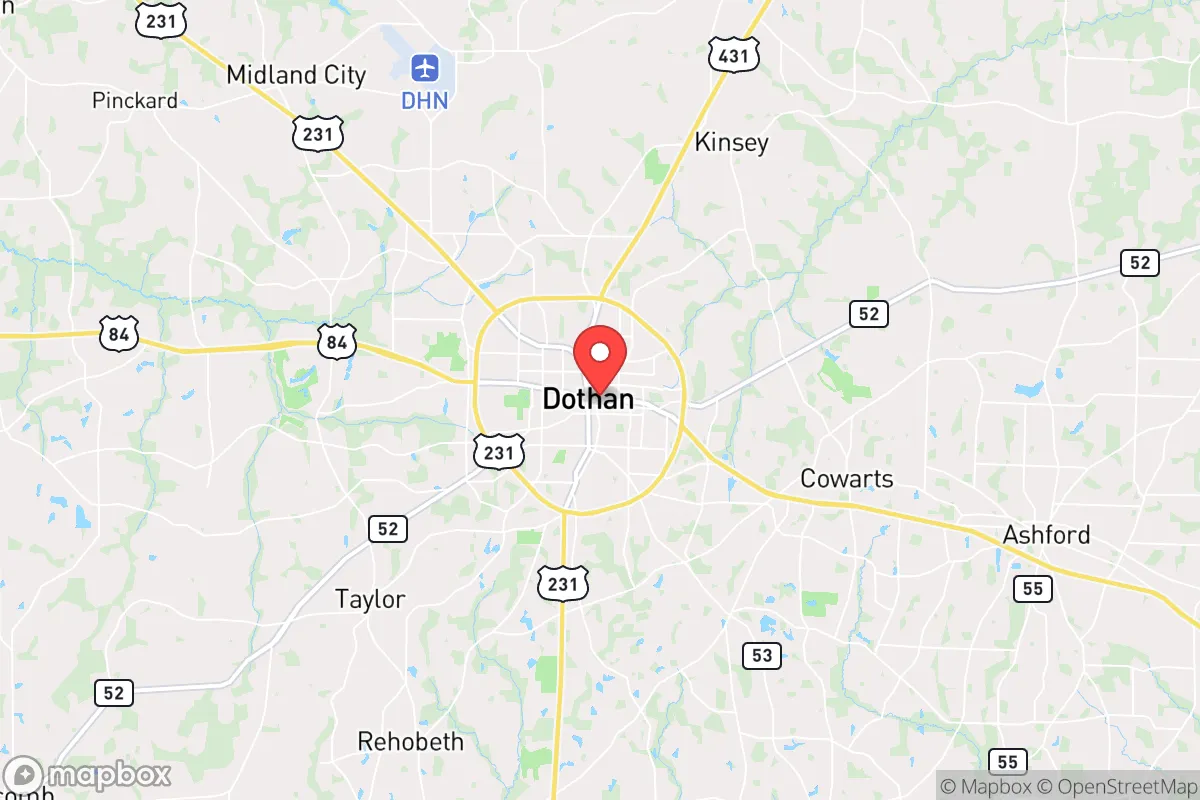
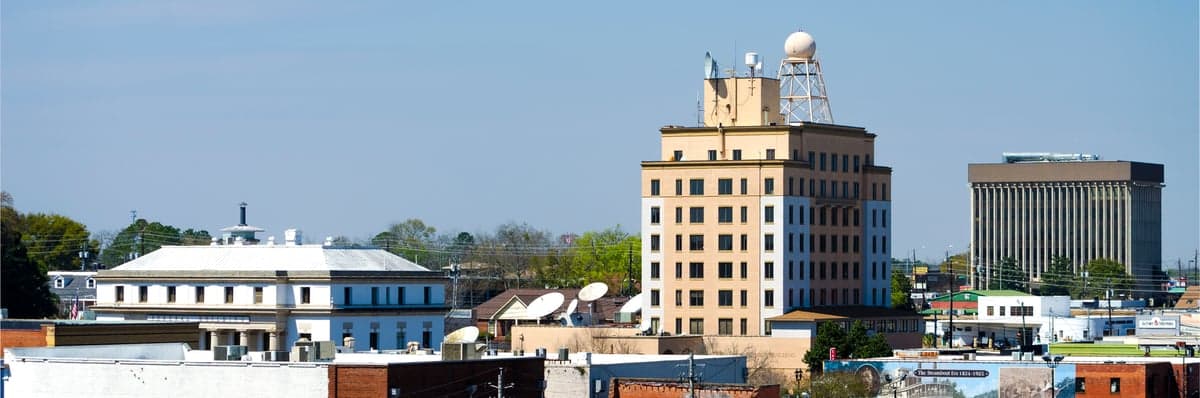
Photo: Wikipedia
Political ClimatePolitical Climate in Dothan, AL
District shown is the primary district for this city’s centroid. Cities may span multiple districts.
Local Political AnalysisPolitical Analysis of Dothan, AL
Dothan is about as reliably conservative as it gets in Alabama, and that’s not changing anytime soon. The city sits in the heart of the Wiregrass region with a Cook PVI of R+27, meaning Republicans consistently win by massive margins here—think 25 to 30 points above the national average in most presidential and statewide races. If you’ve lived here a while, you remember when the biggest political fights were over local school board budgets and road projects, not culture wars. But over the past decade, the shift has been unmistakable: Dothan has doubled down on its conservative roots, even as some nearby towns like Troy or Ozark have seen small pockets of progressive activism pop up. That’s not happening here. The local GOP is strong, the Democratic Party is essentially a non-factor in local elections, and most folks I know vote straight-ticket Republican without a second thought.
How it compares
Compared to other parts of Alabama, Dothan is actually more conservative than the state average. Montgomery, about 90 miles northwest, has a Cook PVI of R+16 and a more diverse, urban electorate that occasionally flips local seats to Democrats. Even Auburn-Opelika, with its university influence, leans R+18 and has a younger, more moderate vibe. Dothan, by contrast, is older, whiter, and more rural in its political DNA. The surrounding counties—Houston, Dale, Geneva—all vote similarly, so there’s no real “blue island” nearby. The closest you’ll find is maybe Enterprise, which is still solidly red but has a slightly higher military population that can swing independent on certain issues. But overall, Dothan is a fortress for conservative values, and that’s exactly how most residents want it.
What this means for residents
For someone moving here, the political climate means you’re unlikely to see much government overreach into your personal life—at least not from the local level. The city council and county commission are dominated by folks who believe in limited government, low taxes, and keeping the bureaucracy out of your business. That’s a big deal if you’re tired of places where every little thing requires a permit or a fee. On the flip side, the conservative majority here is pretty unified on social issues, so if you’re hoping for progressive policies like expanded public transit, rent control, or sanctuary city status, you’ll be disappointed. The real concern I have is the creeping influence of national politics. More and more, local elections are being decided by party labels rather than actual track records, and that opens the door for outsiders who don’t understand the community. It’s something to watch, but for now, Dothan remains a place where personal freedoms—like gun rights, school choice, and religious expression—are respected and protected.
One thing that sets Dothan apart culturally is its strong sense of self-reliance. You don’t see the same kind of government dependency here that you might in larger cities. The local economy is driven by agriculture, healthcare, and small business, not government contracts or big corporate handouts. That independence shows in the politics: people here vote for candidates who promise to stay out of their lives, not those who promise to manage them. If you’re looking for a place where the government keeps its nose out of your business and your neighbors share your values, Dothan is a solid bet. Just don’t expect any sudden shifts toward progressive ideology—that’s not on the horizon, and most of us are fine with that.

State Political ClimatePolitical Climate in Alabama
State Political AnalysisPolitical Environment in the State
Alabama is a deeply conservative state, with a Republican lean that has only intensified over the past two decades. The GOP holds supermajorities in both chambers of the state legislature, controls every statewide elected office, and has carried the state in every presidential election since 2004 by margins of 20 points or more. The dominant coalition is a mix of rural traditionalists, evangelical Christians, and suburban conservatives, with the Democratic Party largely confined to the Black Belt counties and a few urban pockets. Over the last 10-20 years, the state has shifted from a competitive two-party state to a solidly red one, driven by the realignment of white voters and the collapse of the old “Yellow Dog” Democratic tradition in rural areas.
Urban vs. rural divide
The political map of Alabama is starkly divided. The state’s largest metro, the Birmingham-Hoover area, is a microcosm of the national divide: Jefferson County (Birmingham) votes reliably Democratic, while its suburban and exurban neighbors—Shelby County (the wealthiest in the state), St. Clair County, and parts of Blount County—are among the most Republican in the nation. Huntsville, the state’s second-largest city and a tech and defense hub, is a fascinating exception: it’s a growing, educated, and increasingly moderate-to-conservative metro, with Madison County trending red but with a libertarian streak. Mobile and Baldwin County on the Gulf Coast are solidly Republican, with Baldwin being one of the fastest-growing and most conservative counties in the state. The Black Belt—a crescent of counties like Dallas, Lowndes, and Greene—votes overwhelmingly Democratic, driven by a majority-Black population, but these areas have shrinking populations and little political power outside of legislative districts. The rural Wiregrass region (Dothan, Enterprise) and the Appalachian foothills (DeKalb, Jackson counties) are deeply red, with many precincts voting 80%+ Republican. The only real Democratic stronghold outside the Black Belt is Tuscaloosa County’s city of Tuscaloosa itself, home to the University of Alabama, but the surrounding county is solidly red.
Policy environment
Alabama’s policy environment is among the most conservative in the country. There is no state income tax on retirement income, and the state’s combined state and local sales tax rate averages around 9.2%, one of the highest in the nation, but property taxes are among the lowest in the nation—a major draw for families and retirees. The state has a right-to-work law, no state-level minimum wage above the federal $7.25, and a regulatory climate that is consistently ranked as business-friendly. Education policy is a flashpoint: the state has a robust school choice movement, with the Alabama Accountability Act providing tax credits for private school scholarships, and in 2024, Governor Kay Ivey signed the CHOOSE Act, creating Education Savings Accounts (ESAs) for families. However, public school funding remains low, and the state’s academic outcomes are near the bottom nationally. Healthcare policy is limited; Alabama did not expand Medicaid under the Affordable Care Act, leaving a coverage gap for low-income adults. Election laws are strict: voter ID is required, and the state has closed primaries. The legislature has also passed laws restricting ballot harvesting and limiting absentee voting, which conservatives view as election integrity measures.
Trajectory & freedom
On the trajectory of freedom, Alabama has been moving decisively in the direction of expanding personal liberty, particularly on gun rights, parental rights, and religious freedom. In 2022, the state passed permitless carry (constitutional carry), allowing any law-abiding adult to carry a concealed firearm without a permit. In 2023, the legislature passed the “What is a Woman Act,” defining sex based on biological biology and banning transgender girls from female sports. Parental rights were strengthened with the “Parental Rights in Education” law, which requires schools to notify parents of any changes in a student’s services related to mental, emotional, or physical health. On medical autonomy, the state has a near-total abortion ban with no exceptions for rape or incest, and it has passed laws restricting gender-affirming care for minors. Property rights are strong, with no statewide zoning mandates, though local municipalities can impose their own. The state has also passed a “Second Amendment Preservation Act” that attempts to nullify federal gun laws. However, there are concerning trends: the state’s high sales tax is regressive, and the lack of Medicaid expansion means many working poor are stuck in a coverage gap. The state also has a history of federal court oversight on prison conditions and mental health, which could lead to costly mandates.
Civil unrest & political movements
Alabama has seen relatively little civil unrest compared to other states, but there are notable flashpoints. The Black Belt has a long history of civil rights activism, and modern movements like Black Lives Matter have held protests in Birmingham and Montgomery, though they have been smaller and less frequent than in other states. The state’s immigration politics are tense but not explosive; Alabama passed a strict immigration law (HB 56) in 2011 that was largely gutted by federal courts, but the state still has a strong enforcement posture. There is a growing “constitutional sheriff” movement in rural counties, with sheriffs in places like Etowah and Marshall counties publicly refusing to enforce certain federal gun laws. Election integrity has been a hot topic since 2020, with the state’s Republican Secretary of State, Wes Allen, aggressively purging voter rolls and pushing for stricter ID laws. The most visible political movement is the rise of the “MAGA” wing within the state GOP, which has led to primary challenges against incumbents deemed insufficiently conservative. The state’s secessionist rhetoric is mostly historical, but there is a small but vocal “Alabama Independence” movement that resurfaces periodically. A new resident would notice the prevalence of “Don’t Tread on Me” flags and pro-Second Amendment signage in rural areas, and the near-total absence of progressive political messaging outside of college towns.
Projection
Over the next 5-10 years, Alabama is likely to become even more conservative, but with a growing libertarian-leaning suburban bloc. The state is experiencing significant in-migration from the Midwest and Northeast, particularly to the Huntsville and Baldwin County areas, which are attracting families and retirees seeking lower taxes and a slower pace of life. These newcomers tend to be conservative but less culturally traditionalist, which could create tensions within the GOP over issues like marijuana legalization (currently illegal) and gambling (a perennial debate). The Black Belt will continue to shrink in population and political influence, while the suburbs of Birmingham, Huntsville, and Mobile will grow. The state’s demographic shift is slow but real: the white population is aging, while the Hispanic population is growing, particularly in the poultry-processing towns of North Alabama (like Albertville and Cullman). This could eventually moderate the state’s immigration stance, but not in the near term. The biggest wildcard is the state’s prison system, which is under federal investigation for unconstitutional conditions; a federal takeover or consent decree could force massive spending, potentially leading to tax increases that would be politically unpopular. The state’s education outcomes are unlikely to improve dramatically without major funding increases, but the ESA program could accelerate the shift toward private and homeschool options.
For a new resident, the bottom line is this: Alabama offers a high degree of personal freedom on gun rights, parental control, and low property taxes, but you’ll pay for it with high sales taxes, limited healthcare access, and underfunded public schools. If you’re a conservative looking for a state that aligns with your values on most cultural and economic issues, you’ll feel at home. If you’re a libertarian, you’ll appreciate the hands-off approach to property and guns but may chafe at the state’s moral legislation on alcohol, gambling, and marijuana. The state is stable, safe, and growing, but it’s not for everyone—and that’s exactly how most Alabamians like it.
* Values derived from national, state, county, city and local statistics and may differ in a specific area. Last updated: 2026-04-19T18:48:30.000Z
Narrative content on this page is AI-generated and may contain mistakes. Verify any details that matter before acting on them.
ReloMaps may earn a commission from affiliate links at no extra cost to you.

