 Popular
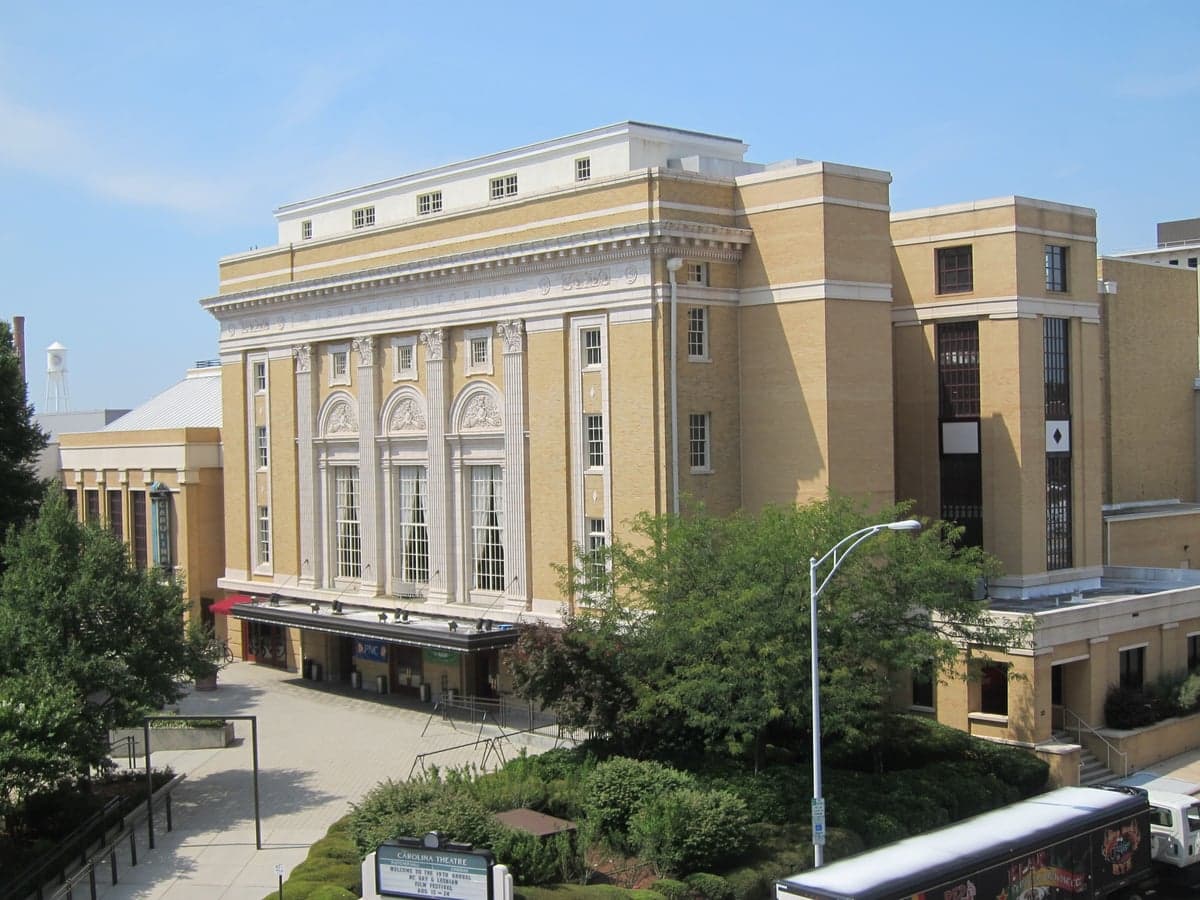
Photo: Wikipedia
Personal Sovereignty in Durham, NC
Viable for self-reliance. Generally workable, though some barriers may limit total independence.
What does Personal Sovereignty tell us?
Personal Sovereignty measures your capacity for self-reliance and independence with minimal government friction. Higher scores mean fewer barriers between you and the way you want to live... but it assumes you have the space you need and good neighbors.
What does this tell us?
Personal Sovereignty measures your capacity for self-reliance and independence with minimal government friction. Higher scores mean fewer barriers between you and the way you want to live... but it assumes you have the space you need and good neighbors.
State Policy
Energy independence: Importer (15% of energy produced in-state)
Personal Liberty
Homesteading

Personal Liberty Analysis
For a conservative-leaning individual or family weighing personal sovereignty, Durham, North Carolina presents a complex calculus. The city itself leans heavily progressive, but its location within a state that has pushed back against federal overreach on several fronts offers a mixed bag of autonomy and restriction. You are not in a free-zone like rural Idaho, but you are also not in a lockdown-heavy state like New York. The key is understanding where Durham’s local governance imposes burdens and where state preemption gives you breathing room. This analysis breaks down the specific levers of personal sovereignty—taxes, self-defense, homesteading, and civil liberties—so you can decide if the Triangle’s economic opportunity is worth the trade-offs in personal freedom.
Tax burden and regulatory posture: How much of your income and time does the state take?
North Carolina’s tax climate is a relative bright spot for fiscal conservatives, but Durham County adds its own layer. The state levies a flat 4.75% personal income tax as of 2026, down from 5.25% in 2024, with a path toward 3.99% by 2027. This is competitive nationally. However, Durham County’s property tax rate sits at roughly $0.72 per $100 of assessed value, which is higher than surrounding counties like Orange ($0.65) or Chatham ($0.55). On a $400,000 home, that’s an extra $680 per year compared to Chatham. Sales tax in Durham is 7.5% (state 4.75% + local 2.75%), which is standard for the region. The regulatory posture is where you feel the squeeze. Durham’s city council has a reputation for aggressive zoning and permitting delays—expect 6-12 months for a simple residential addition. Business licensing is straightforward for low-risk ventures, but any home-based operation that involves customers visiting your property will trigger a conditional-use permit process that can cost thousands and take months. The state’s right-to-work laws and lack of a state-level income tax on LLCs are positives, but the local bureaucracy is a friction point for anyone wanting to operate without government permission.
Self-defense and gun law specifics: Can you protect your home and family without permission slips?
North Carolina is a shall-issue state for concealed carry, meaning if you pass a background check and complete an 8-hour training course, the sheriff must issue your permit. Durham County’s sheriff’s office processes these within the statutory 45-day window, though wait times can stretch to 60-90 days during high-volume periods. The state does not require a permit to open carry a handgun, but Durham’s local ordinances ban firearms in city parks and government buildings—a restriction that preemption laws technically override, but you’ll still be arrested if you test it. Magazine capacity is unlimited, and there is no state-level assault weapons ban. Stand-your-ground laws apply statewide, meaning you have no duty to retreat in your home or vehicle. The practical concern for Durham residents is the city’s rising violent crime rate—Durham reported 38 homicides in 2024, a rate of about 13 per 100,000, which is triple the national average. This makes a strong self-defense posture not just a right but a practical necessity. However, the city council has repeatedly attempted to pass “safe storage” ordinances and red flag laws, which have been blocked by state preemption. For now, your gun rights are intact, but the political pressure to erode them is constant.
Self-reliance and homesteading viability: Lot sizes, zoning, and off-grid feasibility
If your vision of sovereignty includes a few acres, a garden, and minimal reliance on municipal utilities, Durham proper is not your place. The city’s minimum lot size is 6,000 square feet in most residential zones, and agricultural zoning (RA-20) requires at least 20 acres—rare and expensive inside the city limits. Backyard chickens are allowed (hens only, no roosters) on lots of 6,000 sq ft or more, but you are limited to six birds. Beekeeping is permitted with registration. The real constraint is water and waste: Durham mandates connection to city water and sewer for any habitable structure within 300 feet of a main line, which covers most residential parcels. Off-grid solar is technically allowed, but you must remain grid-tied for net metering approval; standalone systems require a special permit and are rarely approved. Rainwater collection is legal but limited to 1,000 gallons per property without a permit. For serious homesteading, look to northern Durham County or southern Granville County, where you can find 1-5 acre parcels for $50,000-$100,000 per acre, with fewer zoning restrictions. There, you can keep goats, have a large garden, and install a septic system without city interference. Inside Durham, you are essentially a renter of your own land, subject to the city’s rules on everything from grass height to fence materials.
Personal liberties: Parental rights, medical autonomy, speech, and property
This is where Durham’s progressive governance clashes most directly with conservative values. On parental rights, North Carolina has a Parents’ Bill of Rights (SB 49, 2023) that requires schools to notify parents of any changes in a child’s health or well-being, including mental health and gender identity discussions. Durham Public Schools has been openly resistant, with the superintendent stating the district would “follow state law minimally” while maintaining its own policies. This creates a gray area where your rights are technically protected but practically contested. Medical autonomy is stronger than in blue states: there is no state-level vaccine mandate for adults, and the 2023 law banning mask mandates in schools still stands. However, Durham County’s health department aggressively pushed COVID-era restrictions and would likely do so again. Speech is protected under the First Amendment, but Durham’s city council has passed resolutions condemning “hate speech” and has a history of de-platforming conservative speakers at public venues. Property rights are the weakest link: Durham has a rent control ordinance (technically a “rent stabilization” program) that caps annual increases at 5% for multi-unit buildings, and the city has used eminent domain for redevelopment projects like the Durham Innovation District. If you own rental property, you are subject to annual inspections and tenant-friendly eviction laws that can take 6-12 months to remove a non-paying tenant.
In the broader landscape of personal sovereignty, Durham ranks as a moderate-to-low freedom zone compared to other Southern cities. It offers better tax rates than Raleigh or Charlotte, but worse property rights and local regulatory freedom. For a survivalist or prepper, the city’s dense population (285,000) and reliance on centralized infrastructure make it a poor bug-out location. However, the surrounding counties—Person, Granville, and Chatham—offer a much higher degree of autonomy within a 30-minute drive. The strategic play is to live in a rural county, work in Durham for the economic opportunity, and treat the city as a resource to be exploited rather than a home to be defended. If you must live inside the city limits, accept that you are trading some sovereignty for convenience and be prepared to fight for the rest at the ballot box and in the courts.

* Values derived from national, state, county, city and local statistics and may differ in a specific area. Last updated: 2026-05-03T20:25:48.000Z
Narrative content on this page is AI-generated and may contain mistakes. Verify any details that matter before acting on them.
ReloMaps may earn a commission from affiliate links at no extra cost to you.

