 Popular
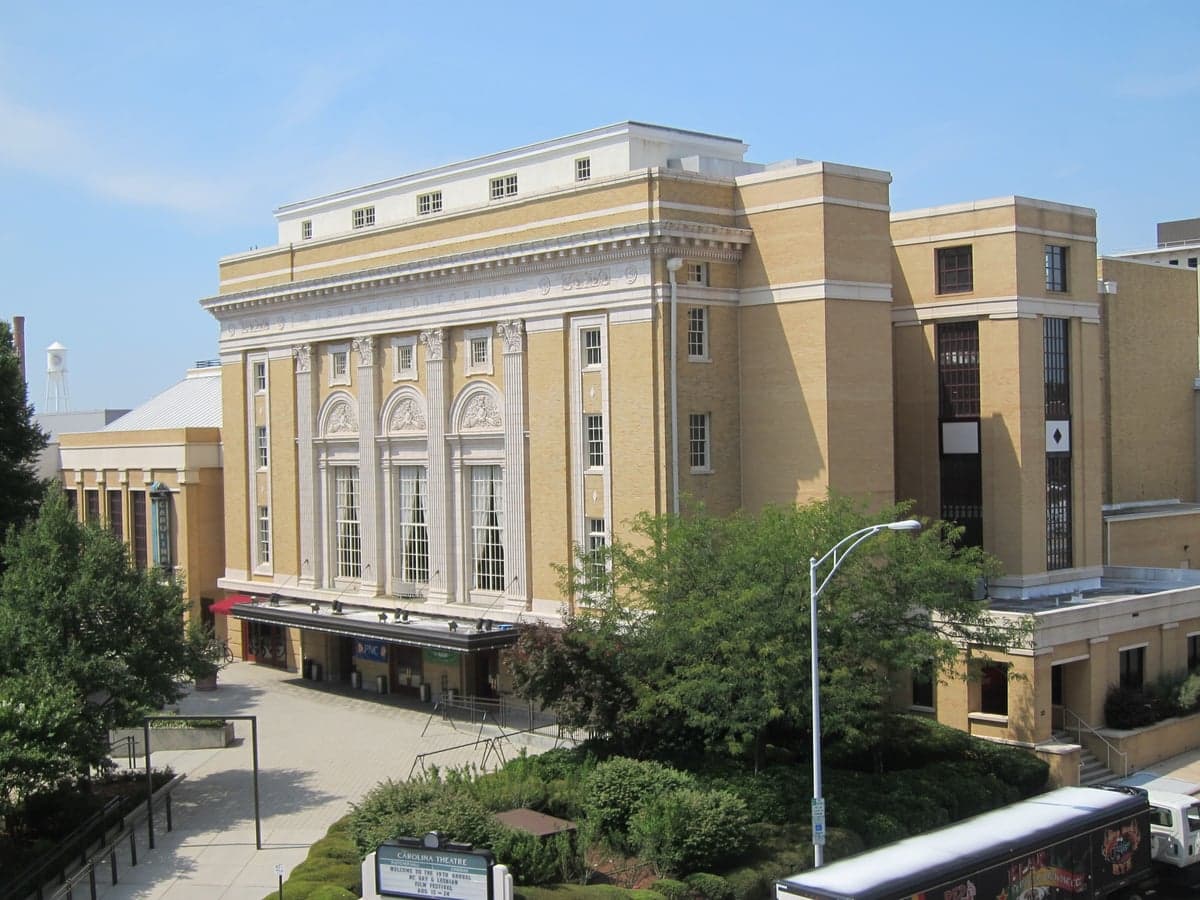
Photo: Wikipedia
Demographics of Durham, NC
Affluence Level in Durham, NC
A middle-class area roughly in line with national averages across income, home values, education, and employment.
People of Durham, NC
Durham, North Carolina, is a mid-sized city of 288,465 residents defined by its stark contrasts: a highly educated workforce (55.7% college-educated) alongside a deeply rooted Black middle class, a rapidly growing Hispanic population (14.7%), and a smaller but notable East/Southeast Asian community (3.8%). The city’s character is shaped by its history as a tobacco and textile boomtown that drew Black and white migrants from the rural South, followed by waves of tech and academic professionals from across the country. Today, Durham is a majority-minority city where the white share (40.5%) and Black share (34.2%) are nearly equal, while the foreign-born population (9.6%) is smaller than in many peer cities but growing. Distinctive identity markers include a strong local pride in Black entrepreneurship, a thriving food scene anchored by Hispanic and Southern cuisines, and a palpable tension between longtime residents and newcomers reshaping historic neighborhoods.
How the city was settled and grew
Durham’s population history begins not with colonial settlement but with the post-Civil War tobacco boom. The city was incorporated in 1869, built on the fortunes of the Washington Duke family and other tobacco magnates who established factories along the railroad. The first major wave of migrants were Black and white farmers from the surrounding Piedmont who left sharecropping for factory work. Black workers, in particular, built a self-sufficient community in the Hayti neighborhood (south of downtown), which became a nationally known center of Black business, banking, and education anchored by North Carolina Mutual Life Insurance Company and what is now North Carolina Central University. Meanwhile, white mill workers and managers settled in Trinity Park and Old West Durham, neighborhoods of modest bungalows and mill houses near the factories. A second wave came during the Great Migration (1910–1970), when tens of thousands of Black Southerners moved to Durham for jobs in tobacco and textiles, swelling Hayti and creating new enclaves like Walltown (near Duke University) and East Durham. By 1960, Durham was roughly 40% Black, with a rigidly segregated housing pattern that persisted for decades.
Modern era (post-1965)
The post-1965 era brought two transformative shifts. First, the Immigration and Nationality Act of 1965 opened the door to new immigrant groups. Hispanic migrants, initially from Mexico and later Central America, began arriving in the 1980s and 1990s to work in construction, landscaping, and the booming service industry. They concentrated in East Durham and Southside, where affordable housing and proximity to jobs created a growing Latino corridor. Today, the Hispanic share (14.7%) is the city’s fastest-growing demographic. Second, the decline of tobacco manufacturing in the 1980s and the rise of Research Triangle Park (RTP) drew a wave of white and Asian professionals from other states. East/Southeast Asian communities (3.8%)—including Chinese, Korean, and Vietnamese families—settled in South Durham near RTP and along the Highway 54 corridor, drawn by tech and biotech jobs. Indian-subcontinent residents (1.7%) followed a similar pattern but are a distinct group, concentrated in the same RTP-adjacent suburbs. The white population, which had declined during white flight to suburbs in the 1970s and 1980s, rebounded after 2000 as young professionals and empty-nesters gentrified Downtown and Old North Durham, displacing some Black and Hispanic residents. The Black share fell from roughly 55% in 1990 to 34.2% today, driven by both out-migration to suburbs and in-migration of non-Black residents.
The future
Durham’s population is heading toward greater diversity but also greater economic stratification. The Hispanic share is projected to continue rising, potentially reaching 20–25% by 2040, as family reunification and labor demand sustain growth. East/Southeast Asian and Indian communities are likely to grow more slowly, plateauing as RTP’s tech sector matures and housing costs push new arrivals to suburbs like Cary and Morrisville. The white share is stabilizing after the post-2000 influx, but the Black share may continue a slow decline as gentrification pushes lower-income Black families to southern Durham County or neighboring towns. The city is not homogenizing; rather, it is tribalizing into distinct enclaves: Downtown and Trinity Park are increasingly white and affluent, East Durham remains heavily Hispanic and working-class, and South Durham is a multiethnic corridor of Asian, Indian, and white professionals. The foreign-born share (9.6%) is lower than in Raleigh or Charlotte, suggesting Durham remains a secondary destination for immigrants, but second-generation Hispanic and Asian families are beginning to enter the city’s political and economic mainstream.
For someone moving in now, Durham is a city where the old Black-white binary is giving way to a more complex, multiethnic reality—but one where neighborhood boundaries still largely reflect race and class. The city offers a highly educated workforce and a vibrant cultural scene, but newcomers should expect to navigate a landscape where historic Black neighborhoods are under pressure and Hispanic communities are still building political power. It is becoming a more diverse, more expensive, and more stratified place than the tobacco town it once was.

* Values derived from national, state, county, city and local statistics and may differ in a specific area. Last updated: 2026-05-03T20:25:48.000Z
Narrative content on this page is AI-generated and may contain mistakes. Verify any details that matter before acting on them.
ReloMaps may earn a commission from affiliate links at no extra cost to you.

