 Popular
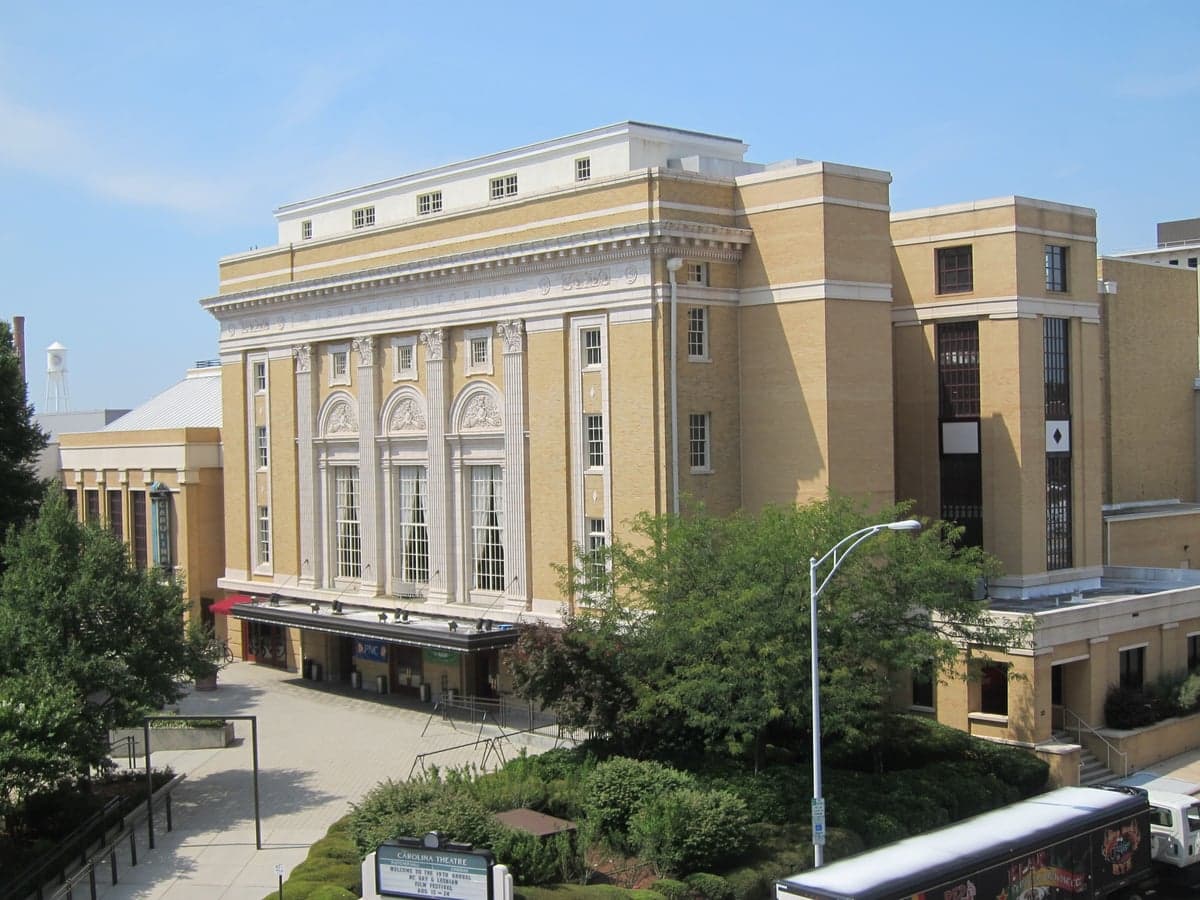
Photo: Wikipedia
Quality of Life in Durham, NC
Above-average quality of iife. The area offers a reasonable cost of living, decent mobility, and a mix of neighborhood amenities.
What does Quality of Life tell us?
Quality of Life blends cost of living, nearby amenities, socioeconomic signals, and neighborhood character. City-level scores represent the whole municipality; individual neighborhoods can differ.
What does this tell us?
Quality of Life blends cost of living, nearby amenities, socioeconomic signals, and neighborhood character. City-level scores represent the whole municipality; individual neighborhoods can differ.
Cost of Living
23% above national average
The Real Cost of Living in Durham, NC for 2026
| Tier | Individual | Family (4) |
|---|---|---|
| Survival | $23k | $42k |
| Comfortable | $69k | $101k |
| Luxury | $143k+ | $222k+ |
| Elite (Top 5%) | $175k+ | $271k+ |
78%
The Area Signal
A metric tracking the socioeconomic signals of the area.
Hobbies
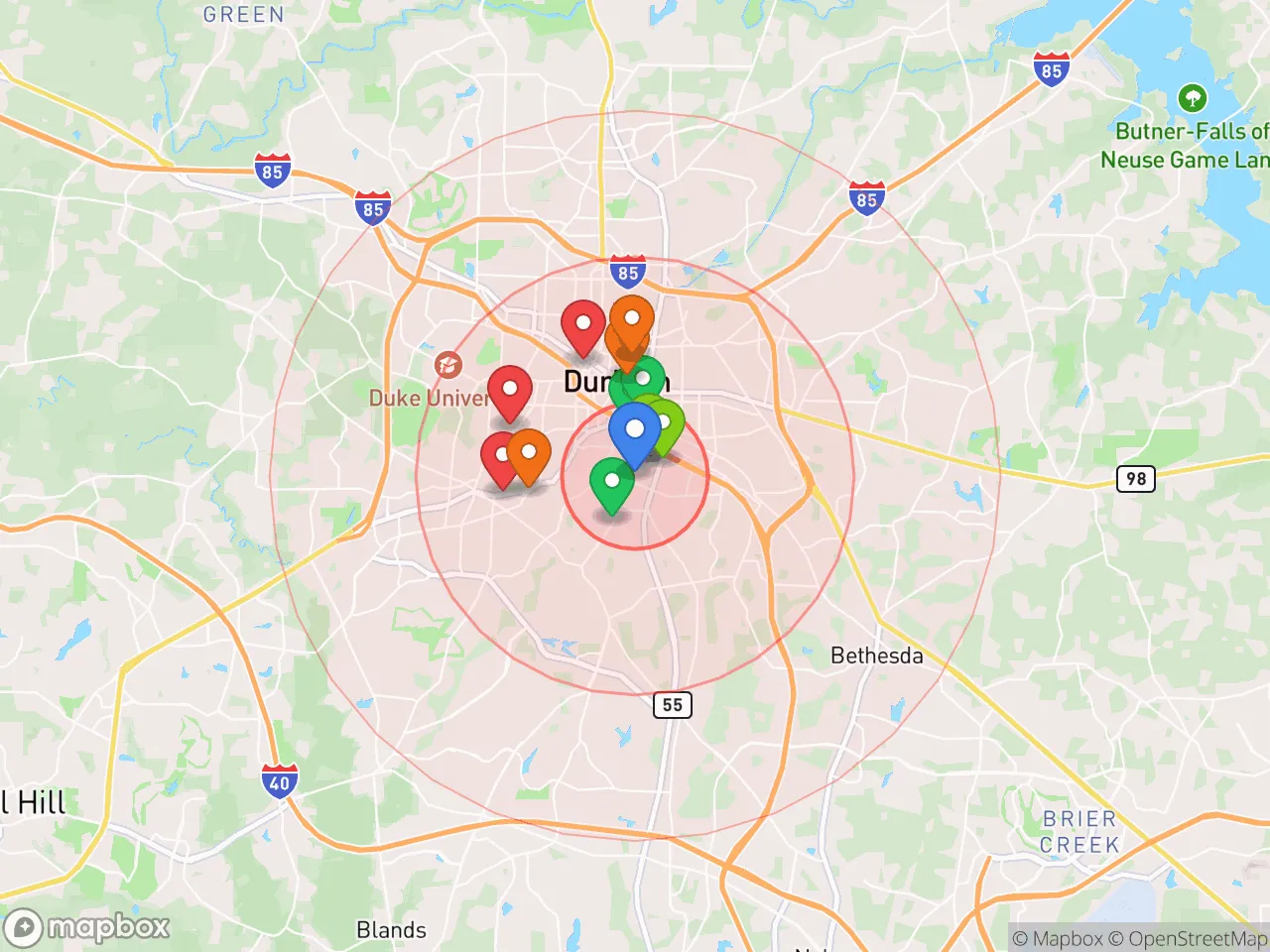
Explore the areaGroceries
7 within 10 miles
Gas
20 within 10 miles
Hospital
15 within 20 miles
Airport
RDU — Raleigh–Durham International
Post Office
USPS — Durham, NC
Critical Amenities
Quality-of-Life Analysis
Durham, North Carolina, is an affluent and rapidly growing city where a mix of highly educated professionals, university faculty, and creative-class workers shape daily life. With a cost of living index of 123 (23% above the U.S. average), the city attracts those who value cultural vibrancy and career opportunity over low expenses. The population skews younger and more diverse than the state average, driven by anchor institutions like Duke University and a thriving biotech and tech sector.
Cost of living, housing affordability, and how Durham compares to Raleigh and Chapel Hill
Durham’s cost of living sits notably higher than the national average but remains more affordable than its immediate neighbors. The median home value of $355,300 is roughly 15% lower than in Cary or Chapel Hill, where prices often exceed $420,000. Median rent of $1,412 undercuts Raleigh’s average by about $100 per month, making Durham a relative bargain within the Research Triangle region. However, housing costs have risen sharply since 2020, with home values climbing over 40%, pushing some long-term renters toward suburbs like Mebane or Hillsborough. The average commute of 22.7 minutes is shorter than the national average of 26 minutes, thanks to the region’s interconnected highway network (I-85, I-40, and NC-147) and the absence of severe gridlock outside peak hours. For buyers, the trade-off is clear: Durham offers lower entry prices than Chapel Hill or Cary but higher property taxes (around 1.3% of assessed value) than outlying counties.
What daily life is like for families: schools, parks, and local amenities
Daily life in Durham centers on a walkable downtown core, a robust parks system, and a nationally recognized food scene. The Durham Public Schools system includes magnet programs like the School of Creative Studies and the Durham School of the Arts, though many families also consider charter options such as Voyager Academy or KIPP Durham. The city maintains over 60 parks, with the 85-acre American Tobacco Trail and the 22-acre Durham Central Park hosting farmers’ markets and festivals year-round. Amenities are dense: the Durham Performing Arts Center (2,800 seats) draws Broadway tours, while the Nasher Museum of Art and the Carolina Theatre offer cultural programming. Grocery access is strong, with multiple Whole Foods, Harris Teeter, and the Durham Co-op Market locations. For families, the trade-off is between urban convenience—where a three-bedroom near Ninth Street might rent for $2,200—and suburban options in South Durham or near Hope Valley, where larger lots and quieter streets prevail.
Who thrives in Durham and who might look elsewhere
Durham is best suited for professionals and families who prioritize cultural density, walkability, and career access over low housing costs. The city’s economy is anchored by Duke University and Health System (the largest employer, with over 40,000 workers), along with major firms like Fidelity Investments, IBM, and biotech companies such as BioCryst Pharmaceuticals. The median household income of roughly $72,000 supports the cost of living, but single earners or those in service roles may find the housing market challenging. Retirees on fixed incomes often prefer nearby Pittsboro or Hillsborough for lower taxes and quieter neighborhoods. Young professionals and dual-income families will find the strongest alignment with Durham’s rhythm: a 22-minute commute, a vibrant downtown, and a community that leans progressive (Durham County voted 80% Democratic in 2024). Those seeking sprawling subdivisions or top-ranked suburban schools should look to Cary or Wake Forest instead.

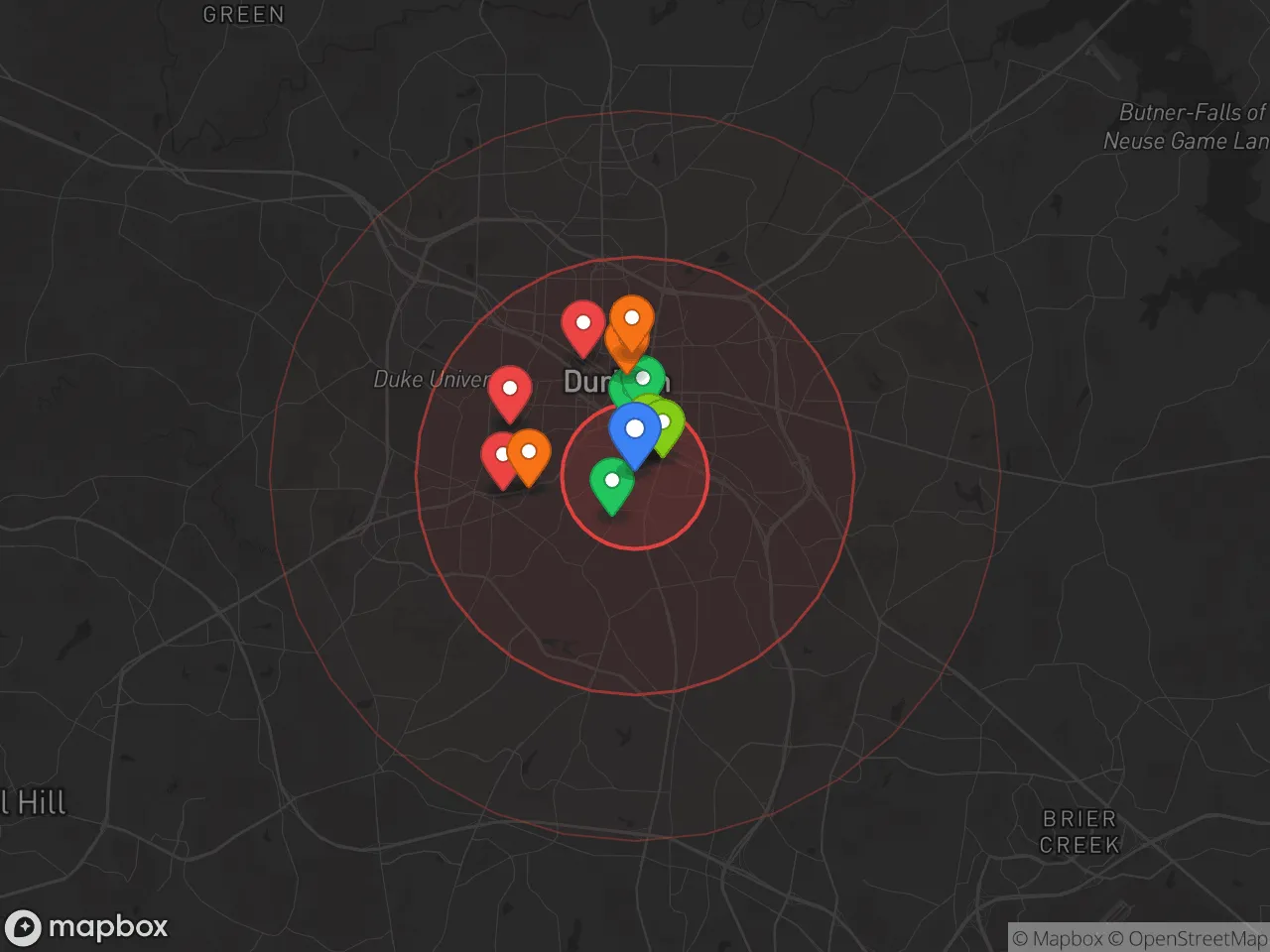
Crime in Durham, NC
Significantly higher crime rates than 77% of comparable U.S. locations.
Violent CrimeViolent Crime Analysis
Property CrimeProperty Crime Analysis
Crime Analysis
Durham, North Carolina, presents a challenging safety landscape for potential residents. With a violent crime rate of 503.4 incidents per 100,000 residents and a property crime rate of 3,583.7 per 100,000, the city’s overall crime index is significantly higher than both the state and national averages. These figures place Durham among the higher-crime cities in the Triangle region, a reality shaped in part by local criminal justice policies that prioritize progressive, offender-focused approaches over public safety.
Crime in context
Durham’s violent crime rate is roughly 30% higher than the national average, while its property crime rate is nearly double the national benchmark. For context, the state of North Carolina’s violent crime rate hovers around 350 per 100,000, making Durham’s 503.4 figure a clear outlier. The city’s property crime problem is even more pronounced: the 3,583.7 rate far exceeds the national average of approximately 1,950 per 100,000. These numbers reflect a jurisdiction where progressive district attorneys and judges have implemented policies such as reduced cash bail, diversion programs for repeat offenders, and lenient sentencing guidelines. While these measures aim to reduce incarceration, they have been linked to higher recidivism and a perception that criminal behavior carries minimal consequences.
What residents experience
For those living in Durham, the statistical reality translates into everyday concerns. Vehicle break-ins, package thefts, and home burglaries are common complaints in neighborhood forums and Nextdoor groups. Violent incidents, including armed robberies and aggravated assaults, are concentrated in certain corridors but can occur in areas previously considered safe. The city’s progressive justice system has drawn criticism for releasing suspects on low or no bond, only for them to re-offend while awaiting trial. This cycle erodes trust in law enforcement and leaves victims feeling underserved. Residents often report that calling the police for property crimes results in little follow-up, as resources are stretched thin and prosecutorial priorities lean toward non-carceral solutions.
Neighborhood-level variation is stark. Areas like Hope Valley Farms and parts of South Durham near Research Triangle Park see lower crime rates, while downtown, East Durham, and neighborhoods near the Holloway Street corridor experience higher concentrations of both violent and property offenses. Proximity to major highways and the city’s status as a regional hub for nightlife and events also contribute to opportunistic crime. Prospective residents should research specific census tracts and consult local crime maps, as a few blocks can separate relatively safe streets from high-risk zones. Ultimately, Durham’s safety profile demands vigilance and a clear-eyed understanding that its progressive criminal justice policies have direct, measurable consequences for public safety.
* Values derived from national, state, county, city and local statistics and may differ in a specific area. Last updated: 2026-05-03T20:25:48.000Z
Narrative content on this page is AI-generated and may contain mistakes. Verify any details that matter before acting on them.
ReloMaps may earn a commission from affiliate links at no extra cost to you.

