 Popular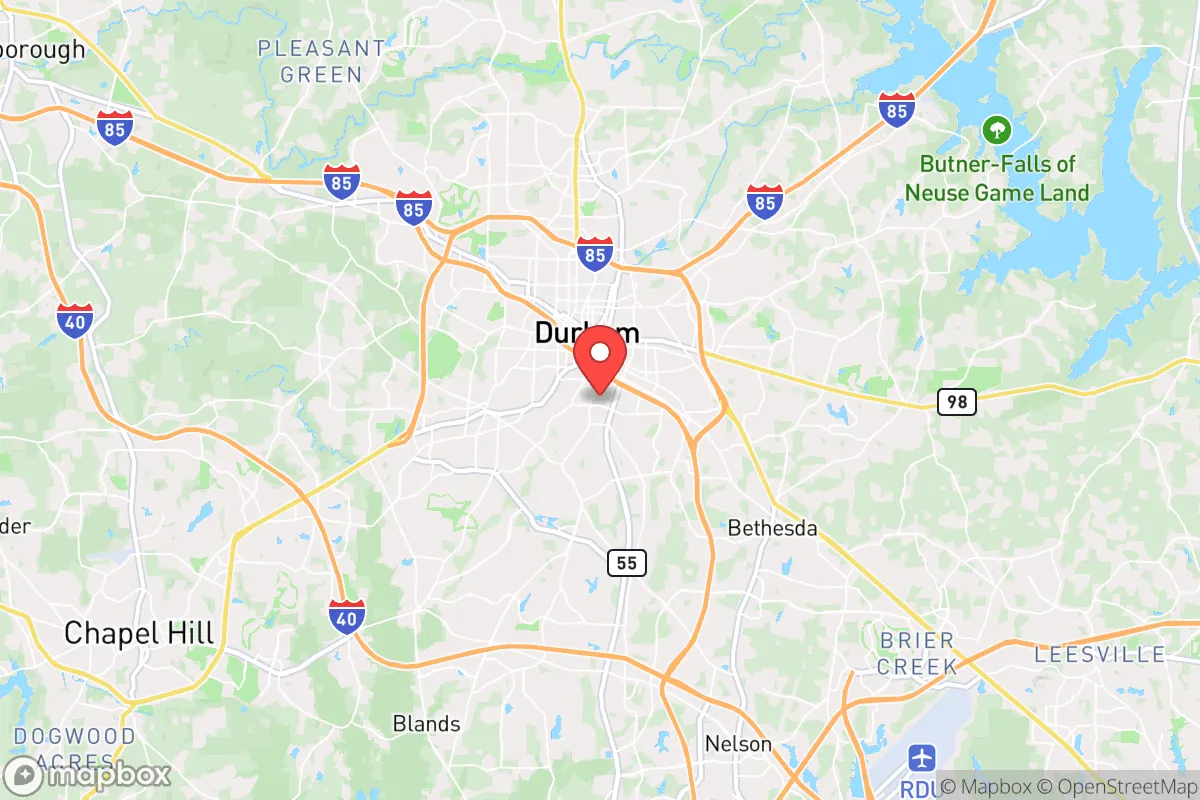
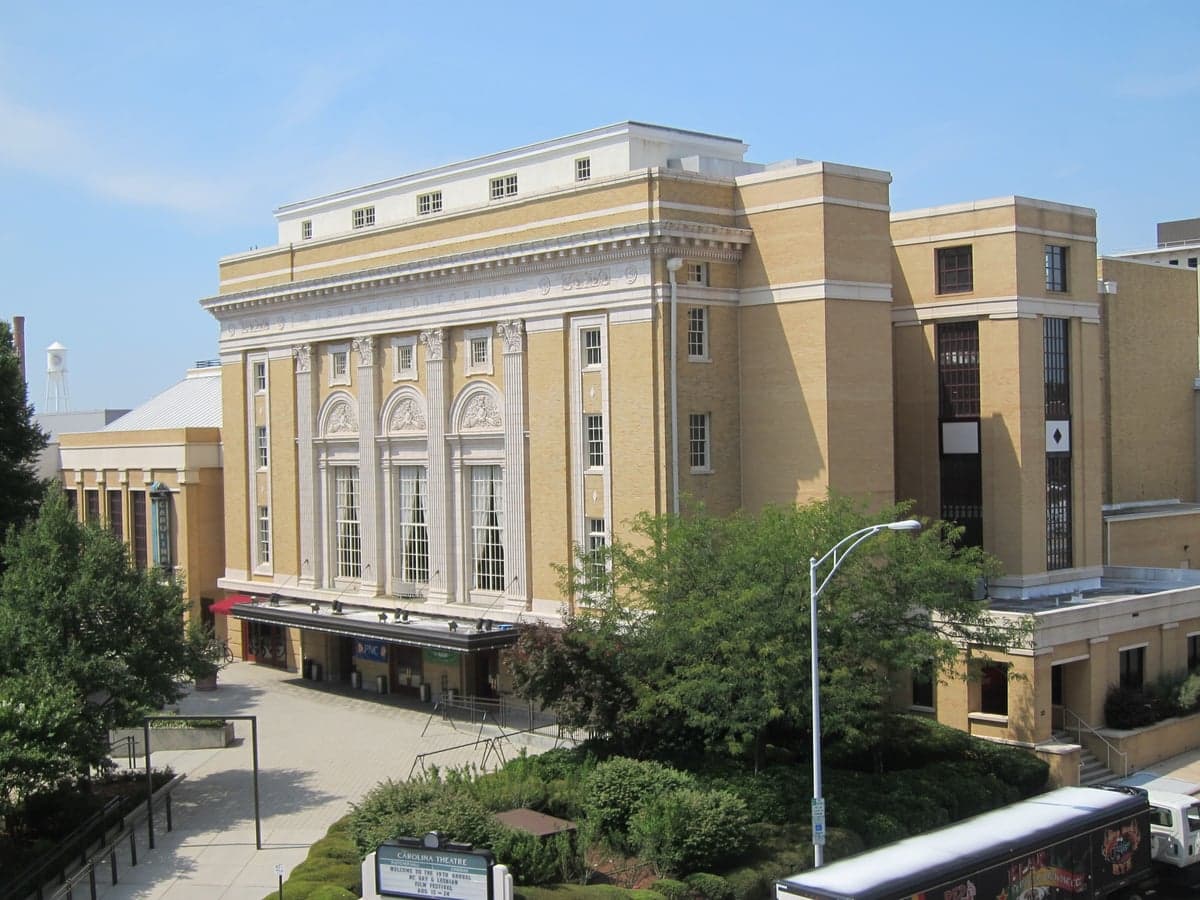
Photo: Wikipedia
Political ClimatePolitical Climate in Durham, NC
District shown is the primary district for this city’s centroid. Cities may span multiple districts.
Local Political AnalysisPolitical Analysis of Durham, NC
Look, I’ve lived in Durham long enough to remember when this town had a more balanced, live-and-let-live vibe. Today, it’s a different animal. The Cook PVI rating of D+23 tells you everything: this is one of the most lopsidedly Democratic counties in the entire state. The political lean here isn’t just blue; it’s deep, dark indigo, and it’s been trending that way for a solid decade. The local government, from the city council to the county commissioners, is almost entirely controlled by progressive Democrats. What was once a moderate Southern city is now a laboratory for left-wing policy experiments, and the trajectory shows no signs of slowing down.
How it compares
If you drive just 15 minutes north to Roxboro or 30 minutes east to Raleigh, you’ll feel the political temperature drop noticeably. Raleigh is still purple-ish, with a Republican-leaning state legislature keeping things in check. But Durham? It’s an island. Compare it to Cary or Apex to the southwest, where you still find neighborhoods that vote Republican and schools that haven’t been fully captured by progressive curriculum overhauls. Even Chapel Hill, which is also very liberal, has a more academic, “let’s debate it” feel. Durham’s politics feel more activist-driven, less deliberative. The contrast is stark: you can live in a conservative-leaning suburb like Bahama (yes, that’s the real name) and drive 20 minutes into a city where the city council is openly pushing defunding police rhetoric and rent control studies.
What this means for residents
For a conservative or even a moderate, living here means constantly watching your back. The local government has a habit of overreach into areas that used to be personal choices. We’ve seen mask mandates linger longer than in surrounding counties, vaccine passport discussions that never fully died, and a city council that’s openly hostile to Second Amendment rights—Durham was one of the first cities in the state to pass a “safe storage” ordinance that feels like a backdoor gun registry. Property taxes have climbed steadily to fund social programs you may not agree with, and the school board has embraced critical race theory-adjacent curricula that many parents find divisive. If you value school choice or parental rights, you’ll be fighting an uphill battle. The political machine here is well-funded and coordinated; local elections are essentially decided in the Democratic primary, which means your vote in the general election is almost meaningless.
On the cultural front, Durham has leaned hard into its “progressive paradise” branding. The city has sanctuary city policies that limit cooperation with federal immigration enforcement, which sounds noble until you see the strain on public services. There’s a strong push for equity-based budgeting, which reallocates resources based on race and income—a policy that many long-time residents see as government picking winners and losers. The downtown area is booming with breweries and tech offices, but the political climate feels increasingly like a monoculture where dissent isn’t welcome. If you’re considering a move here, know that your personal freedoms—from how you raise your kids to what you can say at a city council meeting—are under constant, well-intentioned siege. It’s a beautiful city in many ways, but the political trajectory is something to watch very, very carefully.

State Political ClimatePolitical Climate in North Carolina
State Political AnalysisPolitical Environment in the State
North Carolina has long been considered a quintessential swing state, but over the past decade, it has settled into a reliably right-leaning posture, voting Republican in 9 of the last 11 presidential elections. The dominant coalition is a mix of rural conservatives, suburban fiscal conservatives, and a growing number of culturally conservative transplants from the Northeast and Midwest. Over the last 10-20 years, the state has shifted from a purple battleground to a light-red stronghold, driven by explosive growth in the Charlotte and Raleigh metros that has actually diluted the progressive influence of the old Democratic strongholds. While the state still has competitive statewide races, the overall trajectory is one of steady, if contested, conservative governance.
Urban vs. rural divide
The political map of North Carolina is a textbook study in the urban-rural split. The major metros—Charlotte (Mecklenburg County), Raleigh-Durham (Wake and Durham Counties), and Asheville (Buncombe County)—are deep blue islands in a sea of red. Mecklenburg County alone delivered over 60% of its vote to Joe Biden in 2020, while Wake County was similarly lopsided. But these cities are surrounded by rapidly growing suburban and exurban counties that are trending redder. Union County, just southeast of Charlotte, is one of the most reliably Republican counties in the state, with a 2024 margin of +35 points for Trump. Cabarrus County, between Charlotte and Concord, has flipped from competitive to solid red as families flee the city for lower taxes and better schools. Meanwhile, the rural east—places like Robeson County and Duplin County—remain Democratic on paper but are culturally conservative, often voting for conservative Democrats or splitting tickets. The real story is the Piedmont Triad (Greensboro, Winston-Salem, High Point), which is a true battleground within the state, with Guilford County often deciding statewide races by razor-thin margins. The mountains and coastal plain are overwhelmingly Republican, with Watauga County (Boone) being a rare blue outlier due to Appalachian State University.
Policy environment
North Carolina’s policy environment is broadly conservative, with a few notable exceptions. The state has a flat income tax rate of 4.5%, which is being phased down to 3.99% by 2027, making it increasingly attractive for high-earners fleeing high-tax states like New York and California. There is no state property tax, and sales tax is capped at 7.5% in most counties. The regulatory posture is business-friendly, with a right-to-work law and a relatively low minimum wage ($7.25, tied to the federal floor). On education, the state has a robust school choice program, including Opportunity Scholarships (vouchers) that were expanded in 2023 to cover all income levels, and a growing charter school sector. However, the state’s healthcare landscape is a mixed bag: the Republican legislature has resisted full Medicaid expansion for years, finally passing a limited expansion in 2023 that includes work requirements and premiums for able-bodied adults. Election laws have been a flashpoint: the state requires voter ID (passed in 2018, upheld in 2023), has strict absentee ballot rules, and has drawn congressional maps that have been repeatedly challenged in court but ultimately upheld as legal. The state also has a Republican supermajority in the legislature, which has been able to override Democratic Governor Roy Cooper’s vetoes on key issues like abortion restrictions (12-week ban passed in 2023) and gun rights (permitless carry passed in 2023).
Trajectory & freedom
North Carolina is becoming more free in several key areas, particularly for conservatives. The 2023 permitless carry law (HB 189) allows any law-abiding adult to carry a concealed handgun without a permit, a major expansion of Second Amendment rights. The same year, the legislature passed the Parents’ Bill of Rights (SB 49), which requires schools to notify parents of any changes to a student’s health or well-being, including gender identity or sexual orientation, and prohibits classroom instruction on gender identity and sexuality in K-4. This was a direct response to progressive overreach in school districts like Wake County and Chapel Hill-Carrboro. On the tax front, the phase-down of the income tax and the elimination of the corporate income tax by 2030 represent a clear trend toward fiscal freedom. However, there are concerning signs: the state’s environmental regulations are tightening under federal pressure, and the growth of the Research Triangle has brought a wave of progressive transplants who are pushing for higher density zoning and more government spending in local elections. The 2023 expansion of Medicaid, while limited, is a step toward bigger government that many conservatives view warily. Overall, the state is trending in the right direction on guns, parental rights, and taxes, but the cultural battle is intensifying in the suburbs.
Civil unrest & political movements
North Carolina has seen its share of political flashpoints. The 2020 protests in Charlotte and Raleigh over the death of George Floyd were large but largely peaceful, though there were isolated incidents of property damage and looting. The state has a strong, organized conservative movement, anchored by groups like the John Locke Foundation and the North Carolina Family Policy Council, which have been instrumental in pushing the Parents’ Bill of Rights and school choice. On the left, the Moral Monday movement, led by the NAACP, has been a persistent force since 2013, staging regular protests at the General Assembly over voting rights, Medicaid expansion, and abortion. Immigration politics are relatively muted compared to border states, but there have been flashpoints in Siler City and Monroe, where meatpacking plants have drawn large immigrant populations. The state has no sanctuary cities, and the legislature passed a law in 2015 requiring sheriffs to cooperate with ICE. Election integrity has been a hot topic since 2020, with the state’s absentee ballot process coming under scrutiny. The legislature has tightened rules, including requiring absentee ballots to be received by Election Day (not just postmarked), and has banned private funding of election administration. There is no serious secession or nullification rhetoric, but the state’s rural-urban divide is deep enough that some counties have discussed forming new counties to escape progressive city governance.
Projection
Over the next 5-10 years, North Carolina is likely to remain a light-red state, but the margin for error is shrinking. The influx of out-of-state transplants—roughly 100,000 net new residents per year—is a double-edged sword. Many are conservatives fleeing blue states, but a significant portion are young professionals and tech workers who lean left. The Charlotte and Raleigh metros will continue to grow, but the exurban counties like Johnston (southeast of Raleigh) and Harnett (southwest) are exploding in population and are deeply red. The wildcard is the Piedmont Triad, which is becoming more competitive as manufacturing jobs decline and service-sector jobs grow. If the state’s Republican supermajority holds, expect further tax cuts, school choice expansion, and continued resistance to federal overreach on environmental and healthcare mandates. However, if the Democratic governor’s office flips to a Republican in 2024 (Attorney General Josh Stein is the likely Democratic nominee, while Lt. Gov. Mark Robinson is the GOP frontrunner), the state could accelerate its conservative trajectory. The biggest risk is that the urban counties continue to grow faster than the rural ones, potentially flipping the state back to purple by 2032. For now, the state is a safe bet for conservatives who want a low-tax, high-freedom environment with a strong cultural backbone.
For a new resident, the bottom line is this: North Carolina is a great place to live if you value low taxes, gun rights, and parental control over education. You’ll find a welcoming community in the suburbs and exurbs, but you’ll need to be aware that the cities are increasingly progressive and that the cultural battle is real. If you’re moving from a blue state, you’ll feel a sense of relief at the lack of government overreach, but don’t expect it to stay that way forever—get involved locally to keep it that way. The state is still a beacon of freedom in the Southeast, but it requires active citizenship to maintain.
* Values derived from national, state, county, city and local statistics and may differ in a specific area. Last updated: 2026-05-03T20:25:48.000Z
Narrative content on this page is AI-generated and may contain mistakes. Verify any details that matter before acting on them.
ReloMaps may earn a commission from affiliate links at no extra cost to you.

