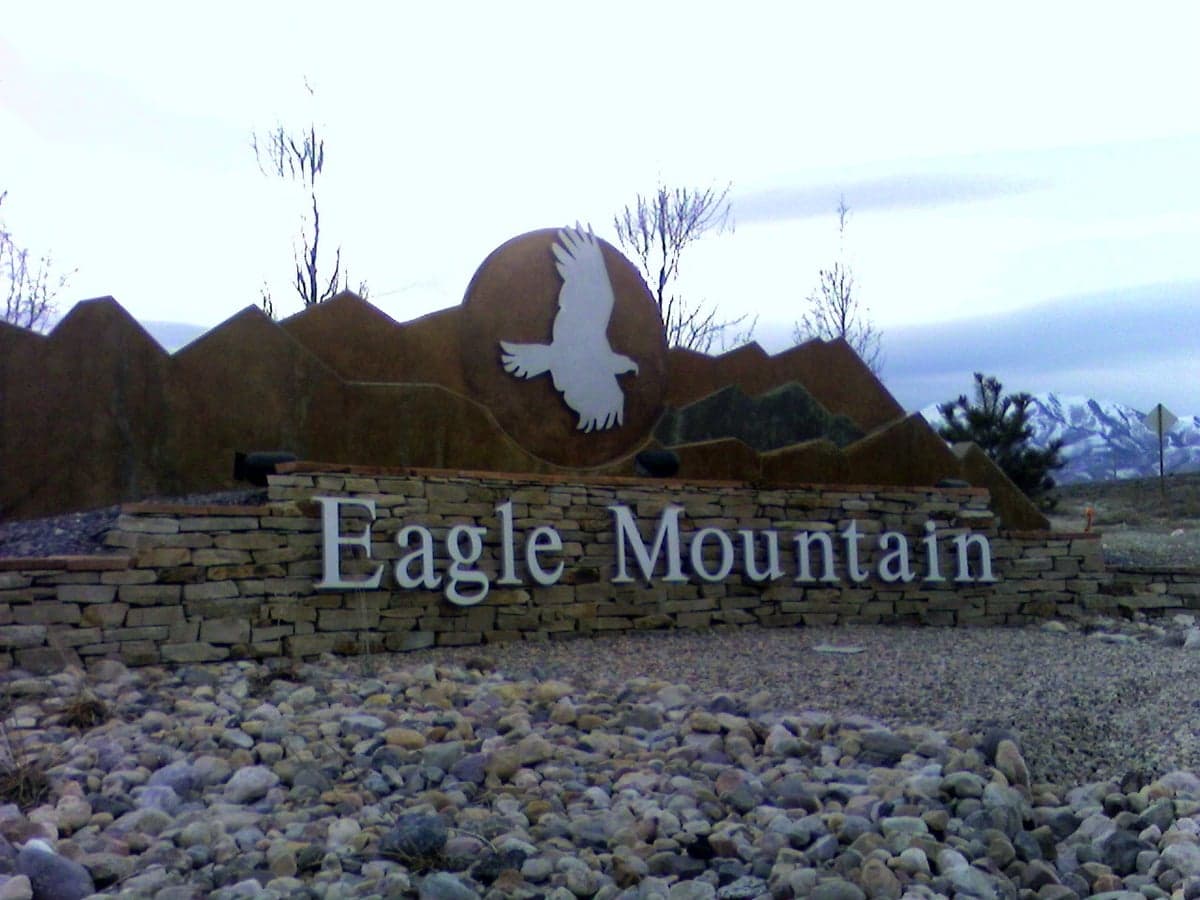
Photo: Wikipedia
Political ClimatePolitical Climate in Eagle Mountain, UT
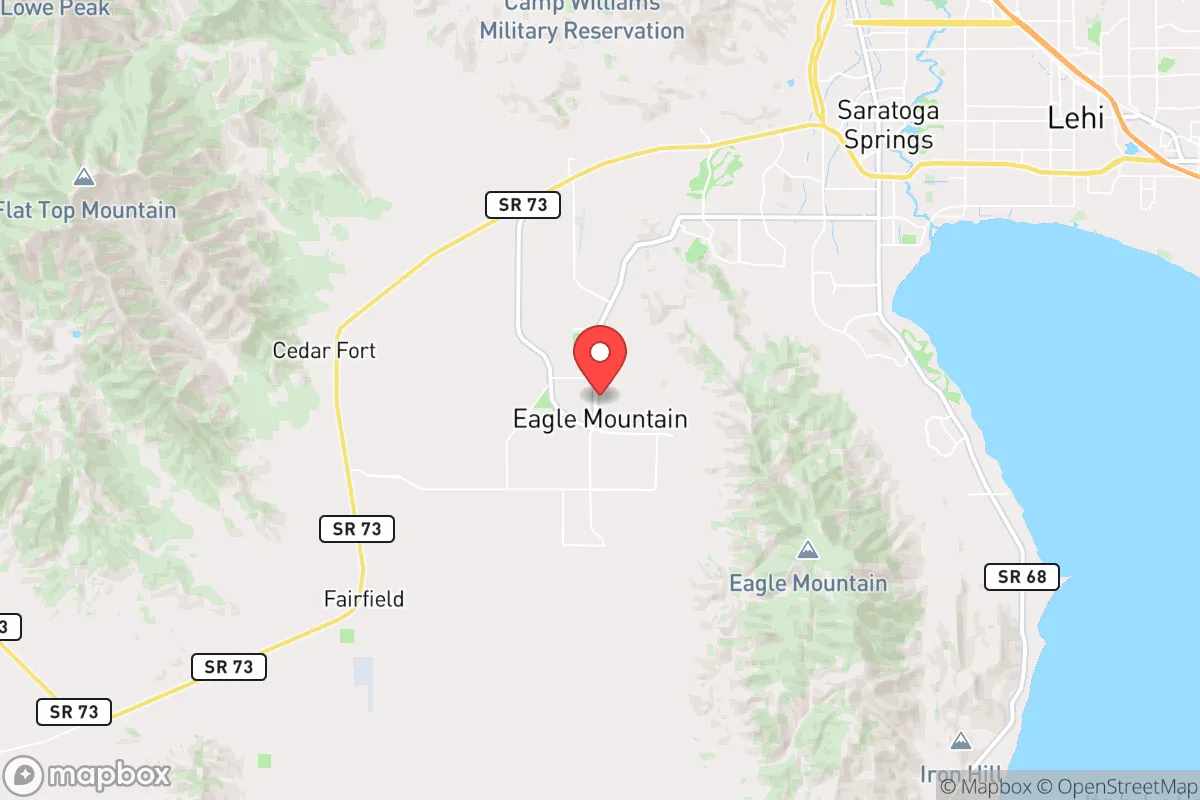
District shown is the primary district for this city’s centroid. Cities may span multiple districts.
Local Political AnalysisPolitical Analysis of Eagle Mountain, UT
Eagle Mountain is about as solidly conservative as it gets in Utah County, with a Cook PVI of R+14 that tells you exactly where things stand. The city has been a magnet for families who want to escape the creeping progressive influence you see in places like Salt Lake City or even parts of northern Utah County like Lehi, where tech transplants have started shifting the local vibe. If you’ve been here since the early 2000s, you remember when it was just a handful of homes and a whole lot of open space—now it’s booming, but the political heart hasn’t budged. The trajectory is clear: Eagle Mountain is doubling down on its conservative roots, and any talk of moving leftward is met with serious skepticism from the folks who’ve built this community from the ground up.
How it compares
When you stack Eagle Mountain against nearby towns, the contrast is pretty stark. Head west to Saratoga Springs, and you’ll find a similar conservative bent, but it’s a bit more moderate—more transplants from California and the coasts have diluted the hardline stance you see here. Drive north to Lehi, and you’ll notice the “Silicon Slopes” crowd has brought a libertarian-leaning, tech-bro vibe that sometimes clashes with traditional values. But Eagle Mountain? It’s closer to rural towns like Fairfield or Cedar Fort, where the Second Amendment is a given, property rights are sacred, and government overreach is the enemy. The R+14 rating isn’t just a number—it means local elections are decided in Republican primaries, and Democrats rarely even bother to field candidates. That’s a far cry from Salt Lake County, where progressive policies on zoning, taxes, and social issues are becoming the norm.
What this means for residents
For the people living here, the political climate translates into a daily life that respects personal freedoms and keeps government out of your business. You won’t see the kind of overreach you get in blue cities—no heavy-handed mask mandates that lasted forever, no zoning laws that tell you what you can do with your own land, and no school boards pushing woke curriculum. The city council and school board are stacked with conservatives who prioritize low taxes, parental rights, and local control. That said, there’s a growing concern among long-time residents that as the population swells—Eagle Mountain is one of the fastest-growing cities in Utah—some of that small-town, hands-off feel could erode. New developments bring new voters, and if the trend in other Utah County towns is any indicator, a shift toward progressive ideology is a real risk. The 2024 election cycle already saw some close races in nearby districts, and that’s a warning sign that complacency could let the wrong people in.
One thing that sets Eagle Mountain apart culturally is its strong LDS influence, which reinforces the conservative values around family, community, and self-reliance. You won’t find the kind of government-run programs or social engineering you see in progressive cities—instead, the church and local nonprofits handle most of the safety net. Policy-wise, the city has resisted efforts to impose strict growth caps or environmental regulations that would limit property rights, and the local sheriff’s office is known for a “don’t tread on me” approach to law enforcement. Looking ahead, the key battle will be keeping that spirit alive as more people move in. If you’re thinking about relocating here, know that you’re getting a place where personal freedom is still the priority—but you’ll need to stay engaged to make sure it stays that way.

State Political ClimatePolitical Climate in Utah
State Political AnalysisPolitical Environment in the State
Utah has long been one of the most reliably conservative states in the nation, with a Republican trifecta controlling the governorship and both legislative chambers for decades. The state’s dominant political coalition is a blend of the Church of Jesus Christ of Latter-day Saints (LDS) cultural influence, a strong free-market ethos, and a deep skepticism of federal overreach. Over the past 10-20 years, the trajectory has been one of steady, if not accelerating, conservatism, though the rapid in-migration to the Wasatch Front—particularly Salt Lake County—has introduced a small but growing progressive countercurrent. In 2024, Donald Trump won Utah by 21 points, a slight dip from 2020’s 20-point margin, but the state’s legislative and congressional delegation remains among the most conservative in the country.
Urban vs. rural divide
The political map of Utah is starkly divided between the urban Wasatch Front and the vast, deeply red rural expanse. Salt Lake City and its immediate suburbs—like Park City and Summit County—are the state’s liberal strongholds, with Salt Lake County voting for Joe Biden in 2020 and Kamala Harris in 2024 by narrow margins. This is driven by a growing tech and outdoor recreation economy, a younger demographic, and a significant non-LDS population. However, the rest of the state is overwhelmingly conservative. Utah County, home to Provo and Brigham Young University, is a conservative powerhouse, voting +40 points for Trump in 2024. The rural counties—San Juan, Carbon, and Uintah—routinely deliver 70-80% Republican margins. The divide is not just ideological but cultural: urban areas are increasingly secular and diverse, while rural Utah remains deeply tied to LDS values and a frontier independence mindset. The St. George area in Washington County has seen explosive growth from conservative retirees and families fleeing California, further solidifying the southern part of the state as a red bastion.
Policy environment
Utah’s policy environment is a model of limited government and fiscal conservatism. The state has a flat income tax rate of 4.65%, no state-level property tax on vehicles, and a sales tax that is among the lowest in the West. Regulatory burden is minimal, with no state-level minimum wage above the federal $7.25, and a right-to-work law that keeps union influence weak. Education policy is a mixed bag: Utah spends less per pupil than almost any other state, but it has a robust school choice system, including a new universal school voucher program (HB 215, passed in 2023) that allows families to use state funds for private or homeschool expenses. Healthcare is largely market-driven, with no state-run insurance exchange and a Medicaid expansion that was narrowly passed only after a citizen initiative in 2018. Election laws are secure: Utah requires voter ID, has no-excuse mail-in voting (which has been in place for years with minimal fraud), and conducts regular audits. The state has also passed strong parental rights legislation, including HB 261 (2024), which prohibits school districts from hiding a child’s gender identity or medical decisions from parents.
Trajectory & freedom
Utah is trending more free in several key areas, but there are warning signs for those who value personal liberty. On the positive side, the state has expanded gun rights significantly: in 2021, Utah became a permitless carry state (HB 60), allowing any law-abiding adult to carry a concealed firearm without a license. Property rights are strong, with no state-level rent control and a robust “right to farm” law protecting agricultural land from nuisance lawsuits. Medical autonomy has been bolstered by a 2023 law (HB 132) that prohibits employers from mandating COVID-19 vaccines as a condition of employment. However, the state has also seen a concerning expansion of government overreach in the name of public health and safety. The 2020 lockdowns were among the most aggressive in the West, with Governor Gary Herbert imposing a stay-at-home order that shuttered many small businesses. More recently, the state has cracked down on unlicensed “medical freedom” practitioners and has considered legislation to limit the sale of raw milk. The biggest red flag for liberty-minded residents is the growing influence of the “Utah Compact” style of governance, which seeks to accommodate federal mandates rather than resist them—a stark contrast to states like Texas or Florida that actively push back against Washington.
Civil unrest & political movements
Utah has seen relatively little civil unrest compared to other states, but the political movements that do exist are organized and vocal. On the right, the Utah Patriot movement and local chapters of the Constitutional Sheriffs and Peace Officers Association are active in rural counties, pushing for nullification of federal gun laws and land-use restrictions. The “Sovereign Utah” movement, while fringe, has gained some traction in Duchesne and Uintah counties, where residents resent federal control over vast tracts of public land. On the left, the Utah Democratic Party has been energized by the influx of out-of-state transplants, particularly in Salt Lake City and Park City, where protests over racial justice and climate change have been common. Immigration politics are relatively calm: Utah has no sanctuary cities, and the state passed a 2011 law (HB 497) requiring police to check immigration status of those arrested for felonies. However, the “Utah Compact”—a 2010 statement by LDS leaders and business groups—advocated for a compassionate approach to immigration, which has created a moderate tone on the issue. Election integrity has not been a major flashpoint, though some rural counties have called for hand-counting ballots, a move that was rejected by the state legislature in 2024.
Projection
Over the next 5-10 years, Utah will likely become more politically divided as the Wasatch Front continues to attract progressive-leaning professionals from California and the Pacific Northwest. The state’s overall conservative majority will hold, but the margin may shrink to 10-15 points in presidential elections. The rural-urban divide will deepen, with Salt Lake City and Ogden becoming increasingly blue, while Provo, St. George, and the rural counties remain deep red. The biggest policy shift will likely be in education, where the voucher program will expand and potentially lead to a full-blown school choice revolution. On freedom, expect continued expansion of gun rights and parental rights, but also more government intervention in health mandates and land use, particularly as the state grapples with water scarcity and growth management. The LDS Church’s influence will wane slightly as the non-LDS population grows, but its cultural and political weight will remain significant. A new resident moving in now should expect a state that is still very conservative, but with a growing progressive minority that will make local elections in Salt Lake County increasingly competitive.
Bottom line for a new resident: If you’re moving to Utah for the freedom and conservative values, you’ll find plenty to love—low taxes, strong gun rights, and a culture of self-reliance. But don’t expect a libertarian paradise. The state government is still willing to impose its will on personal choices, especially in health and education, and the growing progressive influence in the urban core means you’ll need to stay engaged in local politics to protect the freedoms you value. Choose your county wisely: Utah County or Washington County for a reliably red environment, or Salt Lake County if you’re okay with a more mixed political landscape.
* Values derived from national, state, county, city and local statistics and may differ in a specific area. Last updated: 2026-05-03T20:37:11.000Z
Narrative content on this page is AI-generated and may contain mistakes. Verify any details that matter before acting on them.
ReloMaps may earn a commission from affiliate links at no extra cost to you.

