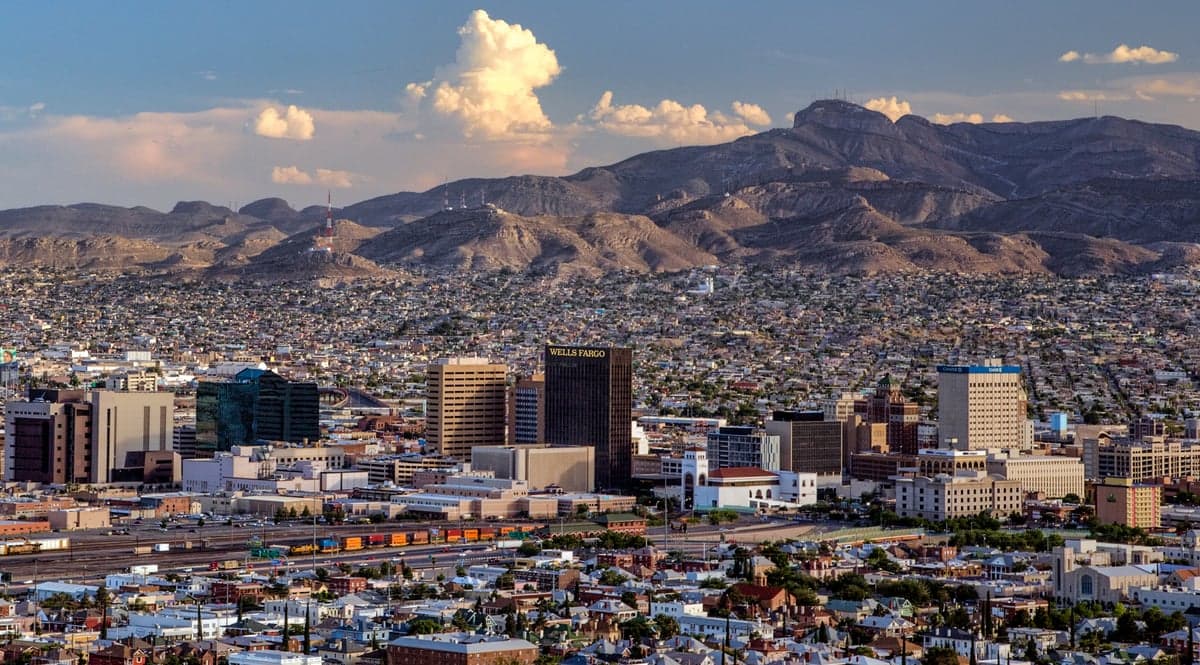
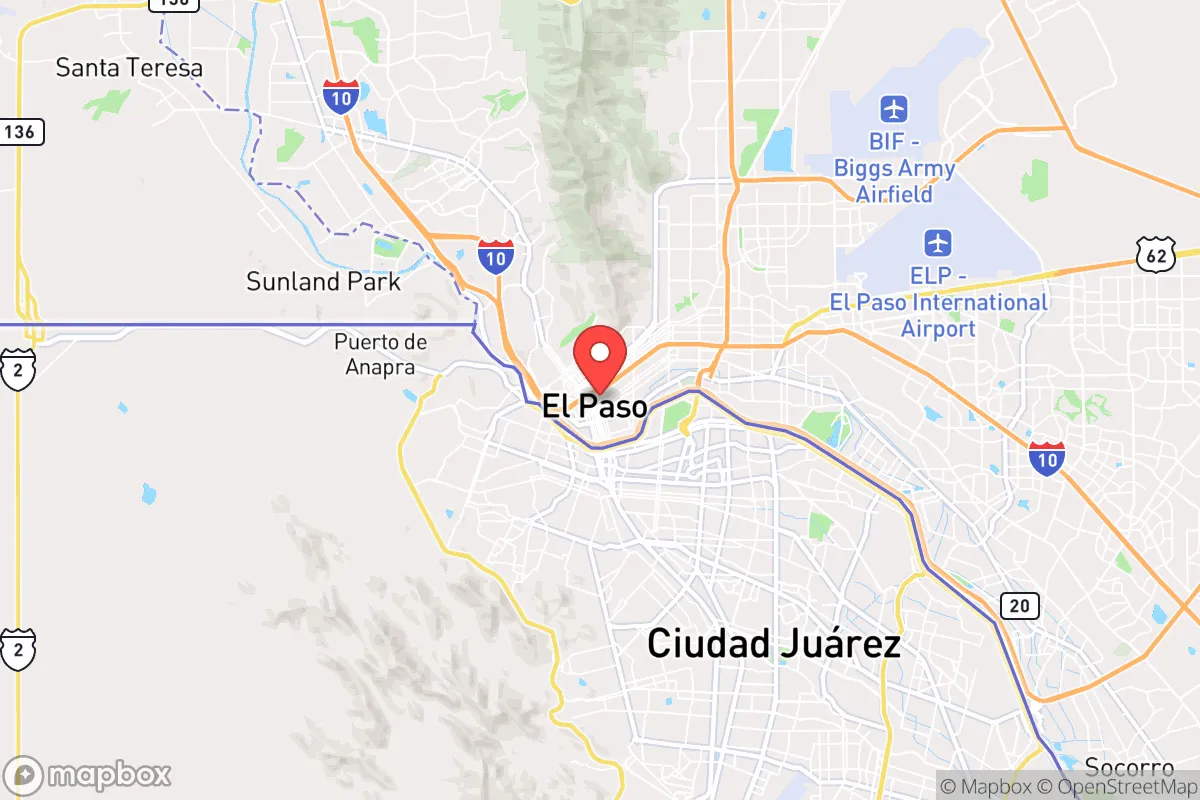
Photo: Wikipedia
Political ClimatePolitical Climate in El Paso, TX
District shown is the primary district for this city’s centroid. Cities may span multiple districts.
Local Political AnalysisPolitical Analysis of El Paso, TX
El Paso has been a Democratic stronghold for generations, and that’s not changing anytime soon. The Cook PVI rating of D+11 tells you the basics: this city votes blue by a solid margin, and it has for decades. But if you’ve lived here as long as I have, you know the political climate isn’t just about party registration—it’s about a slow, steady shift toward progressive policies that feel more like Sacramento or Chicago than the Texas I grew up in. The old-school conservative Democrats who used to run things are fading out, replaced by a younger, more activist crowd that’s pushing for things like defunding the police, sanctuary city status, and heavy-handed public health mandates. It’s a different El Paso than the one I remember.
How it compares
Drive 45 minutes east to Fort Bliss or the surrounding unincorporated areas of Hudspeth County, and you’ll find a completely different political world. Those communities lean heavily Republican, with many military families and ranchers who view El Paso’s progressive tilt as a cautionary tale. Even Las Cruces, New Mexico, just 40 miles up I-10, is more moderate on fiscal issues, though it trends blue socially. The contrast is stark: El Paso County voted for Biden by 35 points in 2020, while neighboring Hudspeth County went for Trump by 18 points. That’s not just a difference in party preference—it’s a difference in worldview. In Hudspeth, people still believe in limited government and personal responsibility. In El Paso, the city council has been moving toward government-run programs for everything from housing to small business loans, which I see as a worrying expansion of bureaucratic control over daily life.
What this means for residents
For the average El Pasoan, the political climate means you’re going to see more government involvement in your personal decisions. The city has already passed ordinances that restrict how landlords can set rental prices and what kind of firearms you can carry in public parks. There’s talk of mandatory paid sick leave for all workers, which sounds nice on paper but forces small businesses to either eat the cost or close their doors. Property taxes are climbing to fund new social programs, and the school board is pushing curriculum changes that emphasize critical race theory and gender ideology over basic math and reading. If you value your Second Amendment rights or want to keep more of your paycheck, you’ll feel the squeeze here. The long-term trajectory is concerning: as more progressive transplants move in from California and the Northeast, the pressure to adopt their policies—like rent control and green energy mandates—will only grow. I’ve seen friends leave for Alamogordo or Deming just to get away from the red tape.
Culturally, El Paso still has a strong sense of community and family, which is the one thing that keeps it from feeling like a full-blown progressive experiment. But the policy distinctions are real: the city was one of the first in Texas to declare itself a “Welcoming City” for undocumented immigrants, which puts it at odds with state law and creates friction with local law enforcement. The county health department also imposed some of the strictest COVID-19 restrictions in the state, shutting down churches and small businesses while big-box stores stayed open. That kind of overreach is a red flag for anyone who believes in personal liberty. If the trend continues, El Paso will look less like a unique border town and more like a cookie-cutter progressive city, with all the government overreach that entails.

State Political ClimatePolitical Climate in Texas
State Political AnalysisPolitical Environment in the State
Texas has been a reliably Republican state for decades, but the political landscape is far from monolithic. The state’s overall partisan lean is solidly red at the statewide level, with Republicans holding every statewide office and commanding majorities in both legislative chambers. However, the last 10-20 years have seen a slow but steady shift, driven by explosive population growth in the major metros. While the GOP still wins by comfortable margins in most elections, the margins have tightened in key suburban areas, and the state’s political future is increasingly shaped by the tug-of-war between its sprawling, conservative rural regions and its fast-growing, diversifying cities.
Urban vs. rural divide
The political map of Texas is a study in contrasts. The state’s three largest metros—Houston, Dallas-Fort Worth, and San Antonio—are now competitive or lean Democratic in their urban cores, while the surrounding suburbs remain the primary battlegrounds. Austin is the state’s most progressive city, a deep-blue island in a sea of red, where local politics often clash with state law on issues like homelessness and policing. El Paso and the Rio Grande Valley have historically been Democratic strongholds, though the Valley has shown signs of shifting rightward in recent cycles, with counties like Starr and Zapata flipping to Trump in 2020. Meanwhile, rural and exurban counties—places like Lubbock, Amarillo, and the vast stretch of West Texas—vote overwhelmingly Republican, often by margins of 70-80%. The key dynamic is the suburban ring: counties like Collin (north of Dallas), Fort Bend (southwest of Houston), and Williamson (north of Austin) have seen their GOP margins shrink as educated, moderate professionals move in. This is where the real political action is, and where both parties are pouring resources.
Policy environment
Texas’s policy environment is defined by a low-tax, low-regulation posture that appeals to conservatives. There is no state income tax, and property taxes are high but capped by law. The regulatory climate is business-friendly, with minimal red tape for everything from construction to occupational licensing. On education, the state has pushed school choice and charter expansion, though a universal voucher bill failed in 2023 due to rural Republican opposition. Healthcare remains a flashpoint: Texas has the highest uninsured rate in the nation, having refused Medicaid expansion under the ACA. Election laws have been tightened in recent years, with the 2021 SB 1 adding voter ID requirements and limiting drive-through and 24-hour voting. The state also has a strong preemption law that prevents cities from enacting their own gun, labor, or environmental ordinances—a direct check on progressive city councils in Austin, Houston, and Dallas. For a conservative, this is a feature, not a bug: state law overrides local overreach.
Trajectory & freedom
On the freedom front, Texas has moved in two directions at once. On the positive side for conservatives, the state has expanded gun rights significantly: permitless carry (HB 1927) became law in 2021, allowing most adults to carry a handgun without a license. Parental rights in education were strengthened by HB 900 (restricting sexually explicit content in school libraries) and SB 14 (banning gender-transition procedures for minors). The state also passed a near-total abortion ban (SB 8) in 2021, enforced through private civil lawsuits. On the concerning side, property taxes remain a burden despite repeated reform efforts, and the state’s reliance on local property taxes means homeowners in fast-growing suburbs face steep increases. Medical freedom took a hit during the pandemic, with some local mask and vaccine mandates that were later preempted by the governor. The state’s power grid failure in 2021 also raised questions about regulatory oversight. Overall, Texas is still a leader in personal liberty on most fronts, but the trend is toward more state-level control to counter local progressive activism.
Civil unrest & political movements
Texas has seen its share of political flashpoints. The 2020 Black Lives Matter protests in Austin and Dallas were large and sometimes violent, leading to property damage and a lasting rift between city leaders and state officials. The state legislature responded with HB 20 (2021), which increased penalties for rioting and protected police from defunding efforts. Immigration politics are a constant: the governor’s Operation Lone Star has bused migrants to northern cities and deployed state troopers to the border, drawing both praise and lawsuits. There is a vocal secessionist movement—the Texas Nationalist Movement—but it remains fringe. Election integrity remains a hot-button issue, with the 2020 election sparking calls for audits in counties like Harris (Houston) and Tarrant (Fort Worth). A new resident will notice the political divide most in the cities: Austin’s homeless encampments and progressive city council vs. the state’s conservative preemption laws. It’s a visible tension that plays out in daily life.
Projection
Over the next 5-10 years, Texas is likely to become more politically competitive, but not necessarily more liberal. The key demographic trend is the continued influx of domestic migrants from California and the Northeast—many of whom are moderate or conservative-leaning but bring different cultural expectations. The suburban counties that are currently trending purple will likely become the decisive battlegrounds. The state’s Hispanic population, long assumed to be a Democratic base, is showing signs of shifting right, especially in the Rio Grande Valley and among younger voters. However, the growing urban cores of Houston, Dallas, and Austin will continue to push left on social issues. The most likely outcome is a state that remains Republican at the statewide level but with narrower margins, while local control battles intensify. A new resident moving in now should expect more political friction, not less, but the fundamental structure—low taxes, limited government, and strong property rights—is unlikely to change dramatically.
For a conservative individual or family considering a move, Texas still offers a strong alignment with traditional values: low taxes, gun rights, school choice, and a state government that pushes back against progressive city policies. The trade-off is that you’ll be living in a state where the political battle lines are drawn in your backyard—especially if you choose a suburb near a major city. The bottom line: Texas is still a red state, but it’s a red state that’s fighting to stay that way. If you’re looking for a place where your vote matters and where the culture wars are real and visible, you’ll find it here.
* Values derived from national, state, county, city and local statistics and may differ in a specific area. Last updated: 2026-04-14T07:27:33.000Z
Narrative content on this page is AI-generated and may contain mistakes. Verify any details that matter before acting on them.
ReloMaps may earn a commission from affiliate links at no extra cost to you.

