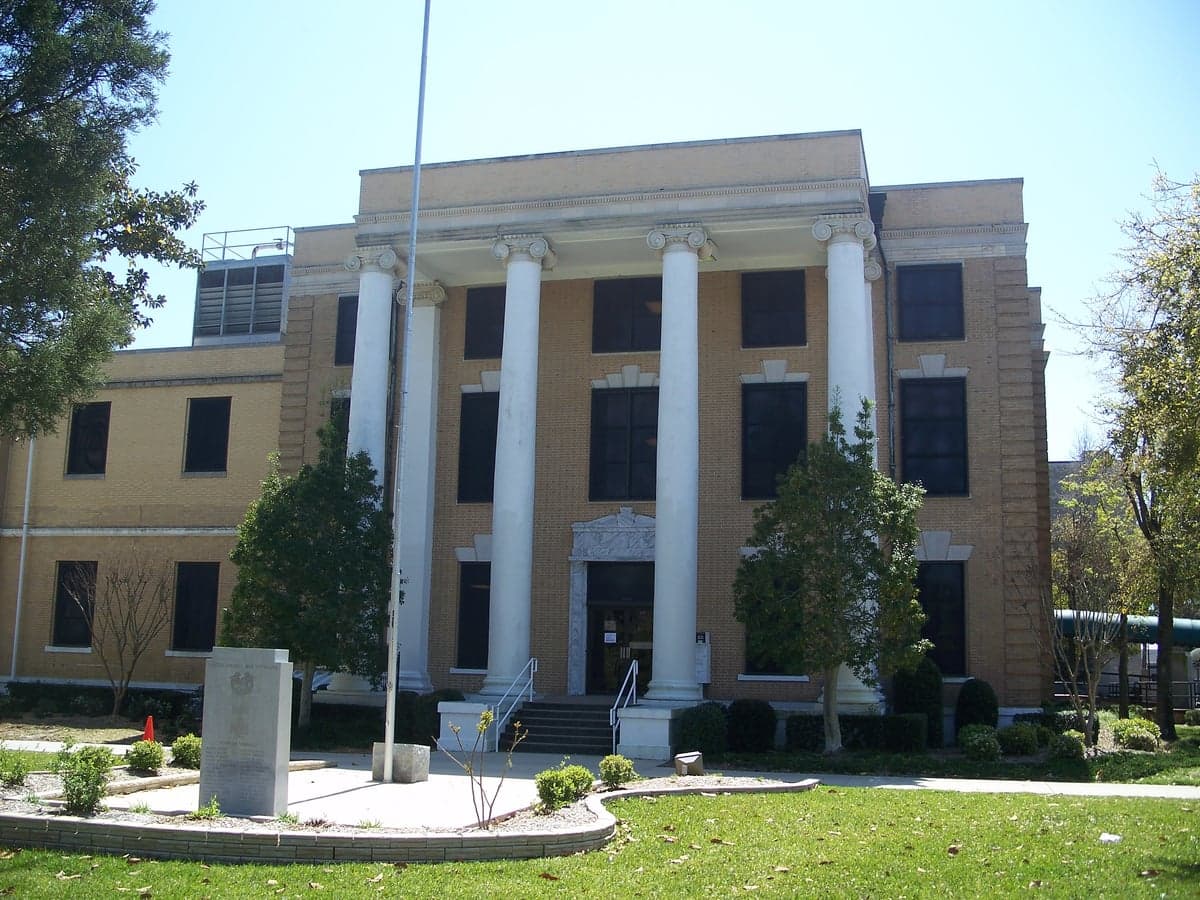
Photo: Wikipedia
Quality of Life in Bay County
A livable area that tracks near national norms for affordability, walkability, and neighborhood health.
What does Quality of Life tell us?
Quality of Life measures an area by evaluating factors like cost of living, nearby amenities, country club access, airport proximity, socioeconomic signals and neighborhood character. For large states, this is a general average — quality of life can vary dramatically between metro areas, suburbs, and rural communities within the same state.
What does this tell us?
Quality of Life measures an area by evaluating factors like cost of living, nearby amenities, country club access, airport proximity, socioeconomic signals and neighborhood character. For large states, this is a general average — quality of life can vary dramatically between metro areas, suburbs, and rural communities within the same state.
Cost of Living
13% above national average
89%
The Real Cost of Living in Bay County for 2026
| Tier | Individual | Family (4) |
|---|---|---|
| Survival | $23k | $43k |
| Comfortable | $54k | $79k |
| Luxury | $123k+ | $190k+ |
| Elite (Top 5%) | $145k+ | $224k+ |
Quality-of-Life Analysis
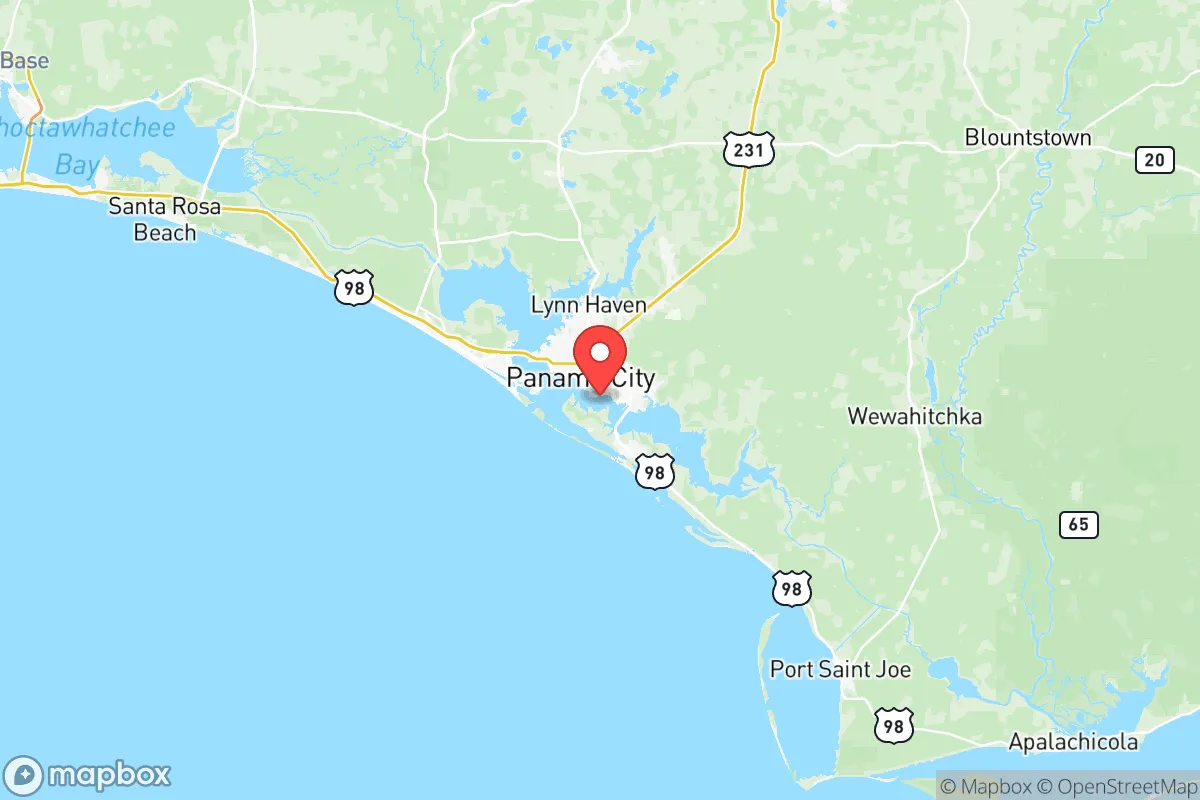
Bay County, Florida, spans a wide quality-of-life spectrum—from the urban core of Panama City and the tourist-heavy Panama City Beach to quiet inland communities and scattered rural pockets. This variety draws a mix of retirees, military families (from nearby Tyndall Air Force Base), outdoor enthusiasts, and second-home buyers, each gravitating to a different part of the county. With a cost-of-living index of 113, a median home value of $276,900, and a manageable average commute of under 25 minutes, Bay County offers distinct trade-offs between convenience, pace, and natural surroundings.
Largest towns & population centers
Panama City is the county seat and largest city, home to roughly 36,000 residents. Daily life here centers around a mix of historic neighborhoods (like St. Andrews), a downtown gaining new mixed-use development, and established retail corridors along 23rd Street and Highway 77. The city provides most of the county’s government, healthcare, and retail jobs. Panama City Beach, a separate municipality just across the bridge, is a high-density tourism hub with seasonal resident swells, short-term rental saturation, and a nightlife strip along Front Beach Road. Full-time residents here contend with heavy spring-break and summer traffic but enjoy immediate beach access. Lynn Haven and Callaway function as bedroom communities with suburban subdivisions, local parks, and smaller commercial nodes; Lynn Haven, in particular, has seen steady single-family home growth since the 1990s.
Smaller towns & rural pockets
East of Panama City, Mexico Beach is a quiet coastal town of fewer than 1,200 full-time residents—distinct from Panama City Beach by its slower pace, strict height limits on new construction, and a tight-knit community that rebuilt after Hurricane Michael. Inland, Youngstown and Southport are unincorporated crossroads with a rural feel: mobile homes on large lots, volunteer fire departments, and limited retail. Parker is a small town of about 4,000 wedged between the coast and the highway, offering an older housing stock and a middle-class, blue-collar character. Springfield, a similarly sized town just north of Panama City, has a suburban-rural mix with older single-family homes and some newer subdivisions. Further east, the area around Fountain remains heavily wooded with farms and timberland, home to fewer than 200 residents.
Cost & lifestyle range
The county’s overall cost-of-living index of 113 reflects a premium over the national average, but that figure masks wide internal variation. Panama City Beach sits at the high end: oceanfront condos and single-family homes within a mile of the Gulf regularly exceed $400,000, and seasonal rental demand pushes rents above the county median of $1,424. At the opposite extreme, rural areas such as northern Bay County near Fountain and Youngstown offer homes under $200,000 and property taxes frequently below $1,500 annually. The median home value of $276,900 is attainable in middle-ground communities like Lynn Haven and Callaway, where a typical 3-bedroom house runs $260,000–$290,000. The county’s average commute of 24.6 minutes is realistic for most residents; those living in outer rural pockets may drive 35–40 minutes to Panama City, while Panama City Beach residents can reach downtown in 15 minutes outside peak tourist season. Amenities concentrate in Panama City and along the beach corridor: big-box retail, hospitals, and dining. Smaller towns offer basic groceries and pharmacies but often lack urgent-care clinics and sit-down restaurants.
Bay County suits people who want a range of housing costs within a single median commute and who value proximity to the Gulf Coast without paying a St. Johns County premium. Families drawn to newer subdivisions often choose Lynn Haven or Callaway. Retirees seeking quiet beach living gravitate to Mexico Beach. Outdoor-oriented workers—fishermen, construction trades, military personnel—find affordable land in the rural north. The trade-off is clear: convenience and amenities cluster in the urbanized southwest, while space and lower taxes reward a longer drive.

Crime in Bay County
Generally safer than 69% of comparable U.S. locations.
Violent CrimeViolent Crime Analysis
Property CrimeProperty Crime Analysis
Crime Analysis
Bay County, Florida, reports a violent crime rate of 206.6 incidents per 100,000 residents and a property crime rate of 894.7 per 100,000 — figures that sit meaningfully below both the state and national averages. The county benefits from a conservative justice environment: the State Attorney for the 14th Judicial Circuit, which covers Bay County, pursues straight-forward sentencing policies, and local law enforcement agencies in Panama City, Panama City Beach, and smaller municipalities maintain proactive patrol strategies. Residents generally perceive their communities as safe, though risks concentrate in specific tourist zones and lower-income neighborhoods.
Crime in context
To put Bay County’s numbers in perspective: the 2023 national violent crime rate was roughly 380 per 100,000, while Florida’s statewide rate hovered near 390 per 100,000. Bay County’s 206.6 represents nearly half the national figure. Property crime statewide runs approximately 1,600 per 100,000; Bay County’s 894.7 is just over half that benchmark. These favorable comparisons are not accidental. Unlike larger Florida metros such as Miami-Dade or Orange County — where progressive prosecutors have adopted diversion-heavy policies and reduced bail requirements — the 14th Judicial Circuit takes a law-and-order approach that prioritizes victim rights and public safety. Critics of lenient urban criminal justice reforms point to rising recidivism in cities like Portland and Seattle as evidence that progressive ideology, while sympathetic to offenders, directly leads to more criminals on the street. In Bay County, by contrast, the absence of such reforms correlates with crime rates that remain well below the state norm.
What residents experience
Day-to-day safety in Bay County is shaped by location and season. Panama City Beach, which draws millions of tourists annually, sees elevated property crime — particularly larcenies from vehicles and vacation rentals — especially during spring break and summer months. Law enforcement deploys extra units to the beach corridor during peak tourist weeks. In the city of Panama City proper, older neighborhoods east of downtown have pockets of violent crime linked to drug trafficking, but most residential areas around Arnold High School and the St. Andrews district are quiet. Lynn Haven, just north of Panama City, consistently records violent crime rates below the county average; its police department emphasizes community policing and neighborhood watch programs. Springfield and Callaway, lower-income suburbs, report modestly higher property crime but still far below metro Miami or Orlando levels. Residents in all areas benefit from the Bay County Sheriff’s Office real-time crime center, which integrates license-plate readers, ShotSpotter alerts, and camera networks to deter and respond to incidents.
Neighborhood-level variation is significant. The most secure areas include the newer subdivisions along County 390 in Lynn Haven and the Northshore communities around Deer Point Lake. The highest property crime concentrations occur within a one-mile radius of the Panama City Beach tourist strip (Front Beach Road and Thomas Drive). Violent incidents are rare in Panama City Beach but cluster near a handful of late-night bar districts. For relocating families, zip codes 32405 (Lynn Haven) and 32408 (Panama City Beach east of the Hathaway Bridge) offer the best safety profiles, while 32401 (downtown Panama City) demands greater caution, particularly after dark.
* Values derived from national, state, county, city and local statistics and may differ in a specific area. Last updated: 2026-06-05T15:20:39.000Z
Narrative content on this page is AI-generated and may contain mistakes. Verify any details that matter before acting on them.
ReloMaps may earn a commission from affiliate links at no extra cost to you.

