Photo: Wikipedia
Personal Sovereignty in Miami-Dade County
Viable for self-reliance. Generally workable, though some barriers may limit total independence.
What does Personal Sovereignty tell us?
Personal Sovereignty measures your capacity for self-reliance and independence with minimal government friction. Higher scores mean fewer barriers between you and the way you want to live... but it assumes you have the space you need and good neighbors.
What does this tell us?
Personal Sovereignty measures your capacity for self-reliance and independence with minimal government friction. Higher scores mean fewer barriers between you and the way you want to live... but it assumes you have the space you need and good neighbors.
State Policy
Energy independence: Importer (10% of energy produced in-state)
Personal Liberty
Homesteading

Personal Liberty Analysis
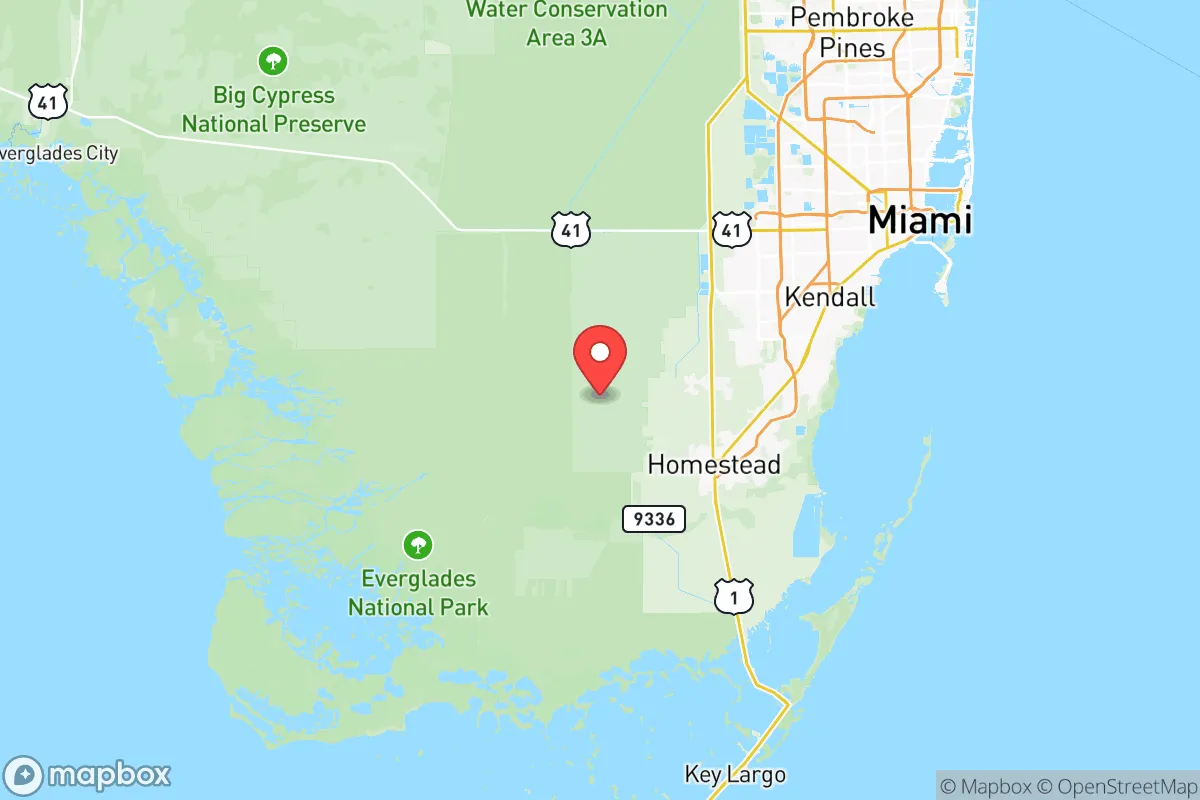
Miami-Dade County presents a complex personal sovereignty environment where Florida’s strong state-level preemption laws on firearms and taxes clash with a dense, heavily regulated urban core. While the state guarantees a low income tax burden and robust self-defense rights, the county itself imposes significant local ordinances, zoning restrictions, and homeowner association (HOA) authority that can sharply limit individual autonomy. For a conservative-leaning reader prioritizing personal freedom, the key distinction is between the county’s urbanized eastern corridor—Miami, Miami Beach, Coral Gables—and the more rural, less regulated western and southern fringes like Homestead, Redland, and the area around the Everglades.
Tax burden and regulatory posture: What the state gives, the county often takes
Florida’s lack of a state income tax is a major draw, but Miami-Dade County imposes a local sales tax rate of 7% (state 6% plus 1% county surtax), which is among the highest in the state. Property taxes are also above the state average, with a countywide millage rate of roughly 5.5 to 6.0 per $1,000 of assessed value, plus additional levies for schools, fire, and library districts. The regulatory posture is heavy: Miami-Dade has its own building code (the Florida Building Code with local amendments), strict flood zone regulations, and a countywide noise ordinance that can restrict everything from construction hours to backyard generators. In contrast, the unincorporated areas west of Krome Avenue—like the Redland agricultural district—have looser zoning for farming and livestock, but still fall under county health and environmental rules. For a homesteader or off-grid enthusiast, the county’s permitting process for solar panels, rainwater collection, and septic systems is notoriously slow and expensive, often requiring multiple inspections and environmental impact studies.
Self-defense and gun law specifics: State preemption vs. local reality
Florida is a “shall-issue” state for concealed carry permits, and Miami-Dade County is subject to state preemption laws that prohibit local governments from enacting their own gun ordinances. This means the county cannot ban open carry (though open carry is generally illegal in Florida except for hunting and fishing) or restrict magazine capacity beyond state law. However, the practical reality differs: the Miami-Dade Police Department and local municipalities like Miami Beach and Coral Gables have been known to enforce aggressive “stop and frisk” policies in high-crime areas, and the county’s “Stand Your Ground” law has been applied inconsistently in court, with some prosecutors (notably in the State Attorney’s Office for the 11th Judicial Circuit) taking a more restrictive view of self-defense claims than in more rural counties like Collier or Hendry. Gun ranges are concentrated in the western suburbs—places like the Trail Glades Range near the Everglades—while urban areas have few public shooting facilities. For a gun owner, the legal framework is solid, but the cultural and enforcement environment is less permissive than in Florida’s Panhandle or interior counties.
Self-reliance and homesteading viability: Lot sizes, zoning, and off-grid feasibility
True homesteading in Miami-Dade is difficult but not impossible. The county’s minimum lot size in agricultural zones (AU) is 5 acres, but most residential zoning (RU-1, RU-2) allows only single-family homes on lots as small as 5,000 to 7,500 square feet. The Redland area (south of Homestead, west of US-1) is the county’s agricultural heart, where zoning permits livestock, crop farming, and even small-scale aquaculture. However, off-grid living faces major hurdles: the county requires connection to municipal water and sewer in most subdivisions, and solar panel installations must comply with the Florida Building Code and local utility interconnection rules. Rainwater collection is legal but limited to 500 gallons per property without a permit, and composting toilets are generally prohibited outside of agricultural exemptions. The area around Florida City and the Everglades National Park buffer zone has the most lax enforcement, but also lacks infrastructure and is prone to flooding. For a family seeking self-reliance, the western unincorporated areas offer the best chance, but the regulatory overhead is far higher than in rural counties like Okeechobee or Glades.
Personal liberties: Parental rights, medical autonomy, speech, and property
Florida’s “Parental Rights in Education” law (HB 1557) applies statewide, giving parents in Miami-Dade the legal right to review school curricula and opt their children out of certain instruction. The county’s public school system (Miami-Dade County Public Schools) is the fourth-largest in the U.S., and while the district has a reputation for progressive policies, parental involvement groups have successfully pushed back on issues like library book content and gender identity instruction. Medical autonomy is mixed: Florida has no state-level vaccine mandate, but Miami-Dade County Health Department has historically enforced strict quarantine and isolation orders during outbreaks. The county also has a strong “home rule” tradition, meaning local ordinances on noise, signage, and short-term rentals (Airbnb) can override state preemption in some cases. Property rights are generally strong, but the county’s zoning board has broad discretion to deny variances, and the HOA presence in subdivisions like those in Kendall, Cutler Bay, and Palmetto Bay can impose covenants that restrict everything from fence height to paint colors. Free speech is protected under the First Amendment, but the county’s public spaces are heavily regulated for permits for rallies and protests, and the city of Miami has a history of enforcing strict noise and assembly ordinances.
Overall, personal sovereignty in Miami-Dade County is a trade-off: the state provides a strong baseline of low taxes, gun rights, and parental control, but the county’s dense population, heavy regulation, and powerful local governments create a more constrained environment than in Florida’s rural interior. For a reader who values maximum autonomy, the western agricultural zones near Homestead and Redland offer the most breathing room, while the urban core of Miami, Coral Gables, and Miami Beach is among the least permissive areas in the state. Compared to counties like Liberty or Lafayette in the Panhandle, Miami-Dade ranks lower in personal sovereignty due to its regulatory density, but it remains far freer than comparable urban counties in California or New York.

* Values derived from national, state, county, city and local statistics and may differ in a specific area. Last updated: 2026-09-21T19:01:58.000Z
Narrative content on this page is AI-generated and may contain mistakes. Verify any details that matter before acting on them.
ReloMaps may earn a commission from affiliate links at no extra cost to you.

