Photo: Wikipedia
Quality of Life in Miami-Dade County
A livable area that tracks near national norms for affordability, walkability, and neighborhood health.
What does Quality of Life tell us?
Quality of Life measures an area by evaluating factors like cost of living, nearby amenities, country club access, airport proximity, socioeconomic signals and neighborhood character. For large states, this is a general average — quality of life can vary dramatically between metro areas, suburbs, and rural communities within the same state.
What does this tell us?
Quality of Life measures an area by evaluating factors like cost of living, nearby amenities, country club access, airport proximity, socioeconomic signals and neighborhood character. For large states, this is a general average — quality of life can vary dramatically between metro areas, suburbs, and rural communities within the same state.
Cost of Living
27% above national average
77%
The Real Cost of Living in Miami-Dade County for 2026
| Tier | Individual | Family (4) |
|---|---|---|
| Survival | $25k | $47k |
| Comfortable | $63k | $93k |
| Luxury | $130k+ | $201k+ |
| Elite (Top 5%) | $172k+ | $266k+ |
* median household income, median home value, and 2 more figures substituted from state-level data — local Census figures unavailable for small populations
Quality-of-Life Analysis
Miami-Dade County, Florida, offers a remarkably broad quality-of-life spectrum that spans dense, globally connected urban centers, established suburban towns, and sparsely populated agricultural and wetland communities. With a cost of living index of 127 (100 being the U.S. average), the county is more expensive than the national norm, but this figure masks extreme internal variation. The county attracts everyone from international finance professionals and creative-class workers to long-time farming families and retirees seeking quiet, semi-rural living, with daily life shaped heavily by which of its 34 municipalities a resident calls home.
Largest town(s) & population centers
The county's dominant population centers are Miami, Hialeah, and Miami Gardens. Miami itself is the urban core, a dense coastal city of roughly 450,000 residents where daily life revolves around high-rise condos, a 24/7 nightlife and dining scene, and a service economy tied to tourism, finance, and international trade. Hialeah, with a population exceeding 220,000, is a distinctly different experience: a densely populated, predominantly Cuban-American city with a strong industrial and manufacturing base, where Spanish is the primary language of commerce and daily life is more family-oriented and less tourist-driven. Miami Gardens, home to about 110,000 people, is a suburban-style city with a large African American and Caribbean population, anchored by the Hard Rock Stadium complex and offering a more residential, car-dependent lifestyle. The average commute across the county is approximately 28 minutes, but this can stretch to 45 minutes or more for those commuting from the western suburbs into downtown Miami.
Smaller towns & rural pockets
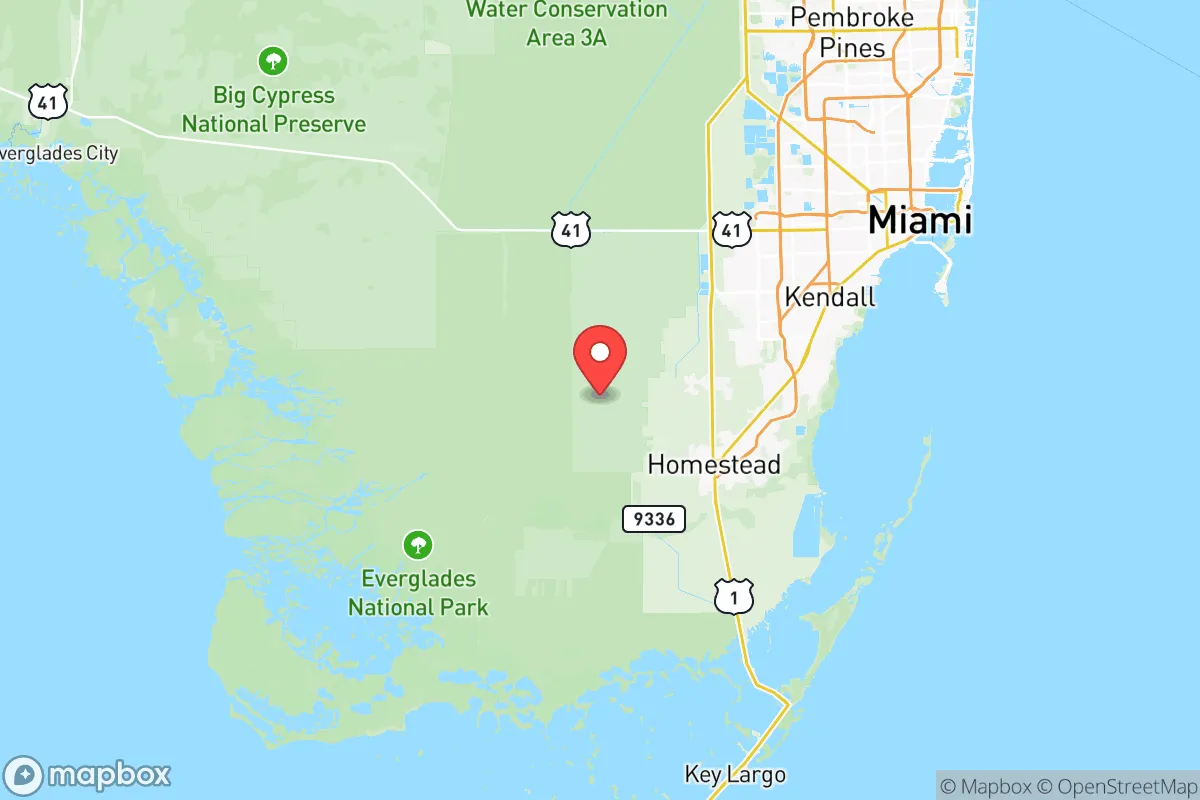
Beyond the major cities, Miami-Dade contains several distinct smaller towns and genuinely rural areas. Homestead, in the far south, is a historic agricultural hub with a population around 80,000, serving as the gateway to Everglades National Park and Biscayne National Park. Its character is markedly different from Miami, with a slower pace, a large farmworker community, and a growing number of suburban subdivisions. Cutler Bay and Palmetto Bay are planned, family-oriented suburbs in the south with good schools and a strong sense of community. Further west, the unincorporated area of Redland is a designated agricultural preserve, home to nurseries, fruit groves, and horse farms, offering a rural lifestyle that feels disconnected from the coastal metropolis. The Florida City area, just south of Homestead, is the county's southernmost municipality and a gateway for tourists heading to the Keys, with a small-town feel and a notable number of affordable mobile home parks.
Cost & lifestyle range
The cost of living and lifestyle options vary dramatically across the county. At the high end, neighborhoods like Coral Gables, Coconut Grove, and Key Biscayne feature median home values well above the county's overall median of $325,000, often exceeding $1 million, with correspondingly high rents and amenity costs. These areas offer walkable, tree-lined streets, top-tier private schools, and immediate access to Biscayne Bay. At the more affordable end, areas like Homestead, Florida City, and parts of Hialeah and Miami Gardens offer median home values closer to the county average, with rents near the median of $1,564. The western suburbs, including Kendall and The Hammocks, represent a middle ground: master-planned communities with good schools, shopping centers, and parks, but requiring longer commutes and offering less cultural density. The rural Redland area offers the lowest housing costs per square foot but virtually no rental inventory and limited public services.
This county is best suited for individuals and families who value proximity to a world-class urban core but are willing to navigate significant trade-offs in commute time, cost, and lifestyle density. Those who thrive here are typically adaptable to the region's subtropical climate, comfortable with a multilingual environment, and clear-eyed about the trade-offs between the energy of Miami and the quiet of Homestead or the agricultural preserve. The county's internal diversity means that a tech worker in Brickell, a nurse in Kendall, and a farmer in Redland all share a county government but inhabit vastly different daily realities.

Crime in Miami-Dade County
Generally safer than 72% of comparable U.S. locations.
Violent CrimeViolent Crime Analysis
Property CrimeProperty Crime Analysis
Crime Analysis
Miami-Dade County presents a mixed safety picture, with violent crime rates that fall below the national average but property crime rates that exceed it, creating distinct risk profiles depending on where residents live and work. The county's 2023 violent crime rate of 206.6 per 100,000 residents is roughly 40% lower than the national average of 380 per 100,000, while its property crime rate of 735.6 per 100,000 sits about 10% above the national figure of 670 per 100,000. These aggregate numbers, however, mask dramatic variation across the county's 34 municipalities, from high-crime corridors in downtown Miami to low-crime enclaves like Coral Gables and Pinecrest.
Crime in context
Compared to Florida's statewide violent crime rate of 258 per 100,000, Miami-Dade's 206.6 figure is notably lower, placing the county among the safer large metro areas in the state. Property crime, however, tells a different story: the county's 735.6 per 100,000 rate exceeds both the Florida average of 680 per 100,000 and the national average, driven largely by vehicle theft and burglary in tourist-heavy zones. The Miami-Dade State Attorney's Office, under progressive leadership that has emphasized diversion programs and reduced prosecution of low-level offenses, has drawn criticism from law enforcement groups who argue these policies contribute to recidivism. Miami-Dade's clearance rate for violent crimes hovers around 45%, meaning more than half of violent offenses go unsolved, a figure that concerns residents in higher-crime neighborhoods. The county's property crime clearance rate is even lower, at roughly 12%, reflecting the difficulty of investigating thefts and burglaries across a sprawling 2,400-square-mile jurisdiction.
What residents experience
Daily life in Miami-Dade involves navigating a landscape where property crime is the most common threat, particularly in areas with high tourist traffic and transient populations. Miami Beach and downtown Miami report the highest concentrations of property crime, with thefts from vehicles and package thefts being routine complaints in neighborhoods like Brickell and South Beach. Violent crime, while less frequent, is concentrated in specific corridors: Liberty City, Overtown, and parts of Homestead experience rates of aggravated assault and robbery that are 2-3 times the county average. Residents in safer suburbs like Coral Gables, Pinecrest, and Palmetto Bay report feeling secure walking at night, with violent crime rates below 100 per 100,000 in those communities. The county's reliance on progressive judicial policies, including cash bail reform and reduced sentencing for repeat property offenders, has led to frustration among homeowners in areas like Kendall and Cutler Bay, where property crime has ticked upward since 2020. Vehicle theft rates in Miami-Dade have increased 15% since 2021, a trend that police attribute to organized theft rings targeting high-value SUVs and luxury cars in affluent neighborhoods.
Neighborhood-level variation is extreme: while the county's overall violent crime rate is manageable, residents in high-crime areas face risks comparable to the most dangerous cities in the United States. In Liberty City, the violent crime rate exceeds 1,200 per 100,000, more than three times the national average, while in Coral Gables it drops below 80 per 100,000. Property crime follows a similar pattern, with Miami Beach reporting rates above 1,200 per 100,000 and Pinecrest below 400 per 100,000. The progressive policies of the Miami-Dade State Attorney's Office, which has declined to prosecute certain low-level drug and theft cases, have been cited by local police chiefs as a factor in rising recidivism in high-crime corridors. For prospective residents, the choice of municipality within Miami-Dade is the single most important factor in determining personal safety, with the county's 34 cities operating their own police departments and maintaining vastly different enforcement priorities and crime outcomes.
* Values derived from national, state, county, city and local statistics and may differ in a specific area. Last updated: 2026-09-21T19:01:58.000Z
Narrative content on this page is AI-generated and may contain mistakes. Verify any details that matter before acting on them.
ReloMaps may earn a commission from affiliate links at no extra cost to you.

