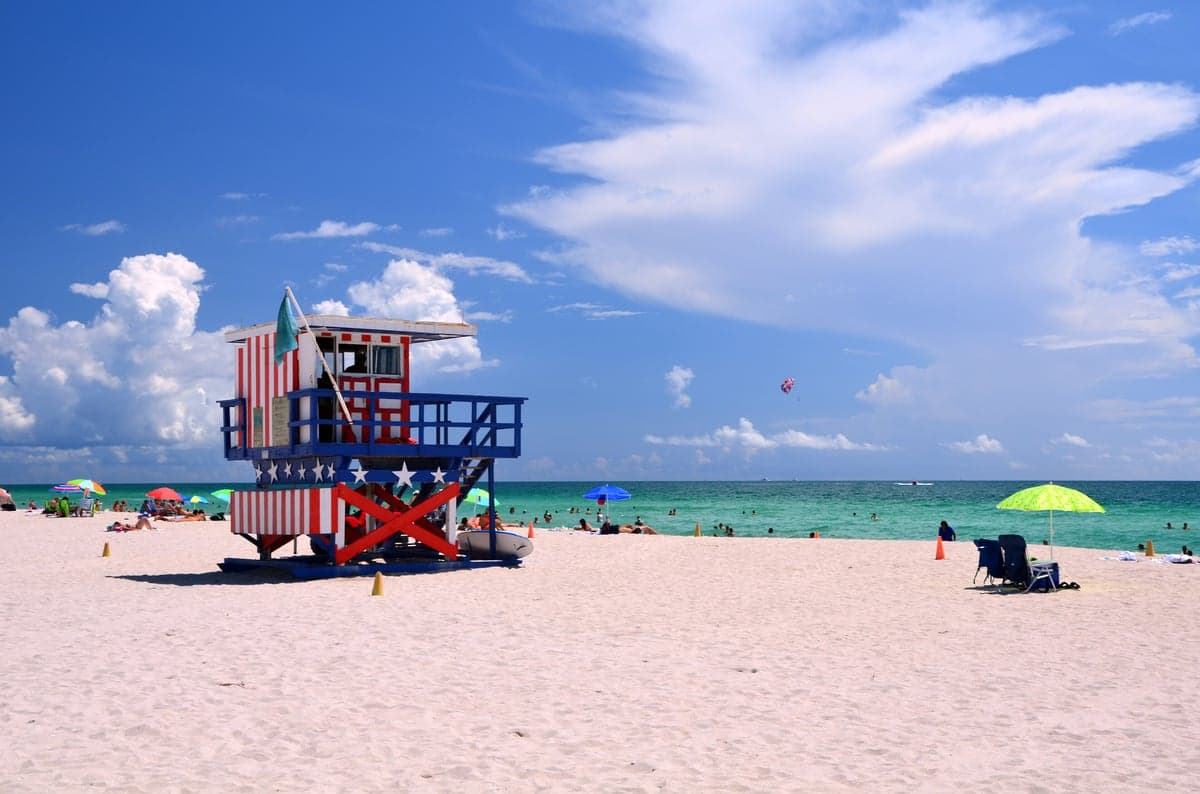
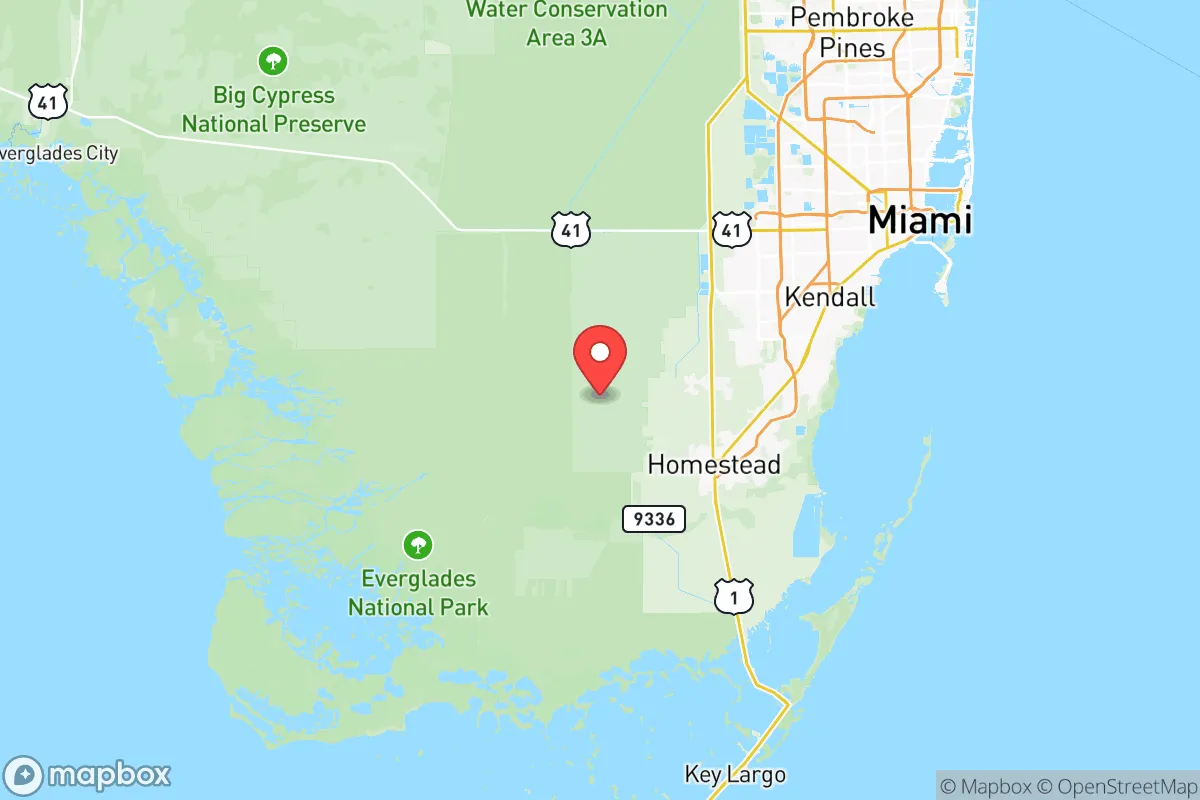
Photo: Wikipedia
Political ClimatePolitical Climate in Miami-Dade County
Showing district-level results — no local-only data available.
Local Political AnalysisPolitical Analysis of Miami-Dade County
Miami-Dade County has undergone a dramatic political realignment, shifting from a reliably Democratic stronghold to a competitive battleground that now leans Republican at the county level. The county's Cook Partisan Voting Index (PVI) is R+10, meaning it votes ten points more Republican than the national average—a stark contrast to the state of Florida's overall R+5 PVI. This shift is driven largely by a surge in conservative-leaning Hispanic voters, particularly Cuban-Americans and Venezuelan-Americans, who have moved away from the Democratic Party in recent cycles. While the county still has deep-blue pockets, the overall trajectory is unmistakably rightward, and local elections are increasingly competitive.
How it compares
Miami-Dade's R+10 PVI makes it significantly more Republican than Florida as a whole (R+5), a reversal from just a decade ago when the county was a Democratic anchor. The key difference lies in the voting patterns of suburban and exurban areas. In the western suburbs like Doral, Hialeah, and Kendall, Republican margins have swelled, often exceeding 60% in precincts. Meanwhile, the urban core of Miami itself remains a Democratic stronghold, with areas like Coral Gables, Coconut Grove, and Brickell voting reliably blue. The swing precincts are concentrated in the central and southern parts of the county, particularly around Cutler Bay and Palmetto Bay, where moderate voters can tip the balance. In contrast, the rest of Florida is more uniformly Republican outside of urban centers like Orlando and Tampa, but Miami-Dade's internal polarization is sharper and more ethnically driven.
What this means for residents
For conservative residents, the shift means they now have a real voice in local governance—county commission seats and mayoral races are genuinely competitive, and Republican candidates can win countywide. You'll see more conservative policies on taxes and development, especially in the western suburbs. For liberal residents, the reality is that they are increasingly concentrated in a few urban enclaves, meaning their influence is waning at the county level but remains strong in city councils and state legislative districts representing Miami proper. The practical effect is that policy debates are more polarized: issues like affordable housing, transit funding, and climate resilience get caught in the crossfire. Both sides need to build coalitions across ethnic lines, as the Hispanic vote is no longer monolithic—Cuban and Venezuelan voters lean right, while Puerto Rican and Colombian voters are more split.
Culturally, this political shift has reinforced Miami-Dade's identity as a bilingual, globally connected hub where conservative social values coexist with a vibrant, diverse social scene. You'll find strong support for school choice and charter schools, a business-friendly tax climate, and a general skepticism of heavy-handed regulation. At the same time, the county's deep-blue urban core ensures that progressive causes like LGBTQ+ rights and environmental protection remain on the agenda. The result is a place where a Republican mayor can champion a $400 million bond for sea-level rise resilience, and a Democratic commissioner can push for rent control—and both can get something done. It's a messy, dynamic, and very Miami kind of politics.

State Political ClimatePolitical Climate in Florida
State Political AnalysisPolitical Environment in the State
Florida is a solidly Republican-leaning state with a Cook PVI of R+5, but calling it a simple red state misses the real story. Over the past 20 years, the state has shifted from a classic swing state—where elections were decided by a few thousand votes in 2000—to a reliably right-of-center powerhouse, driven by a massive influx of conservative-leaning retirees and families from the Northeast and Midwest. The dominant coalition is a mix of suburban and exurban voters, older transplants, and a growing Hispanic electorate in places like Miami-Dade that has moved rightward, while the Democratic base is increasingly concentrated in dense urban cores and a handful of college towns.
Urban vs. rural divide
The political map of Florida is stark. The major Democratic strongholds are Miami-Dade County (though it flipped from +29 D in 2016 to +11 D in 2024), Broward County (Fort Lauderdale), and Palm Beach County—the three southeastern counties that still deliver huge Democratic margins. Orange County (Orlando) and Leon County (Tallahassee) are also blue anchors. But the rest of the state is deeply red. The I-4 corridor, stretching from Tampa through Lakeland to Daytona Beach, is the classic battleground, but it has trended right in recent cycles. Pinellas County (St. Petersburg) and Hillsborough County (Tampa) are now purple-to-lean-red. The rural Panhandle—places like Panama City, Pensacola, and Gainesville's surrounding counties—votes overwhelmingly Republican, often by 30-40 point margins. The southwest coast, from Naples up to Sarasota, is a GOP stronghold of wealthy retirees. The key shift: suburban voters in places like St. Johns County (St. Augustine) and Collier County (Naples) have become more Republican, while Miami-Dade's Cuban-American and Venezuelan-American communities have moved sharply right, driven by anti-socialist sentiment and economic conservatism.
Policy environment
Florida's policy environment is defined by low taxes and light regulation. There is no state income tax, which is the single biggest draw for relocators. Property taxes are moderate, with a 3% annual cap on assessed value increases for homesteaded properties (Save Our Homes). Sales tax is 6%, but local options can push it to 7.5-8.5%. The regulatory posture is business-friendly: no state-level minimum wage above the federal floor (though voters passed a $15/hour phase-in via constitutional amendment), and right-to-work laws keep unions weak. Education policy is a flashpoint: the state has a robust school choice program (vouchers and charter schools), and Governor Ron DeSantis signed the "Parental Rights in Education" law (HB 1557, dubbed "Don't Say Gay" by critics) in 2022, which restricts classroom instruction on sexual orientation and gender identity in early grades. Healthcare is mixed: Florida did not expand Medicaid under the ACA, leaving a coverage gap for low-income adults, but it has a competitive private insurance market. Election laws have tightened: the state passed SB 90 in 2021, adding voter ID requirements, limiting drop boxes, and restricting third-party ballot collection. Early voting and mail-in voting remain widely available, but the window is shorter than in some states.
Recent policy direction
The last five years have seen a hard right turn on multiple fronts. On gun rights, Florida became a "constitutional carry" state in 2023 (HB 543), allowing permitless concealed carry for adults 21 and older. Open carry remains illegal. On parental and education rights, the "Stop WOKE Act" (HB 7, 2022) limits workplace and school training on race and gender, and the "Individual Freedom Act" bans critical race theory concepts in schools. On speech, the state has targeted social media platforms with laws (SB 7072, 2021) that restrict content moderation—though parts have been blocked in court. On privacy and surveillance, Florida has no comprehensive data privacy law, but it passed a biometric privacy law in 2023. On medical and bodily autonomy, the state banned abortion after six weeks in 2023 (HB 7), with exceptions for rape, incest, and life of the mother. A 2024 ballot measure to enshrine abortion rights failed to reach the 60% threshold. Medical marijuana is legal (since 2016), but recreational use remains illegal. On property rights, Florida is a strong "property rights" state with limited eminent domain, but homeowners' associations (HOAs) have broad power. On taxation, the trend is toward cutting taxes: the 2023 budget included a permanent reduction in the corporate income tax rate and a temporary gas tax holiday. On voting and ballot access, the state has purged voter rolls aggressively and requires a felony conviction to be fully served before voting rights are restored (a 2018 constitutional amendment restored rights for most felons, but a 2019 law requires payment of all fines and fees first).
Civil unrest & political movements
Florida has seen its share of political flashpoints. The Black Lives Matter protests in 2020 were large in Miami, Orlando, and Tampa, but were met with a heavy law enforcement response and a subsequent legislative crackdown on "rioting" (HB 1, 2021, which enhanced penalties for violent protests). The immigration politics are intense: Governor DeSantis has made national headlines by flying migrants to Martha's Vineyard and signing SB 1718 (2023), which requires businesses with 25+ employees to use E-Verify, bans local governments from providing ID to undocumented immigrants, and makes transporting undocumented immigrants into the state a crime. There are no sanctuary cities in Florida; the state preempted such policies in 2019. Election integrity controversies have been constant since 2020, with the state creating a new Office of Election Crimes and Security in 2022, which has prosecuted a handful of cases of alleged voter fraud. The secession or nullification rhetoric is minimal, but there is a strong "state sovereignty" streak in the legislature. A new resident would notice the constant political advertising, the prevalence of "Don't Tread on Me" flags in rural areas, and the occasional protest at the state capitol in Tallahassee.
Projection
Over the next 5-10 years, Florida is likely to remain Republican-leaning, but the margin could narrow. The state is growing fast—about 1,000 new residents per day—and many of them are coming from blue states, but they are disproportionately older, wealthier, and more conservative. The Hispanic electorate, now about 20% of voters, is trending right, especially among Cuban-Americans and Venezuelans. However, the Democratic base is growing in the Orlando and Tampa suburbs, and younger voters (Gen Z and Millennials) are more liberal. The wild card is climate change: rising sea levels and hurricane risk could slow growth in coastal areas, while inland cities like Ocala and Gainesville may see more migration. Expect continued fights over abortion, school choice, and immigration. The state's tax structure is unlikely to change—no income tax is a sacred cow. A new resident moving in now should expect a state that is politically stable but polarized, with a government that is aggressive on cultural issues and friendly to business, but with a growing undercurrent of tension over housing costs and climate resilience.
For a new resident, the bottom line is this: Florida offers a low-tax, business-friendly environment with a government that actively promotes conservative values on education, abortion, and immigration. If you lean right, you'll find a state that matches your priorities. If you lean left, you'll find strong communities in the cities and a vibrant activist scene, but you'll be swimming against the current at the state level. The practical takeaway is that your experience will vary dramatically by county—Miami-Dade and Broward feel like blue states, while Collier and St. Johns feel like deep red ones. Choose your location carefully, and you'll find a place that fits your politics.
* Values derived from national, state, county, city and local statistics and may differ in a specific area. Last updated: 2026-09-21T19:01:58.000Z
Narrative content on this page is AI-generated and may contain mistakes. Verify any details that matter before acting on them.
ReloMaps may earn a commission from affiliate links at no extra cost to you.

