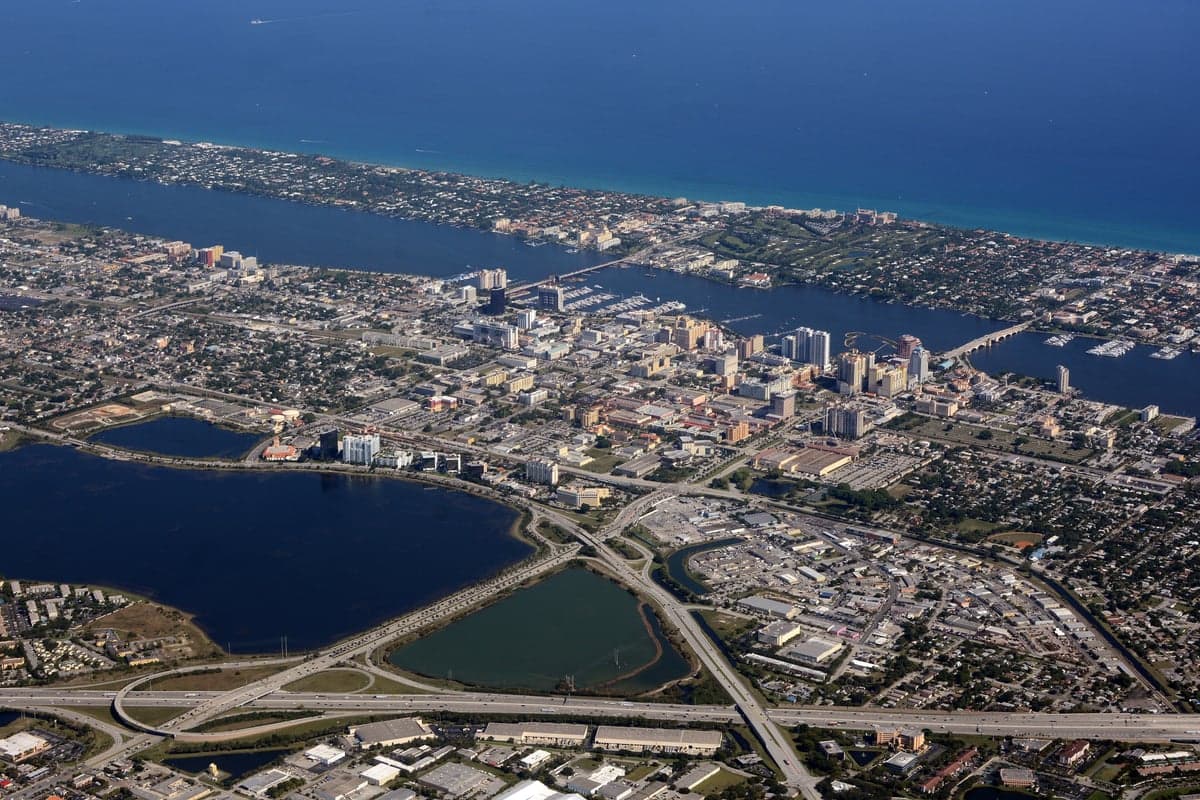
Photo: Wikipedia
Quality of Life in Palm Beach County
A livable area that tracks near national norms for affordability, walkability, and neighborhood health.
What does Quality of Life tell us?
Quality of Life measures an area by evaluating factors like cost of living, nearby amenities, country club access, airport proximity, socioeconomic signals and neighborhood character. For large states, this is a general average — quality of life can vary dramatically between metro areas, suburbs, and rural communities within the same state.
What does this tell us?
Quality of Life measures an area by evaluating factors like cost of living, nearby amenities, country club access, airport proximity, socioeconomic signals and neighborhood character. For large states, this is a general average — quality of life can vary dramatically between metro areas, suburbs, and rural communities within the same state.
Cost of Living
52% above national average
70%
The Real Cost of Living in Palm Beach County for 2026
| Tier | Individual | Family (4) |
|---|---|---|
| Survival | $29k | $55k |
| Comfortable | $79k | $116k |
| Luxury | $147k+ | $227k+ |
| Elite (Top 5%) | $224k+ | $347k+ |
Quality-of-Life Analysis
Palm Beach County spans a vast spectrum from the ultra-wealthy coastal enclaves to agricultural inland communities, offering distinctly different quality-of-life experiences for residents. The county's 152 cost-of-living index (versus 100 U.S. average) and median home value of $407,300 reflect an overall expensive market, but that number masks dramatic internal variation. Some areas attract snowbirds and luxury seekers, while others draw families looking for space and affordability, and still others house working-class agricultural communities. The average commute of roughly 26 minutes is manageable for many, though longer for those crossing the county east-west.
Largest town(s) & population centers
The county's major population centers line the coast and the I-95 corridor. West Palm Beach serves as the urban core, with a revitalized downtown, the Kravis Center, and a growing tech and finance sector. Boca Raton anchors the south end, known for corporate headquarters, top-ranked public schools, and the upscale Mizner Park shopping district. Delray Beach and Boynton Beach offer a slightly more relaxed beach-town vibe with active arts scenes and Atlantic Avenue dining. Palm Beach Gardens and Jupiter in the north are family-oriented suburbs with excellent parks and proximity to the Atlantic. Daily life in these population centers typically involves higher rents and home prices—median rent countywide is $1,818—with walkable commercial stretches but heavy reliance on cars for commuting and errands.
Smaller towns & rural pockets
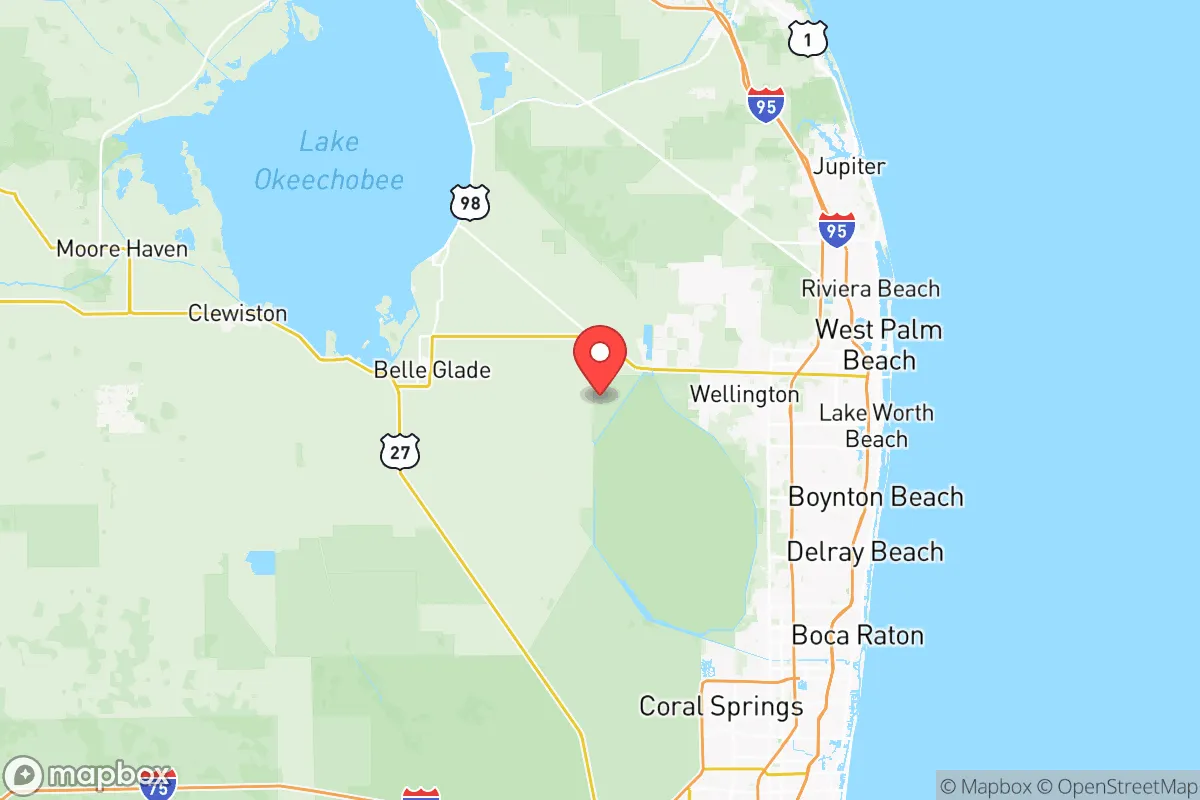
Beyond the coastal strip, Palm Beach County contains distinct smaller communities with very different characters. Wellington is a planned equestrian community with large horse farms and a suburban feel. The Acreage and Loxahatchee Groves are unincorporated areas zoned for larger lots, offering a semi-rural lifestyle with acreage, no sidewalks, and a strong DIY ethos. On the western edge of Lake Okeechobee, Belle Glade, Pahokee, and South Bay form the "Glades" region, a deeply rural agricultural zone dominated by sugar cane fields, vegetable farms, and a much lower cost of living. These inland towns face higher poverty rates and fewer amenities but provide affordable housing options that contrast sharply with coastal prices.
Cost & lifestyle range
The cost-of-living spread across Palm Beach County is among the widest in Florida. At the top end, the barrier island town of Palm Beach (home values frequently exceeding $5 million) and exclusive coastal communities like Manalapan and Gulf Stream offer oceanfront estates, private clubs, and world-class dining. Mid-range coastal areas such as Lake Worth Beach, Lantana, and Riviera Beach offer more attainable waterfront living with older housing stock and a more diverse population. On the affordably lower end, the Glades communities see median home values well below the county average—often under $200,000—but with limited job opportunities and a 40-minute commute to West Palm Beach. Lifestyle differences are equally stark: coastal residents enjoy easy beach access, cultural venues, and sprawling shopping centers, while inland residents deal with longer drives to services but gain space, privacy, and a slower pace.
Who thrives in Palm Beach County depends heavily on location and income. Retirees and wealthy professionals gravitate to the coastal suburbs and island towns. Families seeking good schools and suburban safety often settle in Wellington, Jupiter, or Palm Beach Gardens. Agricultural workers and those willing to trade amenities for affordability find viable options in the Glades region. Remote workers and commuters willing to drive 30–40 minutes can access rural acreage at a fraction of coastal prices. The county's greatest strength—and its greatest challenge—is that it offers a complete quality-of-life spectrum, but only for those who can navigate its wide economic and geographic divides.

Crime in Palm Beach County
Generally safer than 69% of comparable U.S. locations.
Violent CrimeViolent Crime Analysis
Property CrimeProperty Crime Analysis
Crime Analysis
Palm Beach County’s violent crime rate of 206.6 per 100,000 residents is well below both Florida’s statewide average and the national figure, while its property crime rate of 894.7 per 100,000 is also markedly lower than typical metro levels. However, safety varies sharply between affluent coastal enclaves and higher-density inland communities, and residents in some areas voice concerns that progressive prosecution policies may be undermining recent gains.
Crime in context
Compared to the latest FBI data, Palm Beach County’s violent crime rate is roughly 35% lower than the U.S. average and sits well below Florida’s statewide rate of approximately 380 per 100,000. Property crime, at 894.7 per 100,000, is about half the national median. Both violent and property totals have trended downward since 2020, but property theft — especially vehicle break-ins and package theft — remains the most frequent offense. The contrast with nearby Miami-Dade County, where violent crime exceeds 500 per 100,000, underscores the relative safety of this county.
What residents experience
Day-to-day safety depends heavily on location within the county. Boca Raton, Jupiter, and Wellington consistently report the lowest crime rates — Boca Raton’s violent crime rate is roughly 110 per 100,000, half the county average. In contrast, West Palm Beach and Lake Worth Beach experience higher rates of aggravated assault and larceny, often concentrated in specific downtown corridors and lower-income neighborhoods. Residents in these urban areas frequently cite concerns about repeat property offenders. The Palm Beach County State Attorney’s office, which has historically adopted a rehabilitation-first approach for nonviolent crimes, faces criticism from some public safety advocates who argue that lenient charging and plea policies allow habitual thieves to cycle back onto the street quickly, undermining deterrent effects and eroding trust in the justice system. This tension is most visible in West Palm Beach’s municipal court, where progressive diversion programs have drawn both praise for reducing jail populations and complaints about rising retail theft around the CityPlace district.
Neighborhood-level variation
Within individual cities, block-by-block differences are stark. In West Palm Beach, the historic Northwood neighborhood has a violent crime rate triple that of the nearby Flamingo Park area. Delray Beach has seen a 15% drop in burglaries since 2022 due to increased patrols and license-plate readers, yet its Atlantic Avenue entertainment zone still experiences occasional aggravated assaults. Gated communities in Palm Beach Gardens and Boynton Beach effectively eliminate street crime for their residents, while renters in unincorporated west-county corridors face higher vulnerability to car theft. Anyone relocating to Palm Beach County should examine neighborhood-specific data from the Palm Beach County Sheriff’s Office, as averages can obscure vast differences just a few miles apart.
* Values derived from national, state, county, city and local statistics and may differ in a specific area. Last updated: 2026-06-03T08:02:26.000Z
Narrative content on this page is AI-generated and may contain mistakes. Verify any details that matter before acting on them.
ReloMaps may earn a commission from affiliate links at no extra cost to you.

