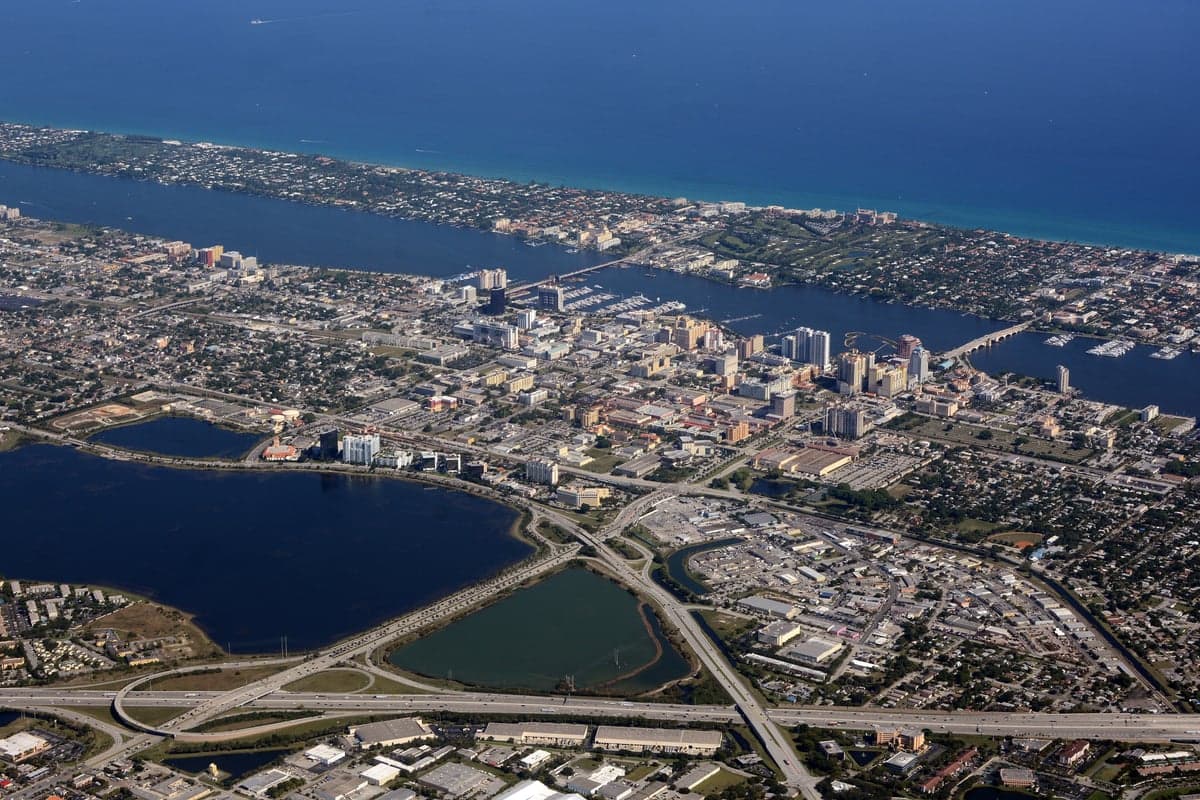
Photo: Wikipedia
Strategic Assessment of Palm Beach County
Meaningful friction. Expect exposure to either population pressure, blast zones, or natural disaster risk. Consider buying a retreat property.
What does the Strategic Assessment tell us?
Our Strategic Assessment grades tactical survivability of an area. Major population centers, military targets, fallout zones, natural disasters, and border exposure all drive risk — lower exposure means a more defensible position in a crisis.
This is heavily inspired by Joel Skousen's Strategic Relocation book. Highly recommended you checkout the book ($)What does this tell us?
Our Strategic Assessment grades tactical survivability of an area. Major population centers, military targets, fallout zones, natural disasters, and border exposure all drive risk — lower exposure means a more defensible position in a crisis.
This is heavily inspired by Joel Skousen's Strategic Relocation book. Highly recommended you checkout the book ($)Strategic Pillars

Key Distances
Strategic Assessment Analysis
Palm Beach County offers a mixed bag for the strategic relocator focused on long-term resilience. Its coastal position on Florida’s Atlantic Gold Coast gives you ocean access and a mild climate, but it also puts you within thirty miles of the St. Lucie Nuclear Power Plant, fifty miles of Turkey Point, and adjacent to the dense Miami–Fort Lauderdale metroplex. For someone weighing civil unrest, mass-casualty events, or regional collapse, this county has notable advantages in water availability and agricultural land, but those are offset by significant exposure risks and proximity to high-value infrastructure. The conservative prepper will need to choose a location inside the county with extreme care—and may find the western interior more viable than the urbanized eastern strip.
Geographic position and natural advantages: What makes Palm Beach County attractive for long-term survival
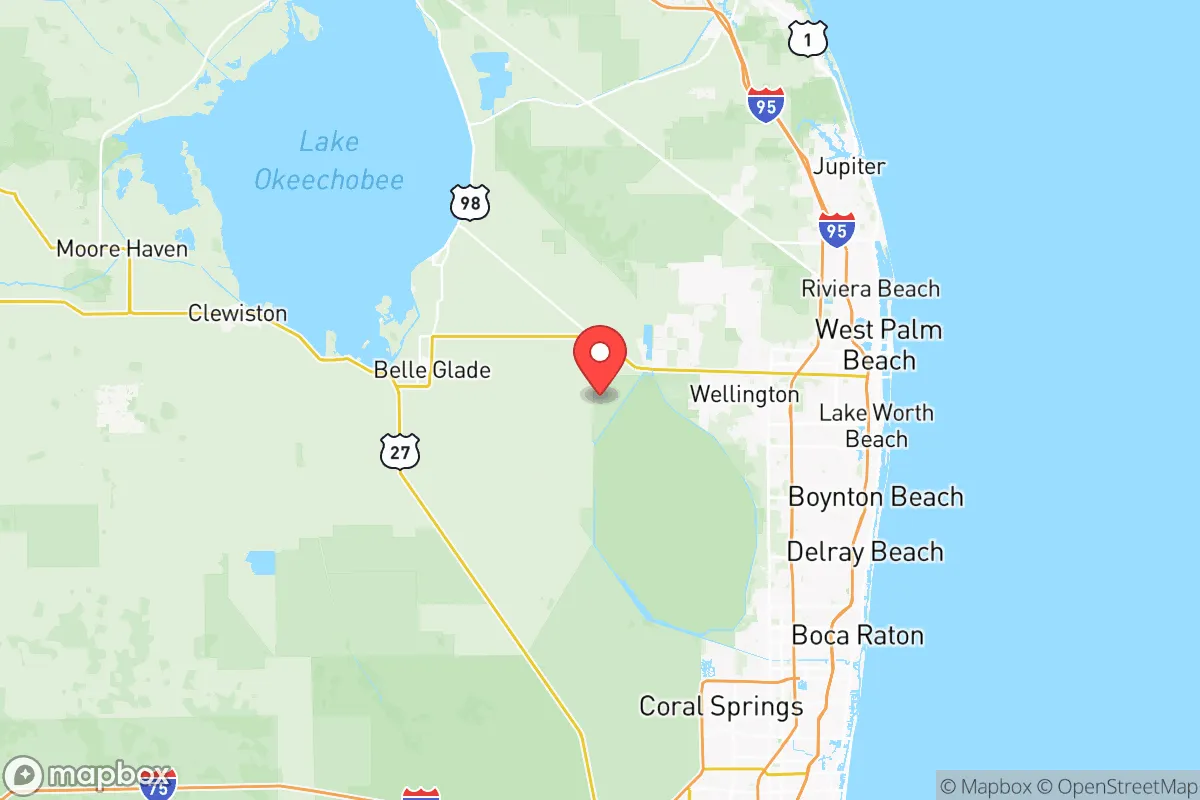
The county’s geography is defined by two major freshwater resources: the Atlantic Ocean and Lake Okeechobee. The lake, whose shoreline forms the county’s western boundary near towns like Pahokee and Belle Glade, holds the largest body of fresh water in the state and feeds the Everglades to the south. That alone is a serious water security asset—surface water that can be treated or filtered, plus a shallow Floridan Aquifer beneath much of the county. The climate supports year-round growing seasons, and the inland agricultural zone—known as the Glades—produces sugarcane, winter vegetables, and citrus. For a relocator who wants to supplement food supply from local growers or establish a small homestead, the land west of State Road 441 has lower population density and larger parcels. The Atlantic coastline offers excellent fishing and maritime trade access via the Port of Palm Beach in Riviera Beach, though that same port becomes a vulnerability in crisis scenarios. The county also features the expansive Loxahatchee National Wildlife Refuge and parts of the Kissimmee River Basin, providing raw wilderness for foraging and retreat if needed. From a pure resource standpoint, Palm Beach County has some of the best raw water and agricultural potential in South Florida.
Critical risks: Proximity to fallout zones, military targets, and evacuation chokepoints
The most glaring risk is the county’s location between two active nuclear power stations. St. Lucie Nuclear Plant sits just north of the county line, approximately 30 miles from West Palm Beach, and Turkey Point Nuclear Generating Station lies about 50 miles south in Homestead. Both are potential targets for sabotage, accident, or fallout contamination during a major event. The county also hosts the Port of Palm Beach, a strategic maritime hub for fuel, cargo, and cruise traffic—likely a high-value target for disruption or seizure in a collapse scenario. Palm Beach International Airport (PBI) could become a military or FEMA staging point, drawing unwanted attention. Evacuation routes are pure nightmare material: I-95 and the Florida Turnpike both run north-south through the county, narrow corridors that can gridlock in any emergency. The coastal suburbs—Boca Raton, Delray Beach, Jupiter—are dense populations with limited escape routes to the west. The county seat, West Palm Beach, has a violent crime rate above the national average, and post-disaster looting is a realistic concern in the urban core. For the conservative relocator, being within a twenty-minute drive of any of these landmarks means being inside a potential blast radius or looting zone. If you’re looking to avoid high-risk infrastructure, Palm Beach County forces you to live very close to it unless you settle deep in the rural interior.
Practical resilience for relocators: Water, food, energy, and defensibility in Palm Beach County
Let’s talk real survival logistics. Water: the county sits on the Biscayne Aquifer and has surface access to Lake Okeechobee, but both face risks. Agrichemical runoff from sugar farms has polluted sections of the lake, and saltwater intrusion is creeping into the aquifer along the coast. You’d need a quality filtration system—multi-stage RO or a well point placed carefully inland. Food: the Glades region is a legit food basket—you can buy directly from farms in Belle Glade, South Bay, and Pahokee, and there are year-round farmers markets in Wellington and Palm Beach Gardens. But the county is also a net importer of most staples; local supply chains would falter fast. Energy: Florida Power & Light runs the grid, which has improved since Hurricane Irma but still goes down hard with Category 3+ storms. Solar panels with battery storage are a must, and the county’s flat terrain means you can mount ground arrays easily on rural lots. Defensibility: here’s the weak spot. The county is mostly flat and open—no hills, no dense forests, no natural chokepoints. Gated communities in Jupiter Island or Palm Beach Gardens offer perimeter walls and private security, but they also create a target-rich environment for desperate crowds. The western ranching areas around Indiantown and west of 441 offer more privacy and larger buffers, but even there you’re not far from major highways. The most defensible spot in the county is probably a rural farmstead with a good well and a strong perimeter fence, located at least five miles from any major highway or population center.
On the whole, Palm Beach County is not a top pick for a survivalist relocator, but it isn’t a write-off either. If you can secure land in the rural western edge—think Loxahatchee Groves, part of The Acreage, or near the Okeechobee shore—you tap into exceptional water and food resources while staying away from the coastal fallout zones. The county’s sheer size (over 2,

* Values derived from national, state, county, city and local statistics and may differ in a specific area. Last updated: 2026-06-03T08:02:26.000Z
Narrative content on this page is AI-generated and may contain mistakes. Verify any details that matter before acting on them.
ReloMaps may earn a commission from affiliate links at no extra cost to you.

