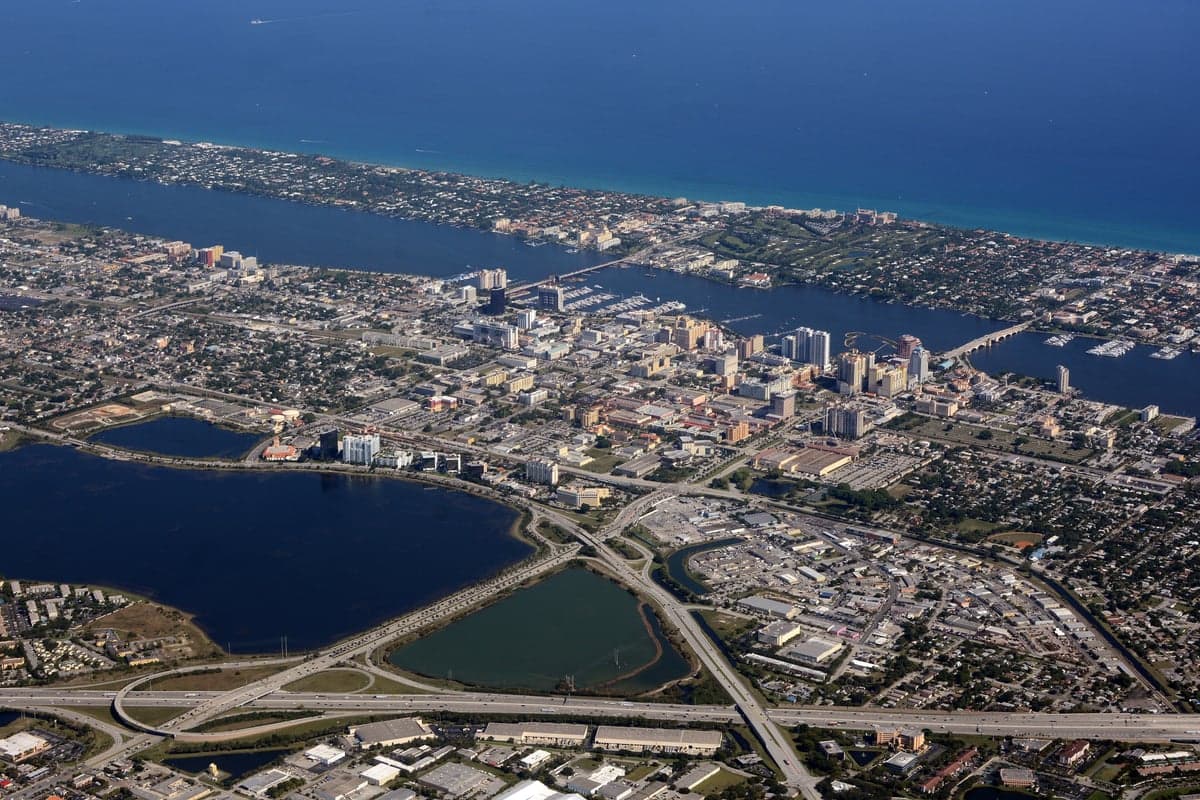
Photo: Wikipedia
Political ClimatePolitical Climate in Palm Beach County
Showing district-level results — no local-only data available.
Local Political AnalysisPolitical Analysis of Palm Beach County
Palm Beach County has become one of the most reliably Democratic strongholds in Florida, with a Cook Partisan Voting Index of D+22 — a stark contrast to the state's overall R+5 lean. But don't let that blanket number fool you: this county is a patchwork of deep-blue coastal enclaves, red-leaning western towns, and a shrinking slice of true swing precincts. I’ve lived here long enough to watch the politics shift, and honestly, the trajectory is concerning if you value limited government and personal freedoms. The progressive machine in places like West Palm Beach and Boca Raton has gained serious momentum, and it’s starting to squeeze out the independent, live-and-let-live spirit that used to define much of South Florida.
How it compares
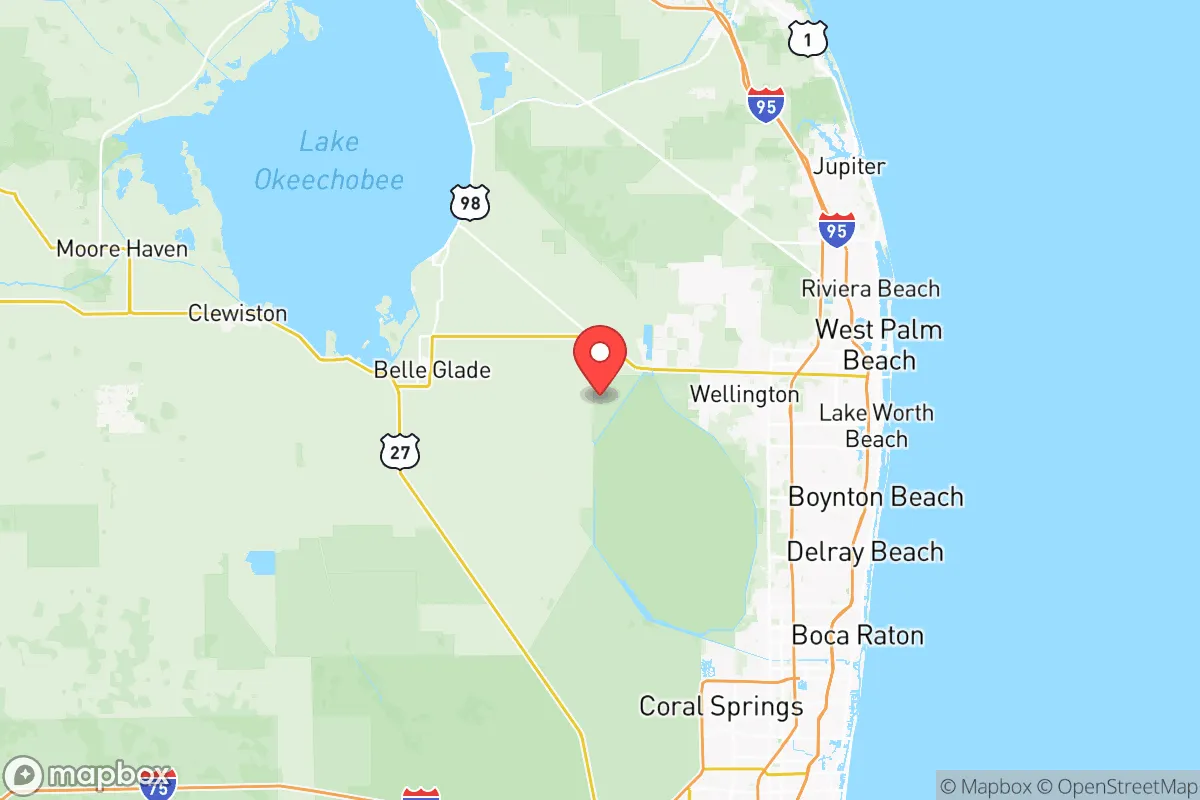
When you step back and look at the whole state, Florida is a purple-to-red battleground that voted for Trump in 2020 and again in 2024. But Palm Beach County is an outlier — it’s one of the bluest counties in the entire state. The contrast is especially visible if you drive from the coast inward. Towns like Delray Beach, Boynton Beach, and Lake Worth Beach are solid blue, packed with transplants from the Northeast who bring progressive voting habits with them. Meanwhile, Wellington, Jupiter, and Palm Beach Gardens still lean Republican but are getting bluer each cycle as wealthier ex-urbanites move in and demand more government services. The real swing areas used to be places like Royal Palm Beach and Greenacres, but even those are trending left as the county government pushes higher-density housing and transit-oriented development — basically, importing more voters who favor big-government solutions. The state as a whole is resisting that trend, but Palm Beach County feels like a laboratory for progressive policies that eventually get exported statewide.
What this means for residents
If you value local control and minimal government overreach, you’re going to find yourself on the losing end of most countywide votes. The county commission and school board are dominated by Democrats who are increasingly comfortable imposing mandates — think vaccine requirements for county employees, mask mandates in schools long after the state dropped them, and land-use policies that prioritize "equity" over property rights. Meanwhile, the Palm Beach County Sheriff’s Office has stayed relatively professional, but there’s constant pressure from county leaders to adopt progressive criminal justice reforms that weaken enforcement. You see it in the uptick of shoplifting and property crime in unincorporated areas that would have been quickly addressed 15 years ago. The school board has become a battleground over parental rights, critical race theory, and book bans — mostly with the state pushing for transparency and the county pushing back. It’s exhausting.
For conservatives, the best strategy is to stick to the more red-friendly towns like Wellington or the rural areas around Loxahatchee and The Acreage, where county influence is weaker. But even there, you’re still paying the high property taxes that fund the county’s progressive agenda. The state's preemption laws — like on firearms, rental regulations, and education — provide some buffer, but every session the legislature has to clean up after Palm Beach County’s local ordinances.

State Political ClimatePolitical Climate in Florida
State Political AnalysisPolitical Environment in the State
Florida is a solidly Republican state with a Cook PVI of R+5, but calling it a simple red state misses the real story. The dominant coalition is a mix of conservative retirees, military veterans, and a growing population of Hispanic and working-class voters who have shifted right in recent cycles. Over the last 10-20 years, Florida has moved from a classic swing state — famously deciding the 2000 election by 537 votes — to a reliably red lean in presidential races, with Republicans winning the governor’s mansion and both chambers of the legislature for over two decades. The 2022 midterms were a blowout: Governor Ron DeSantis won by nearly 20 points, and Miami-Dade County, a longtime Democratic stronghold, flipped to the GOP for the first time in 20 years. That shift is the headline for anyone considering a move here.
Urban vs. rural divide
The political map of Florida is stark but shifting. The rural Panhandle — places like Panama City, Pensacola, and Tallahassee’s outskirts — is deep red, often voting 70-80% Republican. Central Florida’s Ocala and Gainesville’s rural surrounds are similarly conservative. The big metros, however, are where the action is. Miami-Dade used to be the Democratic firewall, but in 2020 and 2022, Cuban-American and Venezuelan voters in Hialeah and Doral swung hard to the GOP, driven by fears of socialism and progressive overreach. Orlando and Tampa remain more purple, with Orange and Hillsborough counties still competitive but trending right among suburban families. Jacksonville is a mixed bag — Duval County has voted Democratic in recent presidential races but by shrinking margins. The rural-to-urban divide is real, but the urban core is no longer a guaranteed blue fortress. That’s a huge change from 2010.
Policy environment
Florida’s policy environment is a major draw for conservatives. There is no state income tax, which keeps more money in your pocket and fuels the in-migration boom. Property taxes are moderate, and the state has a constitutional cap on increases for homesteaded properties. The regulatory posture is business-friendly: Florida is a right-to-work state, and permitting for new construction is faster than in New York or California. On education, the state has led the nation in school choice — the Family Empowerment Scholarship program lets parents use tax dollars for private or homeschool options, and the state banned critical race theory and DEI mandates in public schools. Healthcare is mixed: Florida did not expand Medicaid under Obamacare, and the state has some of the strongest medical freedom laws, including a ban on vaccine passports and a law protecting doctors who decline to perform gender transition procedures on minors. Election laws were tightened after 2020: voter ID is required, drop boxes are restricted, and signature verification is strict. For a conservative, this is a state that actively pushes back against federal overreach.
Trajectory & freedom
Florida is becoming more free for conservatives, but the trajectory is not without tension. The 2023 “Parental Rights in Education” law (HB 1557) — which critics call “Don’t Say Gay” — restricts classroom instruction on sexual orientation and gender identity through 8th grade. The 2024 “Stop WOKE Act” limits how race and gender can be taught in workplaces and schools. Gun rights expanded in 2023 with permitless carry (HB 543), allowing concealed carry without a license. On medical freedom, the 2021 ban on vaccine passports (SB 2006) and the 2023 law protecting medical workers who refuse to perform gender transition procedures (SB 254) are landmark wins. Property rights were strengthened with the 2023 “Live Local Act,” which preempts local zoning to allow more affordable housing. However, the state has also cracked down on local control — the 2023 preemption of local heat protection laws for outdoor workers and the 2024 ban on local plastic bag bans show a preference for state-level uniformity. For a new resident, the trend is clear: Florida is aggressively expanding personal liberty in areas of education, health, and guns, while centralizing power in Tallahassee to prevent local progressive experiments.
Civil unrest & political movements
Florida has seen its share of political flashpoints, but the tone has shifted. The 2020 Black Lives Matter protests in Miami, Orlando, and Jacksonville were large but largely peaceful, with some property damage. The state responded with the 2021 “Combating Public Disorder Act,” which enhanced penalties for rioting and blocking roadways — a direct response to the unrest. Immigration politics are front and center: the 2023 “SB 1718” law requires businesses with 25+ employees to use E-Verify, bans local “sanctuary” policies, and makes transporting undocumented immigrants a felony. This has sparked protests from immigrant rights groups, but polls show broad support among Florida voters. Election integrity remains a hot topic: the 2021 “SB 90” law restricted drop boxes and mail-in voting, leading to lawsuits and a DOJ investigation, but the 2022 election ran smoothly with record turnout. On the left, groups like the Florida Rising and Dream Defenders organize around voting rights and racial justice, but they have little legislative success. On the right, the “Moms for Liberty” movement, born in Brevard County, has become a national force in school board elections. A new resident will notice that political activism is visible — yard signs, bumper stickers, and local protests are common — but the state government is firmly in conservative hands.
Projection
Over the next 5-10 years, Florida will likely become more Republican, not less. The in-migration pattern is key: roughly 1,000 people move to Florida every day, and they are disproportionately conservative-leaning retirees from blue states like New York, Illinois, and California. The Hispanic vote, especially among Cuban, Venezuelan, and Nicaraguan communities in Miami-Dade and Collier County, is trending right. The 2024 census estimates show Florida gaining two congressional seats, further amplifying its red tilt. However, there are risks: the influx of younger, more diverse workers to Orlando and Tampa could slowly shift those metros left, and climate change concerns may eventually affect property values in coastal areas. But for now, the political trajectory is clear: expect continued conservative dominance, more school choice, lower taxes, and a state government that actively resists federal mandates. A new resident moving in now should expect to find a state that is culturally and politically aligned with traditional values, with a government that prioritizes personal freedom over collective mandates.
For a conservative individual or family, Florida offers a rare combination: no income tax, strong parental rights, expanded gun access, and a government that fights federal overreach. The political climate is stable and trending in your favor, but it’s not a monolith — you’ll find liberal pockets in Miami Beach, Key West, and college towns like Gainesville. The bottom line: if you value personal liberty, low taxes, and a state that pushes back against progressive ideology, Florida is one of the safest bets in the country. Just be ready for the heat — both the weather and the political debates at the dinner table.
* Values derived from national, state, county, city and local statistics and may differ in a specific area. Last updated: 2026-06-03T08:02:26.000Z
Narrative content on this page is AI-generated and may contain mistakes. Verify any details that matter before acting on them.
ReloMaps may earn a commission from affiliate links at no extra cost to you.

