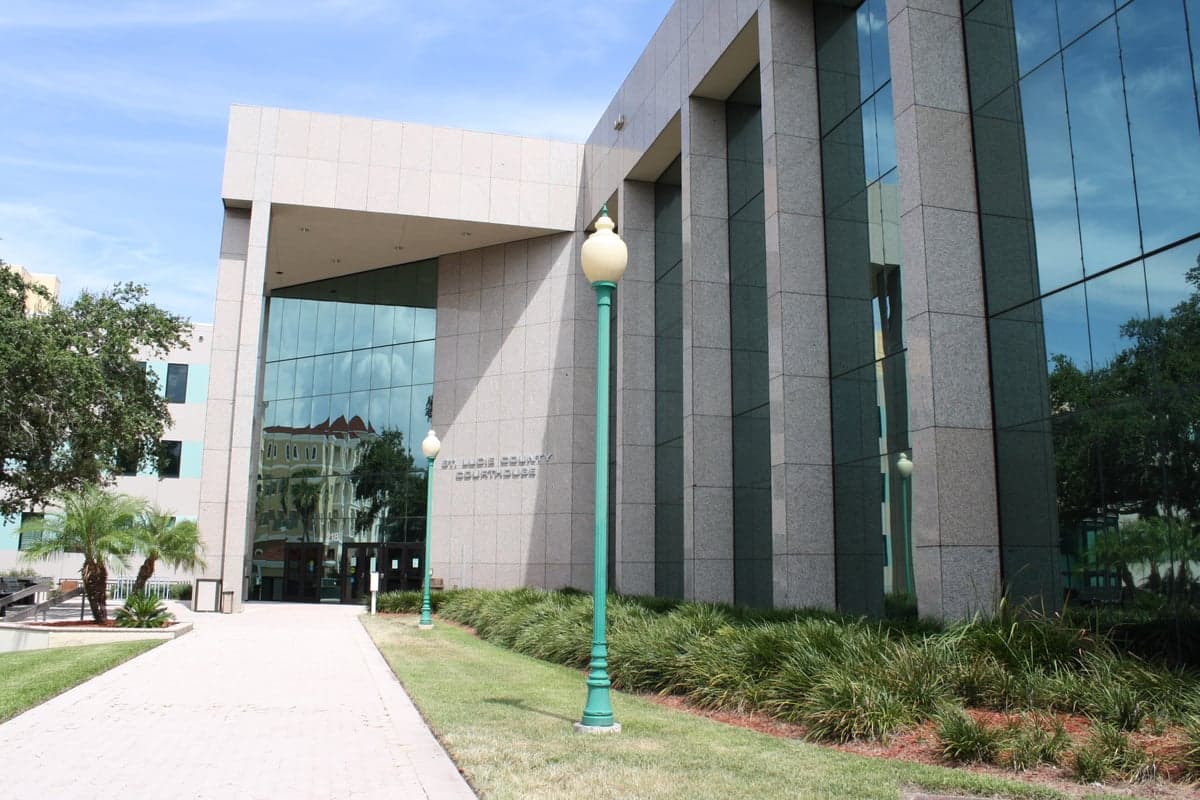
Photo: Wikipedia
Demographics of St Lucie County
Affluence Level in St Lucie County
A middle-class area roughly in line with national averages across income, home values, education, and employment.
People of St Lucie County
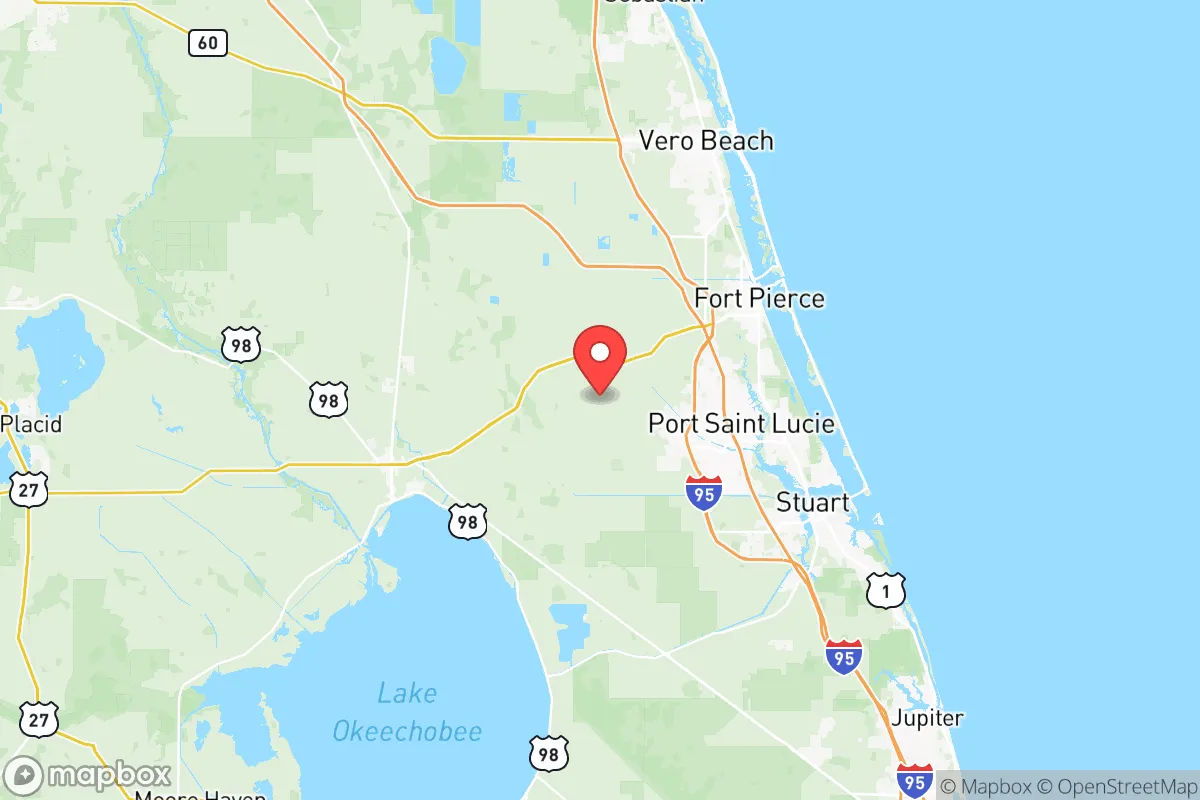
St. Lucie County’s 346,237 residents are a working- and middle-class mix shaped by a century of agricultural labor, Sun Belt suburbanization, and steady domestic migration. The population is 52.6% white, 21.1% Hispanic, and 20.1% Black, with a low 6.2% foreign-born share and only 25.4% holding a bachelor’s degree — signaling a region built around trades, services, and family rather than white-collar professional enclaves. The county’s identity splits between the historic coastal city of Fort Pierce, the sprawling master-planned bedroom community of Port St. Lucie, and smaller rural pockets like White City and St. Lucie Village, each with distinct character and roots.
Settlement & growth (pre-1960)
Before American settlement, the region was home to the Ais and Jaega tribes, who lived along the Indian River Lagoon. Spanish explorers passed through in the 16th century, but no permanent European colony took hold. The area remained sparsely inhabited until after the Second Seminole War, when the U.S. Army established Fort Pierce in 1838 along the inlet. A few pioneer families, such as the Adams and St. Lucie clans, homesteaded on the fertile coastal ridge, planting citrus and pineapples. By the 1880s, small communities like Ankona (a pre-Civil War settlement just south of Fort Pierce) and St. Lucie Village (an early fishing and farming hamlet) dotted the landscape.
The true settlement wave arrived with Henry Flagler’s Florida East Coast Railway, which reached Fort Pierce in 1905. Land speculation and drainage projects opened the interior for farming. White farmers from Georgia and the Carolinas moved in alongside African American laborers — many former sharecroppers — who cleared land and worked the pineapple, citrus, and vegetable fields. This Black workforce established neighborhoods like Lincoln Park in Fort Pierce, which remains a cultural anchor. Small numbers of Greek, Italian, and Bahamian immigrants also trickled in, drawn by the agricultural boom. By 1950, the county’s population hovered around 20,000, and the economy remained almost entirely rural — packing houses, fishing, and small-scale tourism.
Modern era (post-1965)
The 1965 Hart-Cellar Act had minimal direct effect on St. Lucie County; its foreign-born population remained low compared to Miami or Orlando. Instead, the county’s modern character was forged by domestic Sun Belt migration. The incorporation of Port St. Lucie in 1961 as a planned community — originally marketed to retirees and middle-income families from the Northeast and Midwest — triggered explosive growth. Between 1970 and 2000, the city ballooned from a few hundred to over 100,000 residents, and today it exceeds 220,000. Suburban developments like St. Lucie West and the later Tradition master plan drew families seeking lower taxes, newer housing, and a slower pace than South Florida.
Hispanic in-migration accelerated in the 1990s and 2000s, largely from Puerto Rico and Central America, settling in Fort Pierce and parts of southern Port St. Lucie. They found work in construction, landscaping, and the service industries that followed the housing boom. The Black population, which had been stable since the agricultural era, grew from both natural increase and Black families relocating from other parts of Florida and the Northeast. Fort Pierce remained the county’s more urban, lower-income, and racially diverse hub, while Port St. Lucie tilted whiter and more politically conservative. The county’s college-educated share (25.4%) remains well below the state average, reflecting a workforce centered on construction, retail, healthcare support, and agriculture — not high-tech or white-collar sectors.
The future
St. Lucie County’s population is projected to grow another 15–20% by 2035, driven principally by domestic migration from high-cost states like New York, New Jersey, and California. The Hispanic share will likely rise, possibly approaching 30% by 2040, as both second-generation families and new arrivals settle in existing corridors around Fort Pierce and Port St. Lucie. The white population is aging in place and shrinking as a share, while the Black share remains steady. The county shows no signs of tribalizing into balkanized enclaves; instead, suburban sprawl is blending groups into relatively homogeneous middle-class subdivisions and strip-mall commercial strips. Cultural identity is being absorbed into a generalized Treasure Coast ethos — family-oriented, outdoorsy, tax-conscious, and skeptical of big-city trends. For newcomers, this means a stable but not cosmopolitan environment, where affordable housing and a low-stress lifestyle come at the cost of limited high-skill employment and sparse urban amenities.
St. Lucie County is becoming a more diverse, but still majority-white, suburban expanse where the legacy of agricultural labor and the pull of Sun Belt affordability have created a place that feels more like extended family than melting pot. For conservative-leaning movers seeking a quiet, family-friendly coastal region with room to grow, the county offers a predictable trajectory of steady, moderate change — not radical transformation.

* Values derived from national, state, county, city and local statistics and may differ in a specific area. Last updated: 2026-06-01T12:49:10.000Z
Narrative content on this page is AI-generated and may contain mistakes. Verify any details that matter before acting on them.
ReloMaps may earn a commission from affiliate links at no extra cost to you.

