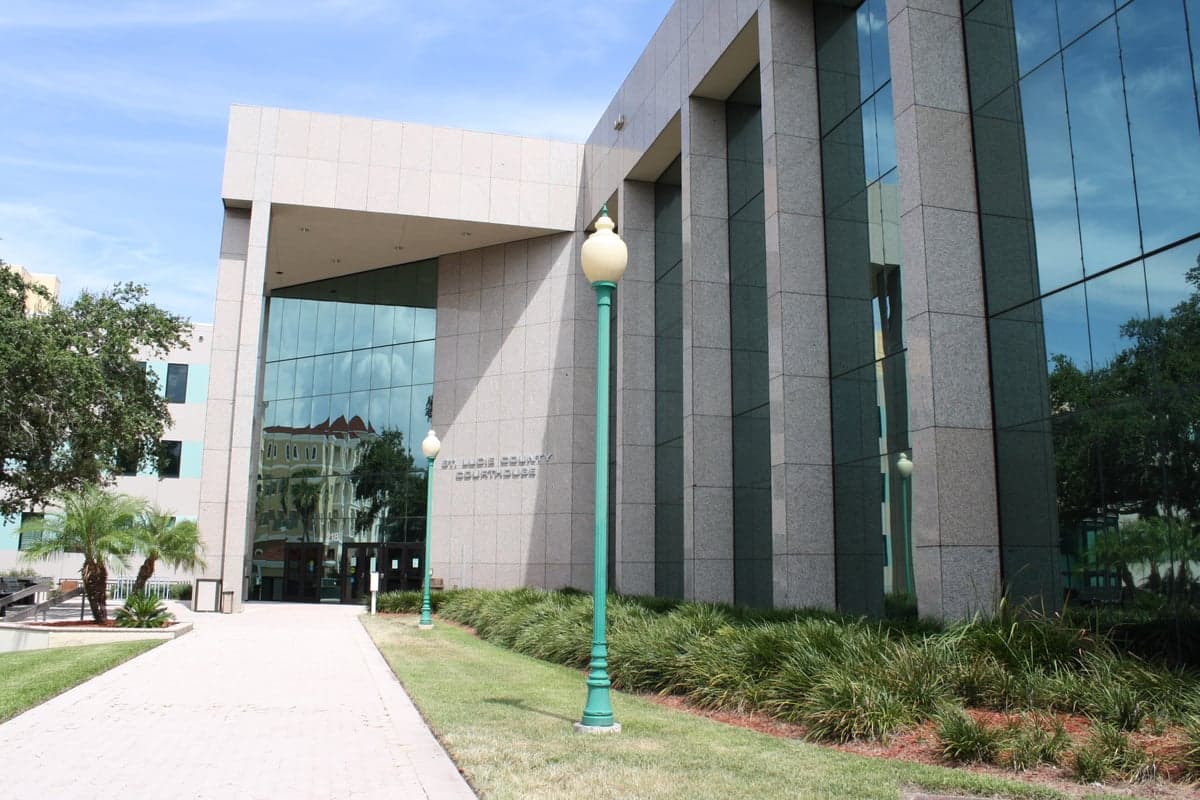
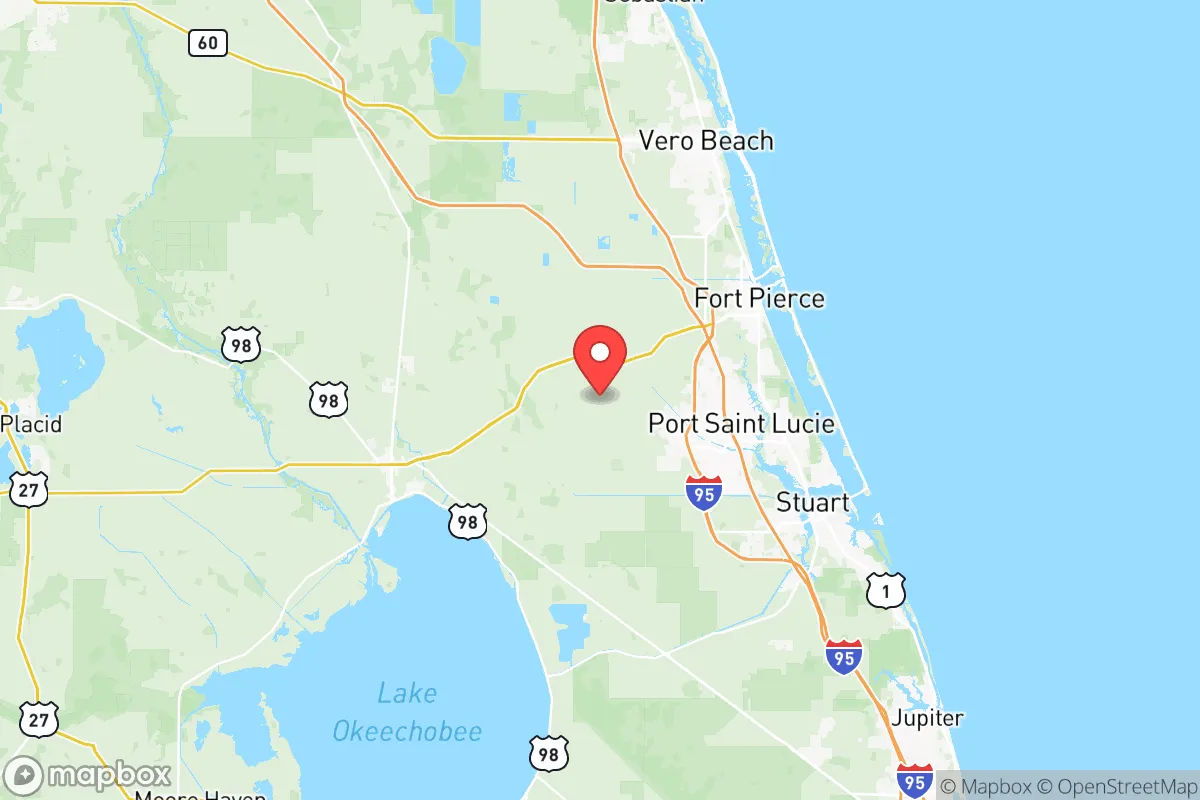
Photo: Wikipedia
Political ClimatePolitical Climate in St Lucie County
Showing district-level results — no local-only data available.
Local Political AnalysisPolitical Analysis of St Lucie County
You wanna know the real political story of St. Lucie County? It’s not as simple as the red-on-the-map reputation. The county leans Republican with a Cook PVI of R+7, which is a solid two points redder than Florida as a whole (R+5). But that number hides a lot of internal fighting. Historically, this was a Democratic-leaning area thanks to union-heavy agriculture and a large African-American population in Fort Pierce. Over the past decade, though, the influx of retirees from the Northeast and Midwest—especially into the newer developments of Port St. Lucie—has flipped the script. The county voted for Trump in 2020 by about 52-47, which matches that R+7 lean, but if you dig into the precincts, you’ll see a county that’s still wrestling with its identity.
How it compares
Compared to the rest of Florida, St. Lucie County is more conservative in aggregate, but the internal geography tells a different story. Take Fort Pierce—the older, more diverse core of the county. Precincts around Lincoln Park and the historic downtown regularly vote 70-80% Democratic. Then you cross over to the western side, places like Lakewood Park and the newer subdivisions around St. Lucie West, and those precincts go 65-75% Republican. Port St. Lucie itself is the big battleground: the southern half, closer to the county line, tends to lean red, while the northern half, nearer to Fort Pierce, is more purple. St. Lucie Village, a tiny enclave along the Indian River, is a reliable blue dot because of its long-time black community. Meanwhile, the rural areas around White City and the agricultural zones vote heavily red. So when people say “St. Lucie is red,” they’re really describing a county where the suburbs and exurbs have overwhelmed the old Democratic strongholds. But the shift isn’t total—the margins are close enough that any leftward drift in the suburbs could flip it back to toss-up status within a couple election cycles.
What this means for residents
For those of us who live here, the political climate directly affects daily life. The conservative majority has kept property taxes relatively low and maintained a business-friendly environment, which is why you see so many new warehouses and medical facilities popping up along I-95. But there’s a growing concern about government overreach creeping in from the state level—things like increasing sales taxes to fund Brightline expansion and new environmental regulations that target homeowners near the St. Lucie River. The progressive push, even if it’s still a minority voice, is focused on density and “climate action plans” that could limit how you use your own land. You can see it in the local school board races, where candidates backed by teacher unions are gaining traction in Port St. Lucie. For now, the county commission and sheriff’s office remain solidly conservative, which means less pushback on Second Amendment rights and fewer mandates on small businesses. But you have to keep an eye on the margins—if the suburban Fort Pierce precincts swing another 3-4 points left, we could see a very different St. Lucie in the next decade.
Culturally, St. Lucie County is a place where old Florida meets new Florida. You still have the annual Fort Pierce Inlet fireworks and the citrus festival, but now you’ve also got kombucha bars and yoga studios in the Tradition area. The policy distinction that matters most to locals is the county’s approach to growth management. While the state has pushed for more housing density and less local control (think Senate Bill 250), St. Lucie’s conservative leadership has fought to keep zoning decisions at the county level, preserving neighborhoods from heavy-handed state mandates. That’s the kind of distinction that keeps this place from turning into Palm Beach County—for now. But if the progressive wing gains any more momentum—especially in school curriculum and property-use restrictions—you’ll see a lot of longtime residents start looking north to Indian River or Brevard County. Keep your powder dry, as they say.

State Political ClimatePolitical Climate in Florida
State Political AnalysisPolitical Environment in the State
Florida is a solidly Republican state with a Cook PVI of R+5, but that number barely hints at the wild political ride it’s been on. Over the last 10-20 years, the state has shifted from a classic purple battleground—think hanging chads and 2000 recount chaos—into a reliably red stronghold, driven by a massive influx of conservative-leaning transplants from the Northeast and Midwest. The dominant coalition is a mix of suburban families, retirees, and rural voters, all united by a deep skepticism of big government and a love for low taxes and personal freedom. The trajectory has been a steady march rightward, with Democrats losing ground even in once-competitive regions like Tampa Bay and Orlando’s suburbs.
Urban vs. rural divide
The political map of Florida is a tale of three Floridas: the deep-blue urban cores, the ruby-red rural and exurban expanses, and the critical swing suburbs that have decisively broken for the GOP. Miami-Dade County, once a Democratic stronghold, has been trending red for years, with Cuban-American and Venezuelan voters in Hialeah and Coral Gables driving a sharp rightward shift—Trump won the county in 2020 by a narrow margin, a seismic change. Meanwhile, Orlando (Orange County) and Tampa (Hillsborough County) remain blue, but their surrounding suburbs—like Kissimmee in Osceola County and Brandon in Hillsborough—are now reliably red. The Panhandle, from Pensacola to Panama City, is as conservative as it gets, with rural counties like Liberty and Lafayette routinely voting 80%+ Republican. The I-4 corridor, stretching from Tampa to Daytona Beach, is the ultimate swing zone, but recent cycles show it leaning right, especially in Lakeland and Winter Haven in Polk County, where growth has been explosive.
Policy environment
Florida’s policy environment is a conservative’s dream, built on a foundation of low taxes and minimal regulation. There’s no state income tax, which is a huge draw for high-earners and retirees alike. Property taxes are capped by the Save Our Homes amendment, keeping them predictable. The regulatory posture is business-friendly, with a right-to-work law and a tort reform push that’s made it harder to sue companies. On education, Governor Ron DeSantis signed the Parental Rights in Education Act (HB 1557) in 2022, which restricts classroom instruction on sexual orientation and gender identity in early grades—a move that enraged the left but thrilled parents who want control over their kids’ upbringing. School choice is robust, with the Family Empowerment Scholarship program letting parents use state funds for private or homeschool options. Healthcare is a mixed bag: Florida didn’t expand Medicaid under Obamacare, keeping costs down for taxpayers, but the state has a high uninsured rate. Election laws tightened after 2020, with SB 90 requiring stricter voter ID, limiting drop boxes, and banning ballot harvesting—all aimed at restoring confidence in the system. Miami and Jacksonville have seen these laws tested, with no major issues reported.
Trajectory & freedom
Florida is becoming more free, especially for those who value personal autonomy from government overreach. The state has been a national leader in expanding gun rights: permitless carry (HB 543) became law in 2023, allowing any law-abiding adult to carry a concealed firearm without a license. Property rights got a boost with the Live Local Act (SB 102), which preempts local zoning to allow more housing development, cutting through NIMBY red tape. On medical autonomy, Florida banned COVID-19 vaccine mandates for private employers (HB 1) and prohibited mask mandates in schools (SB 252), a direct rebuke of federal overreach. Parental rights were further cemented with the “Don’t Say Gay” law and the expansion of the Parental Bill of Rights. However, there are concerning trends: the state’s strict abortion law (HB 5) bans the procedure after six weeks, which some see as a government intrusion into private medical decisions, though it reflects the will of the legislature. The biggest red flag for freedom hawks is the state’s aggressive use of power against local governments—DeSantis suspended elected officials in Tallahassee and Alachua County for defying state immigration laws, which some argue is executive overreach. Still, on balance, Florida is trending toward more liberty, not less.
Civil unrest & political movements
Florida has seen its share of political flashpoints, but they’ve been more about policy battles than street violence. The COVID era saw protests against mask mandates in Fort Lauderdale and St. Augustine, but nothing like the riots in Portland or Seattle. The Black Lives Matter protests in 2020 were relatively muted, with Miami and Orlando seeing peaceful marches that fizzled quickly. The left’s organized activism is weak here—the Florida Democratic Party is a shell of its former self, and progressive groups like Dream Defenders have little sway outside college towns like Gainesville. On the right, the “Free Florida” movement is strong, with groups like Moms for Liberty (founded in Brevard County) leading school board fights and the Florida Citizens Alliance pushing for curriculum transparency. Immigration politics are a constant flashpoint: DeSantis’s SB 1718, which cracks down on illegal immigration by requiring E-Verify and penalizing sanctuary policies, has been a lightning rod, with Miami’s immigrant community split between support and fear. Election integrity remains a hot topic—the 2020 and 2022 cycles were smooth, but activists on both sides remain vigilant. A new resident would notice the absence of visible political tension in daily life; most people are too busy enjoying the beaches and low taxes to protest.
Projection
Over the next 5-10 years, Florida will likely become even more conservative, driven by demographic shifts and in-migration patterns. The state is adding about 1,000 new residents per day, many from high-tax, high-regulation states like New York, California, and Illinois—these transplants tend to be fiscally conservative and socially moderate, but they’re not turning Florida blue. The Hispanic vote, especially in Miami-Dade and Osceola County, is shifting right as second-generation Cuban and Venezuelan Americans prioritize economic freedom over identity politics. The I-4 corridor will continue to be the battleground, but places like Lakeland and Ocala are growing fast with conservative families. The biggest wildcard is climate change: rising sea levels could hit coastal areas like Miami Beach and Fort Myers, potentially driving a realignment if insurance costs skyrocket. But for now, the trend is clear: Florida is solidifying as a red state, with a policy environment that rewards personal responsibility and punishes government overreach. Someone moving in now should expect to find a state that’s freer, more prosperous, and more politically stable than most of the country.
For a new resident, the bottom line is simple: Florida offers a rare combination of low taxes, strong parental rights, and a government that mostly stays out of your way. The political climate is conservative but not oppressive—you won’t see protests on every corner or feel pressured to conform. If you value personal freedom, economic opportunity, and a community that shares your skepticism of big government, Florida is one of the best bets in the nation. Just be ready for the humidity and the occasional hurricane—those are the only things the government can’t control.
* Values derived from national, state, county, city and local statistics and may differ in a specific area. Last updated: 2026-06-01T12:49:10.000Z
Narrative content on this page is AI-generated and may contain mistakes. Verify any details that matter before acting on them.
ReloMaps may earn a commission from affiliate links at no extra cost to you.

