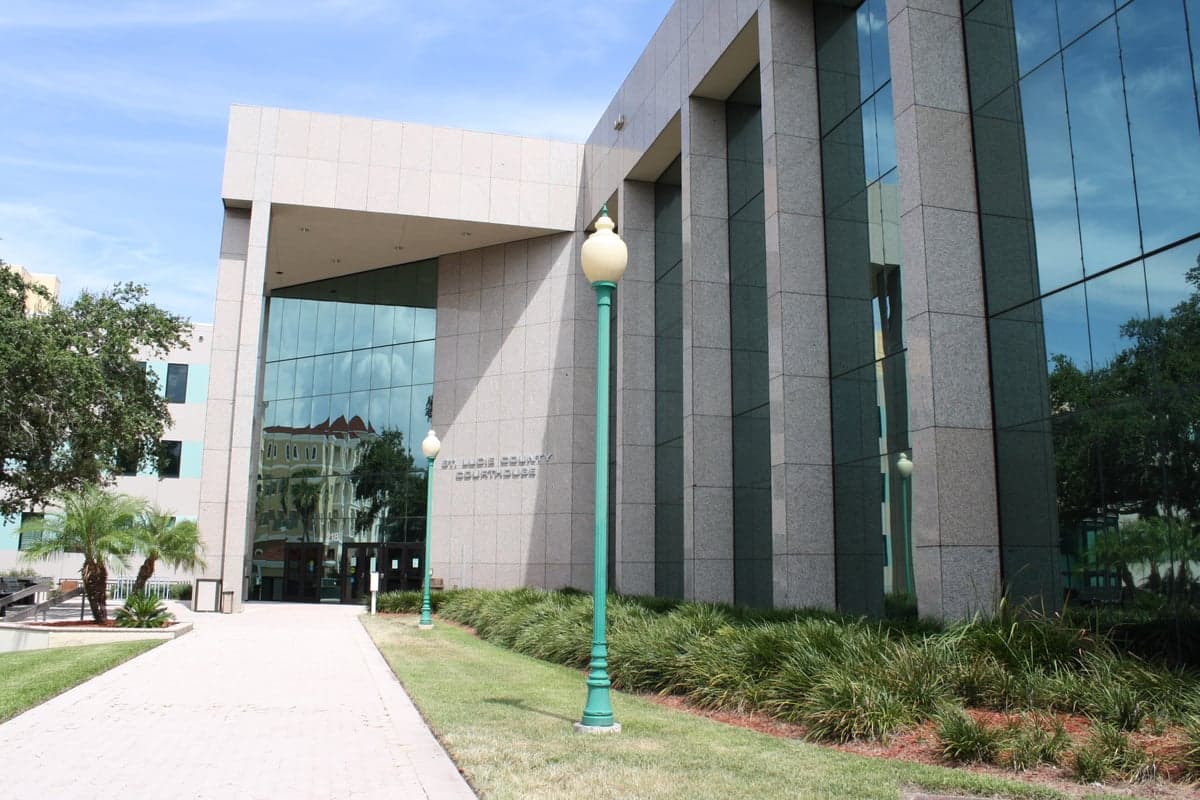
Photo: Wikipedia
Personal Sovereignty in St Lucie County
Viable for self-reliance. Generally workable, though some barriers may limit total independence.
What does Personal Sovereignty tell us?
Personal Sovereignty measures your capacity for self-reliance and independence with minimal government friction. Higher scores mean fewer barriers between you and the way you want to live... but it assumes you have the space you need and good neighbors.
What does this tell us?
Personal Sovereignty measures your capacity for self-reliance and independence with minimal government friction. Higher scores mean fewer barriers between you and the way you want to live... but it assumes you have the space you need and good neighbors.
State Policy
Energy independence: Importer (10% of energy produced in-state)
Personal Liberty
Homesteading

Personal Liberty Analysis
St Lucie County offers a notably higher degree of personal sovereignty than much of coastal Southeast Florida, largely because its mix of agricultural land, suburban sprawl, and smaller municipalities has resisted the heavy-handed regulatory culture found in Broward or Palm Beach counties to the south. While no Florida county is a libertarian utopia—state preemption laws cut both ways—St Lucie’s local governance tends toward a live-and-let-live posture that appeals to those wary of government overreach. The key is knowing which parts of the county deliver on that promise and which still carry the baggage of coastal zoning and HOA-enforced conformity.
Tax burden and regulatory posture: how St Lucie compares to surrounding counties
Florida’s lack of a state income tax is the baseline, but property tax millage rates and local fee structures vary significantly. St Lucie County’s combined millage rate (county + school + special districts) hovers around 18.5 to 19.5 mills, which is moderate for the Treasure Coast—higher than rural Okeechobee County but lower than heavily developed Martin County. The county’s regulatory posture is generally permissive for property owners, especially outside city limits. Port St Lucie, the county’s largest city, imposes standard building codes and stormwater management fees, but its sheer size means enforcement is inconsistent. Fort Pierce, the county seat, has a more aggressive code enforcement division, particularly in historic districts, which can be a headache for anyone wanting to modify a property without permits. For those seeking the lightest touch, unincorporated areas like White City or Lakewood Park offer the fewest layers of bureaucracy—no city business tax receipts, no municipal zoning overlays, just county-level oversight that tends to be more hands-off. The county commission has shown resistance to state-mandated growth management overlays, and local building officials rarely go beyond what state law requires. This is not Texas-level deregulation, but it’s a far cry from the permit hell of South Florida.
Self-defense and gun law specifics: what the Second Amendment looks like on the ground
Florida is a shall-issue state for concealed carry, and St Lucie County’s sheriff’s office processes permits efficiently—typically under 30 days for renewals. The county is home to several well-stocked gun shops and indoor ranges, particularly along US-1 in Port St Lucie and Fort Pierce. Constitutional carry (permitless carry) became law in 2023, meaning law-abiding adults 21 and older can carry a concealed firearm without a permit, though a permit still offers reciprocity for travel. The local political climate is strongly pro-Second Amendment; the sheriff’s office publicly supports gun rights, and there is no local ordinance restricting magazine capacity or ammunition sales beyond state law. Stand-your-ground and castle doctrine protections apply fully. The practical reality: you can carry openly or concealed in most public spaces, though private businesses and government buildings post signage. St Lucie Village, a tiny incorporated enclave, has no local gun ordinances at all. For those concerned about government overreach, the county’s lack of a red-flag law enforcement apparatus (beyond what state law mandates) is a plus—the sheriff has stated he will not enforce federal gun bans. The only friction point is the 3-day waiting period for handgun purchases, which is state law and applies everywhere.
Self-reliance and homesteading viability: lot sizes, zoning, and off-grid feasibility
St Lucie County is one of the few places on Florida’s east coast where you can still buy a piece of land large enough to be genuinely self-sufficient without paying exurban premiums. Zoning in unincorporated areas allows for agricultural use on parcels as small as 2.5 acres in the A-1 (General Agriculture) district. In Lakewood Park and Fort Pierce North, 5- to 10-acre lots are common and affordable—under $20,000 per acre in many cases. The county does not prohibit rainwater collection, and well permits are routinely issued for properties with at least one acre. Solar panels face no HOA restrictions outside city limits, though net metering with Florida Power & Light is capped at 115% of your annual usage—a state-level limitation, not local. Raising chickens, goats, and even small livestock is legal on parcels over one acre in unincorporated areas; Port St Lucie allows backyard chickens on lots of 6,000 square feet or more, but with a permit and setback requirements. The biggest obstacle to full off-grid living is the county’s building code, which requires a septic system permit and adherence to Florida’s wind-load standards for any habitable structure. You can legally live in an RV on your own land for up to 90 days per year without a permit, but beyond that you’ll need a permanent dwelling. White City and Indiantown (technically Martin County but adjacent) have the most lenient enforcement of these rules. For serious homesteaders, the western part of the county near the St Lucie-Okeechobee county line offers the best combination of cheap land, lax zoning, and distance from coastal code enforcement.
Personal liberties: parental rights, medical autonomy, speech, and property
St Lucie County’s school board has been a battleground for parental rights, with conservative majorities elected in 2022 and 2024 that have pushed back against federal overreach in curriculum and health policies. The district does not enforce mask mandates or vaccine requirements beyond state law, and parents can opt their children out of any sex education or health curriculum with a simple written request. Medical autonomy is protected by Florida’s broad informed consent laws, though the state’s ban on gender-affirming care for minors (upheld by courts) is in effect here. On speech, the county has no local ordinances restricting political expression, and public comment at commission meetings is robust and often contentious—a sign of a healthy First Amendment culture. Property rights are the strongest pillar: Florida’s Private Property Rights Protection Act (the Bert Harris Act) gives landowners a cause of action against any government action that inordinately burdens property, and St Lucie County has been sued multiple times over zoning changes, which keeps the commission cautious. The county does not have a rental registration or inspection program (unlike Palm Beach County), and short-term rentals (Airbnb/VRBO) are legal in unincorporated areas with a simple business tax receipt. Fort Pierce has a more restrictive short-term rental ordinance, requiring a special exception permit in residential zones. For those who value the ability to use their land as they see fit, the unincorporated areas and St Lucie Village are the safest bets.
Relative to other regions in Florida, St Lucie County offers a solid middle ground for personal sovereignty—better than the regulatory-heavy urban cores of Miami-Dade or Broward, but not as free as the rural Panhandle or the interior counties like DeSoto or Glades. The trade-off is proximity to coastal amenities and a growing job market, which the more libertarian counties lack. For a single individual or family who wants to live with minimal government interference while still having access to hospitals, schools, and infrastructure, St Lucie County is one of the better options on Florida’s east coast. The key is choosing the right municipality—or avoiding them entirely by going unincorporated—and understanding that state-level preemption protects your gun rights and property rights, but local code enforcement can still be a nuisance if you buy in the wrong spot. If you’re serious about self-reliance, buy west of I-95, get at least 2.5 acres, and keep your head down. The county will mostly leave you alone.

* Values derived from national, state, county, city and local statistics and may differ in a specific area. Last updated: 2026-06-01T12:49:10.000Z
Narrative content on this page is AI-generated and may contain mistakes. Verify any details that matter before acting on them.
ReloMaps may earn a commission from affiliate links at no extra cost to you.

