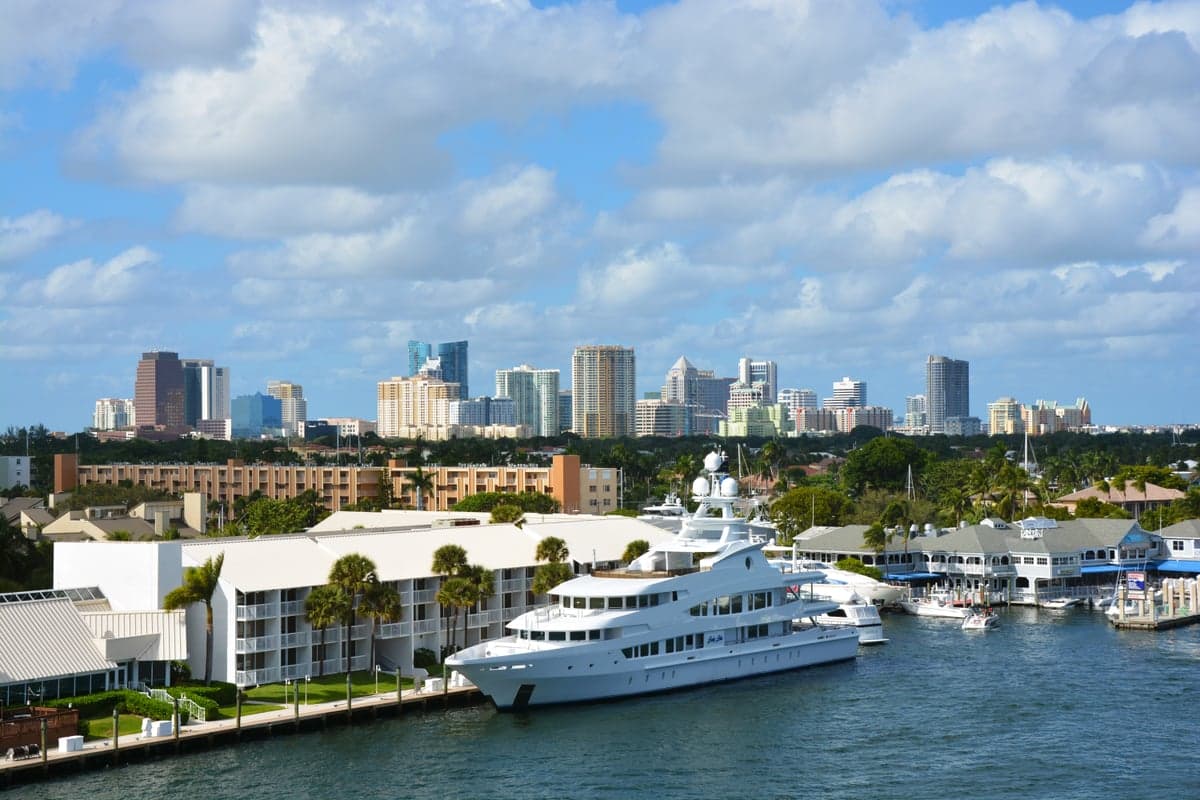
Photo: Wikipedia
Strategic Assessment of Fort Lauderdale, FL
Multiple tactical vulnerabilities. Population density, target proximity, or disaster risk are likely compounding. A retreat property and exit planning is required.
What does the Strategic Assessment tell us?
Our Strategic Assessment grades tactical survivability of an area. Major population centers, military targets, fallout zones, natural disasters, and border exposure all drive risk — lower exposure means a more defensible position in a crisis.
This is heavily inspired by Joel Skousen's Strategic Relocation book. Highly recommended you checkout the book ($)What does this tell us?
Our Strategic Assessment grades tactical survivability of an area. Major population centers, military targets, fallout zones, natural disasters, and border exposure all drive risk — lower exposure means a more defensible position in a crisis.
This is heavily inspired by Joel Skousen's Strategic Relocation book. Highly recommended you checkout the book ($)Strategic Pillars

Key Distances
Regional Safe Places
Below is our recommended "safe zones" in Florida and the surrounding area based on our strategic heuristics. For most people, it's unrealistic to live in a “safe zone” full-time due to work, family or other personal reasons. They tend to be more rural. However, many of these areas are perfect for second homes and retreat properties that double as a vacation home or even a short-term rental.

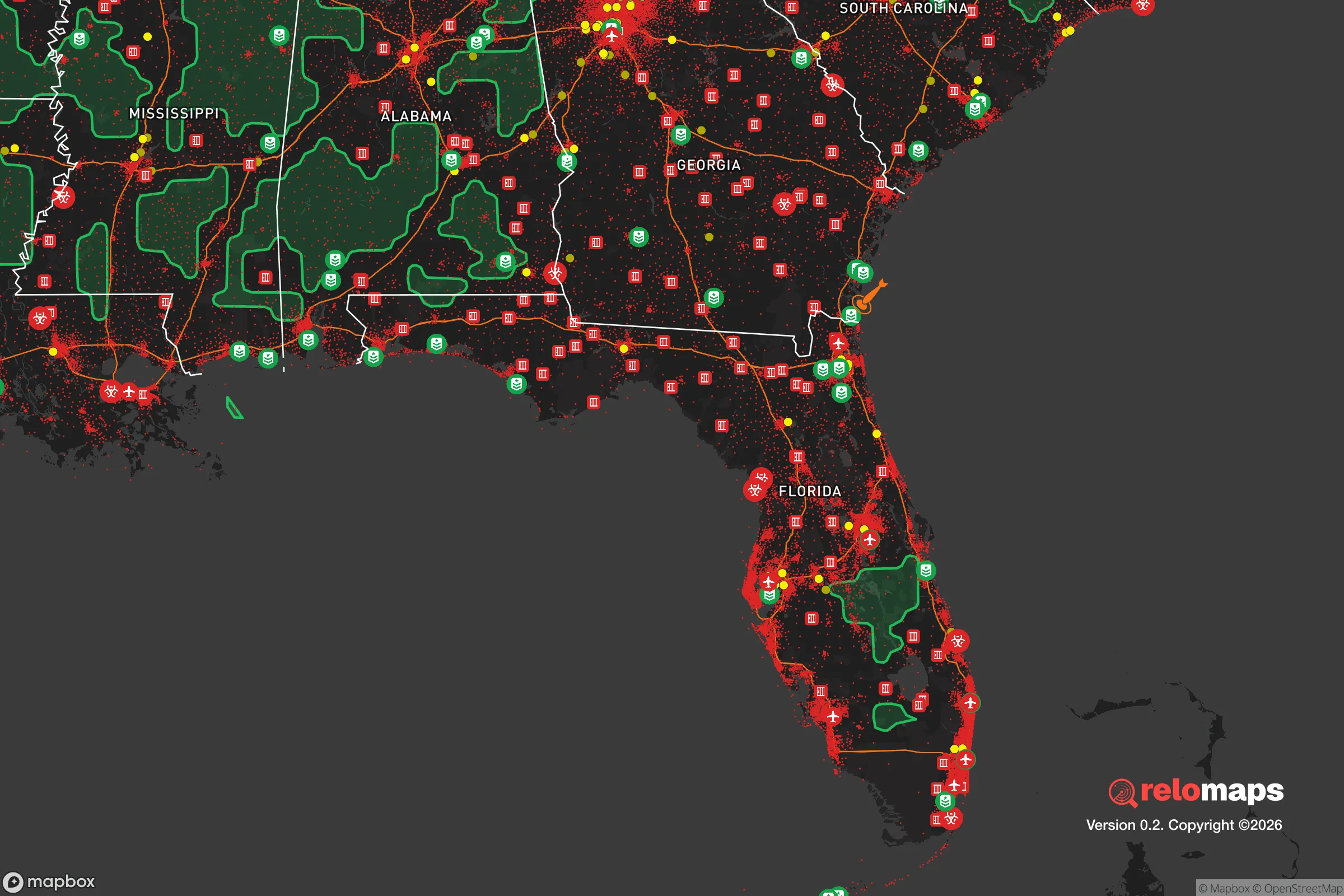


Important Note: For informational purposes only. This does not mean nothing bad ever happens in the green zones. Please use common sense. This is based on public data and modeled with AI. We tried to take a conservative approach but mistakes happen. We update this regularly as new information becomes available.
Solar Generator Recommendations
Backup power matters more here than in safer locations. We've picked three solar generators across budgets and capacity tiers — start with the budget unit if you only need a few essentials, or step up if you want to run a fridge and HVAC for days at a time.

Jackery Portable Power Station Explorer 300
Budget OptionPower on the Go: Weighing only 11 lbs, it's convenient to set up and store with book-sized foldable solar panels

BLUETTI Portable Power Station AC180
Designed for both indoor and outdoor scenarios, AC180 is highly capable as it has a robost capacity and continuous output power.

EF ECOFLOW DELTA Pro Ultra Power Station
Upgraded PickEcoFlow DELTA Pro Ultra is a whole-home energy system designed to grow with your family. Integrated with the Smart Home Panel 2, it scales to meet your evolving energy needs — keeping your home powered, intelligent, and secure through every stage of life.
We earn a commission, at no additional cost to you.
Strategic Assessment Analysis
Fort Lauderdale presents a complex strategic picture for the conservative prepper or survivalist. On the surface, it offers the resilience of a major coastal city with deep infrastructure, a year-round growing season, and proximity to the Everglades as a natural buffer. However, its location in South Florida also places it squarely in the path of multiple high-probability risks—from Category 5 hurricanes to the fallout of a densely populated, politically volatile metropolitan area. For a relocator prioritizing long-term stability and self-sufficiency, this is not a retreat; it is a forward operating base with significant trade-offs.
Geographic position and natural advantages for long-term survival
Fort Lauderdale sits at the intersection of the Atlantic Ocean, the Intracoastal Waterway, and the Everglades—a unique trifecta of natural assets. The region’s subtropical climate allows for year-round food production, with multiple growing cycles for staples like citrus, avocados, and tropical vegetables. The Everglades, while not arable, provide a massive, sparsely populated buffer to the west that could serve as a fallback zone or a source of fresh water and game in a grid-down scenario. The city’s extensive canal system—over 300 miles—offers secondary transportation routes that bypass congested roads, a critical advantage if highways become chokepoints during civil unrest or evacuation. Additionally, the Port Everglades seaport is a major fuel and cargo hub, meaning that in a regional crisis, Fort Lauderdale may receive priority resupply before inland areas. For the prepper, this means access to maritime trade routes and the ability to move goods or people by water when roads are compromised.
Risks, exposures, and proximity to fallout-relevant landmarks
The downsides are substantial and cannot be glossed over. Fort Lauderdale is ground zero for hurricane risk in the continental United States. A direct hit from a major hurricane (Category 3 or above) would likely knock out power, water, and communications for weeks or months, and the flat, low-lying terrain means storm surge can inundate large swaths of the city. Flooding from heavy rain is a near-annual event, even without a hurricane. Beyond weather, the city’s location within the Miami-Fort Lauderdale-Palm Beach metro area—home to over 6 million people—means it is a high-value target for any coordinated attack or civil unrest. The proximity to Port Everglades, Fort Lauderdale-Hollywood International Airport, and the U.S. Southern Command headquarters in Doral (just 30 miles south) makes the area a potential secondary or tertiary target in a national security crisis. For the survivalist, being near such infrastructure is a double-edged sword: it offers resources but also attracts chaos. The dense urban population also means that any disease outbreak, food shortage, or water contamination event will cascade rapidly. The city’s reliance on a single water treatment plant (the Fiveash Water Plant) and a fragile power grid (Florida Power & Light, which is prone to outages) are critical vulnerabilities.
Practical resilience for a relocator: food, water, energy, and defensibility
For a relocator serious about self-sufficiency, Fort Lauderdale requires a deliberate, layered approach. Water is the most immediate concern. The city’s tap water comes from the Biscayne Aquifer, which is shallow and vulnerable to saltwater intrusion and contamination from storm surge. A prepper should plan for at least two weeks of stored water per person, plus a high-quality filtration system (e.g., Berkey or a reverse osmosis unit) and knowledge of local surface water sources like the New River and canals—though these require treatment due to runoff and brackish conditions. Food production is viable but space-limited. Most residential lots are small, so vertical gardening, hydroponics, or community garden plots are necessary. The year-round growing season is a genuine asset, but soil quality is sandy and nutrient-poor, requiring amendment. Energy resilience is a challenge. Solar is viable year-round, but hurricane-force winds will destroy panels not securely mounted. A backup generator with a buried propane tank is a better bet for post-storm recovery. Defensibility is poor in the urban core. The flat terrain, dense housing, and multiple points of entry make a single-family home hard to secure. The better option is to locate in a western suburb like Weston, Southwest Ranches, or Davie, where lots are larger, neighbors are more spread out, and access to the Everglades provides a natural escape route. Even then, the area is not defensible in a siege scenario—it is a place to ride out a short-term crisis, not a long-term bug-out location.
The overall strategic picture for Fort Lauderdale is one of calculated risk. It offers genuine advantages in terms of climate, water access, and logistical connectivity, but those come with exposure to hurricanes, urban density, and proximity to high-value targets. For the conservative prepper who values community, trade, and a warm-weather lifestyle, it can work—but only with serious preparation. This is not a place for the unprepared or the passive. It demands a proactive mindset: stored supplies, redundant systems, a watercraft for evacuation, and a network of like-minded neighbors. If you are willing to invest in hardening your home, building local alliances, and accepting that a major storm will reset your plans every few years, Fort Lauderdale can be a viable base. If you want low-risk, low-maintenance survival, look inland. But if you want a strategic coastal node with year-round productivity and the ability to move by water, this city deserves a hard, honest look.

* Values derived from national, state, county, city and local statistics and may differ in a specific area. Last updated: 2026-04-19T06:56:05.000Z
Narrative content on this page is AI-generated and may contain mistakes. Verify any details that matter before acting on them.
ReloMaps may earn a commission from affiliate links at no extra cost to you.

