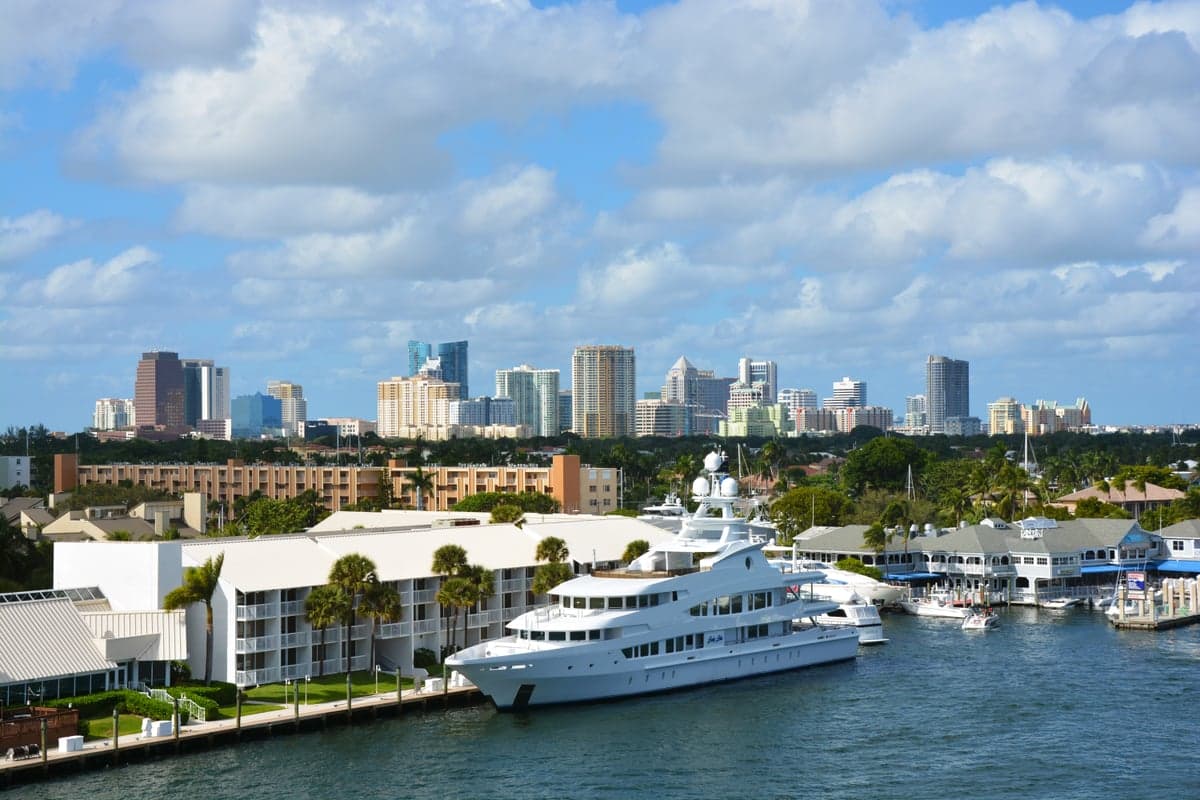
Photo: Wikipedia
Quality of Life in Fort Lauderdale, FL
A high quality of life with strong walkability, manageable living costs, healthy neighborhood signals, and solid amenity access.
What does Quality of Life tell us?
Quality of Life blends cost of living, nearby amenities, socioeconomic signals, and neighborhood character. City-level scores represent the whole municipality; individual neighborhoods can differ.
What does this tell us?
Quality of Life blends cost of living, nearby amenities, socioeconomic signals, and neighborhood character. City-level scores represent the whole municipality; individual neighborhoods can differ.
Cost of Living
56% above national average
The Real Cost of Living in Fort Lauderdale, FL for 2026
| Tier | Individual | Family (4) |
|---|---|---|
| Survival | $28k | $53k |
| Comfortable | $89k | $130k |
| Luxury | $144k+ | $224k+ |
| Elite (Top 5%) | $234k+ | $363k+ |
61%
The Area Signal
A metric tracking the socioeconomic signals of the area.


Hobbies
Explore the areaGroceries
3 within 10 miles
Gas
0 within 10 miles
Hospital
3 within 20 miles
Airport
FLL — Fort Lauderdale-Hollywood International
Post Office
USPS — Plantation, FL
Critical Amenities
Quality-of-Life Analysis
Fort Lauderdale presents a quality of life defined by coastal affluence and a fast-paced, amenity-rich environment that attracts a mix of young professionals, wealthy retirees, and international investors. With a cost of living index of 156—well above the national average of 100—the city demands a premium for its waterfront lifestyle, drawing residents who prioritize proximity to the ocean, a vibrant social scene, and year-round subtropical weather over budget-friendly living. The population skews toward higher-income households, with a median household income around $66,000, though the gap between renters and homeowners is stark, reflecting the area's role as both a luxury destination and a challenging market for middle-income earners.
Cost of living and housing affordability compared to nearby cities
Fort Lauderdale's housing market is the primary driver of its elevated cost of living, with a median home value of $455,600 and a median rent of $1,776—figures that significantly outpace the national medians of roughly $350,000 and $1,200, respectively. Compared to nearby Miami, where the median home value exceeds $500,000, Fort Lauderdale offers slightly more space per dollar, but it remains pricier than inland alternatives like Plantation or Sunrise, where median values hover around $400,000. Renters face particular pressure: the average rent for a one-bedroom apartment in central Fort Lauderdale often exceeds $2,000, pushing many workers to commute from cheaper suburbs. The average commute time of 26.5 minutes is manageable by South Florida standards, though traffic on I-95 and US-1 can spike during snowbird season, adding unpredictability to daily travel. Property taxes in Broward County average about 1.1% of assessed value, which is moderate for Florida but adds to the overall housing burden for homeowners.
What daily life is like for families and professionals in Fort Lauderdale
Daily life in Fort Lauderdale revolves around outdoor recreation and a dense network of services, with over 165 miles of inland waterways earning it the nickname "Venice of America." Residents frequently use the city's 23 miles of beaches, the Riverwalk Arts & Entertainment District, and Las Olas Boulevard for dining and shopping. For families, the Broward County Public Schools system serves the area with several highly rated magnet and charter options, such as Pine Crest School (private) and Fort Lauderdale High School (public), though school quality varies significantly by neighborhood. The city's rhythm is fast and car-dependent, with most errands requiring a vehicle, though the Sun Trolley and Brightline rail offer alternatives for downtown commutes and trips to Miami or West Palm Beach. Nightlife and cultural amenities are robust, with the Broward Center for the Performing Arts and the Museum of Discovery and Science drawing consistent crowds. However, the subtropical climate means humidity and afternoon thunderstorms are a near-daily reality from June through October, and hurricane preparedness is a seasonal routine for long-term residents.
Fort Lauderdale is best suited for professionals and retirees who can absorb its high housing costs and value a lifestyle centered on water access, dining, and cultural events. Families may find better value in neighboring suburbs like Coral Springs or Parkland, where schools are stronger and home prices are lower for comparable square footage. The city's transient, tourism-influenced economy means that newcomers should expect a social scene that is active but sometimes fleeting, with many residents moving in and out for job transfers or seasonal stays. Ultimately, those who thrive here are willing to pay a premium for a coastal address and a calendar filled with boat parades, art festivals, and beach days—provided they can navigate the traffic and the price tag.

Crime in Fort Lauderdale, FL
Higher crime rates than 74% of comparable U.S. locations.
Violent CrimeViolent Crime Analysis
Property CrimeProperty Crime Analysis
Crime Analysis
Fort Lauderdale’s overall safety picture is mixed: the city’s violent crime rate of 605.7 incidents per 100,000 residents is roughly 60% higher than the national average, while its property crime rate of 2,981.2 per 100,000 is nearly double the U.S. median. These figures place the city among the higher-crime large metro areas in Florida, a reality shaped by both its dense urban core and the broader criminal justice environment in Broward County.
Crime in context
Compared to Florida’s statewide violent crime rate of roughly 380 per 100,000, Fort Lauderdale’s rate is about 60% higherched. Property crime in the city also exceeds the state average of approximately 2,100 per 100,000 by over 40%. The gap is even starker when measured against the national property crime rate of roughly 1,950 per 100,000. These disparities are not accidental. Broward County’s elected state attorney and many local judges have pursued progressive criminal justice policies—including reduced cash bail, diversion programs for repeat offenders, and sentencing guidelines that prioritize rehabilitation over incarceration. While intended to reduce mass incarceration, these policies have resulted in shorter sentences and faster release for convicted criminals, contributing to a revolving-door effect that undermines public safety. The result is a justice system that, in practice, prioritizes offender leniency over victim protection, emboldening property and violent offenders alike.
What residents experience
For daily life, the high property crime rate means residents face elevated risks of burglary, vehicle theft, and package theft, particularly in areas with easy highway access. Violent crime—including aggravated assault and robbery—is concentrated in specific corridors, but the city’s overall rate means even low-crime neighborhoods are not immune to spillover. The progressive prosecutorial approach has a direct impact: repeat offenders are more likely to be back on the street within weeks of arrest, increasing the likelihood of victimization for law-abiding residents. This is especially concerning for families and retirees, who may find that even minor property crimes go unpunished or result in plea deals that do not remove dangerous individuals from the community.
Neighborhood-level variation is significant. Areas west of I-95, including neighborhoods like Riverland and Edgewood, report higher violent crime rates, while coastal and downtown zones—such as Victoria Park, Las Olas Isles, and Harbor Beach—have lower violent crime but still face property crime challenges. Gated communities and high-rises with 24/7 security offer a buffer, but the broader county-wide justice policies mean that even these enclaves are not fully insulated from the effects of a system that prioritizes offender leniency. Prospective residents should research specific block-level data and consider that the city’s overall crime statistics reflect a jurisdiction where progressive judicial ideology has tangible, negative consequences for public safety.
* Values derived from national, state, county, city and local statistics and may differ in a specific area. Last updated: 2026-04-19T06:56:05.000Z
Narrative content on this page is AI-generated and may contain mistakes. Verify any details that matter before acting on them.
ReloMaps may earn a commission from affiliate links at no extra cost to you.

