Photo: Wikipedia
Political ClimatePolitical Climate in Fort Lauderdale, FL
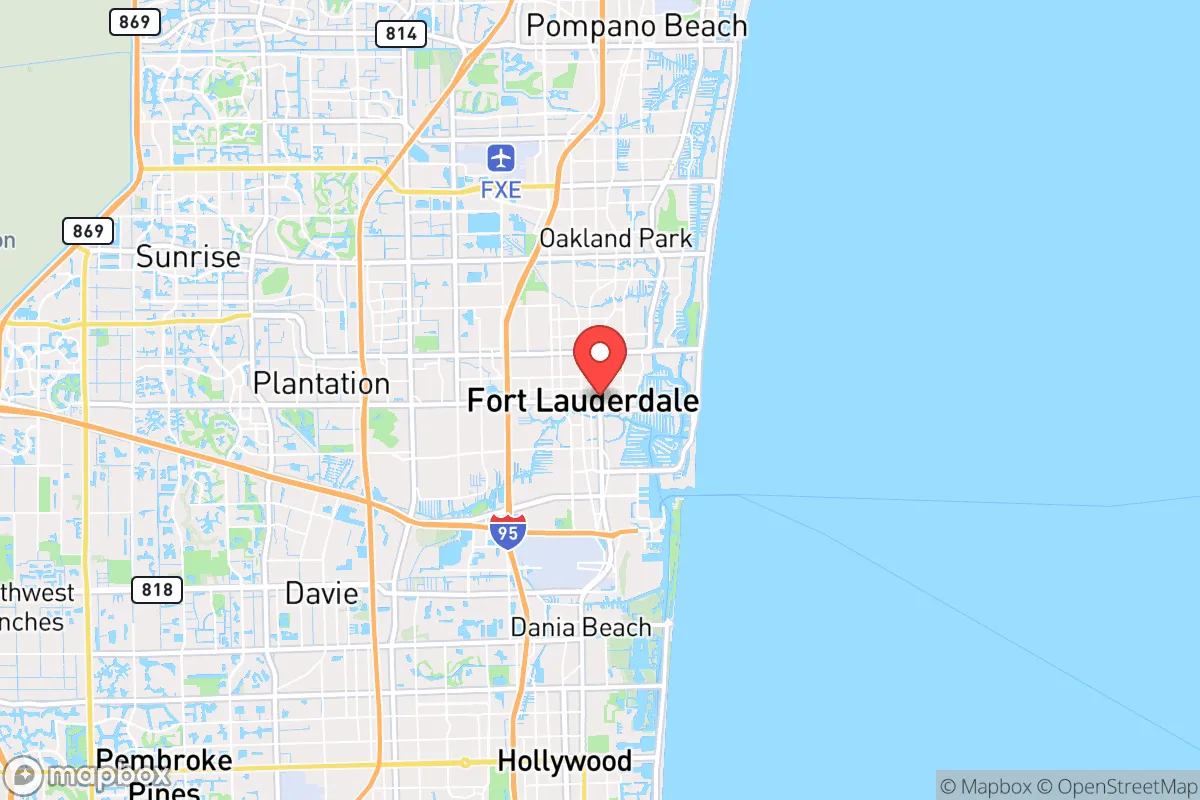
District shown is the primary district for this city’s centroid. Cities may span multiple districts.
Local Political AnalysisPolitical Analysis of Fort Lauderdale, FL
Fort Lauderdale has shifted noticeably leftward over the past decade, and if you’ve lived here as long as I have, you’ve felt it. The city itself leans Democratic, with a Cook PVI of D+2, but that number doesn’t tell the whole story—it’s the direction of the change that’s got a lot of us watching closely. Ten years ago, this was a reliably purple area where common-sense conservatism could still win local races; now, you see progressive policies creeping into everything from zoning to policing, and it’s happening faster than most folks realize.
How it compares
Drive 20 minutes west to Weston or Parkland, and you’re in solidly red territory—those towns vote Republican by double digits and have kept their local governments focused on low taxes and property rights. Head north to Pompano Beach or south to Hollywood, and you’ll find a similar mix of blue-leaning city councils and more conservative suburban pockets. But Fort Lauderdale itself? The city council and mayor’s office have been trending progressive, pushing things like “sanctuary city” policies and restrictive development regulations that feel less like community planning and more like government overreach. The contrast with nearby Broward County’s more rural areas—places like Southwest Ranches or Davie—is stark: out there, people still believe in minding their own business and keeping the government out of their lives.
What this means for residents
For those of us who value personal freedoms, the biggest red flag is how the city has handled public safety and property rights. Fort Lauderdale’s push for “defunding” certain police programs a few years back was a wake-up call—crime rates ticked up, and it took a lot of community pushback to restore funding. On the housing front, new ordinances around short-term rentals and building permits have made it harder for homeowners to use their property as they see fit. Taxes are also creeping up to fund expanded city programs, and while some folks don’t mind, it’s a direct hit on anyone trying to retire or raise a family on a fixed budget. If you’re a small business owner or a gun owner, you’ve probably noticed the city council’s willingness to regulate things that used to be left alone—it’s a slow erosion of the “live and let live” attitude that made this area great.
On the cultural side, Fort Lauderdale still has its conservative pockets—especially in the Rio Vista and Harbor Beach neighborhoods—but the city’s official stance has become more activist. You’ll see pride flags on city buildings year-round, and there’s been a push for “equity” programs in schools and city hiring that some residents view as divisive rather than unifying. The long-term trajectory? If current trends hold, Fort Lauderdale could look more like Miami Beach in a decade—progressive, expensive, and increasingly restrictive on personal choice. For now, it’s still a place where you can find your tribe, but you’ll want to keep an eye on local elections and show up to city council meetings if you want to preserve the freedoms that made you move here in the first place.

State Political ClimatePolitical Climate in Florida
State Political AnalysisPolitical Environment in the State
Florida has transformed from a classic swing state into a solidly Republican-leaning powerhouse over the past decade, with registered Republicans now outnumbering Democrats by over 800,000 voters as of 2025. The state’s political center of gravity has shifted decisively rightward, driven by a massive influx of conservative-leaning domestic migrants from high-tax states like New York, California, and Illinois, combined with a growing Hispanic electorate that has broken heavily for Republicans in recent cycles. In 2024, Donald Trump carried Florida by roughly 13 points, a dramatic shift from the 0.4-point margin in 2000 and the 1.2-point margin in 2012, cementing the state’s status as a red bastion in the Southeast.
Urban vs. rural divide
The political map of Florida is a textbook study in geographic polarization, but with a few critical twists that make it unique. The major urban centers—Miami-Dade County, Orlando (Orange County), and Tampa (Hillsborough County)—have historically been Democratic strongholds, but Miami-Dade has been trending red at an astonishing pace. In 2020, Trump won Miami-Dade by 6 points after losing it by 19 points in 2016, a 25-point swing driven largely by Cuban-American and Venezuelan-American voters who view the Democratic Party’s leftward shift on socialism and immigration with deep suspicion. Meanwhile, the rural Panhandle—places like Panama City, Pensacola, and Tallahassee’s surrounding counties—remains deeply Republican, with many precincts voting 80% or more for Trump. The I-4 corridor, stretching from Tampa through Lakeland to Orlando, remains the state’s premier battleground, but even there, fast-growing exurbs like Lakeland and Clermont have shifted right as families flee urban school districts and rising crime. The Naples and Fort Myers areas in Southwest Florida are now reliably red, driven by affluent retirees and conservative snowbirds. The only real blue holdouts are inner-city neighborhoods in Miami, Orlando, and Tampa, plus college towns like Gainesville (Alachua County), which voted for Biden by 20 points but is increasingly an island in a sea of red.
Policy environment
Florida’s policy environment under Governor Ron DeSantis has become a national model for conservative governance, with a focus on low taxes, limited regulation, and parental rights. The state has no personal income tax, a major draw for high-earners and business owners, and corporate taxes are a flat 5.5% with generous exemptions. Property taxes are moderate, averaging about 0.8% of assessed value, though homestead exemptions keep costs manageable for primary residents. On education, Florida was a pioneer in school choice, with the Family Empowerment Scholarship program now serving over 400,000 students through vouchers and education savings accounts. The Parental Rights in Education Act (HB 1557), signed in 2022, prohibits classroom instruction on sexual orientation and gender identity in grades K-3, a law that has drawn national controversy but remains popular with conservative parents. Healthcare policy has been similarly conservative: Florida is one of 10 states that has not expanded Medicaid under the Affordable Care Act, and the state has aggressively pushed back against federal vaccine mandates and COVID-19 restrictions. Election integrity has been a priority, with the SB 90 law (2021) tightening voter ID requirements, limiting drop boxes, and restricting third-party ballot collection. The state also passed a 15-week abortion ban in 2023 (HB 5), later extended to six weeks in 2024, making Florida one of the most restrictive states in the South on the issue.
Trajectory & freedom
Florida is arguably the most “free” state in the nation by any objective measure, and the trajectory is accelerating in that direction. The Constitutional Carry law (HB 543), signed in 2023, allows law-abiding residents to carry a concealed firearm without a permit, eliminating a previous barrier to the Second Amendment. On property rights, the state has strengthened protections against eminent domain and passed laws limiting homeowners’ association overreach. The Live Local Act (2023) preempts local zoning restrictions to encourage affordable housing development, a rare example of state-level intervention that actually expands property rights. On the personal liberty front, Florida has been a leader in pushing back against federal overreach: the COVID-19 Liability Shield law protects businesses from pandemic-related lawsuits, and the state banned vaccine passports and mask mandates for schools and government buildings. The Individual Freedom Act (HB 7, 2022), often called the “Stop WOKE Act,” prohibits workplace training that promotes certain concepts about race and sex, a controversial but popular move among conservatives who see it as protecting free speech from corporate orthodoxy. The only area where freedom has arguably contracted is on medical autonomy: the six-week abortion ban is among the strictest in the nation, and the state has cracked down on telehealth prescriptions for certain medications. But for most conservatives, the trade-off is well worth it.
Civil unrest & political movements
Florida has seen its share of political flashpoints, but they tend to be smaller and more localized than in states like Oregon or California. The most visible recent unrest was the 2020 George Floyd protests, which saw significant demonstrations in Miami, Orlando, and Tampa, but were met with a heavy law enforcement response and largely dissipated within weeks. The state has been a focal point for immigration politics, with Governor DeSantis’s high-profile flights of migrants to Martha’s Vineyard and Sacramento in 2022 drawing national attention and legal challenges. The “Don’t Say Gay” protests (a misnomer for the Parental Rights in Education Act) drew large rallies at the state capitol in Tallahassee, but counter-protests from conservative parents were equally vocal. Election integrity remains a live issue: the 2020 and 2022 elections in Florida were widely considered smooth and secure, but the state’s aggressive voter roll maintenance and the creation of the Office of Election Crimes and Security in 2022 have drawn criticism from left-leaning groups. The state has also seen a rise in “constitutional sheriff” movements in rural counties like Polk and Lake, where sheriffs have publicly refused to enforce certain state or federal laws they deem unconstitutional. Overall, political violence is rare, and the state’s “stand your ground” law has not led to the widespread vigilanteism critics predicted.
Projection
Over the next 5-10 years, Florida is likely to become even more conservative, driven by continued in-migration from blue states and the naturalization of conservative-leaning Hispanic voters. The state’s population is projected to grow by another 3-4 million by 2035, with the fastest growth in the I-4 corridor and Southwest Florida, areas that are already trending red. The Democratic Party’s base in Florida is shrinking: Miami-Dade is on track to become a swing county within a decade, and the party’s only reliable strongholds will be inner-city neighborhoods and college towns. The state legislature is likely to continue passing conservative legislation on education, gun rights, and election integrity, with the only real brake being the state constitution, which is relatively easy to amend but has been used by progressives on issues like marijuana legalization and felon voting rights. The biggest wild card is climate change: rising sea levels and hurricane intensity could eventually drive migration away from coastal areas, but for now, the state’s pro-growth policies and low taxes continue to attract new residents. A conservative moving to Florida in 2026 should expect to find a state that is increasingly aligned with their values, with a government that actively protects parental rights, gun rights, and economic freedom.
For a new resident, the bottom line is clear: Florida offers a political environment that is stable, predictable, and increasingly conservative. You’ll find lower taxes, less regulation, and a government that respects your right to make decisions for your family. The trade-offs are real—summer heat, hurricane risk, and a cost of living that is rising faster than the national average—but for most conservatives, the freedom dividend is worth it. Just be prepared for the traffic and the humidity.
* Values derived from national, state, county, city and local statistics and may differ in a specific area. Last updated: 2026-04-19T06:56:05.000Z
Narrative content on this page is AI-generated and may contain mistakes. Verify any details that matter before acting on them.
ReloMaps may earn a commission from affiliate links at no extra cost to you.

