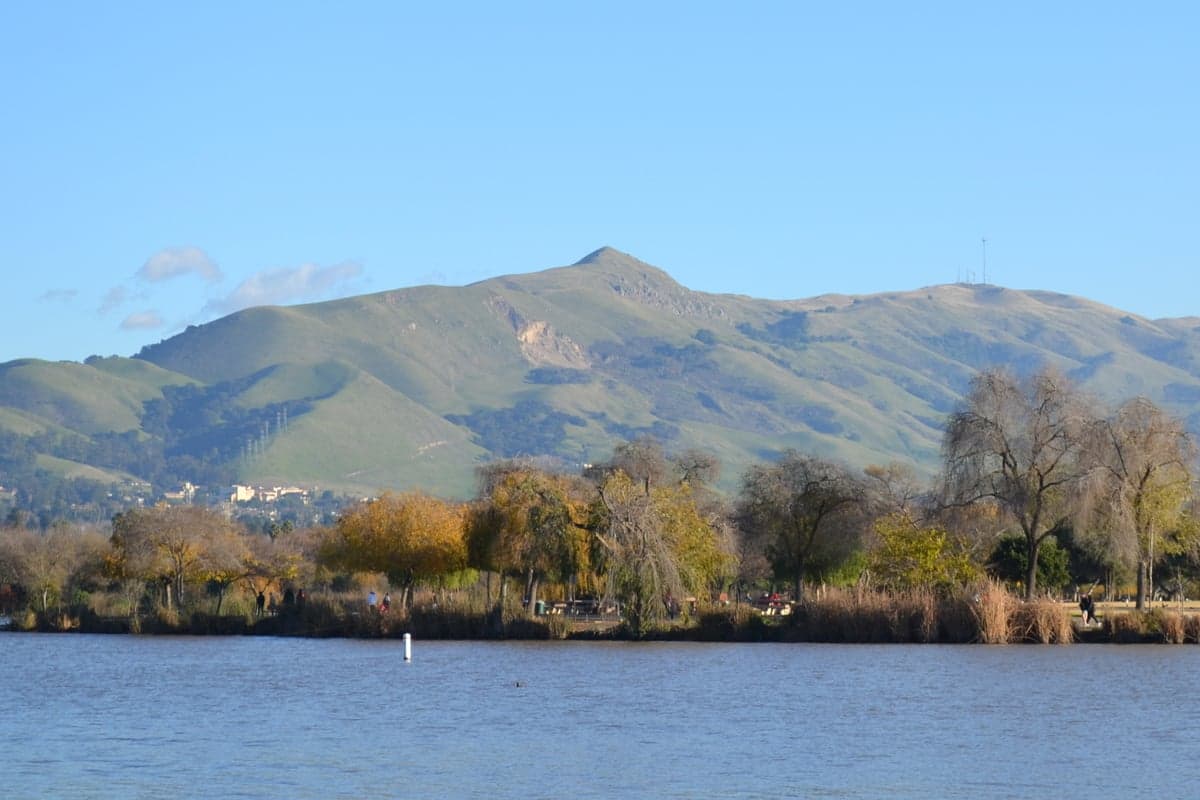
Photo: Wikipedia
Political ClimatePolitical Climate in Fremont, CA
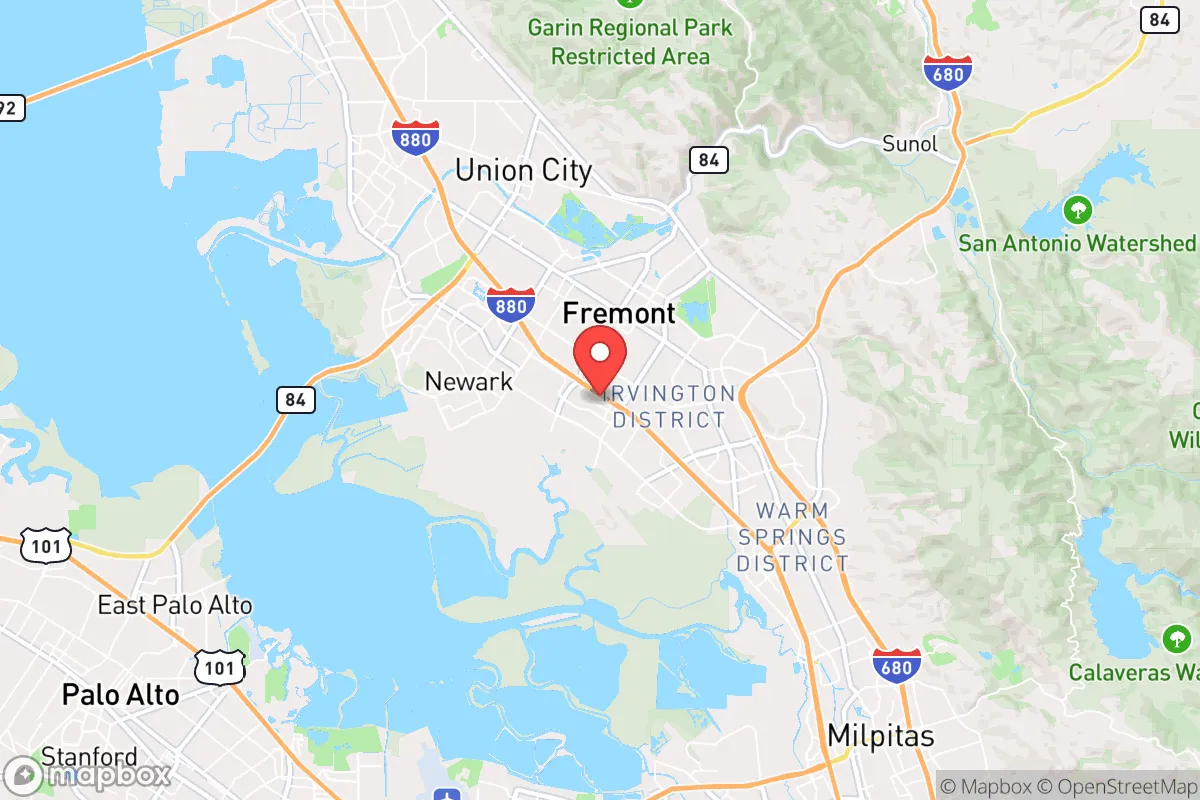
District shown is the primary district for this city’s centroid. Cities may span multiple districts.
Local Political AnalysisPolitical Analysis of Fremont, CA
Fremont, California, leans heavily Democratic, with a Cook PVI of D+21, meaning it votes about 21 points more Democratic than the national average. This wasn't always the case—I remember when this town was a lot more balanced, with a strong mix of moderates and even some conservative voices in local government. Over the last decade, though, the shift has been dramatic. The city council and school board are now almost uniformly progressive, and the local political conversation has moved sharply left, especially on housing, policing, and education. If you're someone who values personal freedoms and limited government, you've probably felt that squeeze getting tighter.
How it compares
Fremont sits in Alameda County, which is one of the most liberal counties in the nation, but it's not as far-left as Berkeley or Oakland to the north. Those cities are in a different league entirely—think rent control on steroids and defund-the-police movements that actually got traction. To the south, you've got San Jose, which is also blue but has a more pragmatic, tech-driven vibe. The real contrast is east, over the hills in places like Livermore or Pleasanton. Those towns still have a noticeable conservative presence, with lower taxes and more pushback on state mandates. Fremont used to feel more like them; now it feels like a suburb of San Francisco, with all the policy baggage that implies.
What this means for residents
For the average family here, the political tilt shows up in your wallet and your daily life. Property taxes are already high thanks to Prop 13 loopholes being chipped away, but the city keeps adding parcel taxes and bond measures for things like "affordable housing" and "climate action plans" that rarely deliver what they promise. You'll see more regulations on everything from short-term rentals to gas stoves. The school board has pushed critical race theory and gender ideology curricula, and parents who object are often dismissed as bigots. If you run a small business, the permitting process is a nightmare, and the city council is openly hostile to anything that isn't a high-density apartment complex. The police department has been defunded in practice—not in name—with response times creeping up and property crime rising in neighborhoods that used to be safe.
Looking ahead, I don't see this trend reversing. The tech industry keeps importing young, left-leaning workers who vote for more of the same. The local GOP is basically a ghost town. If you're a conservative or even a moderate who values individual liberty, you'll find yourself increasingly isolated. The city's cultural identity is now tied to progressive activism—there are regular protests downtown, and the city council spends more time on symbolic resolutions about national politics than on fixing potholes. My advice? If you're thinking of moving here, come with your eyes open. The weather is great, the schools are decent on paper, but the political climate is suffocating if you don't toe the line. A lot of folks I know are already looking at places like Texas or Idaho. I'm not there yet, but I get it.

State Political ClimatePolitical Climate in California
State Political AnalysisPolitical Environment in the State
California is a one-party Democratic state where registered Democrats outnumber Republicans by nearly 2-to-1, and the last Republican presidential candidate to carry it was George H.W. Bush in 1988. Over the past 20 years, the state has shifted from a competitive purple state to a deep blue stronghold, driven largely by massive population growth in coastal metros and a steady exodus of conservative-leaning residents to states like Texas, Idaho, and Arizona. While the state still has conservative pockets, the overall trajectory has been a steady march leftward on nearly every policy front.
Urban vs. rural divide
The political map of California is a tale of two states. The coastal urban corridor—from San Francisco and Oakland down through Los Angeles and San Diego—drives the state’s Democratic supermajority. These metros account for roughly 70% of the state’s population and vote 65-35 Democratic on average. In contrast, the Central Valley and inland regions—places like Bakersfield, Fresno, and Redding—are reliably Republican, often voting 60-40 or more for GOP candidates. The Inland Empire (Riverside and San Bernardino counties) has been a political battleground, flipping from red to purple as Los Angeles spillover changes the demographics. Orange County, once a conservative bastion, flipped blue in 2018 and has stayed there, driven by Asian-American and Latino voters shifting left. The rural north, including Shasta County and the Gold Country, remains deeply red, but these areas have shrinking populations and little political power in Sacramento.
Policy environment
California’s policy environment is defined by high taxes, heavy regulation, and a progressive social agenda. The state has the highest top marginal income tax rate in the nation at 13.3%, and a state sales tax that can exceed 10% in some cities. Property taxes are capped by Proposition 13, but recent ballot measures have chipped away at that protection. The regulatory climate is among the most burdensome in the country, particularly in housing, energy, and environmental permitting. Education policy is dominated by the California Teachers Association, with school choice virtually nonexistent—no vouchers, limited charter expansion, and a strict union-backed curriculum. Healthcare is heavily regulated, with the state pushing toward a single-payer system, though it hasn’t passed yet. Election laws are among the most liberal: universal mail-in voting, same-day registration, and no voter ID requirement. Gun laws are the strictest in the nation, including an assault weapons ban, a 10-day waiting period, and a “may issue” concealed carry regime that was recently tightened further.
Trajectory & freedom
California is becoming less free by nearly any measure, especially for conservatives. Recent legislation has expanded government control over personal choices. In 2023, the state passed SB 2, which dramatically restricted where concealed carry permit holders can take firearms, effectively gutting the Supreme Court’s Bruen decision. Parental rights have been eroded: AB 1955 (2024) prohibits school districts from requiring parental notification when a child changes their gender identity. Medical autonomy took a hit with the state’s COVID-19 vaccine mandates for schoolchildren and healthcare workers, though some have been rolled back. Property rights are under constant assault from rent control expansions (AB 1482) and the California Environmental Quality Act (CEQA), which allows virtually anyone to block development. On the tax front, Proposition 19 (2020) limited property tax portability for inherited homes, effectively raising taxes on families. The state also passed a wealth tax proposal in 2024 that targets unrealized capital gains—a first in the nation and a major red flag for anyone with assets.
Civil unrest & political movements
California has been a flashpoint for political unrest, particularly in its major cities. The 2020 George Floyd protests in Los Angeles and Oakland saw widespread looting and property destruction, with some areas experiencing months of nightly demonstrations. The state’s sanctuary law (SB 54) limits cooperation between local law enforcement and federal immigration authorities, making it a magnet for illegal immigration and creating tension with the Trump administration. The “Calexit” secession movement gained traction after the 2016 election but has since fizzled, though a small but vocal group still pushes for independence. On the right, the “State of Jefferson” movement in rural northern counties—including Modoc, Siskiyou, and Tehama—continues to advocate for secession from California, citing neglect from Sacramento. Election integrity is a major concern for conservatives: the state’s universal mail-in voting system, lack of voter ID, and same-day registration have led to widespread distrust, though no major fraud has been proven. The 2021 recall election of Governor Gavin Newsom failed, but it showed that a motivated conservative base can still force a statewide vote.
Projection
Over the next 5-10 years, California will likely become even more progressive as demographic trends accelerate. The state’s population is aging and declining, with net domestic outmigration of roughly 300,000 people per year, mostly to red states. Those leaving tend to be middle-class families and conservatives, while those arriving are often foreign immigrants and young progressives drawn to coastal cities. The Latino population, which is growing, has shifted leftward in recent cycles, and Asian-American voters in suburbs like Irvine and Cupertino are also trending blue. The state’s housing crisis will likely worsen, driving more middle-class families out and concentrating political power in the urban core. A Republican statewide win—for governor or Senate—is virtually impossible in the current environment. The state will continue to pass progressive legislation on taxes, guns, and social issues, and the courts will likely uphold most of it. For a conservative moving in now, expect to live in a state where your vote for president or Senate is effectively meaningless, and where your values will be increasingly out of step with the government.
For a conservative individual or family considering a move to California, the bottom line is this: you will be a political minority in a state that actively works against your values. Your taxes will be high, your gun rights severely limited, your parental rights under threat, and your vote for statewide office will be wasted. If you can afford the cost of living and are willing to live in a red pocket like Bakersfield or Redding, you can find a community of like-minded people, but you will still be subject to Sacramento’s policies. For most conservatives, the state’s trajectory is a dealbreaker—and the data shows they’re voting with their feet by leaving in droves.
* Values derived from national, state, county, city and local statistics and may differ in a specific area. Last updated: 2026-04-30T04:17:46.000Z
Narrative content on this page is AI-generated and may contain mistakes. Verify any details that matter before acting on them.
ReloMaps may earn a commission from affiliate links at no extra cost to you.

