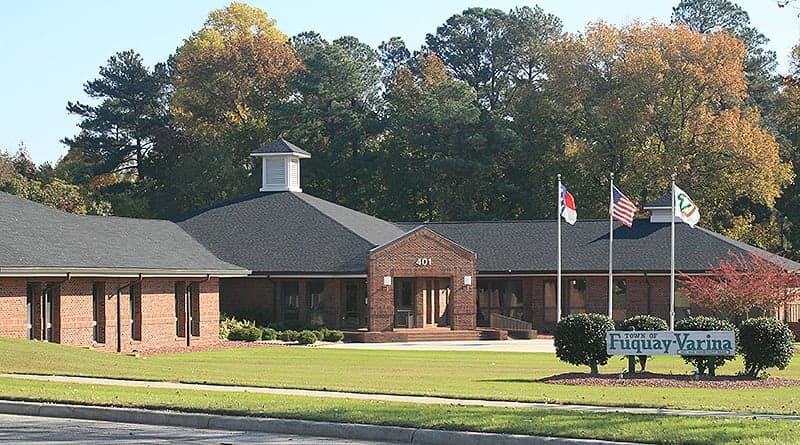
Photo: Wikipedia
Strategic Assessment of Fuquay Varina, NC
Meaningful friction. Expect exposure to either population pressure, blast zones, or natural disaster risk. Consider buying a retreat property.
What does the Strategic Assessment tell us?
Our Strategic Assessment grades tactical survivability of an area. Major population centers, military targets, fallout zones, natural disasters, and border exposure all drive risk — lower exposure means a more defensible position in a crisis.
This is heavily inspired by Joel Skousen's Strategic Relocation book. Highly recommended you checkout the book ($)What does this tell us?
Our Strategic Assessment grades tactical survivability of an area. Major population centers, military targets, fallout zones, natural disasters, and border exposure all drive risk — lower exposure means a more defensible position in a crisis.
This is heavily inspired by Joel Skousen's Strategic Relocation book. Highly recommended you checkout the book ($)Strategic Pillars

Key Distances
Regional Safe Places
Below is our recommended "safe zones" in North Carolina and the surrounding area based on our strategic heuristics. For most people, it's unrealistic to live in a “safe zone” full-time due to work, family or other personal reasons. They tend to be more rural. However, many of these areas are perfect for second homes and retreat properties that double as a vacation home or even a short-term rental.

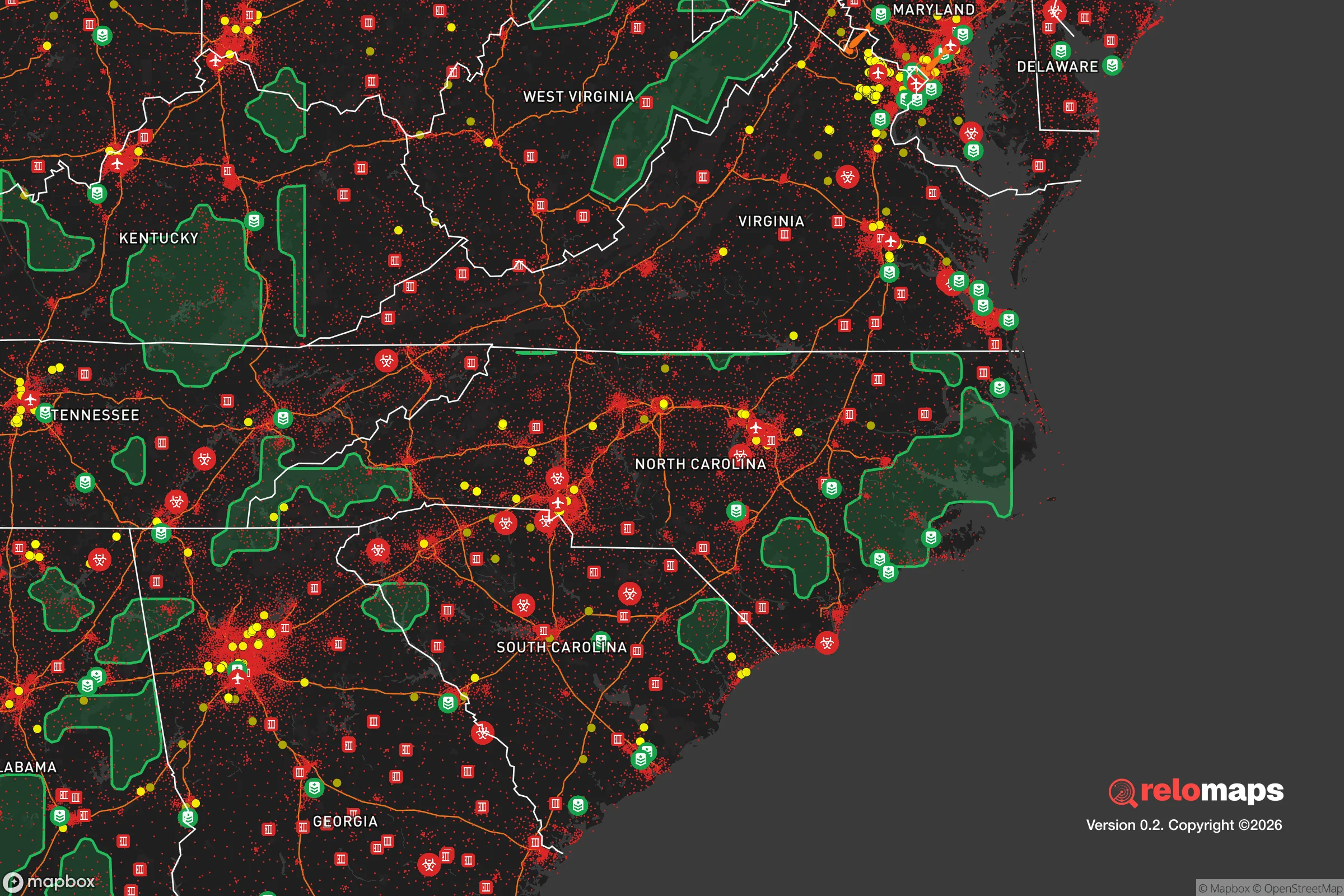


Important Note: For informational purposes only. This does not mean nothing bad ever happens in the green zones. Please use common sense. This is based on public data and modeled with AI. We tried to take a conservative approach but mistakes happen. We update this regularly as new information becomes available.
Solar Generator Recommendations
Backup power matters more here than in safer locations. We've picked three solar generators across budgets and capacity tiers — start with the budget unit if you only need a few essentials, or step up if you want to run a fridge and HVAC for days at a time.

Jackery Portable Power Station Explorer 300
Budget OptionPower on the Go: Weighing only 11 lbs, it's convenient to set up and store with book-sized foldable solar panels

BLUETTI Portable Power Station AC180
Designed for both indoor and outdoor scenarios, AC180 is highly capable as it has a robost capacity and continuous output power.

EF ECOFLOW DELTA Pro Ultra Power Station
Upgraded PickEcoFlow DELTA Pro Ultra is a whole-home energy system designed to grow with your family. Integrated with the Smart Home Panel 2, it scales to meet your evolving energy needs — keeping your home powered, intelligent, and secure through every stage of life.
We earn a commission, at no additional cost to you.
Strategic Assessment Analysis
Fuquay-Varina, North Carolina, offers a surprisingly resilient strategic position for those prioritizing preparedness and self-sufficiency, balancing proximity to the economic engine of the Research Triangle with a distinctly rural, conservative character that’s increasingly hard to find. The town’s dual nature—a rapidly growing suburb with deep agricultural roots—creates a unique buffer zone: close enough to Raleigh’s resources for supply runs and medical care, yet far enough from the urban core to avoid the worst of civil unrest, gridlock, and fallout dangers that come with a major metropolitan area. For a relocator thinking in terms of bug-out locations, community cohesion, and long-term sustainability, Fuquay-Varina deserves a serious look, but only with clear eyes on its specific risks and advantages.
Geographic position and natural advantages for long-term security
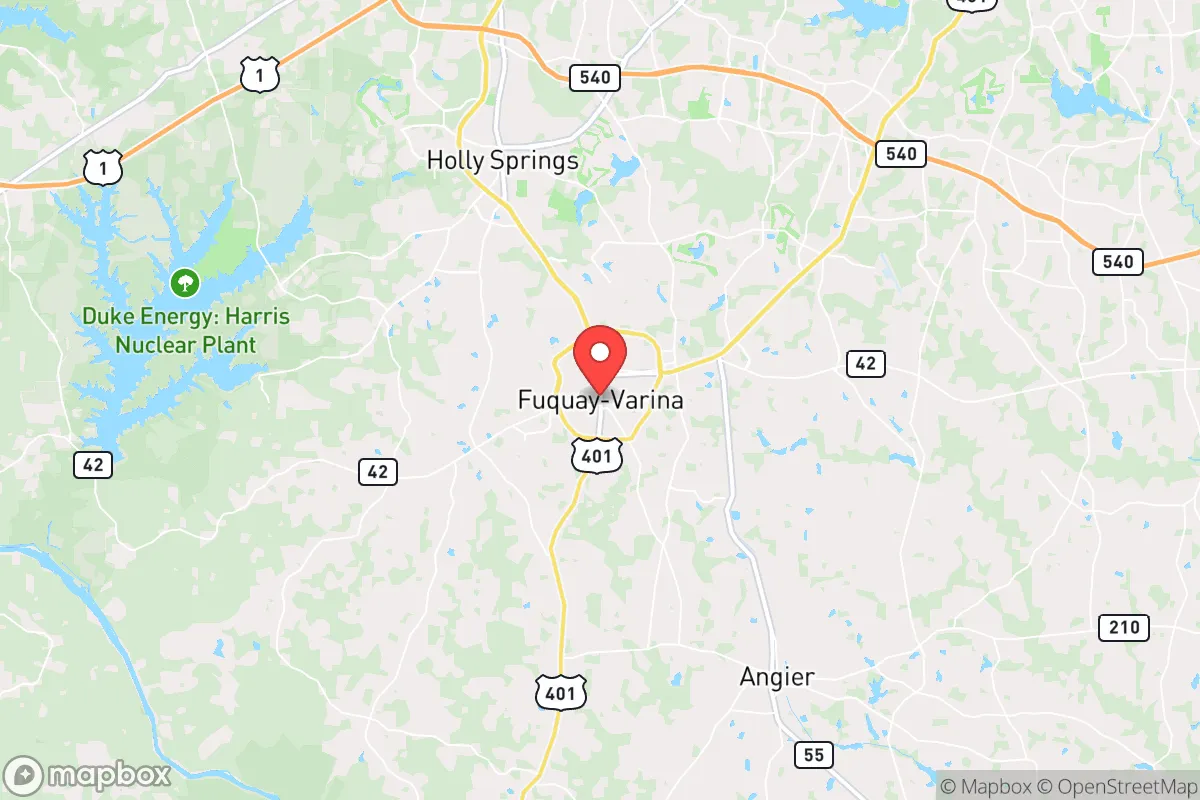
Fuquay-Varina sits in southwestern Wake County, roughly 20 miles from downtown Raleigh, placing it at the edge of the Triangle’s suburban sprawl rather than in its dense center. This location is a double-edged sword, but for the prepper mindset, it leans positive. The town is surrounded by a mix of farmland, pine forests, and small watersheds—specifically the Cape Fear River basin to the south and the Neuse River basin to the north—which provide natural water sources and defensible terrain. The area’s rolling hills and scattered woodlots offer decent cover and line-of-sight advantages for property security, unlike the flat, open coastal plain further east. Fuquay-Varina’s elevation averages around 400 feet, which is modest but enough to avoid the worst flooding risks that plague lower-lying parts of the state. The climate is temperate, with four distinct seasons, meaning you can grow food year-round with some planning—a critical factor for food security. The town’s historical identity as a farming community (the “Varina” name comes from a tobacco strain) means the local soil is proven for agriculture, and there are still working farms within a 10-minute drive of downtown. For a relocator, this geographic setup means you’re not isolated, but you’re also not trapped in a concrete jungle when things go sideways.
Risks, exposures, and proximity to fallout-relevant landmarks
The most significant strategic downside of Fuquay-Varina is its proximity to Raleigh-Durham, a major population and economic hub that would be a primary target in any large-scale conflict or terrorist event. Raleigh-Durham International Airport (RDU) is about 30 miles north, and the Research Triangle Park (RTP) is a dense cluster of high-tech, pharmaceutical, and government-contracted facilities—think biolabs, data centers, and defense contractors. In a mass casualty event or EMP strike, these would be high-value targets. The fallout zone from a conventional or dirty bomb attack on RTP could theoretically extend into southern Wake County depending on wind patterns. Additionally, the town is within 100 miles of Fort Liberty (formerly Fort Bragg), one of the largest military installations in the world. While that base provides a security buffer in some scenarios, it also makes the region a potential staging area or secondary target during civil unrest or war. Fuquay-Varina’s population has exploded from about 18,000 in 2010 to over 40,000 today, which means the town is absorbing new residents faster than its infrastructure can handle. This growth brings increased traffic on US-401 and NC-55—the two main arteries—creating choke points that could become impassable during an evacuation. The town’s water supply comes from a mix of groundwater wells and surface water from the Cape Fear River, which is vulnerable to contamination from upstream industrial sites, including the Chemours facility near Fayetteville that has already caused PFAS pollution issues. For the survivalist, these are real, calculable risks that require mitigation, not denial.
Practical resilience for a relocator: food, water, energy, and defensibility
On the ground, Fuquay-Varina offers several practical advantages for someone serious about self-reliance. The town has a strong network of local farms, farmers’ markets, and agricultural supply stores, including the Fuquay-Varina Farmers Market and several U-pick operations within a 15-minute drive. This means you can source seeds, livestock feed, and fresh produce without relying on big-box supply chains. Water access is decent: most residential lots in the outskirts have wells, and the Cape Fear River is a reliable backup source if you have filtration gear. The area’s groundwater is generally good quality, though testing for PFAS is recommended. For energy, the grid is typical of the Southeast—vulnerable to ice storms and hurricane-related outages, but solar potential is solid. Wake County averages about 215 sunny days per year, making rooftop solar a viable investment for off-grid capability. The town’s defensibility is mixed. The newer subdivisions are cookie-cutter layouts with limited egress points—a tactical nightmare in a grid-down scenario. However, the older parts of town, particularly around the historic downtown and the rural pockets along Old Stage Road and Holly Springs Road, offer more secluded properties with tree cover, acreage, and multiple access routes. Wake County’s gun laws are relatively friendly, with no county-level restrictions beyond state law, meaning you can keep a well-stocked armory without local hassle. The local sheriff’s office is professional but stretched thin due to growth, so community watch and neighborhood defense networks are worth building. For food storage, the area has several big-box stores (Walmart, Lowe’s Foods) within 10 minutes, but a prepper should plan for supply chain disruptions by establishing relationships with local hunters and farmers. The presence of the Triangle’s medical infrastructure—including Duke University Hospital and UNC Health—is a double-edged sword: excellent care in normal times, but a potential magnet for desperate crowds during a crisis.
The overall strategic picture for Fuquay-Varina is one of calculated trade-offs. It’s not a remote mountain redoubt, and it’s not a hardened bunker town. What it offers is a middle ground: a community that still values self-reliance, with enough rural character to support a prepper lifestyle, but close enough to urban resources to be useful. The key is to buy land on the outskirts—preferably with a well, septic, and some timber—and to build relationships with the old-timers who remember when this was just a farming crossroads. If you’re looking for a place that balances access to jobs and healthcare with a conservative, prepared-minded community, Fuquay-Varina is a strong contender, provided you accept the risks of being within striking distance of a major metro area. The town’s rapid growth is both a threat and an opportunity: it brings more eyes and resources, but also more vulnerability. For the strategic relocator, the move here makes sense if you’re willing to invest in hardening your property, building a local network, and keeping a low profile. It’s not a bug-out location—it’s a live-in location that can weather a storm, as long as you’ve done the work.

* Values derived from national, state, county, city and local statistics and may differ in a specific area. Last updated: 2026-05-03T20:27:58.000Z
Narrative content on this page is AI-generated and may contain mistakes. Verify any details that matter before acting on them.
ReloMaps may earn a commission from affiliate links at no extra cost to you.

