Photo: Wikipedia
Quality of Life in Gainesville, TX
A high quality of life with strong walkability, manageable living costs, healthy neighborhood signals, and solid amenity access.
What does Quality of Life tell us?
Quality of Life blends cost of living, nearby amenities, socioeconomic signals, and neighborhood character. City-level scores represent the whole municipality; individual neighborhoods can differ.
What does this tell us?
Quality of Life blends cost of living, nearby amenities, socioeconomic signals, and neighborhood character. City-level scores represent the whole municipality; individual neighborhoods can differ.
Cost of Living
21% below national average
The Real Cost of Living in Gainesville, TX for 2026
| Tier | Individual | Family (4) |
|---|---|---|
| Survival | $17k | $32k |
| Comfortable | $32k | $47k |
| Luxury | $95k+ | $148k+ |
| Elite (Top 5%) | $112k+ | $174k+ |
121%
The Area Signal
A metric tracking the socioeconomic signals of the area.
Hobbies
Explore the areaGroceries
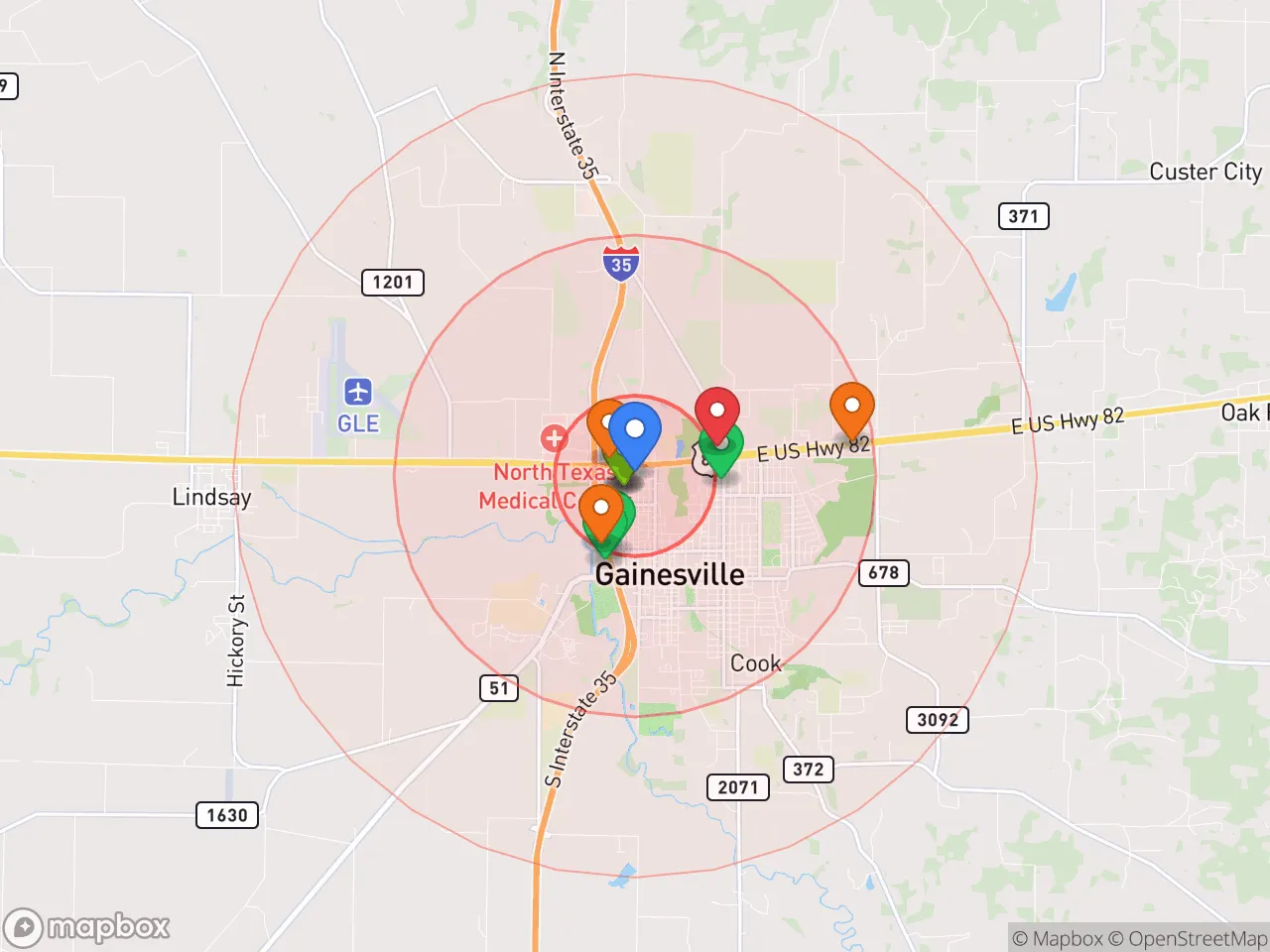
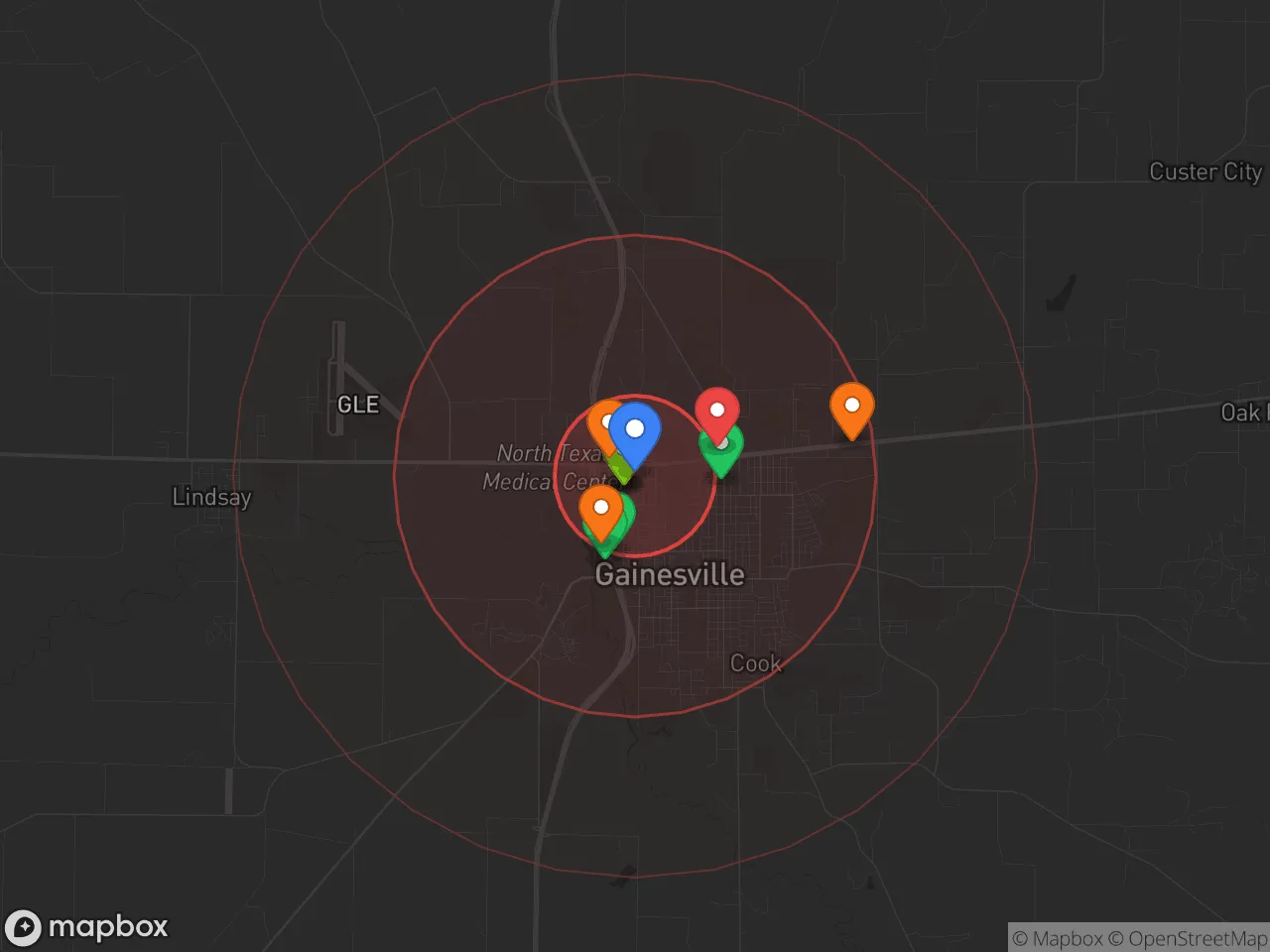
2 within 10 miles
Gas
16 within 10 miles
Hospital
2 within 20 miles
Airport
DFW — Dallas/Fort Worth International
Post Office
USPS — Valley View, TX
Critical Amenities
Quality-of-Life Analysis
Gainesville, Texas, offers a notably affordable quality of life that attracts a mix of families, retirees, and commuters seeking a slower pace without sacrificing access to the Dallas-Fort Worth metroplex. With a cost of living index of 79—21 percent below the national average—the city provides a tangible financial advantage for residents, particularly in housing and daily expenses. The population skews toward middle-income households and those looking to stretch their dollars further, creating a community that values practicality and neighborly connection over urban flash.
Cost of living, housing affordability, and how Gainesville compares to nearby cities
Gainesville’s housing market is a primary draw, with a median home value of $162,900—roughly half the national median and significantly lower than in nearby Denton ($350,000+) or Frisco ($500,000+). Median rent sits at $1,080, making it one of the most budget-friendly rental markets in North Texas. For context, a comparable rental in Sherman or Denison might run $1,200–$1,400, while in the DFW core it often exceeds $1,600. The average commute of 22.9 minutes is slightly longer than the national average but remains manageable, especially for those working locally or commuting south to Cooke County’s industrial employers or to the Texas Health Presbyterian hospital system. Property taxes in Cooke County hover around 2.3–2.5 percent of assessed value, which is typical for Texas but worth factoring into monthly costs. Overall, a household earning $50,000–$60,000 can comfortably afford a home here, whereas the same income would be stretched thin in most DFW suburbs.
Amenities, schools, and what daily life is like for families and retirees
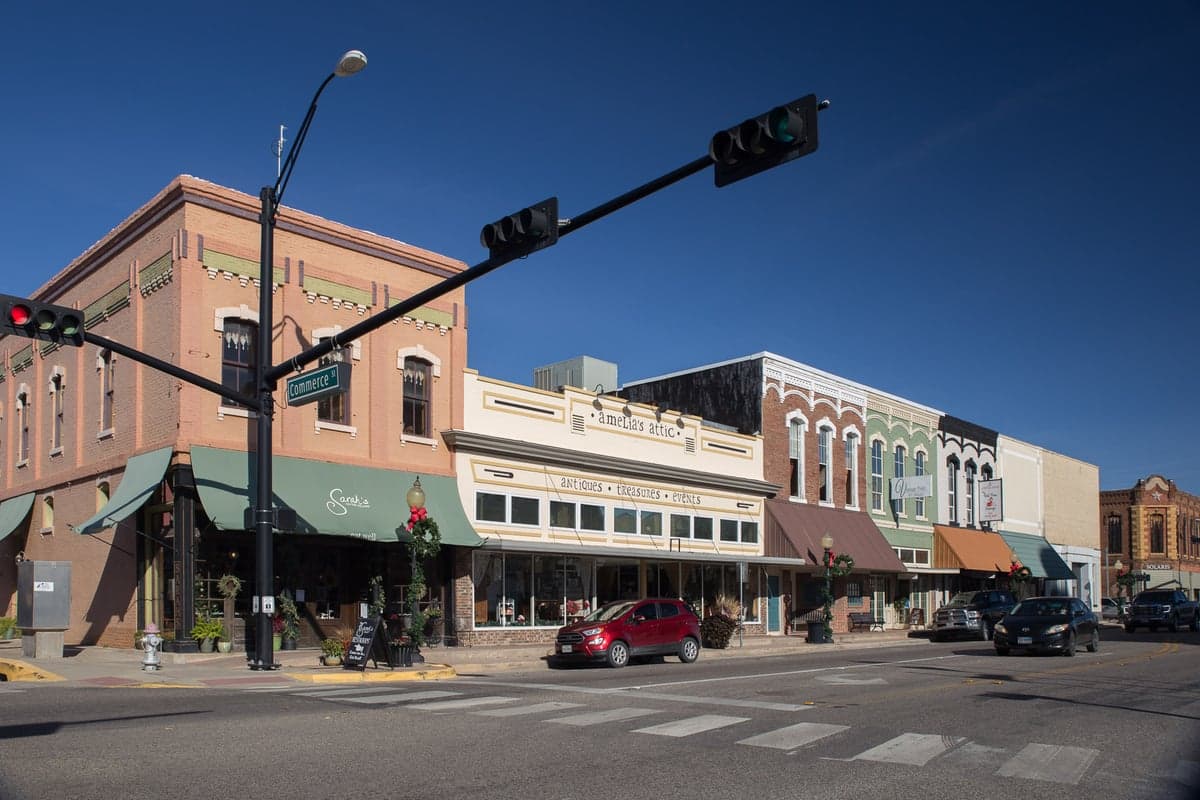
Daily life in Gainesville centers on a compact downtown with locally owned shops, the Gainesville Civic Center, and the historic Cooke County Courthouse square. The Gainesville Independent School District serves most families, with Gainesville High School offering career-and-technology tracks and dual-credit programs through North Central Texas College. For recreation, residents use the Leonard Park complex—featuring a pool, sports fields, and walking trails—and the nearby Ray Roberts Lake State Park for fishing, hiking, and camping. The city lacks the entertainment density of a major metro, but a 45-minute drive south reaches the dining and shopping of Denton, and an hour gets you to DFW Airport. Groceries, healthcare, and basic retail are well-covered locally, with a Walmart Supercenter, Brookshire’s, and the North Texas Medical Center. The rhythm is unhurried: community events like the annual Butterfly Festival and the Cooke County Fair reinforce a small-town feel where neighbors recognize each other.
Gainesville is best suited for those who prioritize affordability and a quiet, family-oriented environment over urban nightlife or career density. Retirees on fixed incomes, remote workers, and young families buying their first home will find the cost-of-life math compelling. Commuters who work in Sherman, Denton, or even northern DFW can tolerate the 30–50 minute drive for the trade-off of a mortgage under $1,200. However, professionals seeking high-paying local jobs or a vibrant cultural scene may find the options limited. For anyone whose top criteria is financial breathing room in a safe, community-focused North Texas town, Gainesville delivers consistently.

Crime in Gainesville, TX
Generally safer than 60% of comparable U.S. locations.
Violent CrimeViolent Crime Analysis
Property CrimeProperty Crime Analysis
Crime Analysis
Gainesville, Texas, presents a mixed safety profile for prospective residents. The city’s violent crime rate of 210.5 incidents per 100,000 people is notably lower than the national average, but its property crime rate of 1,171.5 per 100,000 exceeds both state and national benchmarks. This combination means that while violent confrontations are relatively rare, theft and burglary are more common concerns for daily life.
Crime in context
Gainesville’s violent crime rate sits well below the U.S. average of roughly 380 per 100,000 and is also lower than the Texas state average of about 450 per 100,000. This places the city in a safer tier for personal safety compared to many other communities in the Dallas-Fort Worth metroplex periphery. However, the property crime rate is a significant outlier. At 1,171.5 per 100,000, it is roughly 40% higher than the national average and exceeds the Texas state average by a similar margin. This disparity suggests that property crimes like larceny, vehicle theft, and burglary are the primary drivers of the city’s overall crime index.
What residents experience
For those living in Gainesville, the day-to-day reality is one of low risk for violent victimization but a heightened need for property security. Residents report that crimes of opportunity—such as unlocked car break-ins and package theft—are the most frequent nuisances. The city’s location along Interstate 35, a major north-south corridor, contributes to transient crime patterns, with some property offenses linked to travelers passing through. Local law enforcement has responded with increased patrols in commercial districts and neighborhood watch programs, but the sheer volume of property crime remains a persistent challenge. It is worth noting that the broader legal environment in Texas, which generally maintains a tougher stance on sentencing compared to more progressive jurisdictions, likely helps keep the violent crime rate low. In contrast, areas with liberal district attorneys who prioritize diversion over incarceration often see higher recidivism and more criminals on the street, a dynamic that Gainesville’s local justice system has largely avoided.
Neighborhood-level variation
Safety is not uniform across Gainesville. The historic downtown core and areas near the Cooke County Courthouse see higher foot traffic and police presence, which tends to suppress both violent and property crime. In contrast, outlying residential subdivisions and the commercial strips along Highway 82 and I-35 experience the bulk of property crime reports. The city’s southern and western neighborhoods, which are more rural and have larger lot sizes, report the lowest overall crime rates. Prospective renters and buyers should consult the Gainesville Police Department’s online crime map, which shows that the majority of incidents cluster within a one-mile radius of the interstate exits, while neighborhoods like the Woodbine addition and areas near Leonard Park remain notably quieter.
* Values derived from national, state, county, city and local statistics and may differ in a specific area. Last updated: 2026-05-11T00:45:15.000Z
Narrative content on this page is AI-generated and may contain mistakes. Verify any details that matter before acting on them.
ReloMaps may earn a commission from affiliate links at no extra cost to you.

