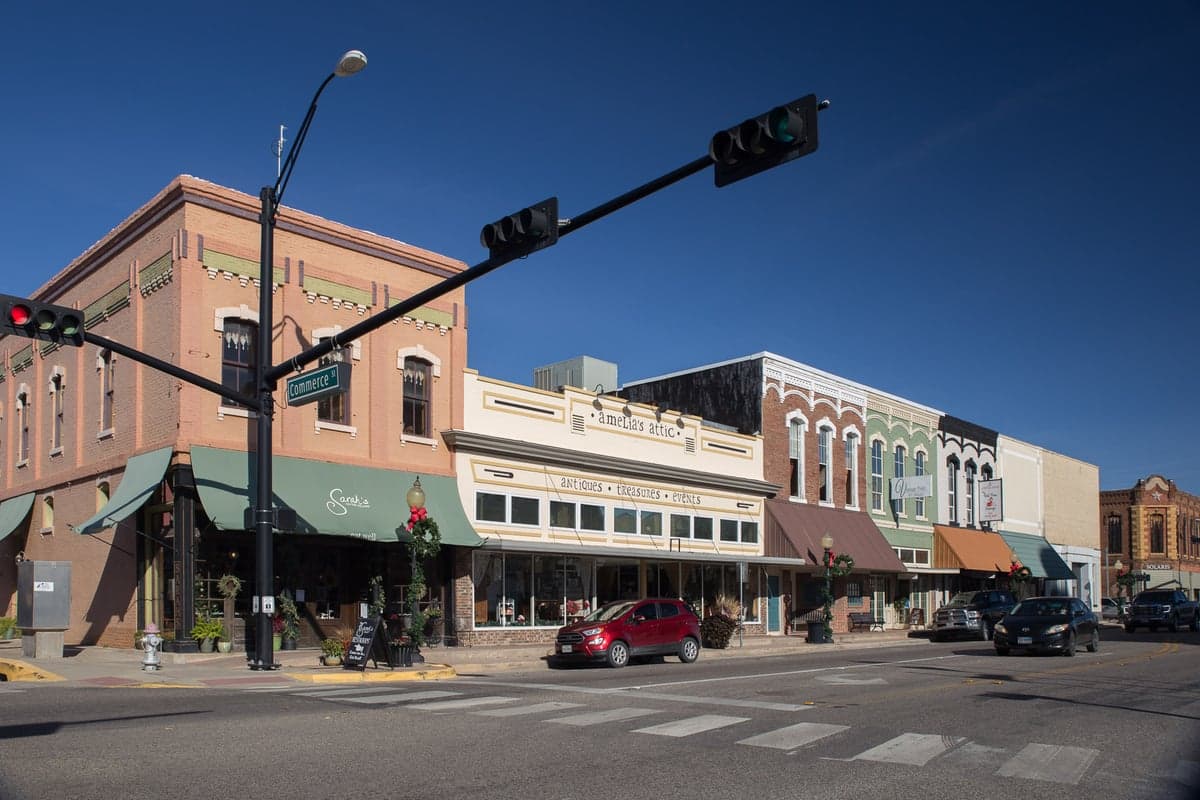
Photo: Wikipedia
Political ClimatePolitical Climate in Gainesville, TX
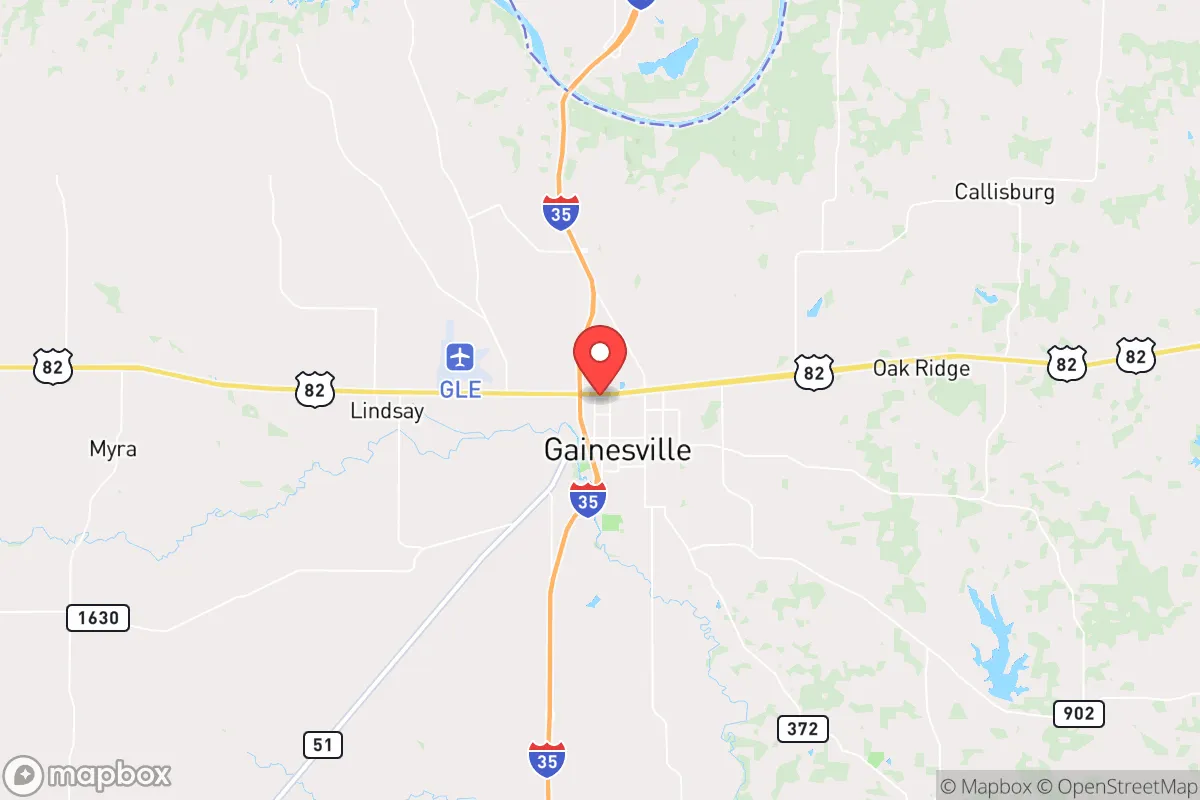
District shown is the primary district for this city’s centroid. Cities may span multiple districts.
Local Political AnalysisPolitical Analysis of Gainesville, TX
Gainesville, Texas, has long been a rock-ribbed conservative stronghold, and it still is, but you can feel the winds shifting a bit. The Cook PVI here is R+11, which is significantly more Republican than the state of Texas as a whole at R+4. That means when you’re in Gainesville, you’re in a place where folks generally believe in limited government, low taxes, and the Second Amendment—values that feel increasingly under siege from both Austin and Washington. But I’ve lived here long enough to see the old guard holding the line while new folks move in from the Metroplex, and that’s where the story gets interesting.
How it compares
Compared to the rest of Texas, Gainesville is a conservative outlier in a state that’s already pretty red. The R+11 PVI means this area votes about 11 points more Republican than the national average, while Texas as a whole is only 4 points more Republican. That’s a big gap. Drive 30 minutes south to Denton, and you’ll hit a college town that’s trending blue fast—Denton County itself is now R+8, but the city council there has a progressive bent that would never fly here. Head east to Sherman or west to Muenster, and you’ll find similar conservative values, but Gainesville feels more insulated from the suburban sprawl that’s diluting the old-school Texas culture. The real contrast is with Austin, which is a whole different planet politically, but even nearby cities like Frisco and McKinney are seeing a slow creep of progressive policies on things like zoning and school curriculum. Gainesville, for now, is still a place where the county commissioners and school board are solidly conservative, and that’s a relief for those of us who worry about government overreach into our personal freedoms.
What this means for residents
For residents, the political climate here means you can still live your life without a lot of bureaucratic nonsense. Property taxes are a concern everywhere in Texas, but local officials here are generally more resistant to the kind of spending increases you see in blue-leaning cities. You won’t find mask mandates or vaccine passports being pushed by the city council, and the sheriff’s office is clear about not enforcing any federal gun control measures they see as unconstitutional. That said, the long-term trend is a little worrying. As the Dallas-Fort Worth metroplex expands northward, we’re seeing more folks who bring their big-city ideas with them. The 2020 election showed a slight tightening in some precincts, and if that continues, we could see a slow erosion of the conservative majority. It’s not a crisis yet, but it’s something to keep an eye on if you value the kind of freedom you get in a place where the government stays out of your business.
Culturally, Gainesville still feels like an old Texas town—rodeos, church potlucks, and a general distrust of anything that smacks of progressive ideology. The local paper still runs editorials defending school choice and border security, and you won’t hear much talk about defunding the police or critical race theory in the classroom. But there’s a quiet tension: the new subdivisions going up near Highway 82 are bringing in families who might not share those values. If you’re looking for a place where the government respects your rights and doesn’t try to micromanage your life, Gainesville is still a solid bet. Just don’t expect it to stay exactly the same forever—nothing does, and that’s the part that keeps me up at night.

State Political ClimatePolitical Climate in Texas
State Political AnalysisPolitical Environment in the State
Texas has been a reliably Republican state for decades, with a Cook PVI of R+4 reflecting its consistent lean in presidential elections. The dominant coalition is a mix of suburban conservatives, rural voters, and a growing number of fiscally-minded transplants, but the state has seen a slow but steady shift leftward in major metro areas over the last 10-20 years. While statewide Republicans still hold every executive office and both legislative chambers, the margin of victory has narrowed from double digits in 2012 to single digits in 2020 and 2024, driven largely by explosive growth in the blue-leaning suburbs of Houston, Dallas, and Austin.
Urban vs. rural divide
The political map of Texas is a stark contrast between its booming, increasingly progressive cities and its vast, deeply conservative rural and exurban areas. Harris County (Houston), Dallas County, Travis County (Austin), and Bexar County (San Antonio) are the Democratic strongholds, with Travis County voting over 70% Democratic in recent cycles. Meanwhile, the Texas Panhandle, West Texas, and East Texas remain solidly Republican, with counties like Lubbock, Midland, and Tyler routinely delivering 70-80% of the vote for GOP candidates. The real battleground is the fast-growing suburban ring around these metros—places like Collin County (north of Dallas), Fort Bend County (southwest of Houston), and Williamson County (north of Austin). These areas have been trending blue as educated professionals and families move in, but they still lean Republican overall, making them the key to statewide elections. For example, Collin County went from 57% Republican in 2016 to 52% in 2024, a shift that has forced GOP candidates to campaign harder there.
Policy environment
Texas’s policy environment is defined by a low-tax, low-regulation posture that appeals strongly to conservative movers. The state has no personal income tax, a cap on property tax growth (Proposition 4, 2023), and a business-friendly regulatory climate that has attracted major corporate relocations. On education, the state has expanded school choice through the Texas Education Savings Account program (2023), allowing parents to use state funds for private or homeschool expenses. Healthcare policy is mixed: Texas has not expanded Medicaid under the ACA, keeping government involvement low, but it also has the highest uninsured rate in the nation. Election laws were tightened with SB 1 (2021), which added voter ID requirements, limited drive-through and 24-hour voting, and banned unsolicited mail-in ballot applications—a move supporters say protects election integrity and critics call restrictive. The state also passed a constitutional carry law (HB 1927, 2021), allowing permitless carry of handguns, and a heartbeat abortion ban (SB 8, 2021), which effectively ended most abortions after six weeks. These policies reflect a government that prioritizes individual liberty in economic and Second Amendment matters, but also imposes significant restrictions on reproductive rights.
Trajectory & freedom
On balance, Texas has become more free in several key areas over the last decade, but there are warning signs. The Parental Bill of Rights (HB 900, 2023) gave parents more control over school library content and curriculum, a win for family autonomy. The constitutional carry law expanded personal firearm rights without a permit. Property rights were strengthened by SB 2038 (2023), which limited the ability of homeowners associations to ban solar panels and other energy improvements. However, the state has also seen government overreach in other areas. The Texas Privacy Act (HB 1816, 2023) restricted the ability of social media platforms to moderate content, which some see as protecting free speech but others view as government interference in private business. More concerning for conservatives is the growing influence of local governments in blue cities that have passed ordinances conflicting with state law—like Austin’s ban on no-knock warrants and Houston’s non-discrimination ordinances. The state legislature has pushed back with preemption laws, but the tension between local and state authority is a growing flashpoint.
Civil unrest & political movements
Texas has seen its share of political turbulence. The 2020 Black Lives Matter protests in Austin, Dallas, and Houston were some of the largest in the country, with Austin alone seeing over 100 consecutive nights of demonstrations. The Texas Capitol in Austin has become a regular site for both left-wing and right-wing rallies, including the “People’s March” in 2022 and the “Stop the Steal” rally in 2021. Immigration politics are a constant flashpoint, with Governor Abbott’s Operation Lone Star deploying state troopers and National Guard to the border, and the state busing migrants to sanctuary cities like New York and Chicago. The “sanctuary city” debate is alive in places like El Paso and Austin, where local officials have resisted cooperation with federal immigration enforcement. Secession rhetoric, while fringe, has gained some traction with the Texas Nationalist Movement, though it remains a non-starter in mainstream politics. Election integrity remains a hot-button issue, with the 2020 and 2024 cycles seeing lawsuits over mail-in ballots and voter roll maintenance. A new resident would notice the political polarization in everyday life—yard signs, bumper stickers, and local news coverage are heavily partisan, especially in the suburbs.
Projection
Over the next 5-10 years, Texas is likely to become more competitive at the statewide level, but not necessarily blue. The in-migration of over 1 million people since 2020 includes a mix of conservatives from California and blue states, as well as younger, more progressive voters drawn to the job market. The suburban shift in places like Collin and Williamson counties will continue to erode the GOP’s margins, but the rural and exurban vote remains deeply entrenched. The Hispanic vote, long assumed to be trending Democratic, has shown surprising movement toward Republicans in the Rio Grande Valley and border counties like Zapata and Starr, which flipped red in 2024. This could offset losses in the suburbs. The biggest wildcard is generational change: younger Texans are more liberal on social issues but still value low taxes and economic freedom. If the state legislature overreaches on cultural issues—like banning books or restricting transgender care—it could accelerate the suburban exodus to the left. For now, expect Texas to remain a lean-Republican state with a narrow but persistent GOP advantage, but one that requires constant attention to the shifting demographics of its major metros.
For a new resident, the bottom line is that Texas offers a high degree of personal and economic freedom compared to most states, but that freedom is increasingly contested in the cities and suburbs. If you’re moving here, you’ll find a state that respects your right to keep and bear arms, keep more of your paycheck, and choose your child’s education—but you’ll also encounter a political environment that is loud, polarized, and changing fast. The key is to pick your community wisely: the rural and exurban areas still feel like the Texas of old, while the inner suburbs are becoming battlegrounds for the state’s future direction.
* Values derived from national, state, county, city and local statistics and may differ in a specific area. Last updated: 2026-05-11T00:45:15.000Z
Narrative content on this page is AI-generated and may contain mistakes. Verify any details that matter before acting on them.
ReloMaps may earn a commission from affiliate links at no extra cost to you.

