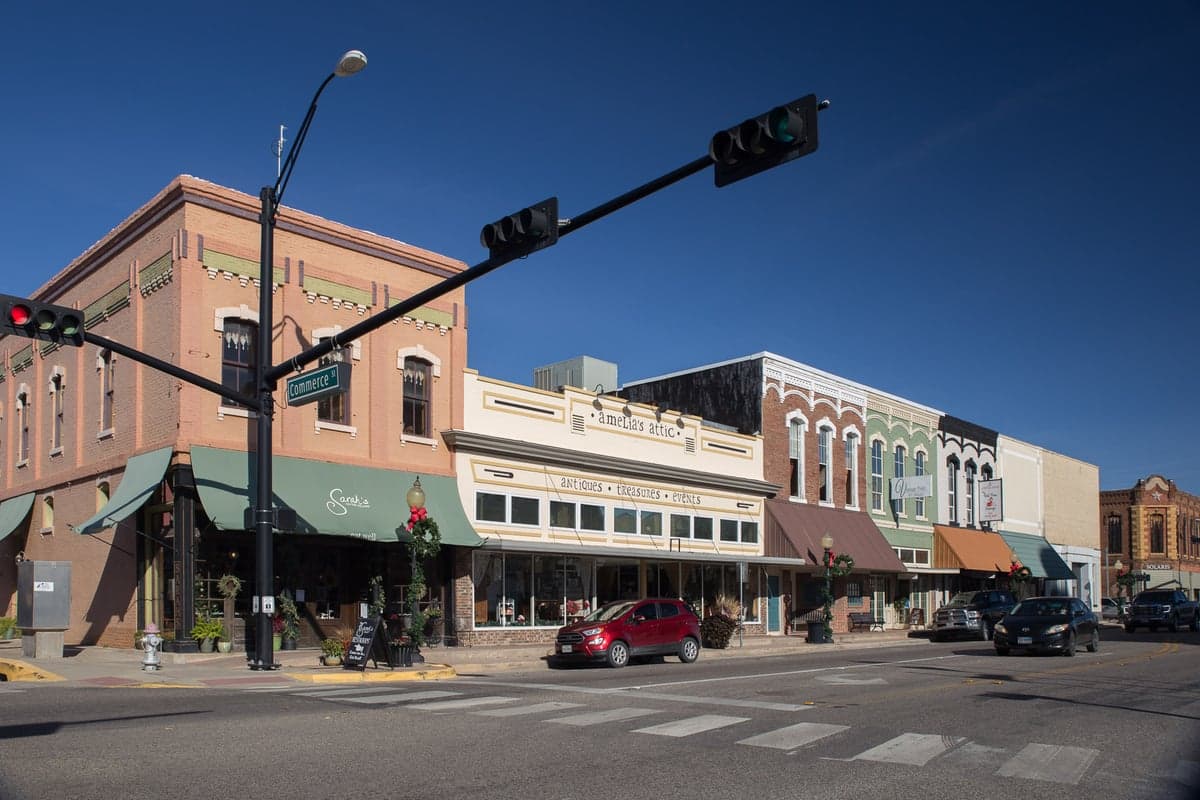
Photo: Wikipedia
Strategic Assessment of Gainesville, TX
Meaningful friction. Expect exposure to either population pressure, blast zones, or natural disaster risk. Consider buying a retreat property.
What does the Strategic Assessment tell us?
Our Strategic Assessment grades tactical survivability of an area. Major population centers, military targets, fallout zones, natural disasters, and border exposure all drive risk — lower exposure means a more defensible position in a crisis.
This is heavily inspired by Joel Skousen's Strategic Relocation book. Highly recommended you checkout the book ($)What does this tell us?
Our Strategic Assessment grades tactical survivability of an area. Major population centers, military targets, fallout zones, natural disasters, and border exposure all drive risk — lower exposure means a more defensible position in a crisis.
This is heavily inspired by Joel Skousen's Strategic Relocation book. Highly recommended you checkout the book ($)Strategic Pillars

Key Distances
Regional Safe Places
Below is our recommended "safe zones" in Texas and the surrounding area based on our strategic heuristics. For most people, it's unrealistic to live in a “safe zone” full-time due to work, family or other personal reasons. They tend to be more rural. However, many of these areas are perfect for second homes and retreat properties that double as a vacation home or even a short-term rental.

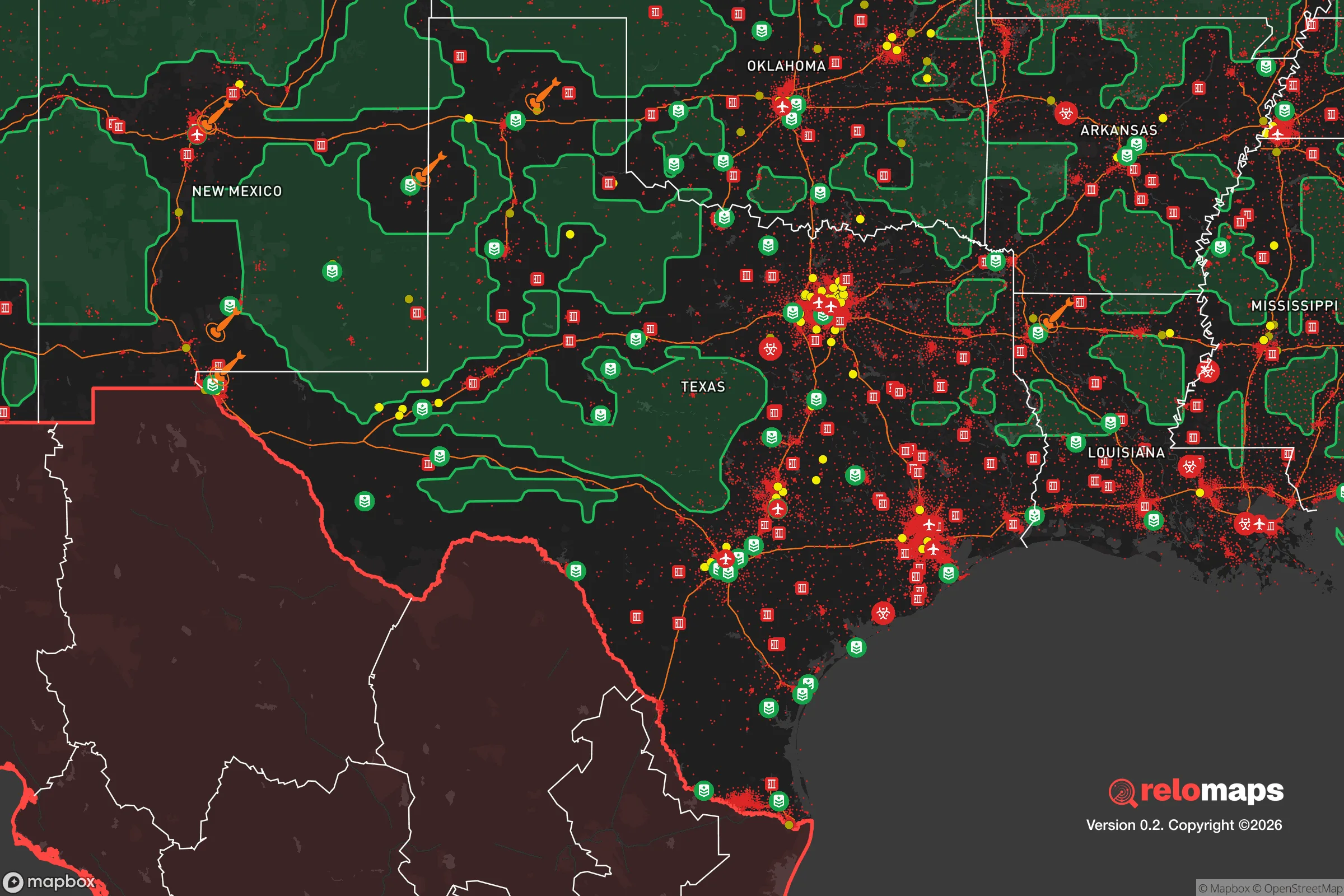


Important Note: For informational purposes only. This does not mean nothing bad ever happens in the green zones. Please use common sense. This is based on public data and modeled with AI. We tried to take a conservative approach but mistakes happen. We update this regularly as new information becomes available.
Solar Generator Recommendations
Backup power matters more here than in safer locations. We've picked three solar generators across budgets and capacity tiers — start with the budget unit if you only need a few essentials, or step up if you want to run a fridge and HVAC for days at a time.

Jackery Portable Power Station Explorer 300
Budget OptionPower on the Go: Weighing only 11 lbs, it's convenient to set up and store with book-sized foldable solar panels

BLUETTI Portable Power Station AC180
Designed for both indoor and outdoor scenarios, AC180 is highly capable as it has a robost capacity and continuous output power.

EF ECOFLOW DELTA Pro Ultra Power Station
Upgraded PickEcoFlow DELTA Pro Ultra is a whole-home energy system designed to grow with your family. Integrated with the Smart Home Panel 2, it scales to meet your evolving energy needs — keeping your home powered, intelligent, and secure through every stage of life.
We earn a commission, at no additional cost to you.
Strategic Assessment Analysis
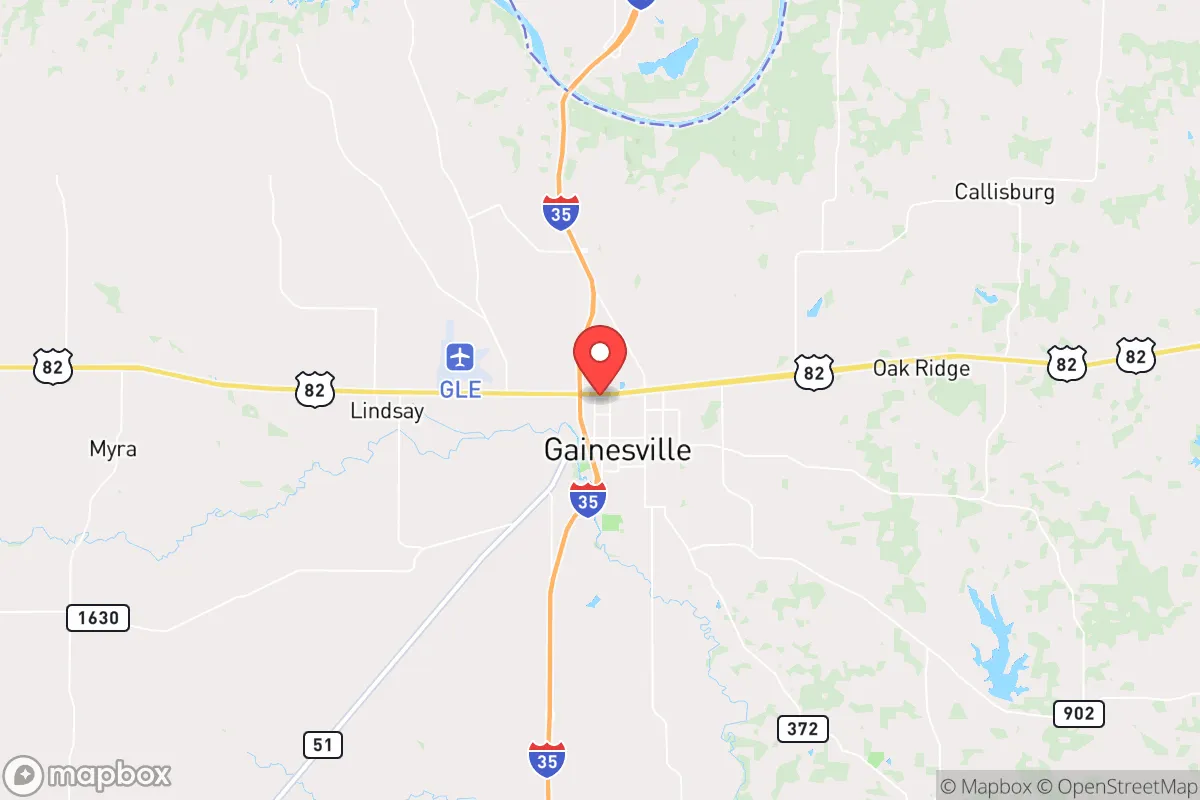
Gainesville, Texas, offers a compelling strategic position for those prioritizing resilience and self-sufficiency, sitting roughly 60 miles north of the Dallas-Fort Worth metroplex—close enough to access resources but far enough to avoid the worst of urban collapse scenarios. The city’s location along Interstate 35 and near the Red River provides a natural buffer zone, while its small-town character (population around 17,000) and agricultural base make it a viable fallback point for individuals and families seeking to decouple from densely populated, high-risk zones. For a conservative-leaning relocator concerned with civic unrest, supply chain disruptions, or mass casualty events, Gainesville presents a balanced mix of isolation and connectivity, though it is not without its own exposures.
Geographic position and natural advantages for long-term survival
Gainesville sits in Cooke County, at the northern edge of Texas’s rolling plains, where the terrain transitions from the Blackland Prairie to the Cross Timbers region. This geography offers several natural advantages: ample groundwater from the Trinity Aquifer, relatively fertile soil for small-scale agriculture, and a climate that supports year-round growing seasons—though summers are hot and droughts are periodic. The Red River, forming the border with Oklahoma, is a major hydrological feature, but its flow is inconsistent and often silty, making it a secondary water source rather than a primary one. The area’s low population density (roughly 40 people per square mile in the county) reduces the risk of disease spread and resource competition during a breakdown, while the absence of major military installations, nuclear power plants, or chemical facilities within a 30-mile radius lowers the chance of direct fallout or targeted strikes. However, the proximity to the Dallas-Fort Worth metroplex (DFW) is a double-edged sword: in a mass evacuation scenario, I-35 could become a chokepoint, and refugees might flood northward, straining local supplies. The city’s position on the edge of Tornado Alley also means severe weather is a recurring hazard, though the flat terrain allows for ample warning time.
Risks, exposures, and proximity to fallout-relevant landmarks
While Gainesville avoids the worst of urban risks, it is not immune to spillover effects from DFW, which is home to two major nuclear reactors (Comanche Peak, 70 miles south) and multiple chemical plants along the I-35 corridor. A catastrophic event at either could send fallout or toxic plumes northward, depending on wind patterns—prevailing winds in this region are from the south, which actually works in Gainesville’s favor, pushing contaminants away. More concerning is the city’s location near the Red River’s Lake Texoma (30 miles east), a major recreational reservoir that also serves as a water source for DFW; in a prolonged grid-down scenario, competition for that water could escalate. The area’s reliance on agriculture means that a widespread crop failure or livestock disease outbreak would hit hard, and the local economy’s dependence on poultry processing (Cargill and Tyson plants) creates a single-point-of-failure risk for food supply. On the plus side, Cooke County has no major military bases, no interstate rail hubs, and no high-value infrastructure targets, making it a low-priority zone for any coordinated attack. The biggest human-caused risk is the I-35 corridor itself: a major accident or terrorist event on that highway could sever supply lines and trigger panic, but Gainesville’s secondary roads (US 82, FM 372) offer alternative routes for those who know the backcountry.
Practical resilience for a relocator: food, water, energy, and defensibility
For a prepper-minded individual or family, Gainesville’s practical resilience hinges on three factors: water availability, local food production, and community cohesion. The Trinity Aquifer provides reliable groundwater at depths of 100–300 feet, and many rural properties already have wells—a critical advantage over suburban subdivisions reliant on municipal systems. Rainwater catchment is viable, with annual precipitation averaging 38 inches, though summer droughts can stretch collection periods. The local agricultural base means that farmers’ markets, feed stores, and livestock auctions are part of daily life, not just weekend novelties; you can buy chicks, seeds, and fencing materials without raising eyebrows. The Cargill and Tyson plants process millions of chickens weekly, but in a crisis, those supply chains would likely be commandeered by the state or collapse entirely—so a relocator should plan to raise their own meat or barter with local ranchers. Energy resilience is moderate: the area is served by the Electric Reliability Council of Texas (ERCOT), which has a history of grid failures (e.g., Winter Storm Uri in 2021), but natural gas and propane are widely available for backup generation. Solar potential is good, with over 230 sunny days per year, though net metering policies are less favorable than in some states. Defensibility is a mixed bag: the flat, open terrain offers long sightlines but little natural cover, meaning a rural property with a perimeter fence and a good line of sight to the road is ideal. The local sheriff’s office is well-funded relative to the population, and gun ownership rates in Cooke County are among the highest in Texas—a cultural factor that deters casual criminality but could escalate disputes in a prolonged breakdown. The biggest practical weakness is the lack of a major hospital (the nearest Level 1 trauma center is in Denton, 40 minutes south), so medical self-sufficiency is non-negotiable.
The overall strategic picture for Gainesville is one of cautious optimism for the prepared relocator. It offers a rare combination of low target value, decent natural resources, and a conservative, self-reliant community culture that aligns with prepper values. The city’s biggest liabilities—proximity to DFW, reliance on I-35, and vulnerability to severe weather—are manageable with proper planning: stockpile supplies for a 90-day window, establish a well and solar backup, and build relationships with local farmers and ranchers before a crisis hits. For those willing to trade the convenience of urban life for the security of a buffer zone, Gainesville is a solid B+ choice—not a fortress, but a defensible outpost with room to grow. The key is to act now, while the area remains affordable and the community is still welcoming to newcomers who share its values of independence and preparedness.

* Values derived from national, state, county, city and local statistics and may differ in a specific area. Last updated: 2026-05-11T00:45:15.000Z
Narrative content on this page is AI-generated and may contain mistakes. Verify any details that matter before acting on them.
ReloMaps may earn a commission from affiliate links at no extra cost to you.

