 Popular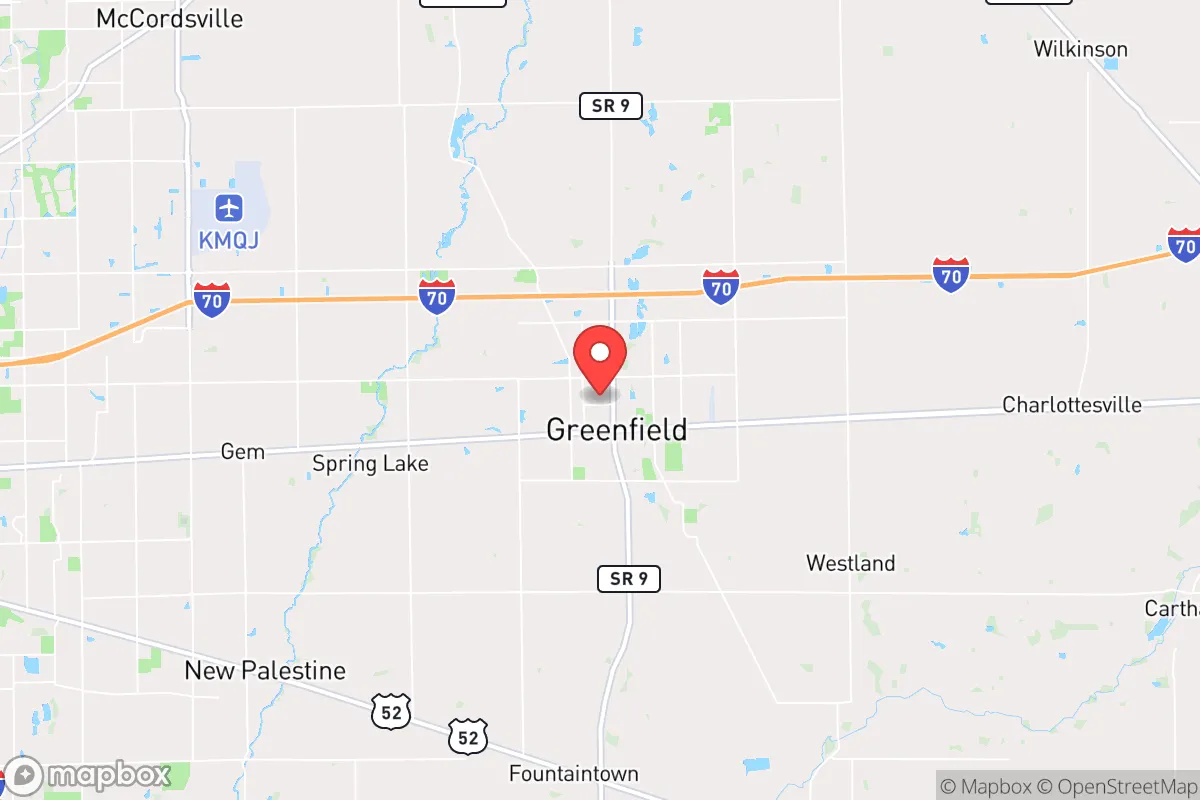
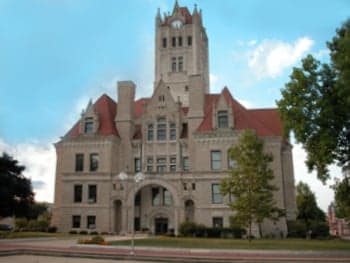
Photo: Wikipedia
Political ClimatePolitical Climate in Greenfield, IN
District shown is the primary district for this city’s centroid. Cities may span multiple districts.
Local Political AnalysisPolitical Analysis of Greenfield, IN
Greenfield, Indiana, sits squarely in the heart of a deeply conservative region, and that’s not just a feeling—it’s baked into the numbers. The Cook Partisan Voting Index (PVI) for this area is a solid R+16, meaning the district votes about 16 points more Republican than the national average. That’s not a fluke; it’s a reflection of a community that has, for decades, valued local control, limited government, and a “live and let live” approach that doesn’t appreciate outsiders telling folks how to run their homes, businesses, or schools. If you’ve lived here as long as I have, you’ve seen the political needle stay pretty steady, even as places like Indianapolis—just 20 minutes west—have drifted leftward. The trajectory here isn’t toward some progressive experiment; it’s a stubborn, proud commitment to traditional values, with a healthy skepticism of any policy that smells like government overreach.
How it compares
Drive 15 minutes west on U.S. 40, and you hit the edge of Marion County, where Indianapolis’s influence starts to show—think higher taxes, more regulations, and a general vibe that the state knows better than the town. Greenfield, in Hancock County, is a different animal entirely. Compared to nearby towns like Cumberland or New Palestine, Greenfield is the anchor of a reliably red corridor. Even within the county, you’ll find a few pockets near the county line that lean a bit more purple, but the core of Greenfield—the courthouse square, the local churches, the small businesses—holds firm. The contrast with Bloomington or even parts of Hamilton County (like Carmel or Fishers) is stark. Those places have seen a surge in progressive policies, from zoning overhauls to diversity mandates that feel more like control than community. Greenfield, by contrast, has kept its head down, focusing on keeping taxes low and letting people make their own choices without a bureaucrat’s stamp of approval.
What this means for residents
For the folks who call Greenfield home, this political climate translates into a daily life that feels, frankly, freer. You’re not constantly looking over your shoulder for a new ordinance telling you what you can plant in your front yard or how many cars you can park in your driveway. The local government tends to stay out of the way, which is exactly how most residents want it. That said, there’s a growing unease among long-timers about the creeping influence of state-level mandates that feel like they’re testing the limits of local autonomy—things like unfunded education requirements or environmental rules that sound good on paper but land hard on small farms and family businesses. The real concern, though, is the cultural shift. As more people move out from Indy, looking for cheaper land and quieter streets, they sometimes bring big-city ideas with them. If that trend accelerates, you could see the political balance tip just enough to invite the kind of government overreach that makes you wonder if your backyard is still your own. For now, it’s not there, but the watch is on.
One thing that sets Greenfield apart culturally is its stubborn refusal to be a bedroom community for Indianapolis, even though it technically is. There’s a distinct identity here—rooted in the James Whitcomb Riley legacy, the annual Riley Festival, and a strong sense of neighborly obligation that doesn’t need a government program to function. Policy-wise, you’ll find a consistent push for school choice, low property taxes, and a general resistance to any zoning changes that smell like overreach. The local school board elections are where the real action happens, because that’s where the battle over curriculum and parental rights plays out. So far, the conservative majority has held, but every election cycle brings a new wave of candidates who want to “modernize” things. If you’re looking for a place where the government stays small and the community stays strong, Greenfield is still that place—but it’s worth keeping an eye on the horizon.

State Political ClimatePolitical Climate in Indiana
State Political AnalysisPolitical Environment in the State
Indiana has been a reliably Republican state for decades, but the nature of that conservatism is shifting. While the state hasn't voted for a Democratic presidential candidate since 2008 (when Barack Obama narrowly won it), the GOP's dominance has deepened in the 2020s, with Donald Trump carrying the state by 16 points in 2020 and 18 points in 2024. However, this isn't a monolithic red wall — the political climate is increasingly defined by a sharp urban-rural split, a growing tension between traditional fiscal conservatism and newer culture-war priorities, and a steady influx of conservative-leaning migrants from Illinois and Michigan who are reshaping suburban politics.
Urban vs. rural divide
The political map of Indiana is a textbook case of the American divide. Indianapolis (Marion County) is the state's deep-blue anchor, consistently voting Democratic by 20+ points in presidential elections, driven by a diverse population, a large university presence (IUPUI), and a growing tech sector. Gary and East Chicago in Lake County are reliably Democratic strongholds, though their shrinking populations have reduced their statewide influence. The other major metros — Fort Wayne (Allen County), Evansville (Vanderburgh County), and South Bend (St. Joseph County) — are more competitive but trending red. Fort Wayne's Allen County flipped from blue-leaning to solidly Republican between 2016 and 2024, driven by suburban growth and a strong manufacturing base. The real action is in the suburbs: Hamilton County (north of Indianapolis) is one of the most Republican counties in the nation, with Trump winning it by 35 points in 2024. Meanwhile, Monroe County (Bloomington, home to Indiana University) is a liberal island, voting Democratic by 30+ points. The rural counties — think Greene, Daviess, and Switzerland — are deep red, often voting 75-80% Republican. This divide means state politics are dominated by rural and suburban Republicans, with urban Democrats holding little sway outside of Indianapolis.
Policy environment
Indiana's policy environment is broadly conservative, but with important nuances. The state has a flat income tax rate of 3.05% (down from 3.23% in 2023, with a scheduled phase-down to 2.9% by 2027), and no inheritance or estate tax. Property taxes are capped at 1% of assessed value for homesteads, a constitutional protection that keeps housing costs manageable. The regulatory posture is business-friendly: Indiana is a right-to-work state (though that law was repealed in 2025, replaced by a "right-to-work-lite" compromise that still allows union opt-outs in most private sectors). Education policy has been a flashpoint: the state expanded school choice dramatically in 2023 with Senate Enrolled Act 1, making vouchers available to nearly all families regardless of income. This has driven a surge in private and charter school enrollment, particularly in Hamilton County and Allen County. Healthcare is a mixed bag: Indiana expanded Medicaid under the Affordable Care Act (the HIP 2.0 program), but the state has resisted further expansion and maintains a conservative approach to abortion (banned at conception with narrow exceptions). Election laws are restrictive: voter ID is required, early voting is limited to 28 days, and mail-in voting requires an excuse. The state has not adopted automatic voter registration or same-day registration.
Trajectory & freedom
Indiana is arguably becoming more free in several key areas, but the trajectory is uneven. On gun rights, the state passed constitutional carry (permitless carry) in 2022, making it one of 25 states where no license is needed to carry a handgun. This was a major win for Second Amendment advocates. On parental rights, the 2023 Senate Enrolled Act 480 requires schools to notify parents of any curriculum involving human sexuality and prohibits instruction on sexual orientation or gender identity in K-3. This has been a rallying point for conservative families. On medical autonomy, Indiana banned nearly all abortions in 2022 (trigger law after Dobbs), with exceptions only for rape, incest, and life of the mother. However, the state has not restricted access to contraception or IVF. On taxation, the flat tax phase-down is a clear freedom-expanding move. The concerning trend is on property rights: the state has seen increased use of eminent domain for private development projects, particularly around the LEAP Lebanon Innovation District in Boone County, where the state is aggressively acquiring farmland for a massive tech hub. This has sparked a backlash from rural landowners who feel their property rights are being trampled.
Civil unrest & political movements
Indiana has seen relatively low levels of civil unrest compared to coastal states, but there have been notable flashpoints. The 2020 George Floyd protests in Indianapolis led to several nights of property damage and a controversial police response, but the state avoided the sustained unrest seen in Portland or Seattle. More recently, the parental rights movement has been highly organized, with groups like Indiana Parents for Education successfully pushing for curriculum transparency laws. On the left, Indiana Progressives and Indiana Democratic Socialists have been active in Indianapolis and Bloomington, but their influence is limited. Immigration politics are relatively quiet: Indiana has no sanctuary cities, and the state passed a law in 2024 requiring local law enforcement to cooperate with ICE. The election integrity debate has been muted compared to states like Georgia or Arizona, though the state did create a Election Integrity Commission in 2023 to review voter rolls. The most visible flashpoint for a new resident would likely be the abortion debate: clinics in Indianapolis and Bloomington have become focal points for both pro-life and pro-choice activism, with regular protests outside Planned Parenthood locations.
Projection
Over the next 5-10 years, Indiana is likely to become more conservative, but with a growing tension between traditional fiscal conservatism and a newer, more populist cultural conservatism. The in-migration pattern is key: Hamilton County and Boone County are absorbing thousands of new residents from Illinois and Michigan, many of whom are fleeing high taxes and progressive policies. These newcomers tend to be culturally conservative but economically moderate, which could push the state toward more tax cuts and school choice expansion. The LEAP Lebanon project could transform Boone County into a major tech hub, potentially attracting a more diverse workforce that might shift the political balance slightly leftward in that area. However, the rural counties are only getting redder, and the Democratic strongholds (Indianapolis, Gary, Bloomington) are not growing fast enough to offset this. The biggest wildcard is the Republican primary: the party is increasingly split between establishment conservatives (backed by the Chamber of Commerce) and populist insurgents (backed by groups like the Indiana Freedom Coalition). This could lead to more dramatic policy swings, particularly on education and property rights. A new resident moving in now should expect a state that remains solidly red, but with increasingly intense internal debates about the direction of that conservatism.
Bottom line for a new resident: If you're moving to Indiana for conservative values, you'll find a state that largely aligns with your views — low taxes, strong gun rights, school choice, and a culture that respects traditional family structures. But don't expect a libertarian paradise: the state is still comfortable using government power to enforce cultural norms (especially on abortion and education) and to pursue economic development (even at the expense of property rights). The best places for a conservative family are the suburban counties around Indianapolis — Hamilton, Boone, and Hendricks — where the schools are strong, the taxes are low, and the politics are reliably red. Avoid the urban cores unless you're comfortable with a more progressive environment. And keep an eye on the property rights battles around Lebanon — that's the issue that could test how much the state truly values individual freedom.
* Values derived from national, state, county, city and local statistics and may differ in a specific area. Last updated: 2026-04-22T10:28:11.000Z
Narrative content on this page is AI-generated and may contain mistakes. Verify any details that matter before acting on them.
ReloMaps may earn a commission from affiliate links at no extra cost to you.

