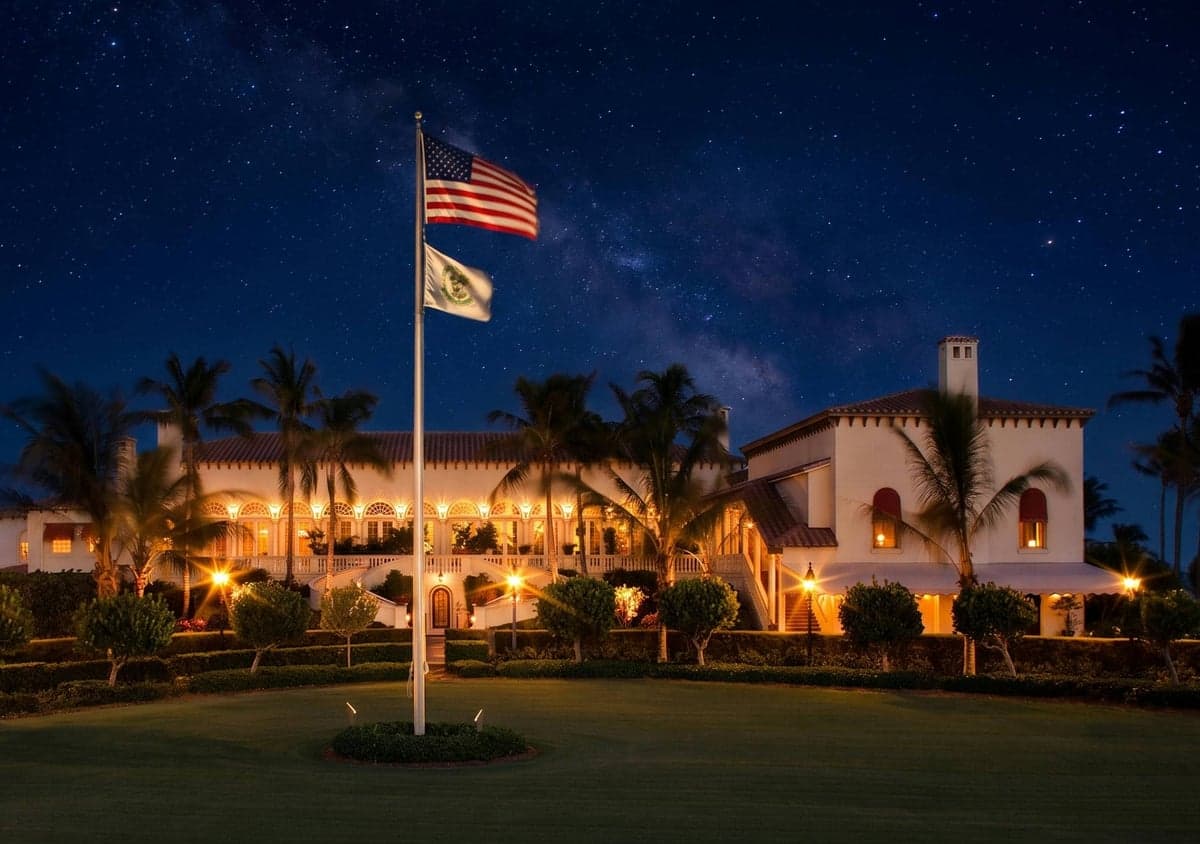
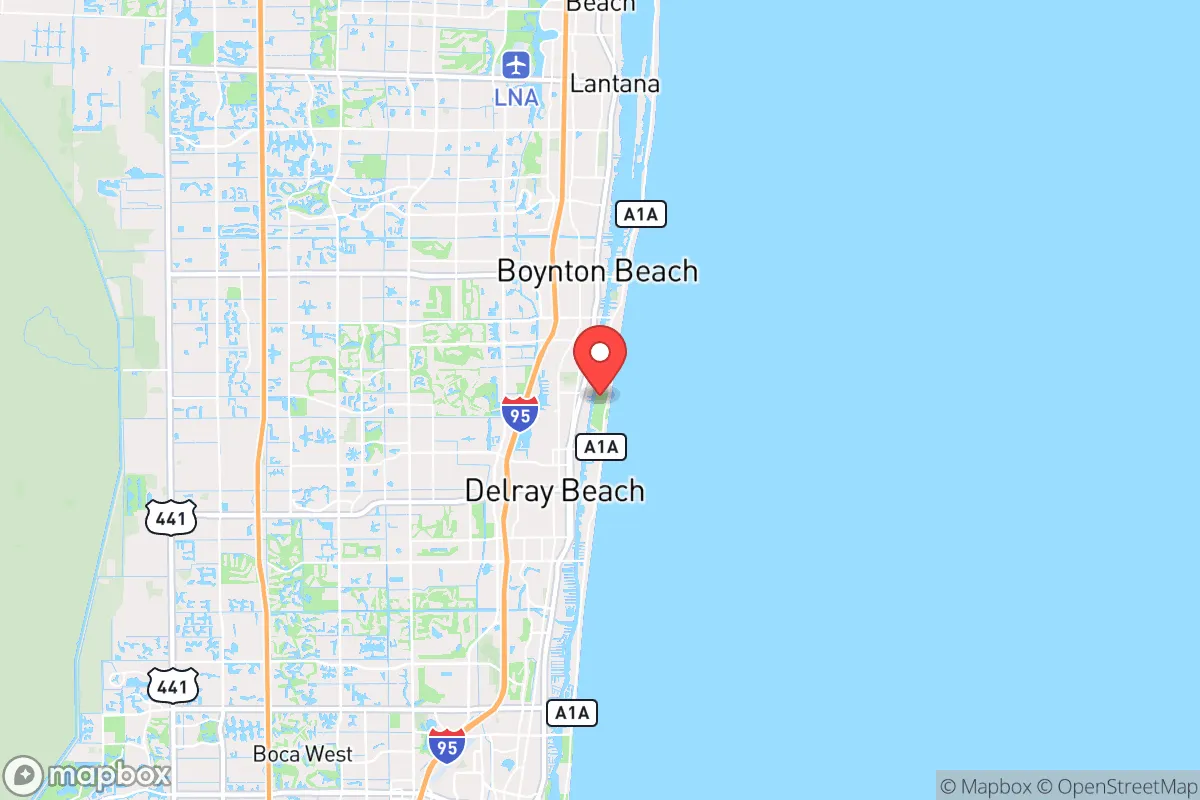
Strategic Assessment of Gulf Stream, FL
Meaningful friction. Expect exposure to either population pressure, blast zones, or natural disaster risk. Consider buying a retreat property.
What does the Strategic Assessment tell us?
Our Strategic Assessment grades tactical survivability of an area. Major population centers, military targets, fallout zones, natural disasters, and border exposure all drive risk — lower exposure means a more defensible position in a crisis.
This is heavily inspired by Joel Skousen's Strategic Relocation book. Highly recommended you checkout the book ($)What does this tell us?
Our Strategic Assessment grades tactical survivability of an area. Major population centers, military targets, fallout zones, natural disasters, and border exposure all drive risk — lower exposure means a more defensible position in a crisis.
This is heavily inspired by Joel Skousen's Strategic Relocation book. Highly recommended you checkout the book ($)Strategic Pillars

Key Distances
Regional Safe Places
Below is our recommended "safe zones" in Florida and the surrounding area based on our strategic heuristics. For most people, it's unrealistic to live in a “safe zone” full-time due to work, family or other personal reasons. They tend to be more rural. However, many of these areas are perfect for second homes and retreat properties that double as a vacation home or even a short-term rental.

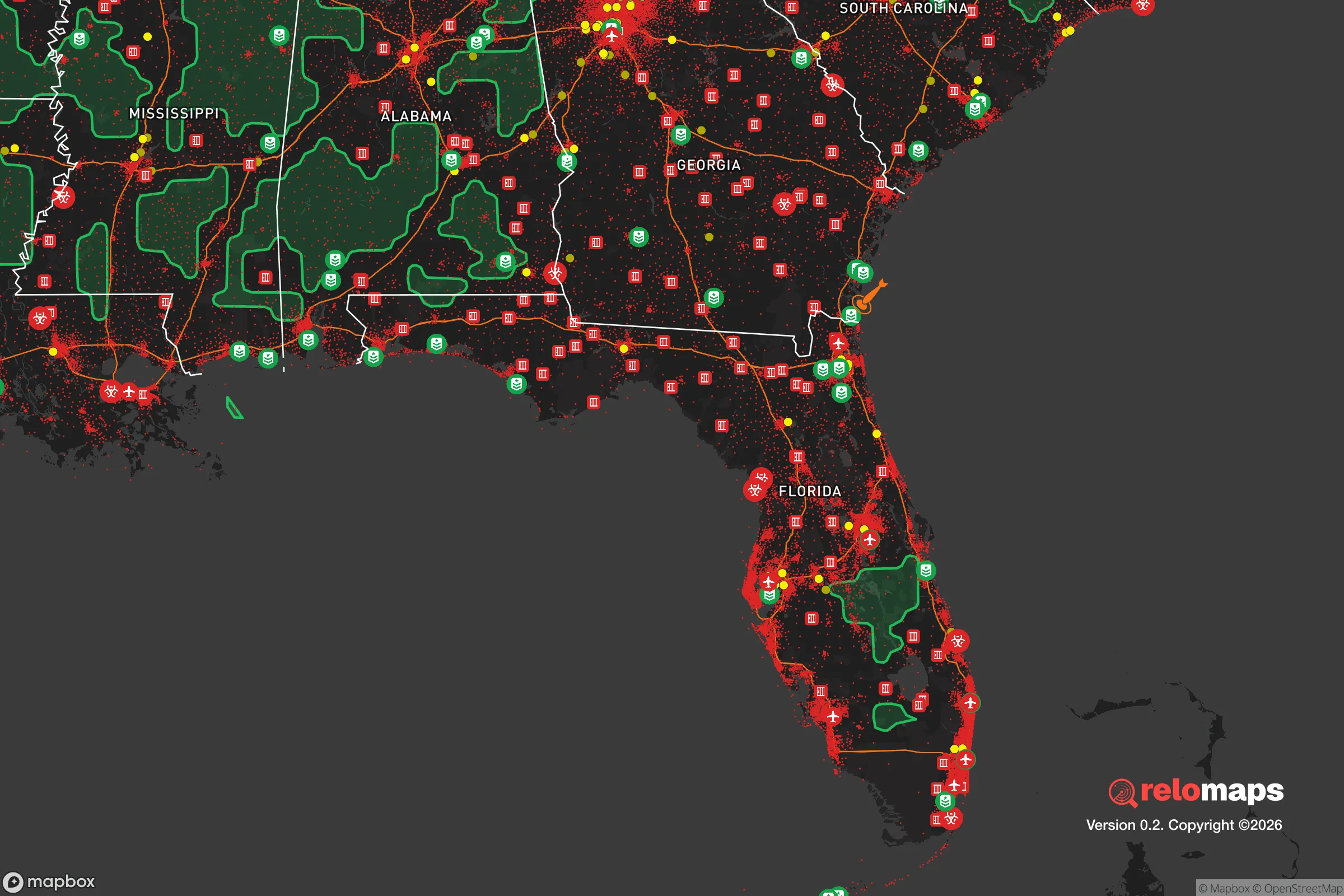


Important Note: For informational purposes only. This does not mean nothing bad ever happens in the green zones. Please use common sense. This is based on public data and modeled with AI. We tried to take a conservative approach but mistakes happen. We update this regularly as new information becomes available.
Solar Generator Recommendations
Backup power matters more here than in safer locations. We've picked three solar generators across budgets and capacity tiers — start with the budget unit if you only need a few essentials, or step up if you want to run a fridge and HVAC for days at a time.

Jackery Portable Power Station Explorer 300
Budget OptionPower on the Go: Weighing only 11 lbs, it's convenient to set up and store with book-sized foldable solar panels

BLUETTI Portable Power Station AC180
Designed for both indoor and outdoor scenarios, AC180 is highly capable as it has a robost capacity and continuous output power.

EF ECOFLOW DELTA Pro Ultra Power Station
Upgraded PickEcoFlow DELTA Pro Ultra is a whole-home energy system designed to grow with your family. Integrated with the Smart Home Panel 2, it scales to meet your evolving energy needs — keeping your home powered, intelligent, and secure through every stage of life.
We earn a commission, at no additional cost to you.
Strategic Assessment Analysis
Gulf Stream, Florida, presents a uniquely complex strategic picture for the conservative relocator prioritizing resilience. This tiny, ultra-exclusive barrier island town in Palm Beach County offers a paradox: extreme wealth concentration and geographic isolation within a stone's throw of one of the most politically volatile and disaster-prone regions in the country. For the survivalist or prepper, the calculus here is not about bugging out to the wilderness, but about leveraging a high-value, low-profile position with immediate access to the Atlantic and the Intracoastal Waterway, while accepting the inherent risks of being within the blast radius of a major metropolitan area. The key is understanding that Gulf Stream’s value lies in its defensible geography and potential for maritime escape, not in self-sufficient land or community resilience.
Geographic position and natural advantages for strategic relocation
Gulf Stream occupies a narrow strip of land between the Atlantic Ocean and the Intracoastal Waterway, roughly 10 miles south of West Palm Beach and 30 miles north of Fort Lauderdale. This location offers a rare combination of natural barriers and escape routes. The ocean provides a 360-degree horizon for maritime observation and a potential evacuation corridor by boat, while the Intracoastal offers a protected inland water route north or south. The town itself is shielded from the mainland by the waterway, meaning any approach from the west requires crossing a bridge—a natural chokepoint that can be monitored or, in a worst-case scenario, controlled. The immediate area is characterized by high-value, low-density residential properties with deep lots and mature vegetation, offering significant visual and physical screening from the main coastal road (A1A). For a relocator with resources, this translates into a position that is both hard to observe from the outside and offers multiple avenues for extraction. The Gulf Stream current itself, running just offshore, is a powerful natural asset for anyone with a capable vessel, providing a fast-moving highway to the Caribbean or up the Eastern Seaboard, bypassing congested coastal roads.
Risks, exposures, and proximity to fallout-relevant landmarks
The most glaring vulnerability of Gulf Stream is its proximity to major population centers and critical infrastructure that would be primary targets during civil unrest, a mass casualty event, or a coordinated attack. Palm Beach International Airport (PBI) is 12 miles north, and the Port of Palm Beach, a major fuel and cargo hub, is roughly 15 miles north. Fort Lauderdale-Hollywood International Airport and Port Everglades—a massive petroleum and cruise ship terminal—are within 30 miles south. In any scenario involving a national-level disruption, these choke points would become chaotic, dangerous zones. Furthermore, the town is sandwiched between the wealthy enclaves of Palm Beach to the north and Boca Raton to the south, meaning any large-scale evacuation or civil unrest in those areas would funnel directly through Gulf Stream’s only road access. The I-95 corridor, a primary north-south evacuation route, is just 5 miles west, and would become a parking lot or a war zone in a crisis. The town’s very exclusivity is a double-edged sword: it makes it a low-probability target for random looting, but a high-value target for organized groups seeking resources or a defensible position. The lack of a local police force (the town contracts with the Palm Beach County Sheriff’s Office) means response times could be delayed in a widespread event.
Practical resilience for a relocator: food, water, energy, and defensibility
For a single individual or family with capital, Gulf Stream can be hardened into a highly defensible position, but it requires significant upfront investment and a mindset shift away from land-based self-sufficiency. Fresh water is the primary vulnerability. The town relies on municipal water from Palm Beach County, which is vulnerable to contamination, pump failure, or supply disruption. A deep well with a hand pump or a large-scale rainwater catchment system is non-negotiable. The saltwater intrusion risk is real, so well placement and testing are critical. Food storage is straightforward: the high-value homes typically have large garages or basements (rare in Florida) that can be converted into climate-controlled pantries. However, there is no arable land for gardening; the sandy, salty soil and strict HOA covenants make traditional food production nearly impossible. The real resilience play here is maritime. A capable, well-stocked boat (25-35 feet, diesel, with a desalinator and solar panels) becomes your primary food source (fishing) and your escape vehicle. Energy is manageable: solar panels are common in the area, and a whole-house generator with a buried propane tank is standard for hurricane season. Defensibility is excellent for a single family: the narrow lot fronts, high walls, and limited access points make a property easy to secure. The biggest threat is not a direct assault, but a siege—being trapped on the island with no way to resupply if the bridges are blocked or destroyed. The solution is a pre-planned maritime evacuation route to a secondary location, such as a property on the Lake Okeechobee rim or a pre-positioned cache in the Bahamas.
The overall strategic picture for Gulf Stream is that of a high-risk, high-reward forward operating base. It is not a place for long-term self-sufficiency or a large group. It is a place for a single operator or a small family with significant financial resources who want to be close to the action but not in the middle of it, with a clear, practiced exit strategy. The conservative prepper will appreciate the town’s inherent order, low crime, and the fact that neighbors are likely to be like-minded in their desire for privacy and security. The fatal flaw is the dependence on bridges and municipal infrastructure. If you can solve for water and maritime escape, Gulf Stream offers a uniquely defensible coastal perch. If you cannot, the mainland suburbs of Palm Beach County—with their access to farmland, freshwater aquifers, and inland escape routes—are a more prudent choice. This is a location for those who understand that resilience is not about hiding, but about having the means to leave when the situation demands it.

* Values derived from national, state, county, city and local statistics and may differ in a specific area. Last updated: 2026-10-10T16:27:35.000Z
Narrative content on this page is AI-generated and may contain mistakes. Verify any details that matter before acting on them.
ReloMaps may earn a commission from affiliate links at no extra cost to you.

