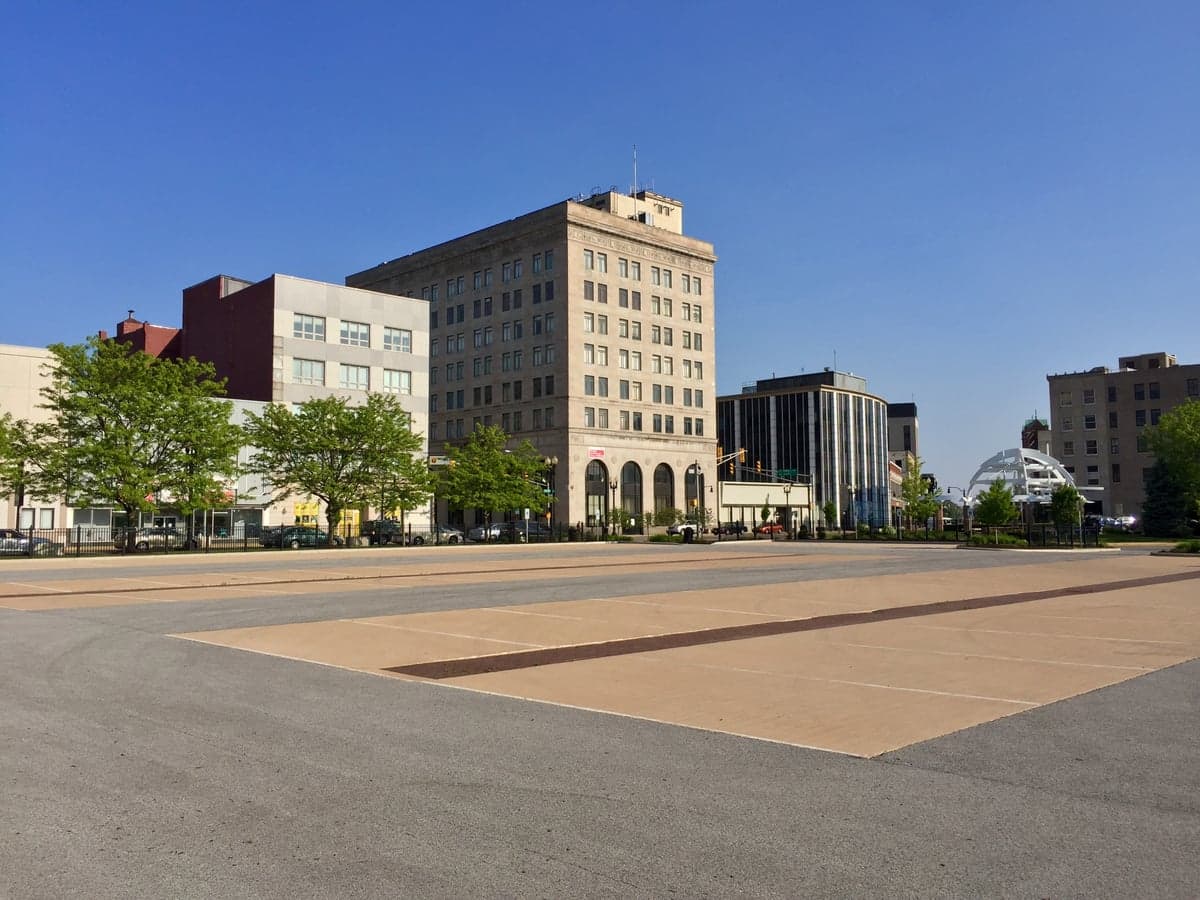
Photo: Wikipedia
Political ClimatePolitical Climate in Hammond, IN
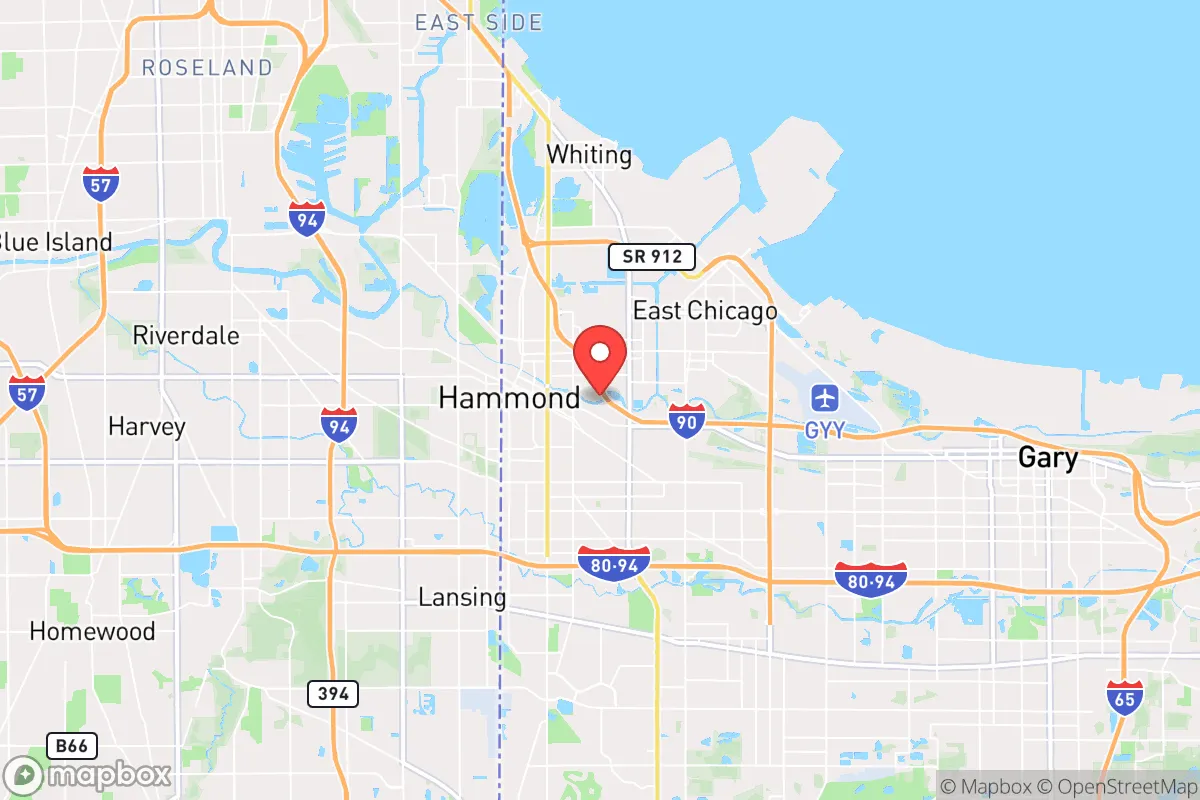
District shown is the primary district for this city’s centroid. Cities may span multiple districts.
Local Political AnalysisPolitical Analysis of Hammond, IN
Hammond, Indiana, sits in a political bubble that’s been shifting in ways that should make any freedom-loving resident take notice. The Cook PVI rating of D+1 tells you this area leans slightly Democratic, but that number doesn’t capture the full story—it’s a place that used to be a lot more balanced, with a strong working-class backbone that valued common sense over party lines. Over the last decade or so, you’ve seen the local machine push harder on progressive policies, and the old-school, live-and-let-live vibe is getting squeezed out by government overreach that touches everything from property rights to how you run your small business.
How it compares
Drive ten miles west into Illinois, and you hit Chicago’s Cook County—a place where taxes and regulations are a nightmare for anyone who wants to keep their own money. Hammond used to be a refuge from that, but now it’s starting to mirror those same patterns, just at a slower pace. Compare it to nearby towns like Munster or Dyer, which lean more conservative and have resisted some of the heavy-handed zoning and spending increases you see in Hammond. Even Schererville, just a few minutes east, has a more skeptical attitude toward the kind of progressive agenda that’s creeping into Hammond’s city council meetings. The contrast is stark: you can drive 15 minutes and feel like you’re in a different state, politically speaking.
What this means for residents
For folks who value personal freedom, the trend is concerning. You’re seeing more local ordinances that micromanage property use—like stricter rental codes and noise complaints that give the city too much say over what you do on your own land. The school board has also taken a turn toward progressive curriculum changes, which has parents worried about their kids being exposed to ideology instead of basics. Property taxes have crept up, and there’s a push for more public spending on projects that don’t always benefit the average taxpayer. If you’re a small business owner, the permitting process has gotten slower and more invasive, with inspectors digging into things that used to be nobody’s business but yours. It’s not a full-blown crisis yet, but the direction is clear: more government, less freedom.
One thing that still sets Hammond apart is its blue-collar grit—people here remember when the steel mills were king, and that independent spirit hasn’t completely died. You’ll still find plenty of folks at the local diner who’ll tell you they vote for the person, not the party, and they’re suspicious of any politician who wants to run their life. But the cultural shift is real: the old ethnic neighborhoods that kept things grounded are being replaced by transient renters and out-of-state transplants who bring big-city voting habits with them. If you’re considering moving here, keep an eye on the next few election cycles—if the progressive wave keeps rolling, Hammond could lose the last of its conservative charm. For now, it’s still a place where you can have a say, but you’ve got to show up and speak up, or you’ll wake up in a town that doesn’t look or feel like the one you moved to.

State Political ClimatePolitical Climate in Indiana
State Political AnalysisPolitical Environment in the State
Indiana has been a reliably Republican state for decades, but don’t let the “red” label fool you—it’s a more nuanced place than the national headlines suggest. The state has voted for the GOP presidential candidate in every election since 2008 (except for a narrow Obama win in 2008, driven by the Great Recession and a strong ground game in Lake County), and the current partisan lean is roughly R+11 to R+14 depending on the cycle. However, the last 10-15 years have seen a slow but steady shift: the Indianapolis suburbs are becoming more competitive, while the rural and exurban areas have hardened into deep-red strongholds. For a conservative-leaning individual or family, Indiana still offers a solidly center-right policy environment, but you need to know where the cracks are forming.
Urban vs. rural divide
The political map of Indiana is a classic tale of three regions. Indianapolis (Marion County) is the blue anchor, voting Democratic by about 20 points in recent presidential elections, driven by a growing minority population and a professional class that leans left. But the real story is the donut counties—Hamilton, Hendricks, Johnson, and Boone—which ring the city and are among the fastest-growing and most politically contested areas in the state. Hamilton County (Carmel, Fishers, Noblesville) was once a GOP fortress, but it’s now trending purple: Trump won it by 12 points in 2020, down from 20 points in 2016. That’s a warning sign for conservatives. Meanwhile, Fort Wayne (Allen County) and Evansville (Vanderburgh County) remain reliably red, with Trump winning Allen by 15 and Vanderburgh by 18 in 2020. The rural counties—like Kosciusko (Warsaw), Elkhart, and Dubois (Jasper)—are deep red, often voting 70-80% Republican. The divide isn’t just urban vs. rural; it’s suburban vs. exurban, with the inner-ring suburbs of Indy showing the most vulnerability for the GOP.
Policy environment
Indiana’s policy environment is broadly conservative, but with some notable exceptions that should give a freedom-minded person pause. The state has a flat income tax rate of 3.15% (down from 3.23% in 2023, with a scheduled phase-down to 2.9% by 2029), and no inheritance or estate tax. Property taxes are capped at 1% of assessed value for owner-occupied homes, which is a major plus. On education, Indiana has a robust school choice program—the Choice Scholarship Program (vouchers) is one of the largest in the nation, and the state also has charter schools and public school open enrollment. However, the state’s 2023 “Parents’ Bill of Rights” (HEA 1608) was a win for parental control, requiring schools to notify parents of any changes to a child’s health or well-being. On the flip side, the state’s election laws are a mixed bag: voter ID is required (good), but the state also has no-excuse absentee voting (bad, in my view) and same-day registration is not allowed. The 2021 law banning private funding of election administration (SEA 391) was a solid move against Zuckerberg-style interference. Healthcare is a concern: Indiana expanded Medicaid under the HIP 2.0 program, which is a conservative-leaning expansion with work requirements and premiums, but it still represents government growth. The regulatory environment is generally business-friendly, with a right-to-work law (though repealed for private sector in 2022, but still in place for public sector) and low union density.
Trajectory & freedom
Indiana’s trajectory on personal freedom is a mixed bag, and I’d say it’s holding steady but not improving as fast as some neighboring states. On the plus side, constitutional carry (permitless carry) became law in 2022 (HEA 1296), a major win for Second Amendment rights. The state also passed a “critical race theory” ban in K-12 schools (HEA 1440) in 2022, which prohibits teaching that individuals are inherently racist or sexist—a good step for parental rights. On the negative side, the state’s abortion ban (SEA 1, 2022) is a near-total ban with exceptions for rape, incest, and life of the mother, which is a strong pro-life position, but the law has been tied up in court and is currently blocked. That uncertainty is frustrating. More concerning is the 2023 law allowing the state to seize property for “blight” (HEA 1195), which expands eminent domain powers—a red flag for property rights. The state also has a “red flag” law (SEA 310, 2020) that allows for temporary firearm seizure without a criminal conviction, which is a direct infringement on due process. On medical freedom, Indiana was one of the first states to ban gender-affirming care for minors (SEA 480, 2023), which is a win for protecting kids, but the state also has a vaccine passport ban (HEA 1405, 2021) that prevents government mandates—good. Overall, the freedom trajectory is a tug-of-war: wins on guns and parental rights, but losses on property rights and due process.
Civil unrest & political movements
Indiana has seen its share of political flashpoints, but nothing like the chaos of Portland or Seattle. The 2020 George Floyd protests in Indianapolis turned violent, with looting and fires along Mass Ave and the downtown area, leading to a heavy police response and a curfew. That was a wake-up call for many conservatives. The Indiana Black Legislative Caucus has been pushing for police reform, but the GOP-controlled legislature has resisted most changes. On the right, the Indiana Firearms Coalition is a powerful grassroots force that successfully pushed constitutional carry. The 2022 election integrity debate was heated, with some counties (like Allen and Hamilton) seeing calls for hand-count audits, but the state’s electronic voting machines remain in place. Immigration politics are relatively quiet, but Elkhart County (home to a large Amish and Mennonite population) has seen tensions over immigration enforcement, with some local sheriffs cooperating with ICE and others not. There’s no sanctuary city movement of note, but Bloomington (Monroe County) has a “welcoming city” ordinance that limits cooperation with federal immigration authorities—a small but visible flashpoint. The 2023 controversy over the “Don’t Say Gay” bill (HEA 1608) drew protests at the Statehouse, but the law passed anyway. For a new resident, you won’t see daily protests, but the political temperature is higher than it was a decade ago.
Projection
Over the next 5-10 years, Indiana is likely to continue its slow drift toward purple, especially in the Indianapolis suburbs. In-migration is coming from blue states like Illinois and California, and those newcomers tend to bring their politics with them. Hamilton County will be the bellwether: if it flips blue in a presidential election, Indiana becomes a swing state. That’s a real possibility by 2032. The rural areas will remain deep red, but they’re losing population. The state’s economic growth is concentrated in the I-69 corridor (Indianapolis to Fort Wayne) and the I-65 corridor (Indianapolis to Lafayette), which are attracting younger, more diverse populations. The GOP legislature will likely continue to pass conservative bills on guns, abortion, and education, but the margin for error is shrinking. The 2024 governor’s race will be a test: if a moderate Republican wins, the state stays red; if a far-right candidate wins, it could alienate suburban voters. For a conservative moving in now, expect the state to remain a good bet for the next 5 years, but don’t assume it’s a permanent safe haven. The 2028 redistricting cycle will be critical—if Democrats gain control of the statehouse, you could see a rapid shift in policy.
Bottom line for a new resident: Indiana is still a solid choice for a conservative-leaning family or individual, but it’s not the rock-solid red state it was 20 years ago. You’ll find low taxes, school choice, and constitutional carry, but you’ll also see growing suburban liberalism, a messy abortion law situation, and a state government that sometimes overreaches on property rights and due process. If you’re moving here, choose your county carefully: Hamilton County is trending purple, but Boone County (Lebanon) or Hendricks County (Plainfield) are still reliably red. The rural counties like Kosciusko or Dubois are your best bet if you want a deep-red environment. Just keep an eye on the Indianapolis suburbs—that’s where the future of Indiana politics will be decided.
* Values derived from national, state, county, city and local statistics and may differ in a specific area. Last updated: 2026-04-22T10:39:14.000Z
Narrative content on this page is AI-generated and may contain mistakes. Verify any details that matter before acting on them.
ReloMaps may earn a commission from affiliate links at no extra cost to you.

