Photo: Wikipedia
Demographics of Honolulu, HI
Affluence Level in Honolulu, HI
An upper-middle-class area. Household wealth, education levels, and homeownership run ahead of national benchmarks.
People of Honolulu, HI
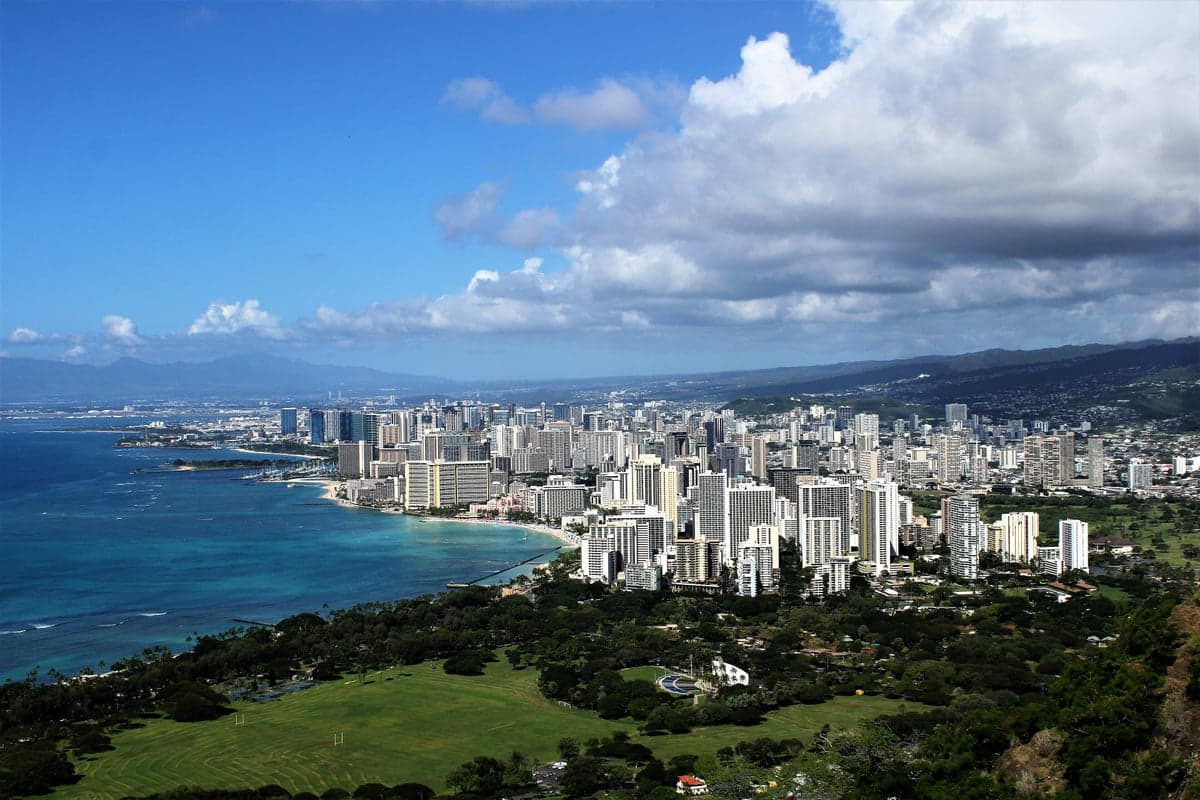
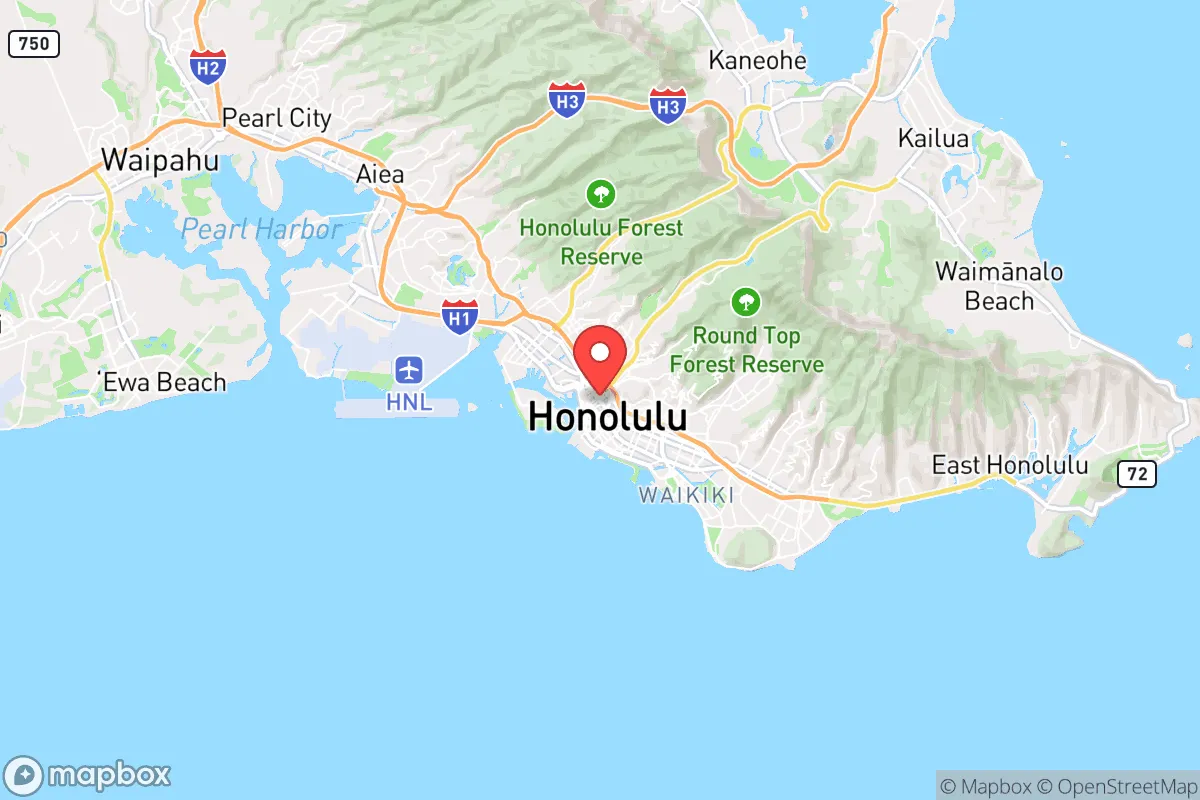
Honolulu’s 346,323 residents form one of the most ethnically diverse urban populations in the United States, defined by a majority East and Southeast Asian composition (51.8%) alongside a modest White minority (15.8%) and a small but growing Hispanic cohort (6.6%). The city is densely packed along the southern shore of Oʻahu, with a foreign-born share of 11.6% and a college-educated rate of 40.8% that reflects its role as the state’s economic and governmental hub. Distinctive markers include a strong local identity rooted in Native Hawaiian and plantation-era cultures, a high cost of living driven by limited land, and a political culture that leans left but retains conservative pockets, particularly among older Japanese-American and military-affiliated residents.
How the city was settled and grew
Honolulu’s population history begins with Native Hawaiians, who established settlements around the natural harbor of Keʻehi and what is now downtown Honolulu long before Western contact. The city’s modern demographic shape was forged by the sugar and pineapple plantation economy of the 19th and early 20th centuries. Plantation owners recruited contract laborers from China beginning in the 1850s, then Japan in the 1880s, followed by Portugal (from Madeira and the Azores), Puerto Rico, and Korea in the early 1900s. These groups settled in plantation camps that later became distinct neighborhoods: Pālama and Kalihi became heavily Japanese and Filipino, while Kaimukī developed as a mixed Japanese and Portuguese working-class area. The Filipino community, arriving in large numbers after 1906, concentrated in Waipahu and Kalihi, where many descendants remain today. By the 1930s, Honolulu was a multi-ethnic but stratified society, with White Americans (haole) holding most economic and political power, while Asians and Native Hawaiians occupied lower rungs. The 1941 attack on Pearl Harbor and subsequent martial law accelerated urbanization, drawing rural Oʻahu residents into the city for wartime jobs.
Modern era (post-1965)
The 1965 Immigration and Nationality Act opened the door to new Asian and Pacific Islander groups, reshaping Honolulu’s ethnic map. Vietnamese refugees arrived after 1975, settling initially in Kalihi and Makiki, while Samoan and Chamorro migrants from American Samoa and Guam clustered in Salt Lake and Moanalua. The Chinese community, long established in downtown’s Chinatown, saw new arrivals from Hong Kong and Taiwan who moved into Mānoa and Nuʻuanu. Domestic in-migration from the U.S. mainland, particularly military personnel and retirees, grew steadily after statehood in 1959, with Mililani and Kapolei (on the Ewa Plain) absorbing many of these newcomers. The Japanese-American population, once the largest ethnic group, has been aging and declining in share since the 1980s, while the Filipino community has grown to become the largest single Asian subgroup in Honolulu proper. The White population (15.8%) is concentrated in upscale neighborhoods like Kāhala, Diamond Head, and Hawaiʻi Kai, as well as military housing areas. The Hispanic population (6.6%) is smaller than the national average but growing, with many Puerto Ricans and Mexicans living in Waipahu and Kapolei. The Black population (1.7%) is overwhelmingly military-affiliated, concentrated near Joint Base Pearl Harbor-Hickam and Schofield Barracks. The Indian subcontinent population (0.6%) is tiny but visible in professional and tech sectors, with no single neighborhood concentration.
The future
Honolulu’s population is slowly aging and diversifying, but not in ways that suggest rapid homogenization. The Japanese-American cohort continues to shrink as younger generations intermarry and move to the mainland, while the Filipino community is growing through both immigration and higher birth rates. The Native Hawaiian population, roughly 10-15% of the city, is younger and more concentrated in Waiʻanae and Kalihi, but faces displacement pressures from rising housing costs. The White share is stable, sustained by military transfers and mainland retirees, but not expanding significantly. The Hispanic and Samoan communities are growing from immigration and higher fertility, particularly in Waipahu and Salt Lake. The city is not tribalizing into stark ethnic enclaves—most neighborhoods are mixed—but economic stratification is sharpening, with wealthy Kāhala and Diamond Head becoming whiter and more expensive, while Kalihi and Waiʻanae remain poorer and more Native Hawaiian and Filipino. Over the next 10-20 years, Honolulu will likely become more Filipino and Hispanic, less Japanese-American, and slightly more diverse overall, but the high cost of living will continue to push young families and middle-class residents to the mainland or to the suburban Ewa Plain.
For someone moving to Honolulu now, the city offers a stable, multi-ethnic society with deep roots in plantation-era immigration and a strong local culture that values community and respect. The political environment is liberal on social issues but conservative on property rights and development, reflecting the influence of older Japanese-American homeowners and military families. New arrivals should expect a dense, expensive urban environment where ethnic identity matters less than economic status, and where the biggest challenge is finding affordable housing in safe, convenient neighborhoods like Mānoa, Kaimukī, or Mililani.

* Values derived from national, state, county, city and local statistics and may differ in a specific area. Last updated: 2026-04-24T00:01:43.000Z
Narrative content on this page is AI-generated and may contain mistakes. Verify any details that matter before acting on them.
ReloMaps may earn a commission from affiliate links at no extra cost to you.

