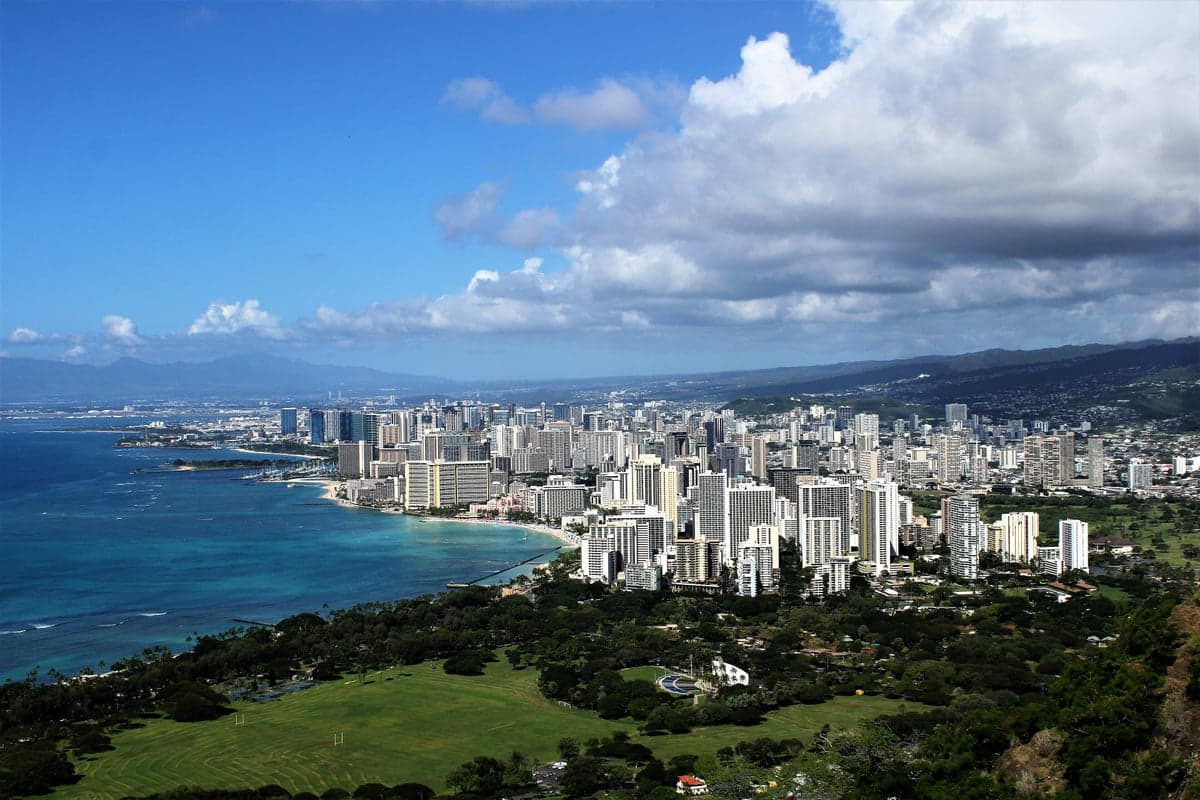
Photo: Wikipedia
Political ClimatePolitical Climate in Honolulu, HI
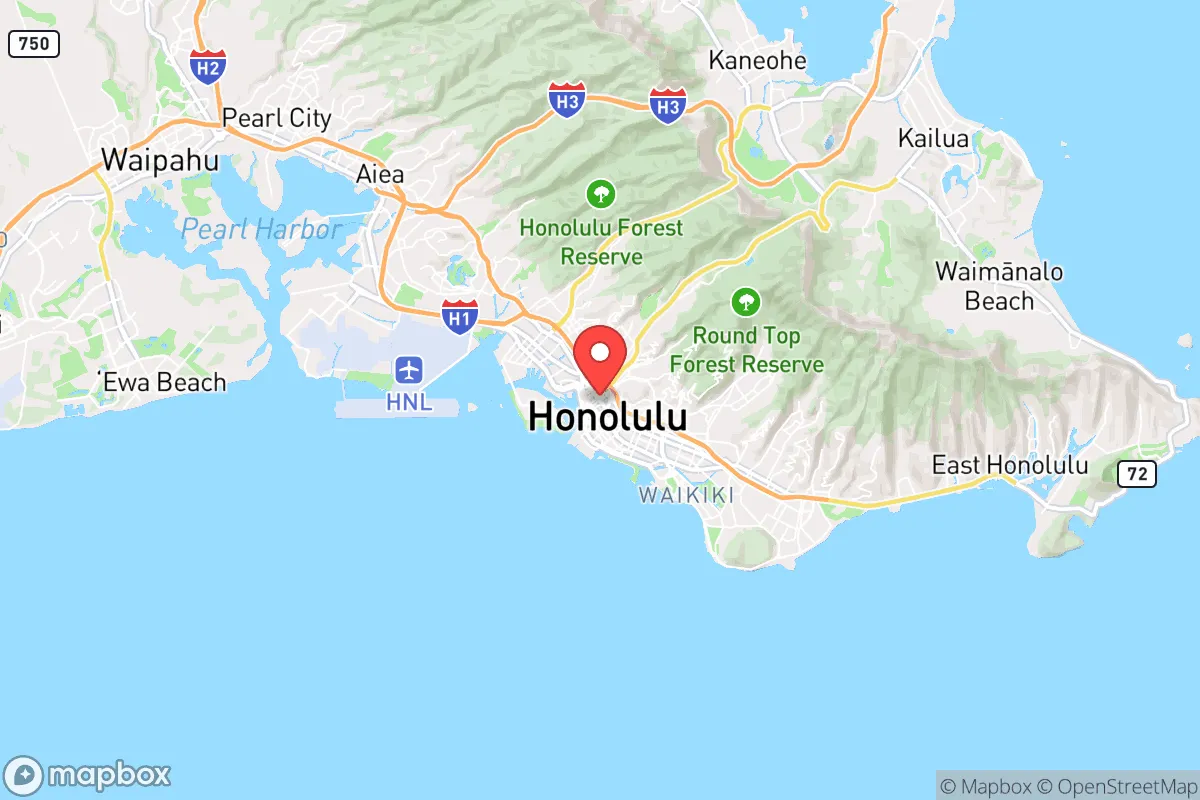
District shown is the primary district for this city’s centroid. Cities may span multiple districts.
Local Political AnalysisPolitical Analysis of Honolulu, HI
Honolulu’s political climate has shifted hard to the left over the past couple of decades, and it’s not just the usual blue-leaning island vibe. The Cook PVI sits at D+13, meaning the city is reliably Democratic by a wide margin, but that number doesn’t capture how much the local government has embraced progressive policies that can feel heavy-handed. If you’ve been around since the 90s or early 2000s, you remember when Honolulu was more of a moderate, live-and-let-live place. Now, you’ve got city council members pushing for stricter land-use regulations, higher taxes on everything from vacation rentals to vehicle registration, and a general attitude that government knows best. The trajectory is concerning—each election cycle seems to bring another layer of bureaucracy and another squeeze on personal freedoms, all in the name of “sustainability” or “equity.”
How it compares
Drive 30 minutes west to Kapolei or Ewa Beach, and you’ll find a slightly more conservative tilt, though still blue overall. The real contrast is on the North Shore or in rural Windward Oahu communities like Kaaawa and Hauula, where folks are more libertarian-leaning—they want less government interference in their daily lives, especially when it comes to property rights and local business. Head over to the neighbor islands, like Maui or the Big Island, and you’ll see a similar pattern: the urban core (Honolulu) is where the progressive agenda gets pushed hardest, while the outer areas push back. Even within Honolulu, neighborhoods like Hawaii Kai and East Honolulu tend to vote more moderately than the central city or Waikiki. But overall, the city’s political machine is firmly in the hands of Democrats who aren’t shy about expanding government reach.
What this means for residents
For someone who values personal freedom, Honolulu can feel like a slow squeeze. The city has some of the strictest rental and short-term vacation rental laws in the country, making it tough for homeowners to use their own property as they see fit. There’s also a growing push for higher minimum wages, paid leave mandates, and stricter environmental regulations that hit small businesses and contractors hard. You’ll see more red tape around building permits, business licenses, and even what you can plant in your yard (invasive species rules are no joke). The public school system is heavily influenced by the state teachers’ union, and there’s little room for school choice or charter alternatives. If you’re a gun owner, forget it—Hawaii has some of the strictest firearm laws in the nation, and Honolulu’s police department enforces them aggressively. The bottom line: if you like being left alone to make your own choices, you’ll find yourself butting heads with city hall more often than not.
Culturally, Honolulu has always had a strong sense of community and aloha spirit, but that’s being tested by the influx of mainland transplants who bring their own political baggage. The local government has leaned into identity politics and climate activism in ways that feel out of step with the traditional Hawaiian value of personal responsibility. Longtime residents grumble about the rising cost of living, which is driven partly by government policies that limit housing supply and tax the middle class. Looking ahead, if the trend continues, expect more regulations on everything from energy use to transportation—Honolulu is already eyeing congestion pricing and electric vehicle mandates. It’s a beautiful place to live, but the political climate is one where you’ll want to keep an eye on the ballot box and maybe have a backup plan if things get too heavy-handed.

State Political ClimatePolitical Climate in Hawaii
State Political AnalysisPolitical Environment in the State
Hawaii has been a one-party Democratic stronghold for decades, with Democrats holding supermajorities in both legislative chambers and every statewide office since 1962. The state’s overall partisan lean is roughly D+20 in presidential elections, but that masks a growing conservative undercurrent in rural and suburban areas. Over the past 10-20 years, the Democratic coalition has shifted from a moderate, union-based machine to a more progressive, activist-driven one, while Republicans have been squeezed into a few geographic pockets and a shrinking base of fiscal conservatives. For a conservative considering relocation, the key takeaway is that Hawaii’s political climate is increasingly hostile to traditional values, but the cracks in the blue wall are widening.
Urban vs. rural divide
The political map of Hawaii is starkly divided between the urban core of Honolulu on Oahu and the rest of the state. Honolulu and its suburbs—like Waipahu, Pearl City, and Kaneohe—drive the state’s progressive tilt, with precincts routinely voting 70-80% Democratic. The city’s reliance on government jobs, tourism, and a large public-sector union base keeps it deep blue. In contrast, the Big Island (Hawaii County) is the most politically mixed, with rural areas like Puna and Hilo leaning left, but Kona and Waimea showing significant Republican strength. Maui County is reliably Democratic, but Kihei and Makawao have small but vocal conservative pockets. Kauai is the most uniformly liberal of the outer islands, with Lihue and Kapaa voting heavily Democratic. The rural North Shore of Oahu and the Leeward Coast (Nanakuli, Waianae) are also Democratic, but with a more populist, anti-establishment flavor that sometimes breaks with the party on development and military issues. The only reliably Republican precincts are in Kahala and Diamond Head on Oahu, and a few ranching areas on the Big Island and Maui.
Policy environment
Hawaii’s policy environment is a textbook case of progressive overreach. The state has the highest combined tax burden in the nation, with a 4% general excise tax (effectively a sales tax on nearly everything, including services), high property taxes, and a progressive income tax that tops out at 11%. There is no school choice—Hawaii is the only state with a single, statewide school district, and charter schools are tightly controlled. The state’s gun laws are among the strictest in the country, requiring permits to purchase, registration of all firearms, and a ban on “assault weapons” and standard-capacity magazines. In 2022, the legislature passed a law requiring a 14-day waiting period for all firearm purchases, even for those with a permit. Healthcare is heavily regulated, with a state-run insurance exchange and a mandate that employers provide coverage. Election laws are moderately restrictive: same-day registration is not allowed, and mail-in voting is universal, but there are no voter ID requirements. The state’s land use commission has near-total control over development, making housing scarce and expensive—a de facto barrier to entry for new residents.
Trajectory & freedom
Hawaii is becoming less free by nearly every measure. The 2023 legislative session saw the passage of SB 1030, which expanded the state’s red flag law to allow family members and law enforcement to petition for the temporary seizure of firearms without a criminal conviction. In 2024, the legislature passed HB 1900, which banned the sale of flavored tobacco products and placed new restrictions on vaping. On the parental rights front, the state’s Department of Education has adopted policies that allow students to use their preferred names and pronouns without parental notification, and the legislature has repeatedly killed bills that would require parental consent for medical procedures. Medical autonomy took a hit with the passage of Act 1 in 2023, which codified abortion access into state law and removed parental consent requirements for minors. Property rights are under constant assault from the Hawaii Community Development Authority and the Land Use Commission, which can downzone or reclassify land with little notice. The only bright spot for conservatives was the 2024 defeat of a proposed constitutional amendment that would have allowed the state to impose a surcharge on real estate transactions to fund affordable housing—a clear tax hike that voters rejected.
Civil unrest & political movements
Hawaii has a long history of protest, but the tone has shifted from labor disputes to culture war flashpoints. The Mauna Kea telescope protests in 2019-2020 were a left-right coalition of Native Hawaiian activists and environmentalists that blocked construction of the Thirty Meter Telescope, leading to months of roadblocks and arrests. More recently, the 2023 teacher strike over pay and class sizes shut down schools for a week, highlighting the power of the public-sector unions. On the right, the Hawaii Republican Party is small but active, with a focus on school choice and tax relief. The Oahu County Republican Party has been particularly vocal about election integrity, pushing for voter ID laws that have gone nowhere. Immigration politics are muted—Hawaii has a relatively small immigrant population—but the state is a sanctuary state by practice, with local law enforcement prohibited from cooperating with ICE on civil immigration detainers. The most visible flashpoint for a new resident would be the constant tension between development and preservation: every new housing project, hotel, or wind farm faces organized opposition from environmental groups and Native Hawaiian sovereignty activists. The secessionist movement (the “Kingdom of Hawaii”) is small but persistent, with occasional protests at the state capitol and a presence on social media.
Projection
Over the next 5-10 years, Hawaii’s political trajectory is likely to continue leftward, driven by demographic shifts and in-migration from the mainland. The state’s population is aging and declining, but the people moving in are disproportionately wealthy retirees and remote workers from California and the Pacific Northwest, who tend to be progressive. The Native Hawaiian population, which is growing, is increasingly aligned with the Democratic Party on environmental and sovereignty issues. The Republican Party shows no signs of revival—its base is aging and geographically isolated. However, the state’s housing crisis could become a political wildcard. If the Democratic supermajority continues to block new construction, a populist backlash could emerge, similar to the 2024 defeat of the real estate surcharge. A conservative candidate who runs on a platform of cutting red tape, lowering taxes, and expanding school choice could potentially win in a rural district or even a suburban Oahu seat. But for the foreseeable future, expect more of the same: higher taxes, more regulations, and a government that prioritizes progressive social policy over economic growth.
For a conservative moving to Hawaii, the bottom line is this: you will be living in a state where your values are in the minority, and where the government is actively hostile to gun rights, parental rights, and fiscal conservatism. The trade-off is unparalleled natural beauty and a slower pace of life, but you will need to be prepared to fight for your freedoms at the local level. If you can afford it, consider the Big Island’s Kona coast or Maui’s upcountry, where the political climate is slightly more balanced. But don’t expect any major policy shifts—Hawaii is likely to remain a blue state for the foreseeable future, and the best you can hope for is to hold the line.
* Values derived from national, state, county, city and local statistics and may differ in a specific area. Last updated: 2026-04-24T00:01:43.000Z
Narrative content on this page is AI-generated and may contain mistakes. Verify any details that matter before acting on them.
ReloMaps may earn a commission from affiliate links at no extra cost to you.

