
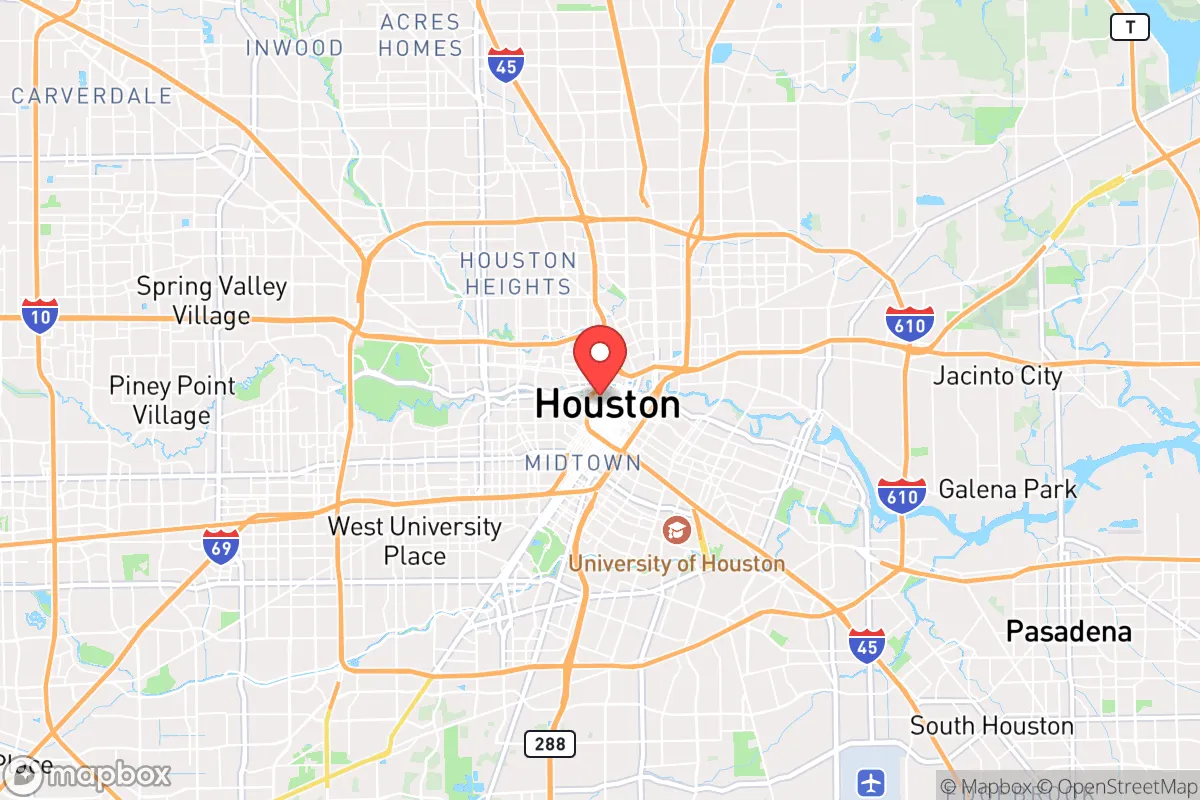
Photo: Wikipedia
Quality of Life in Houston, TX
Above-average quality of iife. The area offers a reasonable cost of living, decent mobility, and a mix of neighborhood amenities.
What does Quality of Life tell us?
Quality of Life blends cost of living, nearby amenities, socioeconomic signals, and neighborhood character. City-level scores represent the whole municipality; individual neighborhoods can differ.
What does this tell us?
Quality of Life blends cost of living, nearby amenities, socioeconomic signals, and neighborhood character. City-level scores represent the whole municipality; individual neighborhoods can differ.
Cost of Living
4% above national average
The Real Cost of Living in Houston, TX for 2026
| Tier | Individual | Family (4) |
|---|---|---|
| Survival | $53k | $99k |
| Comfortable | $100k | $147k |
| Luxury | $114k+ | $176k+ |
| Elite (Top 5%) | $188k+ | $291k+ |
43%
The Area Signal
A metric tracking the socioeconomic signals of the area.


Hobbies
Explore the areaGroceries
5 within 10 miles
Gas
0 within 10 miles
Hospital
3 within 20 miles
Airport
IAH — Bush Iah Terminal C
Post Office
USPS — Houston, TX
Critical Amenities
Quality-of-Life Analysis
Houston, Texas, presents a quality-of-life profile defined by its status as a major economic hub with a cost of living that remains notably below many peer cities. The population is a diverse mix of young professionals drawn to the energy and healthcare sectors, established families seeking affordable housing, and a large immigrant community that shapes the city's cultural fabric. With a cost of living index of 104 (just 4% above the national average), Houston offers a level of affordability rare among America's largest metropolitan areas, attracting residents who prioritize career opportunity and space over the premium prices of coastal cities.
How housing costs and daily expenses compare to nearby suburbs
Houston's housing market is a primary driver of its affordability, especially when compared to other top-10 U.S. cities. The median home value sits at $253,400, significantly lower than the national median and a fraction of prices in cities like Los Angeles or New York. Median rent is $1,313, making it feasible for single professionals and families alike to find housing without overextending their budgets. While nearby suburbs like The Woodlands or Sugar Land offer newer housing stock and top-rated schools, they come with a premium—home values in The Woodlands often exceed $400,000—and longer commutes. Houston's average commute time of 27.3 minutes is slightly below the national average, a practical advantage for a city of its size, though traffic on major arteries like I-10 and I-45 can push that higher during peak hours. Property taxes in Harris County are high (often 2.5–3.5% of assessed value), which offsets some of the housing cost savings, but the absence of a state income tax keeps overall expenses manageable for most households.
What daily life is like for families and professionals
Daily life in Houston is shaped by its sprawling layout and car-dependent infrastructure, but the city compensates with a wealth of amenities. The Houston Independent School District (HISD) is the largest in Texas, offering magnet programs and specialized schools like Carnegie Vanguard High School that rank among the nation's best, though overall district performance varies widely by neighborhood. For families, the Museum District provides free admission to institutions like the Houston Museum of Natural Science and the Children's Museum of Houston, while the 1,500-acre Memorial Park offers hiking, biking, and golf. Professionals benefit from a robust job market anchored by the Texas Medical Center—the world's largest medical complex—and the Energy Corridor, home to companies like ExxonMobil and Shell. The city's food scene is a standout, with over 10,000 restaurants reflecting its multicultural population, from Viet-Cajun crawfish in Midtown to authentic tacos in the East End. Summers are hot and humid, with average highs above 90°F from June through September, which limits outdoor activity during midday but fuels a strong air-conditioned indoor culture of malls, museums, and sports arenas.
Houston is best suited for residents who value career opportunity, cultural diversity, and affordable space over walkability or temperate weather. Young professionals in energy, medicine, or engineering will find a deep job market and a social scene that ranges from live music in Montrose to rooftop bars in Downtown. Families can access good schools in specific neighborhoods like Bellaire or the Heights, provided they budget for higher property taxes. Those who dislike humidity, long commutes, or a car-centric lifestyle may struggle, but for anyone seeking a major city with a reasonable cost of entry and a dynamic, international character, Houston delivers a compelling quality of life.

Crime in Houston, TX
Significantly higher crime rates than 86% of comparable U.S. locations.
Violent CrimeViolent Crime Analysis
Property CrimeProperty Crime Analysis
Crime Analysis
Houston's overall safety picture is significantly worse than both Texas and national averages, driven by high rates of violent and property crime that place it among the most dangerous large cities in the United States. With a violent crime rate of 886.1 incidents per 100,000 residents and a property crime rate of 3,814.8 per 100,000, the city faces persistent public safety challenges that directly affect daily life for its 2.3 million residents. These figures reflect a metropolitan area where progressive prosecutorial policies and judicial leniency have been linked to elevated recidivism and reduced deterrent effects.
Crime in context
Houston's violent crime rate of 886.1 per 100,000 is roughly 2.4 times the national average (about 370 per 100,000) and significantly above the Texas state average of approximately 450 per 100,000. Property crime in Houston, at 3,814.8 per 100,000, also exceeds both the national average (around 2,000 per 100,000) and the Texas average (roughly 2,500 per 100,000). These disparities are not random; they correlate with the policies of Harris County's elected officials, including District Attorney Kim Ogg and a judiciary that has embraced progressive reforms such as no-cash bail for many felony offenses and reduced sentencing guidelines. Critics argue these approaches, while intended to reduce incarceration, have resulted in more offenders cycling back onto Houston streets without meaningful accountability, directly undermining public safety and victim justice.
What residents experience
For Houston residents, the high crime rates translate into tangible daily risks. Car thefts, home burglaries, and armed robberies are common, with many neighborhoods experiencing property crime rates that make home and auto insurance premiums among the highest in Texas. Violent crime, including aggravated assault and homicide, is concentrated in certain corridors but can occur anywhere. Residents frequently report feeling unsafe walking alone after dark or using public transit, and many businesses in higher-crime areas invest heavily in private security. The progressive justice system's focus on offender rehabilitation over punishment has led to widespread frustration among victims, who often see perpetrators released quickly on personal recognizance bonds only to reoffend.
Neighborhood-level variation is stark. Areas like Uptown, Memorial, and West University Place enjoy relatively low crime rates due to higher incomes, private security patrols, and proactive community policing. In contrast, neighborhoods such as Third Ward, Sunnyside, and parts of the Northside experience violent crime rates several times the city average, with residents facing frequent gun violence and property theft. Suburban communities like Sugar Land and The Woodlands offer significantly lower crime rates but remain within commuting distance of Houston's job centers. For those considering relocation, choosing a neighborhood with strong local law enforcement and conservative judicial oversight is critical to personal safety and property protection.
* Values derived from national, state, county, city and local statistics and may differ in a specific area. Last updated: 2026-04-13T20:13:33.000Z
Narrative content on this page is AI-generated and may contain mistakes. Verify any details that matter before acting on them.
ReloMaps may earn a commission from affiliate links at no extra cost to you.

