Photo: Wikipedia
Political ClimatePolitical Climate in Houston, TX
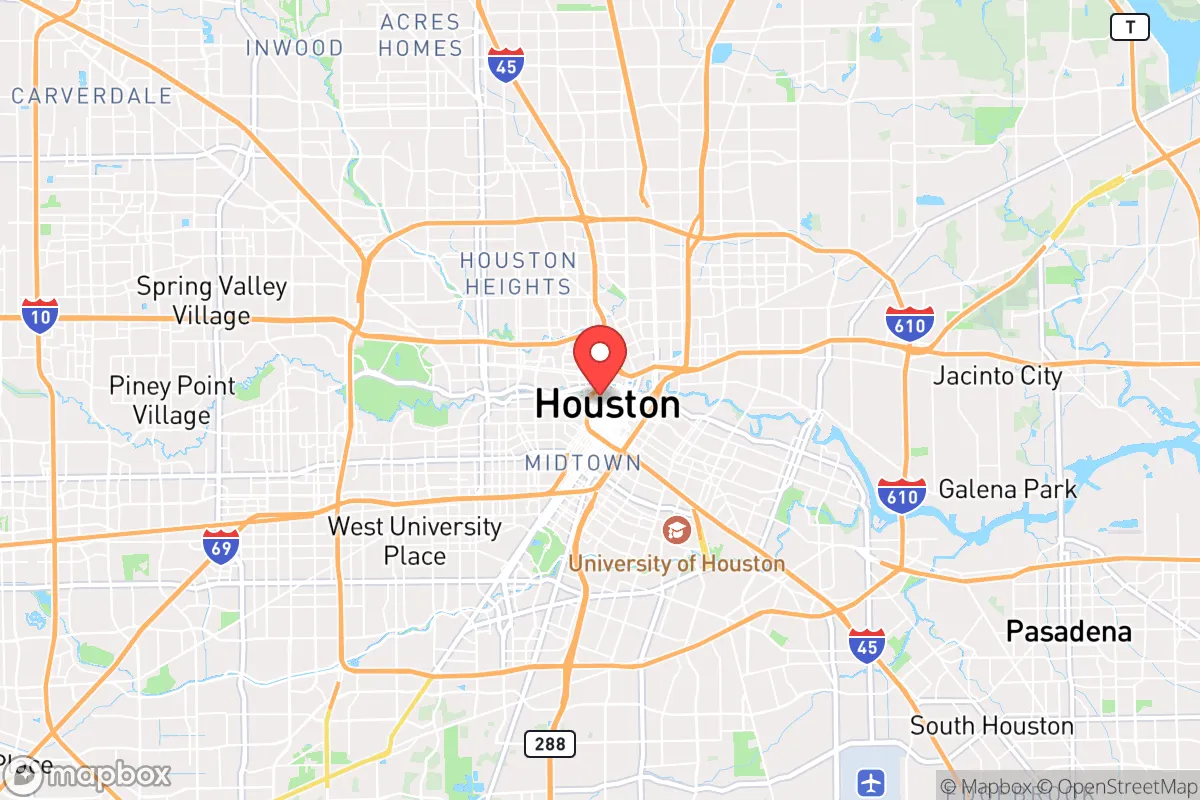
District shown is the primary district for this city’s centroid. Cities may span multiple districts.
Local Political AnalysisPolitical Analysis of Houston, TX
Houston’s political climate has shifted hard to the left over the last decade, and the numbers back it up. The Cook Partisan Voting Index (PVI) now sits at D+21, meaning the city votes 21 points more Democratic than the national average. That’s a far cry from the moderate, business-first Houston I remember from the 90s and early 2000s, where you could still find a healthy mix of conservative and liberal voices at the dinner table. Today, the city council and county leadership are overwhelmingly progressive, and the trendline is only getting steeper. If you’re looking for a place where your personal freedoms—like keeping your own money, sending your kid to the school you choose, or not getting tangled up in endless new regulations—are respected, Houston is becoming a tougher place to call home.
How it compares
Drive 30 minutes outside the loop, and you’ll see a completely different political reality. Suburbs like Katy, Sugar Land, and The Woodlands lean much more conservative, often voting Republican by double digits in local races. Even Montgomery County to the north is a solid red stronghold, while Fort Bend County has become a purple battleground after years of rapid growth. Inside Houston proper, though, the contrast is stark. The city’s core is dominated by progressive activists who push policies like defunding the police (which we saw play out in 2020), strict zoning overrides, and tax hikes disguised as “equity” initiatives. Meanwhile, the surrounding exurbs are fighting to keep property taxes low and school boards focused on academics, not social experiments. It’s a tale of two worlds, and the divide is widening every election cycle.
What this means for residents
For the average Houstonian, the political tilt translates into real-life headaches. Property taxes keep climbing because the city and county can’t stop spending—on everything from light rail expansions to diversity training programs that do nothing to fix potholes. You’ll also see more government overreach into your daily life: mask mandates that lasted longer than in neighboring counties, restrictions on short-term rentals, and a growing list of fees and permits for small businesses. The school board has become a battleground over curriculum and parental rights, with progressive members pushing critical race theory and gender ideology into classrooms while pushing back against charter schools and vouchers. If you value the freedom to run your life without a bureaucrat’s permission, you’ll find yourself constantly fighting city hall.
On the cultural side, Houston still has its charms—world-class food, a diverse population, and a strong energy sector that keeps the economy humming. But the political culture is increasingly hostile to traditional values. The city’s leadership has embraced sanctuary city policies, which means local law enforcement won’t cooperate with federal immigration authorities, and they’ve pushed for “reimagining” public safety in ways that make neighborhoods less safe. The long-term trajectory is concerning: as more progressive transplants move in from California and the Northeast, the old Houston of fiscal conservatism and personal liberty is fading fast. If you’re considering a move here, I’d recommend looking at the suburbs or even smaller towns like Conroe or Brenham, where the political climate still respects your right to live as you see fit.

State Political ClimatePolitical Climate in Texas
State Political AnalysisPolitical Environment in the State
Texas remains a solidly Republican state at the statewide level, but the coalition that keeps it red is shifting under your feet. The GOP has won every statewide election since 1994, and Donald Trump carried the state by 5.6 points in 2024, down from 9 points in 2020 and 16 points in 2016. The dominant coalition is still conservative—pro-business, pro-gun, and pro-life—but the margins are thinning as fast-growing suburban counties trend purple and blue metros swell. Over the last 20 years, the state has gone from a deep-red lock to a lean-red battleground, driven entirely by where people are moving and how they vote.
Urban vs. rural divide
The political map of Texas is a tale of three regions. The big blue metros—Austin (Travis County), Dallas (Dallas County), Houston (Harris County), San Antonio (Bexar County), and El Paso (El Paso County)—are solidly Democratic, often by 20-40 point margins. These five counties alone cast about 40% of the state’s votes. Meanwhile, the vast rural and exurban areas—places like the Panhandle around Lubbock, East Texas timber country, and the South Texas brush country—vote Republican by 30-50 points. The real action is in the suburbs and exurbs. Collin County (north of Dallas) voted for Trump by 14 points in 2024, down from 24 points in 2016. Fort Bend County (southwest of Houston) flipped from red to blue in 2018 and has stayed there. Hays County (south of Austin) went from +11 R in 2012 to +8 D in 2024. The divide isn’t just urban vs. rural anymore—it’s growing suburbs vs. shrinking small towns, and the suburbs are trending left fast.
Policy environment
Texas has no state income tax, which remains the single biggest policy draw for conservatives and businesses alike. Property taxes are high to compensate—averaging about 1.7% of assessed value—but the state legislature passed a $12.7 billion property tax cut in 2023 (SB 2 and SB 3) that compressed school tax rates and raised the homestead exemption to $100,000. The regulatory posture is famously light: no state-level occupational licensing for dozens of trades, no state minimum wage above the federal $7.25, and a right-to-work law that keeps unions weak. On education, the state passed school choice legislation in 2023 (HB 1) creating education savings accounts for special-needs students, but a broader universal voucher bill failed in the House. Healthcare is a mixed bag: Texas refused Medicaid expansion under the ACA, leaving about 18% of residents uninsured (the highest rate in the nation), but the state also passed the “Texas Heartbeat Act” (SB 8) in 2021, banning abortion after about six weeks and empowering private enforcement. Election laws tightened after 2020 with SB 1 (2021), which banned drive-through voting, added ID requirements for mail ballots, and restricted early voting hours. For a conservative, the policy environment is broadly friendly—low taxes, light regulation, and strong protections for religious liberty and gun rights—but the cracks are showing as the state’s growing population demands more services.
Trajectory & freedom
On balance, Texas has become more free on several fronts over the last five years, but with notable exceptions. The 2021 legislative session was a landmark for gun rights: permitless carry (HB 1927) went into effect, allowing any law-abiding adult to carry a handgun without a license. Parental rights in education got a boost with HB 3979 (2021) and the “Parental Bill of Rights” (SB 49, 2023), which require schools to notify parents about curriculum changes and medical services. Medical freedom took a hit, though: the state banned nearly all abortions (SB 8 and the trigger law HB 1280) and restricted gender-affirming care for minors (SB 14, 2023). Property rights remain strong—Texas has no state-level rent control and strong eminent domain protections—but local governments are increasingly using zoning and tree ordinances to slow development, especially in blue cities like Austin. On taxation, the 2023 property tax cuts were real, but the state’s reliance on sales and property taxes means that inflation and rising home values automatically increase your tax burden without a vote. The trajectory is mixed: the state is expanding freedom on guns, education, and parental rights, but contracting it on medical choices and local land use. For a conservative, the net is still positive, but the margin is shrinking.
Civil unrest & political movements
Texas has seen its share of political flashpoints. The 2020 Black Lives Matter protests in Austin and Dallas were large and occasionally violent, leading to property damage and a police budget cut in Austin that was later partially restored. The “Defund the Police” movement had real traction in Austin, where the city council cut $150 million from the police budget in 2020, only to reverse course after a spike in violent crime. On the right, the “Texas Nationalist Movement” (Texit) has been pushing for secession since 2016, but it remains a fringe effort with no serious legislative traction. Immigration politics are a constant flashpoint: Governor Greg Abbott’s Operation Lone Star (2021-present) deployed state troopers and National Guard to the border, bused migrants to Democratic cities, and installed razor wire and buoys in the Rio Grande. The state passed SB 4 (2023) making illegal entry a state crime, though it’s been tied up in court. Election integrity remains a hot-button issue: the 2020 election in Texas was clean by all official accounts, but the 2021 voting law (SB 1) was passed in response to unsubstantiated fraud claims. A new resident will notice the political tension most in the suburbs—yard signs, bumper stickers, and local school board meetings that turn into shouting matches over library books and curriculum. The civil unrest isn’t at 2020 levels, but the underlying polarization is baked in.
Projection
Over the next 5-10 years, Texas is likely to become a true swing state. The demographic math is relentless: the state is growing by about 1,000 people per day, and the vast majority of new arrivals are moving to the blue-leaning suburbs of Dallas, Houston, and Austin. The Hispanic population, which made up 40% of the state in 2023, is trending more Democratic among younger voters, though older Hispanic voters in South Texas still lean Republican. The rural vote is shrinking as small towns depopulate. If current trends hold, Texas could be competitive at the presidential level by 2032 or sooner. That said, the state legislature is gerrymandered to protect Republican incumbents, and the GOP controls the redistricting process, so the state government will likely remain red for at least another decade even if the popular vote tightens. For a conservative moving in now, the practical reality is that your vote will matter more than it used to, but the state’s policy direction will remain conservative for the foreseeable future. The biggest risk is that the state’s growing diversity and urbanization will eventually flip the legislature, leading to higher taxes, more regulation, and a rollback of the gun and parental rights gains. That’s a 10-15 year horizon, not a 5-year one.
For a new resident, the bottom line is this: Texas is still a great place for a conservative to live, work, and raise a family, but it’s not the same Texas your granddad moved to. The low taxes and light regulation are real, but they come with high property taxes and a growing demand for public services. The cultural conservatism is strongest in the small towns and exurbs, while the big cities are increasingly progressive. If you’re looking for a state that respects your gun rights, your parental authority, and your wallet, Texas still delivers—but you’ll want to pick your county carefully. The suburbs of Fort Worth (Tarrant County) and San Antonio (Bexar County) are still reliably red, while Austin and Dallas are lost causes for conservatives. The political climate is shifting, but for now, the Lone Star State still lives up to its name.
* Values derived from national, state, county, city and local statistics and may differ in a specific area. Last updated: 2026-04-13T20:13:33.000Z
Narrative content on this page is AI-generated and may contain mistakes. Verify any details that matter before acting on them.
ReloMaps may earn a commission from affiliate links at no extra cost to you.

