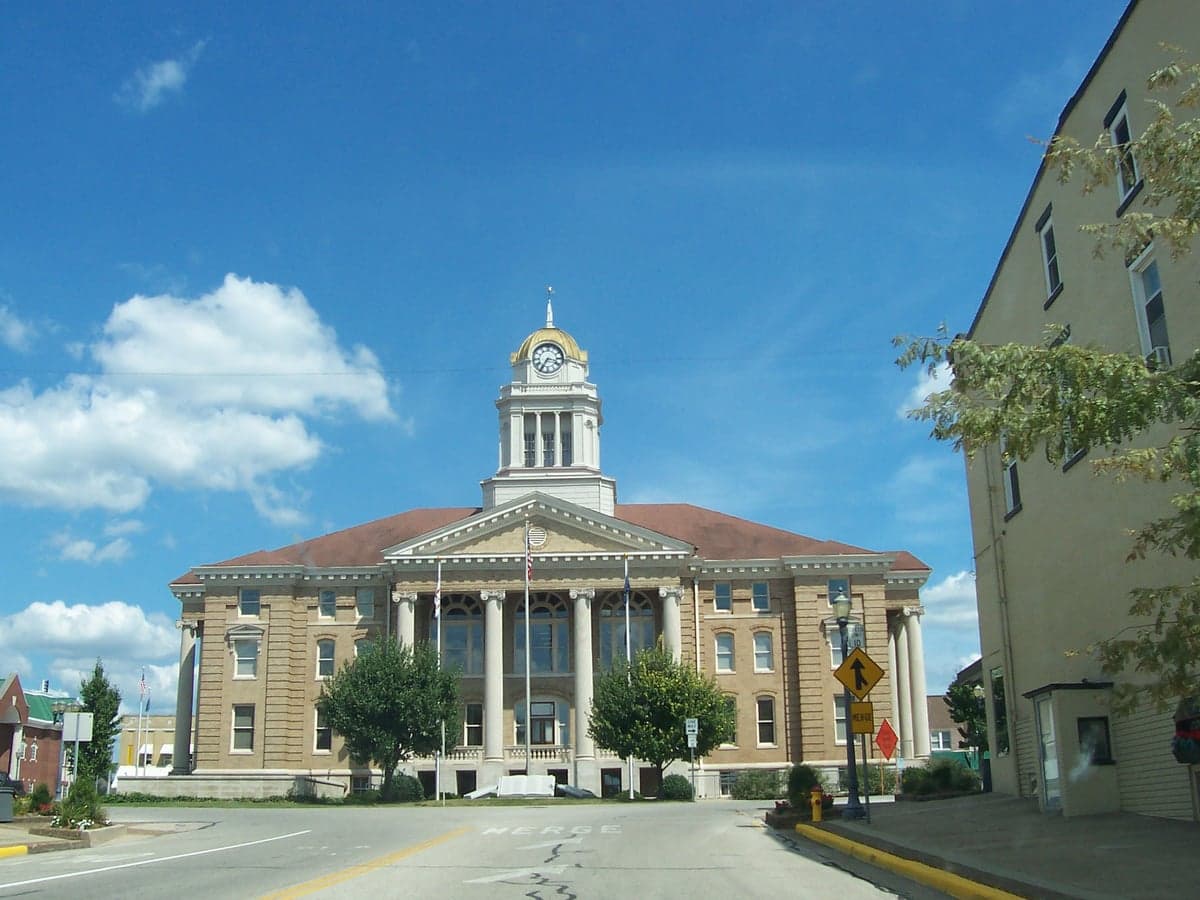
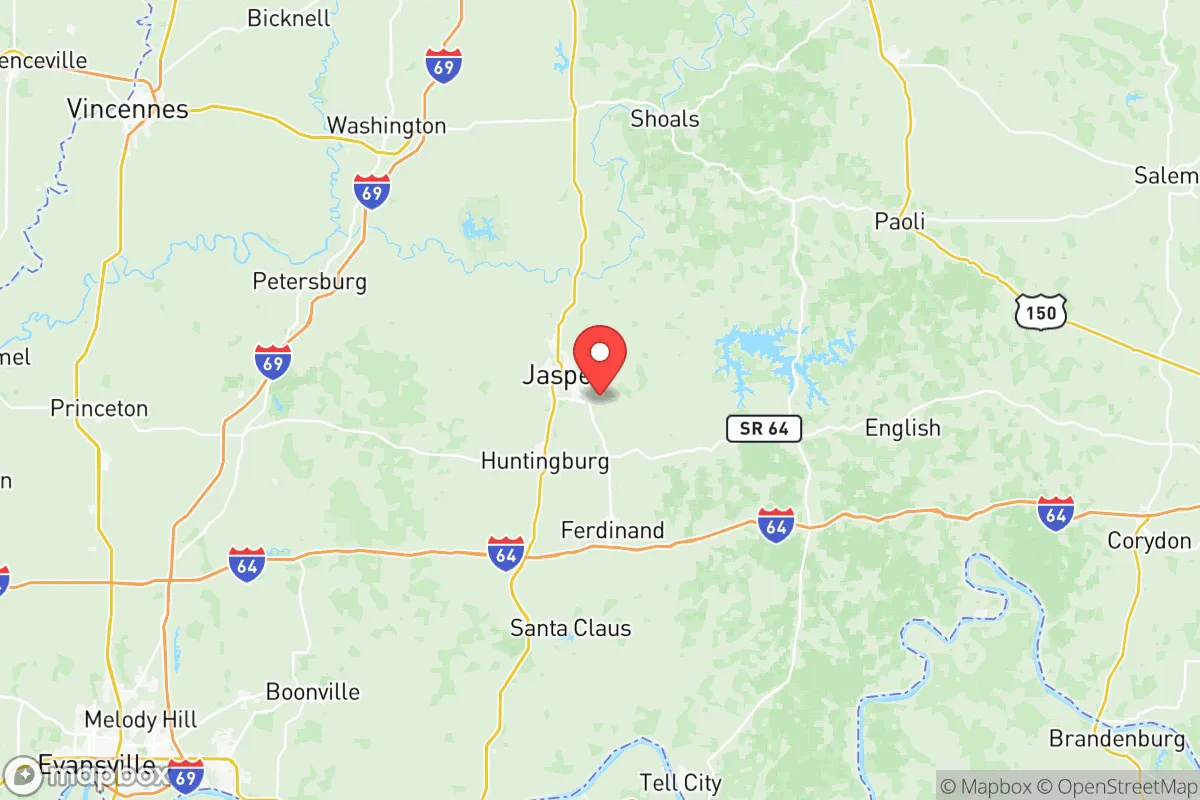
Photo: Wikipedia
Political ClimatePolitical Climate in Dubois County
Showing district-level results — no local-only data available.
Local Political AnalysisPolitical Analysis of Dubois County
Dubois County, Indiana, is a reliably conservative stronghold, with a Cook Partisan Voting Index of R+18 that makes it significantly more Republican than the state of Indiana as a whole, which sits at R+9. This isn't a recent shift; the county has been a GOP bastion for decades, anchored by the culturally conservative values of its large German Catholic population and a robust manufacturing economy. While the county as a whole hasn't voted for a Democratic presidential candidate since Lyndon B. Johnson in 1964, the political landscape isn't a monolith—there are real, if subtle, variations between its towns and precincts that shape daily life for everyone who lives here.
How it compares
The R+18 rating places Dubois County nearly ten points to the right of Indiana's statewide R+9 lean. To put that in perspective, while Indiana is already considered a solidly red state, Dubois County votes more like a deep-red district in Tennessee or Kentucky. The difference is most visible in presidential elections: in 2020, Donald Trump won Dubois County with 74% of the vote, compared to 57% statewide. The county's Republicanism is also more consistent than the state's—Indiana has occasionally elected Democratic senators (like Joe Donnelly as recently as 2012), but Dubois County has not sent a Democrat to the state legislature in decades. Within the county, Jasper, the largest city and county seat, is the most reliably Republican, with precincts routinely delivering 75-80% of the vote for GOP candidates. Huntingburg and Ferdinand are also deeply red, though Ferdinand's sizable monastic community (home to the Sisters of St. Benedict) sometimes produces slightly more moderate results on social issues. The only real deviation is Holland, a small town in the county's southwest corner, where a mix of lower-income households and a small but active Democratic club can swing a precinct to 40-45% Democratic in a good year—making it the closest thing to a "blue dot" in the county.
What this means for residents
For conservative residents, the political climate is deeply affirming. Local government, school boards, and law enforcement are overwhelmingly staffed by Republicans, and policy debates tend to focus on tax cuts, economic development, and maintaining the county's strong manufacturing base (home to major employers like Kimball Electronics and Jasper Engines & Transmissions). Conservative social values are reflected in local ordinances—for example, alcohol sales remain restricted on Sundays in unincorporated areas, a nod to the county's Catholic heritage. For liberal residents, the reality is more about finding community within a minority. There is an active Dubois County Democratic Party that fields candidates for local office, though they rarely win. Progressive residents often find their voice in cultural institutions like the Jasper Arts Center or through advocacy groups focused on issues like affordable housing and environmental conservation, which tend to be less partisan at the local level. The key takeaway is that while the county's politics are overwhelmingly conservative, it's not a place of open hostility—most people, regardless of party, share a strong sense of community and neighborliness that transcends the ballot box.
Culturally, Dubois County stands apart from much of Indiana due to its deep German Catholic roots, which infuse local politics with a distinct flavor. Unlike the more evangelical Protestant conservatism found in much of the state, Dubois County's Republicanism is often more pragmatic and less focused on culture-war issues. You'll see strong support for pro-business policies and fiscal conservatism, but less enthusiasm for, say, book bans or hardline abortion restrictions. This creates a unique political environment where the county can be simultaneously one of the most Republican in the state and one of the most welcoming to immigrants (the local meatpacking plants have drawn a growing Hispanic population). Looking ahead, the county's trajectory seems stable—the R+18 lean is unlikely to shift dramatically, though the growing Hispanic community could slowly introduce more Democratic-leaning voters over the next decade. For now, Dubois County remains a place where conservative values are the norm, but where the definition of "conservative" is shaped as much by the local brewery and the parish picnic as by any national party platform.

State Political ClimatePolitical Climate in Indiana
State Political AnalysisPolitical Environment in the State
Indiana is a solidly Republican state with a Cook PVI of R+9, meaning it typically votes about nine points more Republican than the nation as a whole. Over the last 10-20 years, the state has shifted rightward, driven by the continued exodus of union-aligned Democrats from the industrial north and the rapid growth of conservative-leaning suburbs around Indianapolis and along the I-69 corridor. While it hasn't flipped as dramatically as some neighboring states, the GOP now holds a supermajority in both chambers of the legislature and has controlled the governor's office for all but four of the last twenty years. For a relocator, this means you're moving into a state where conservative policy is the baseline, but the political reality is more nuanced than the raw numbers suggest.
Urban vs. rural divide
The political map of Indiana is a classic study in contrasts. The state's two major urban centers—Indianapolis (Marion County) and Fort Wayne (Allen County)—are Democratic-leaning islands in a sea of red. Indianapolis, home to the state government and a growing tech and life sciences sector, consistently votes blue by about 15-20 points in presidential races. Fort Wayne, while more moderate, has trended leftward as its manufacturing base diversified. The real engine of Republican dominance is the vast rural and exurban expanse: counties like Hamilton (north of Indy), Hendricks, and Johnson are among the most reliably Republican in the nation, often delivering 65-70% of the vote for GOP candidates. The I-65 corridor south of Indianapolis, through Columbus and Seymour, is deeply red, as is the entire Wabash Valley. The notable exception is Lake County (Gary and its suburbs), which remains a Democratic stronghold due to its legacy of industrial unionism and a large Black population, though its influence is waning as its population declines. The Bloomington area (Monroe County), home to Indiana University, is a liberal outlier, voting about 60% Democratic, but it's too small to shift the statewide balance.
Policy environment
Indiana's policy environment is defined by low taxes, limited regulation, and a strong tilt toward local control on social issues. The state has a flat income tax rate of 3.05% (scheduled to drop to 2.9% by 2027), and property taxes are capped at 1% of assessed value for owner-occupied homes. There is no estate tax. The regulatory posture is business-friendly, with a right-to-work law (passed in 2012) and a tort reform system that caps non-economic damages in medical malpractice cases. On education, Indiana has a robust school choice program: the state's voucher system (the Choice Scholarship Program) is one of the oldest and largest in the country, and there are no caps on charter schools. Homeschooling is lightly regulated. Healthcare policy is conservative: Indiana expanded Medicaid under the Affordable Care Act via a conservative waiver (the Healthy Indiana Plan), but the state has not pursued a state-based exchange. Election laws are moderately restrictive: voter ID is required, early voting is available but limited to 28 days before an election, and same-day registration is not permitted. Absentee voting requires an excuse, though a no-excuse option was temporarily allowed during the pandemic and has been a recurring legislative battle.
Recent policy direction
In the last five years, Indiana's legislature has moved aggressively on a range of liberty-related issues that matter to relocators. On gun rights, Indiana became a constitutional carry state in 2022, meaning no permit is required to carry a handgun in public. The state also has a "stand your ground" law and preempts local gun ordinances. On parental and education rights, the state passed a "Parents' Bill of Rights" (HB 1608) in 2023, requiring schools to notify parents of curriculum changes and to obtain consent before students can use a name or pronoun different from their official records. The state also banned instruction on human sexuality in grades K-3 (HB 1608 again) and restricted the teaching of "divisive concepts" related to race and sex in K-12 schools (HB 1440, 2021). On medical and bodily autonomy, Indiana passed one of the nation's most restrictive abortion bans in 2023 (SB 1), prohibiting the procedure at fertilization with narrow exceptions for rape, incest, and lethal fetal anomalies up to 10 weeks, and to save the mother's life. The law survived a court challenge and is now fully in effect. On privacy and surveillance, the state has no comprehensive data privacy law, though a bill (HB 1201) was introduced in 2024 to create a consumer data protection framework. On voting and ballot access, the legislature has tightened rules: in 2023, it passed a law (SB 109) that makes it a felony for a third party to collect and return absentee ballots for another person (except for family members), and it shortened the window for returning mail-in ballots. On property rights, Indiana is a "strong" property rights state, with no statewide rent control and a relatively low property tax burden, though there have been recent debates about reassessment frequency.
Civil unrest & political movements
Indiana has a history of organized political activism on both sides, but it rarely reaches the level of sustained civil unrest seen in coastal states. The most visible flashpoints in recent years have been around abortion and education. Following the 2023 abortion ban, protests occurred at the Statehouse in Indianapolis, with large crowds on both sides, but they were largely peaceful and have since subsided. The Indiana Black Legislative Caucus and groups like the Indiana NAACP have been active on voting rights and criminal justice reform, particularly after the 2020 police killing of George Floyd, which sparked protests in Indianapolis and South Bend. On the right, the Indiana Family Institute and local Moms for Liberty chapters have been influential in school board races and curriculum battles, particularly in suburban counties like Hamilton and Johnson. Immigration politics are less heated than in border states, but there have been local controversies: in 2023, the city of Logansport (a growing immigrant hub) saw a push to declare itself a "sanctuary city" for immigrants, which was defeated. There is no statewide sanctuary policy, and Indiana law (SB 590, 2011) requires local law enforcement to cooperate with federal immigration authorities. Election integrity controversies have been minimal compared to states like Arizona or Georgia, though the 2020 election saw some local Republican officials question the results; a 2021 audit of Marion County's election found no evidence of widespread fraud.
Projection
Over the next 5-10 years, Indiana is likely to remain solidly Republican, but the margin may narrow slightly as the Indianapolis metro area continues to grow and diversify. The state's population is aging and slowly diversifying, with Hispanic and Asian populations growing fastest in the I-69 corridor and around Elkhart and Goshen. These new residents tend to be more moderate than the existing rural base. The biggest wildcard is the continued suburbanization of Hamilton County: if it ever shifts toward the center, the GOP's supermajority could become a simple majority. However, the legislature is likely to continue its current trajectory on social issues—further restrictions on abortion, expanded school choice, and tighter voting laws—while maintaining the low-tax, low-regulation economic posture. For a relocator, this means the state will remain a place where conservative values are the norm in policy, but where you can find liberal enclaves in Indianapolis, Bloomington, and parts of Fort Wayne. The practical reality is that your day-to-day life will be shaped more by your local county than by the state as a whole.
Bottom line: If you're a conservative relocator, Indiana offers a policy environment that aligns closely with your values—low taxes, strong gun rights, school choice, and a government that is generally deferential to local control. If you're a liberal relocator, you'll find the state's politics frustrating, but you can live comfortably in the urban centers where your views are shared, and you'll benefit from the low cost of living and relatively stable economy. Either way, the state's political climate is stable, predictable, and unlikely to surprise you in the next decade.
* Values derived from national, state, county, city and local statistics and may differ in a specific area. Last updated: 2026-08-04T23:58:35.000Z
Narrative content on this page is AI-generated and may contain mistakes. Verify any details that matter before acting on them.
ReloMaps may earn a commission from affiliate links at no extra cost to you.

