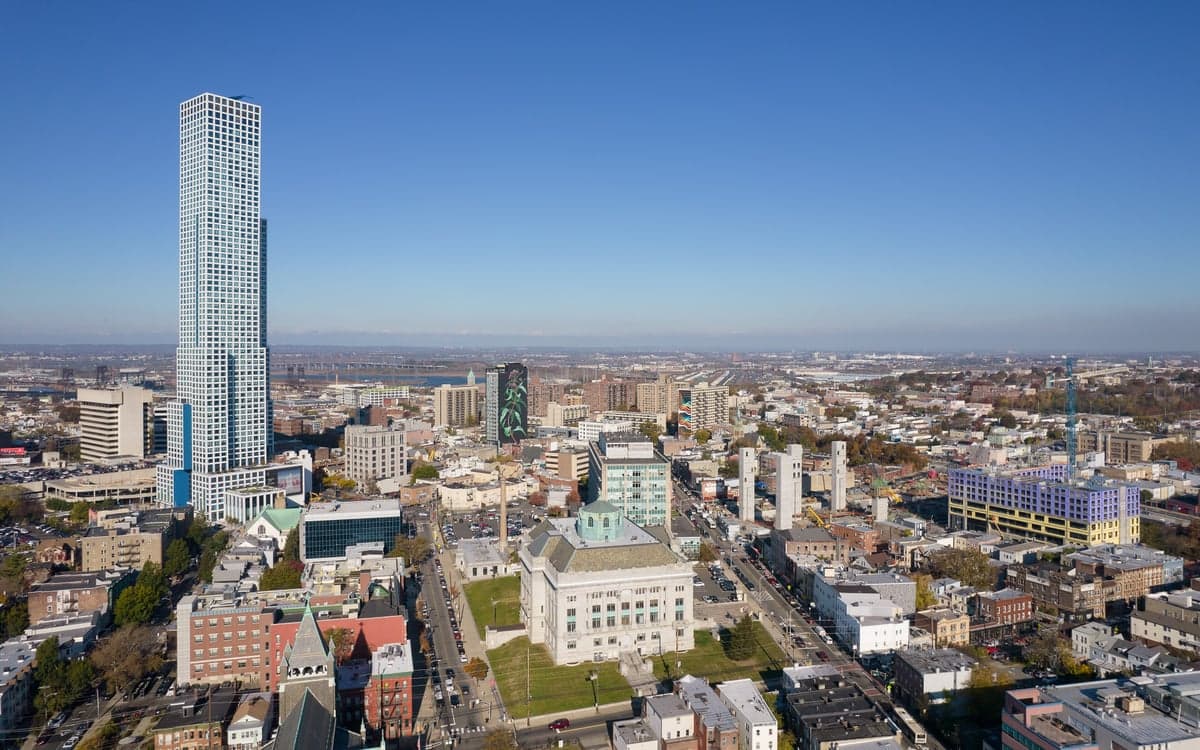
Photo: Wikipedia
Political ClimatePolitical Climate in Jersey City, NJ
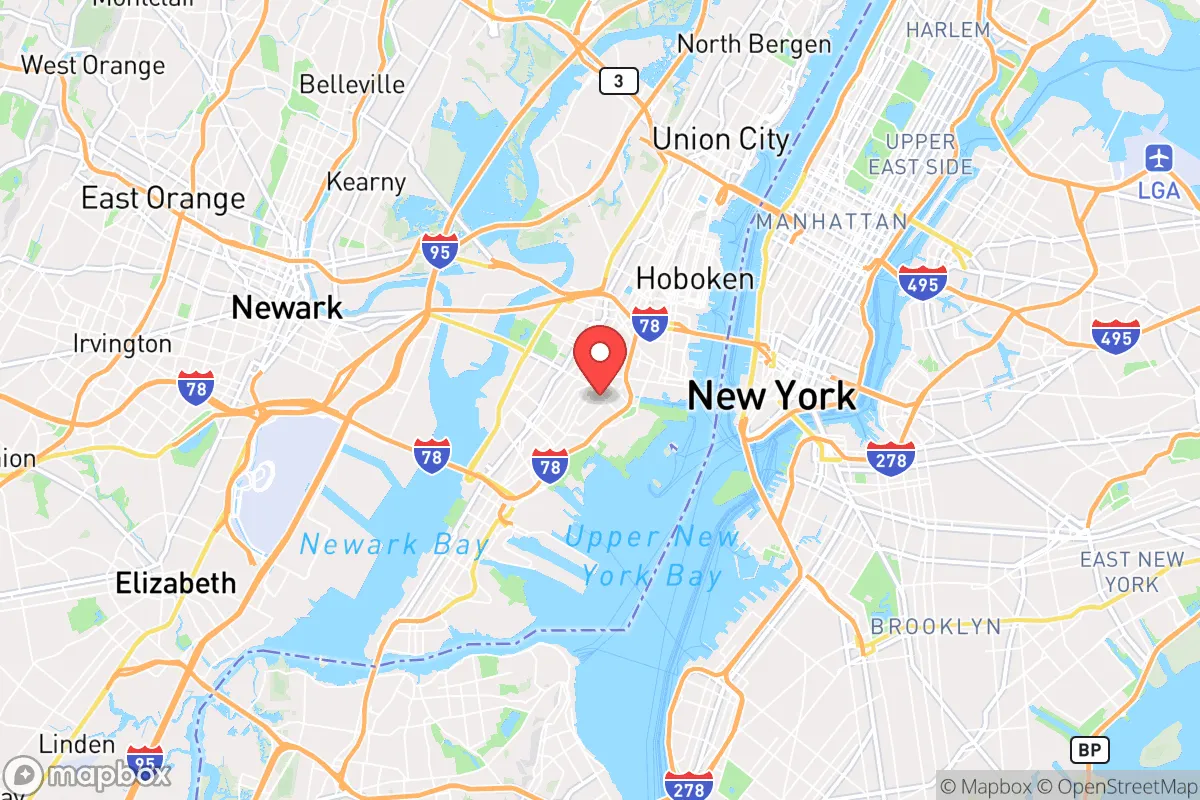
District shown is the primary district for this city’s centroid. Cities may span multiple districts.
Local Political AnalysisPolitical Analysis of Jersey City, NJ
Jersey City has been a Democratic stronghold for decades, but the shift in recent years has been dramatic—and not in a good way if you value personal freedoms and limited government. The Cook PVI of D+27 tells you everything you need to know: this place votes blue by a landslide, and it’s getting bluer. Back in the 1990s and early 2000s, you had a mix of moderate Democrats and a few Republicans who could actually win local races. Now? The city council is all Democrats, the mayor’s office is a progressive launchpad, and the state legislature reps are some of the most left-leaning in New Jersey. The trajectory is clear: every election cycle brings more tax hikes, more regulations, and more government intrusion into daily life.
How it compares
If you drive 15 minutes west to Kearny or Harrison, you’ll find a different political vibe—still blue, but with a working-class, union-heavy moderation that keeps radical policies in check. Head another 20 minutes southwest to Bayonne, and you get a similar story: Democrats who actually listen to concerns about property taxes and public safety. But Jersey City? It’s become the progressive outlier of Hudson County. Compare it to Hoboken, just across the river: Hoboken is also deep blue, but its small-town feel means residents push back harder on overreach. Jersey City’s sheer size—over 290,000 people—dilutes that resistance. The contrast with suburban towns like Nutley or Bloomfield is even starker; those places still have active Republican committees and competitive local races. Here in JC, the GOP is basically a rumor.
What this means for residents
For anyone who values personal freedom, the practical effects are already hitting home. The city council passed a paid sick leave ordinance that forces small businesses to comply with burdensome paperwork. There’s a push for rent control expansion that would let the government dictate what landlords can charge—a direct infringement on property rights. The school board has embraced critical race theory-inspired curriculum changes, and parents who object are labeled as bigots. Property taxes are among the highest in the state, and the city keeps adding new fees and permits for everything from sidewalk cafes to home renovations. If you own a gun, forget it—Jersey City’s local ordinances are even stricter than the state’s already-tough laws. The long-term outlook? Expect more of the same: higher taxes, more regulations, and a government that sees itself as your nanny, not your servant.
Culturally, Jersey City has always been a melting pot, and that’s still true—but the political culture is now dominated by activist groups that push for things like defunding the police (which the council debated seriously in 2020) and sanctuary city policies that protect illegal immigrants over law-abiding citizens. The mayor, Steven Fulop, is openly angling for governor, and his agenda is all about national progressive talking points, not local common sense. If you’re a conservative or even a moderate libertarian, you’ll feel increasingly out of step. The city’s diversity used to mean a healthy exchange of ideas; now it feels like one-party rule where dissent is met with social shaming. My advice? Keep your head down, vote in every primary you can, and start looking at towns like Secaucus or Rutherford if you want a government that still respects your right to live your own life.

State Political ClimatePolitical Climate in New Jersey
State Political AnalysisPolitical Environment in the State
New Jersey has long been a blue state, but the reality is more nuanced than a simple label. The state has voted Democratic in every presidential election since 1992, but its political climate is a constant tug-of-war between the progressive, densely populated urban corridor and the more conservative, rural and suburban regions. Over the last 10-20 years, the state has shifted noticeably leftward on social and fiscal issues, driven by the massive population and political muscle of the northeastern metro areas, while the southern and western parts of the state have become more reliably Republican. For a conservative considering a move here, the key takeaway is that you are moving into a state where the state government is firmly in progressive hands, but where you can find strong, organized conservative communities if you choose your town carefully.
Urban vs. rural divide
The political map of New Jersey is a classic tale of two states. The northeast corridor, anchored by Newark, Jersey City, and Hoboken, is a Democratic stronghold. These cities are dense, diverse, and heavily unionized, and they reliably produce massive vote margins for Democrats. The I-95 corridor through Bergen County and Essex County is similarly blue, though some suburbs like Wyckoff and Franklin Lakes have pockets of conservative voters. In contrast, the south and west of the state are where you find the real red. Ocean County, home to Toms River and Lakewood, is a Republican stronghold, driven by a large population of retirees, veterans, and Orthodox Jewish families who lean conservative. Sussex County in the northwest and Hunterdon County in the west are also reliably red, with a strong rural and exurban character. The Pinelands region and the Delaware Bay shore are similarly conservative. The divide is stark: the urban core votes 70-80% Democratic, while the rural and exurban counties often vote 55-65% Republican. The state's overall blue tint comes from the sheer population density of the northeast, not from a statewide consensus.
Policy environment
New Jersey's policy environment is a textbook example of a high-tax, high-regulation state. The state income tax is progressive, with a top rate of 10.75% for income over $1 million, and the property taxes are the highest in the nation, averaging over $9,500 per year. The sales tax is 6.625%, but many services are exempt. The state has a strong regulatory posture on everything from environmental rules to business licensing. On education, New Jersey spends more per pupil than almost any other state, but the results are mixed, with wealthy suburbs getting top-tier schools while urban districts struggle. The state has a strong public-sector union presence, which drives up costs. On healthcare, the state expanded Medicaid under the Affordable Care Act and has a robust individual mandate. Election laws are relatively liberal: no-excuse mail-in voting is permanent, and same-day voter registration is available. For a conservative, the policy environment is a major red flag: high taxes, heavy regulation, and a powerful public-sector union lobby make it difficult to start a business or keep more of your income.
Trajectory & freedom
Over the last decade, New Jersey has become less free in several key areas. The most visible flashpoint is gun rights. In 2022, Governor Phil Murphy signed a package of gun control laws that included a ban on carrying firearms in "sensitive places" like parks, libraries, and public transportation, and a requirement for a "justifiable need" to carry a concealed weapon. This law was partially struck down by a federal court, but the state continues to push for more restrictions. On parental rights, the state has moved in the opposite direction of many red states. In 2022, Murphy signed a law that prohibits school districts from requiring parental notification if a student changes their name or pronouns, effectively overriding parental rights in the classroom. On medical autonomy, the state has expanded access to abortion and gender-affirming care, including for minors without parental consent. On property rights, the state's Mount Laurel Doctrine forces towns to build affordable housing, which has led to a constant battle between local control and state mandates. The tax burden continues to rise, with no serious effort at tax reform. The trajectory is clear: the state is becoming more progressive on social issues and more aggressive on taxation and regulation.
Civil unrest & political movements
New Jersey has seen its share of political activism, but it rarely reaches the level of civil unrest seen in other states. The Black Lives Matter protests in 2020 were large in cities like Newark and Trenton, but they were mostly peaceful. The state has a strong sanctuary policy; in 2018, Murphy signed a law that prohibits state and local law enforcement from cooperating with federal immigration authorities in most cases, making New Jersey a safe haven for illegal immigrants. This has been a major flashpoint for conservatives, particularly in towns like Lakewood and Paterson, where immigration has changed the demographic makeup rapidly. On the right, there is a growing grassroots conservative movement, particularly in Ocean and Sussex counties, focused on school board elections, parental rights, and tax reform. The New Jersey 2nd Amendment Society is a vocal and active group that has successfully challenged some gun laws in court. There is also a small but vocal secessionist movement in the southern part of the state, where some residents have proposed breaking away to form a new state called "South Jersey," citing the dominance of the northern urban corridor. Election integrity has been a concern for conservatives, particularly after the 2020 election, when the state's widespread use of mail-in ballots led to allegations of fraud, though no major cases were proven. A new resident would notice the constant political tension between the progressive state government and the conservative local communities.
Projection
Looking ahead 5-10 years, the trend is not favorable for conservatives. The state's population is aging, but the in-migration from New York City continues to bring in younger, more progressive residents to the suburbs. The urban core is likely to remain solidly Democratic, and the suburban shift towards the left, seen in places like Morris County and Monmouth County, is likely to continue as older, more conservative residents are replaced by younger, more liberal ones. The rural and exurban areas will remain red, but their political power will continue to diminish as the population concentrates in the northeast. The state's tax burden is unlikely to decrease, as the state faces massive unfunded pension liabilities and a growing budget deficit. The gun control and parental rights battles will continue, with the state likely to push for more restrictions. The sanctuary policy is here to stay. For a conservative moving in now, expect to find a state where your vote for statewide office will be consistently outnumbered, but where you can find a strong, organized conservative community in the right town. The state will not flip red in the foreseeable future, but the fight for local control and individual freedom will continue.
For a conservative considering a move to New Jersey, the bottom line is this: you are moving into a state with a progressive state government that will tax you heavily, regulate your business, and push policies that conflict with your values on guns, parental rights, and immigration. However, you can find a strong, like-minded community in the right town—places like Toms River, Flemington, or Newton offer a conservative lifestyle with good schools and a lower cost of living than the northern suburbs. Your vote for president or governor will likely be a protest vote, but your vote for local school board, town council, and county government can make a real difference. If you value low taxes and maximum personal freedom, New Jersey is a tough sell. But if you need to be here for work or family, you can carve out a good life by choosing your town wisely and getting involved in local politics.
* Values derived from national, state, county, city and local statistics and may differ in a specific area. Last updated: 2026-04-25T03:04:57.000Z
Narrative content on this page is AI-generated and may contain mistakes. Verify any details that matter before acting on them.
ReloMaps may earn a commission from affiliate links at no extra cost to you.

