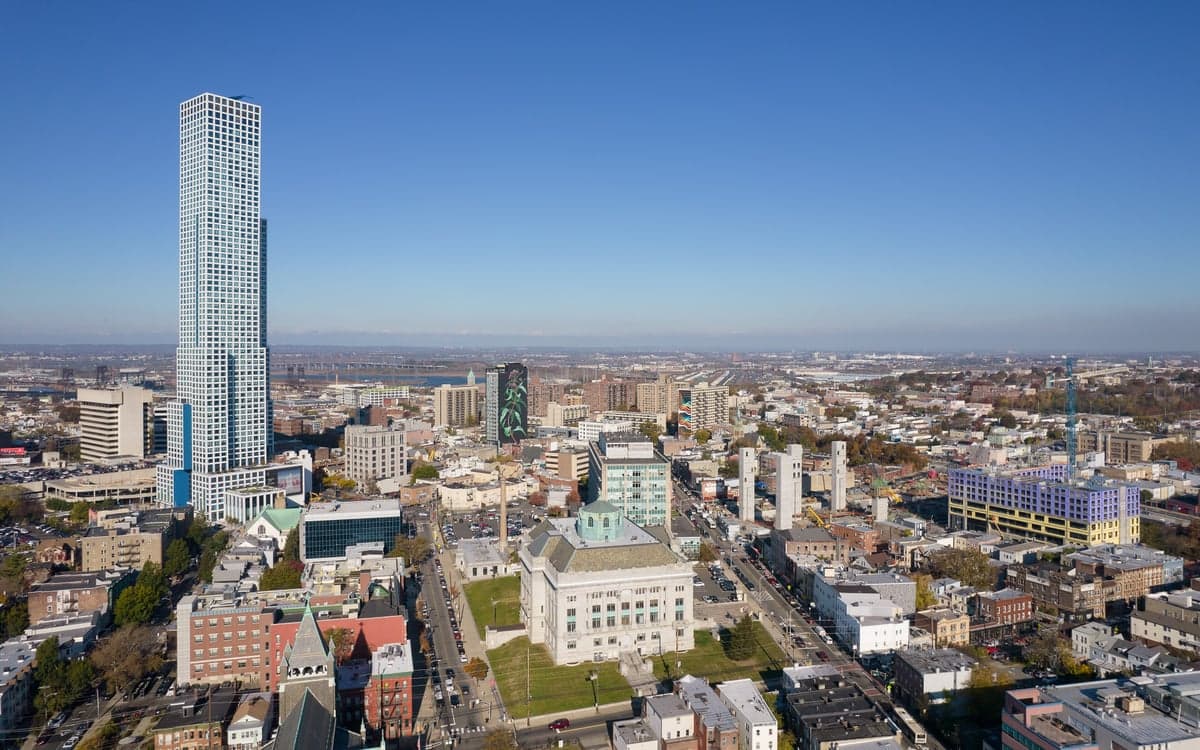
Photo: Wikipedia
Strategic Assessment of Jersey City, NJ
High tactical risk. This location is likely close to major population centers, strategic targets, or sits in a high-disaster corridor. A retreat property and careful exit planning is required.
What does the Strategic Assessment tell us?
Our Strategic Assessment grades tactical survivability of an area. Major population centers, military targets, fallout zones, natural disasters, and border exposure all drive risk — lower exposure means a more defensible position in a crisis.
This is heavily inspired by Joel Skousen's Strategic Relocation book. Highly recommended you checkout the book ($)What does this tell us?
Our Strategic Assessment grades tactical survivability of an area. Major population centers, military targets, fallout zones, natural disasters, and border exposure all drive risk — lower exposure means a more defensible position in a crisis.
This is heavily inspired by Joel Skousen's Strategic Relocation book. Highly recommended you checkout the book ($)Strategic Pillars

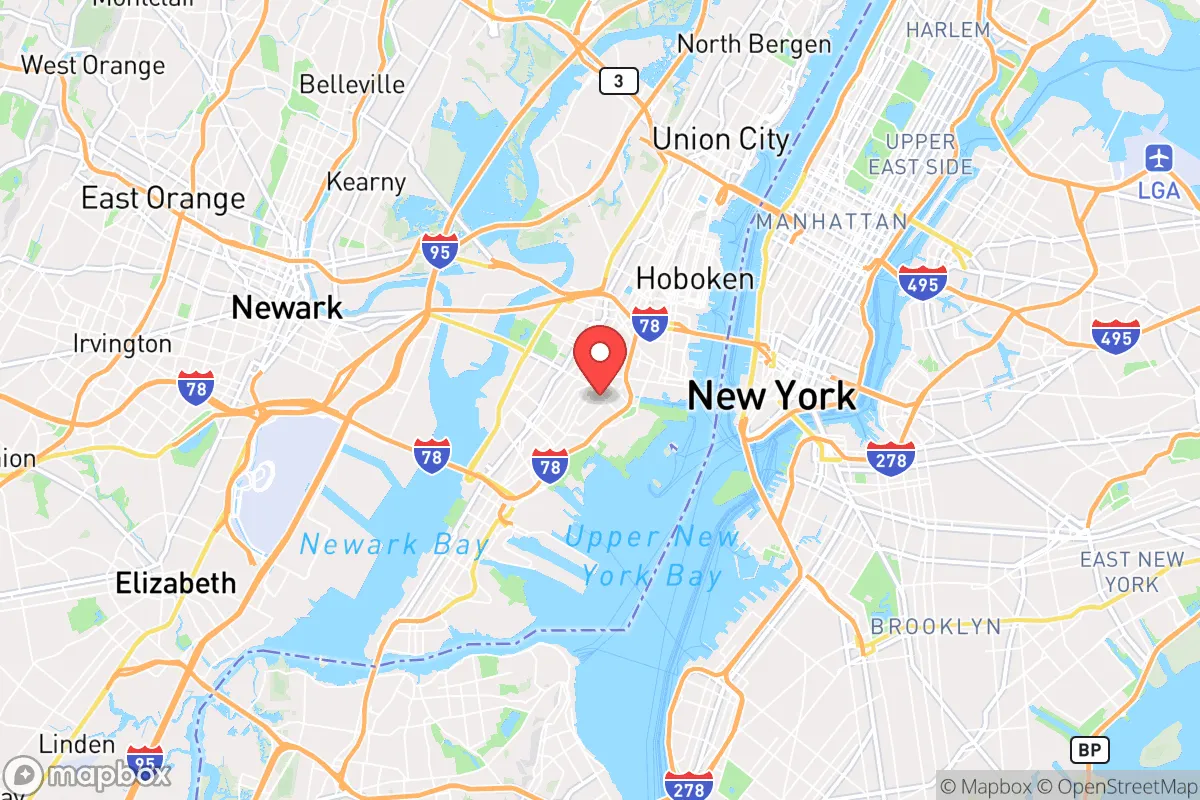
Key Distances
Regional Safe Places
Below is our recommended "safe zones" in New Jersey and the surrounding area based on our strategic heuristics. For most people, it's unrealistic to live in a “safe zone” full-time due to work, family or other personal reasons. They tend to be more rural. However, many of these areas are perfect for second homes and retreat properties that double as a vacation home or even a short-term rental.
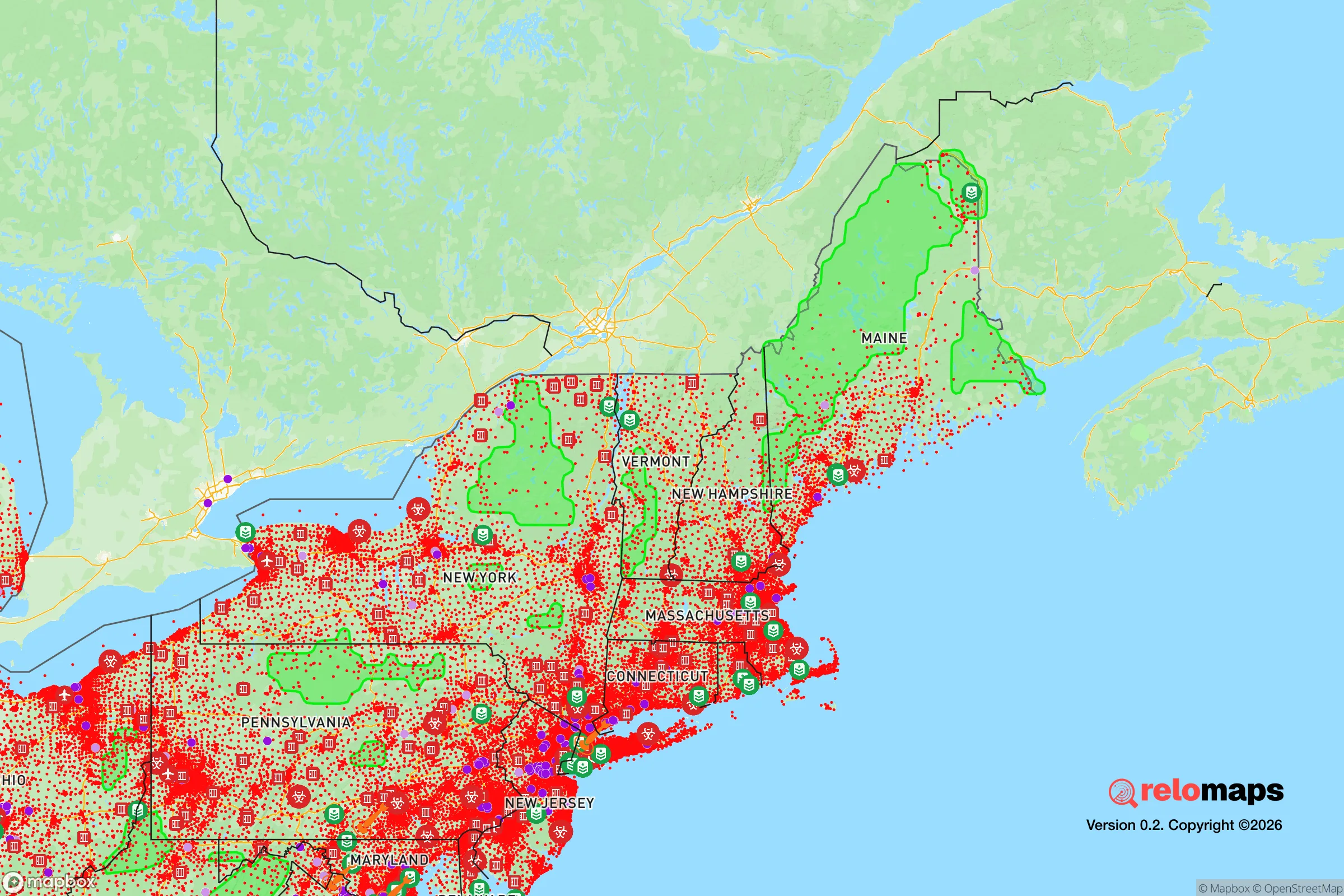
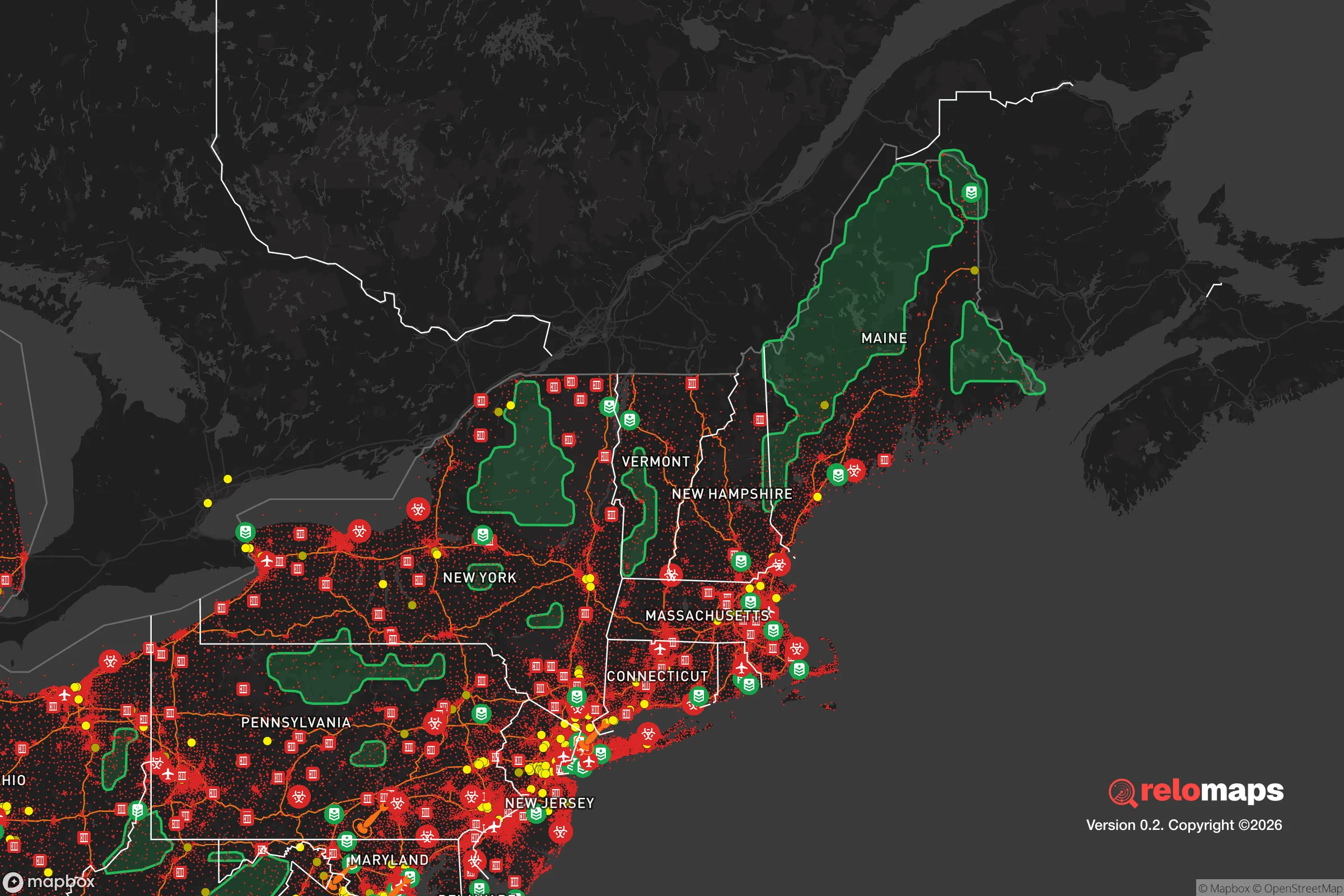


Important Note: For informational purposes only. This does not mean nothing bad ever happens in the green zones. Please use common sense. This is based on public data and modeled with AI. We tried to take a conservative approach but mistakes happen. We update this regularly as new information becomes available.
Solar Generator Recommendations
Backup power matters more here than in safer locations. We've picked three solar generators across budgets and capacity tiers — start with the budget unit if you only need a few essentials, or step up if you want to run a fridge and HVAC for days at a time.

Jackery Portable Power Station Explorer 300
Budget OptionPower on the Go: Weighing only 11 lbs, it's convenient to set up and store with book-sized foldable solar panels

BLUETTI Portable Power Station AC180
Designed for both indoor and outdoor scenarios, AC180 is highly capable as it has a robost capacity and continuous output power.

EF ECOFLOW DELTA Pro Ultra Power Station
Upgraded PickEcoFlow DELTA Pro Ultra is a whole-home energy system designed to grow with your family. Integrated with the Smart Home Panel 2, it scales to meet your evolving energy needs — keeping your home powered, intelligent, and secure through every stage of life.
We earn a commission, at no additional cost to you.
Strategic Assessment Analysis
Jersey City offers a unique strategic paradox for the conservative prepper: it sits in the shadow of one of the world's highest-value targets, yet its own geography, infrastructure, and population density create a resilience profile that is both brittle and, in a few narrow ways, surprisingly robust. For a single individual or family willing to operate with a high degree of situational awareness, this is not a bug-out location but a potential "gray man" holding position—provided you understand that your survival plan hinges entirely on the first 72 hours of any major event. The city's proximity to Manhattan, its status as a transportation hub, and its dense urban fabric mean that while you have access to immense resources, you are also standing on a powder keg.
Geographic position and natural advantages for a strategic holdout
Jersey City sits on a peninsula bounded by the Hudson River to the east and the Hackensack River and Newark Bay to the west and south. This water-bounded geography is a double-edged sword. On the plus side, it creates natural chokepoints: only a handful of bridges, tunnels, and rail lines connect the city to the mainland. In a scenario of civil unrest or mass evacuation, these chokepoints can be monitored, defended, or avoided. The city's elevation is also notable—much of the downtown and the Heights sit on a bluff 50 to 100 feet above the Hudson, offering excellent line-of-sight observation of Manhattan and the harbor. This high ground provides a tactical advantage for anyone with a radio or a pair of binoculars. The Palisades, which run through the northern part of the city, offer natural cover and difficult terrain for any disorganized movement. For a relocator, the key natural advantage is the water itself: the Hudson is a source of fish, and the city's extensive waterfront parks provide open space that, in a crisis, could be used for foraging or small-scale gardening. However, do not mistake this for rural self-sufficiency—the soil is contaminated from a century of industrial use, and the water, while plentiful, requires heavy filtration.
Risks, exposures, and proximity to fallout-relevant landmarks
This is where the analysis gets sobering. Jersey City is directly across the Hudson from Manhattan's financial district, the World Trade Center site, and the Port Authority. In any major event—a nuclear detonation, a large-scale terrorist attack, or a cyber-induced grid collapse targeting financial infrastructure—Jersey City would be in the immediate fallout zone or the secondary blast radius. The city is also adjacent to the Port Newark-Elizabeth Marine Terminal, one of the busiest container ports on the East Coast, and the Liberty State Park rail yards, which handle hazardous materials. A chemical spill, a port-side explosion, or a coordinated attack on the transportation network would cut off the city from its supply lines within hours. Furthermore, the Holland Tunnel and PATH train system are critical infrastructure that, if compromised, would trap residents on the peninsula. For the conservative prepper, the biggest risk is not the initial event but the secondary effects: panic-driven evacuation attempts that clog the Pulaski Skyway and the New Jersey Turnpike, leaving you stranded. The city's population density—over 290,000 people in roughly 15 square miles—means that any disruption to food, water, or power will trigger a cascade of desperation within 48 hours. If you are not prepared to shelter in place for at least two weeks, you should not be here.
Practical resilience for a relocator: food, water, energy, and defensibility
Let's get tactical. Water: The city's water supply comes from the Jersey City Municipal Utilities Authority, which draws from the Boonton Reservoir and the Passaic River. This system is vulnerable to both contamination and power failure. A prepper should have a minimum of 14 days of stored water per person, plus a high-quality Berkey or similar gravity filter. The Hudson is brackish and polluted, but with a reverse osmosis system, it becomes a last-resort source. Food: Jersey City has a high density of bodegas, supermarkets, and ethnic grocery stores (especially Indian and Filipino markets in the Journal Square area), but these will be stripped clean within hours of a crisis. Your best bet is to build a deep pantry in a secure, ground-floor or basement location. The city has a few community gardens (e.g., the Lafayette Community Garden), but they are not a reliable food source for a family. Energy: PSE&G provides electricity and natural gas. The grid is old and prone to outages during storms. A portable generator with a transfer switch is essential, but noise discipline matters—a loud generator in a dense neighborhood is a beacon. Solar panels on a balcony or rooftop are a quieter option, but the city's tall buildings create heavy shading. Defensibility: This is the hardest factor. A single-family home in the Heights or Bergen-Lafayette offers better defensibility than a high-rise condo in the downtown. Look for a unit with a steel door, a deadbolt, and a clear line of sight to the street. Avoid ground-floor apartments near transit hubs. The best strategic setup is a top-floor unit in a walk-up building with a single stairwell—you control the vertical approach. In a grid-down scenario, the elevators are useless, and the stairwell becomes a funnel. The city's dense street grid also means that a determined group can block intersections with vehicles or debris, creating a perimeter. But do not overestimate your ability to hold territory—Jersey City is not a rural compound. Your plan should be to stay quiet, stay low, and avoid drawing attention.
The overall strategic picture for Jersey City is one of high risk with a narrow window of opportunity. For the conservative relocator who is single or has a small family, this location works only if you have a pre-planned bug-out route to the west—toward the Watchung Mountains or the Pine Barrens—and the means to execute it within the first 12 hours of a major event. The city's advantages—proximity to water, high ground, and a dense network of resources—are real, but they are dwarfed by the risks of being adjacent to Manhattan, a major port, and a fragile transportation network. If you are looking for a long-term survival homestead, look elsewhere. If you need a temporary, high-concealment urban base with a solid exit strategy, Jersey City can work—but only if you treat it as a staging ground, not a final destination. The moment the lights go out and the bridges are blocked, your window closes fast. Plan accordingly.

* Values derived from national, state, county, city and local statistics and may differ in a specific area. Last updated: 2026-04-25T03:04:57.000Z
Narrative content on this page is AI-generated and may contain mistakes. Verify any details that matter before acting on them.
ReloMaps may earn a commission from affiliate links at no extra cost to you.

