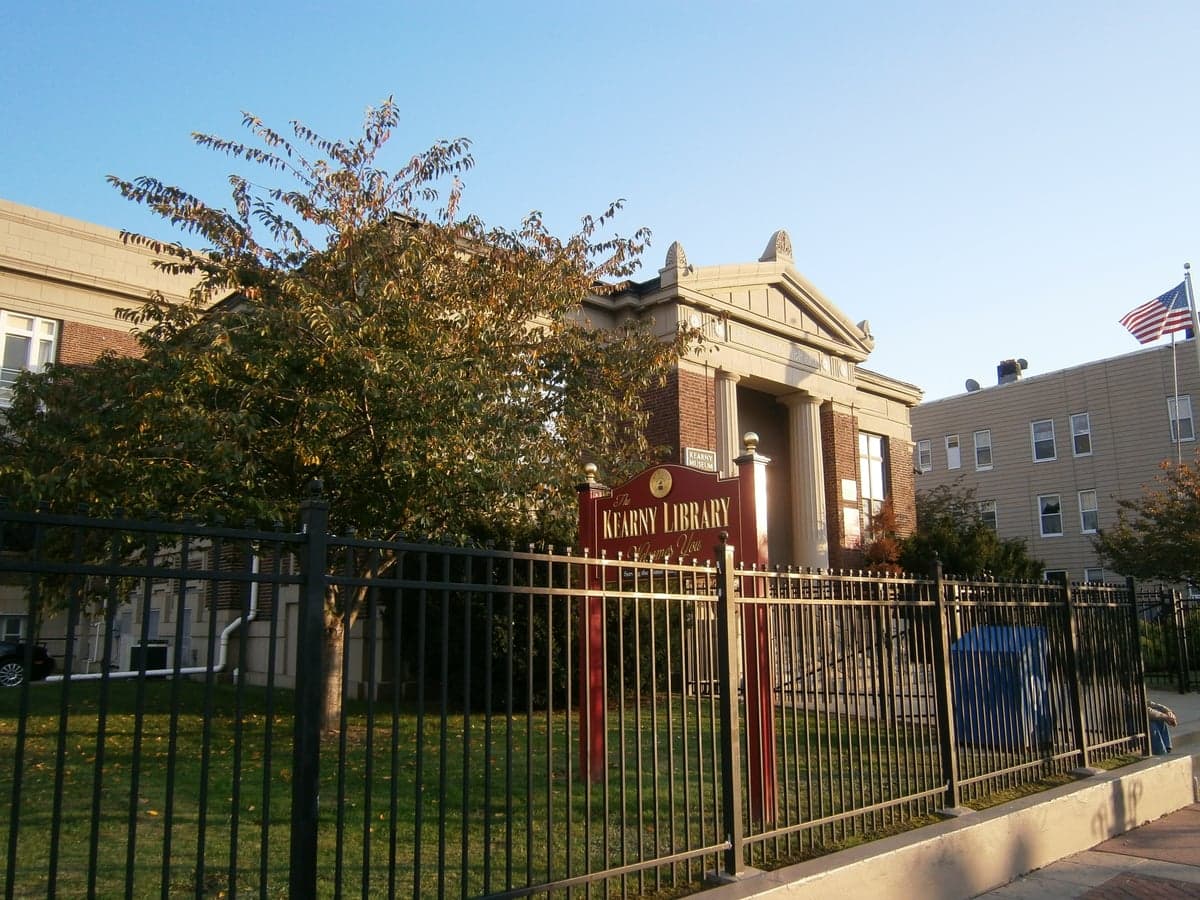
Photo: Wikipedia
Political ClimatePolitical Climate in Kearny, NJ
District shown is the primary district for this city’s centroid. Cities may span multiple districts.
Local Political AnalysisPolitical Analysis of Kearny, NJ
Kearny, New Jersey, has a Cook PVI of D+15, meaning it leans heavily Democratic, but that number doesn't tell the whole story for a town that used to be a lot more balanced. If you've been around here long enough, you remember when Kearny was a solid working-class town where folks from all backgrounds—Irish, Italian, Polish, Portuguese—kept their politics close to the vest and their focus on family, jobs, and keeping the neighborhood safe. Today, the political climate has shifted hard to the left, and a lot of us who've lived here for decades are watching that change with a wary eye, especially as progressive policies start to creep into local governance and daily life.
How it compares
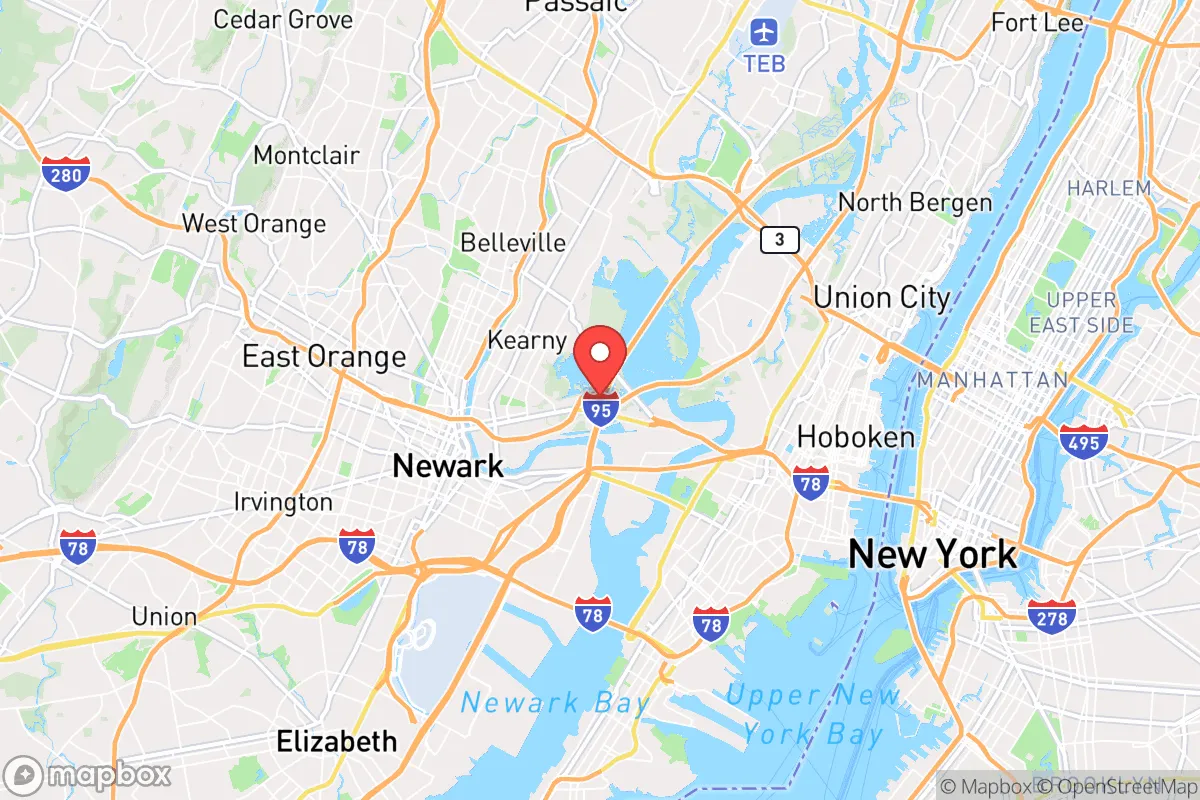
Kearny sits in a unique spot politically because it's sandwiched between some very different towns. Just across the Passaic River, Newark is a deep-blue urban stronghold with a Cook PVI of D+30 or more, and its influence often spills over into Kearny's politics, especially on issues like housing mandates and public transit expansions. Head west to Harrison, and you'll find a similar Democratic lean, though it's been trending younger and more progressive with all the new high-rise development. But drive a few miles north to Lyndhurst or Rutherford, and you'll hit towns that are still more moderate, with a stronger independent streak and less appetite for the kind of top-down progressive agenda you see in Hudson County. That contrast is important because Kearny used to be more like those towns—pragmatic, skeptical of big government, and focused on local control. Now, it feels like we're getting pulled into the orbit of Newark and Jersey City, where the political machine runs on high taxes and social engineering.
What this means for residents
For the average Kearny resident, the D+15 lean translates into a few concrete realities that can feel like government overreach. Property taxes are already among the highest in the nation, and the local political leadership has been pushing for more spending on programs that sound good on paper but hit your wallet hard—like expanded public housing mandates and "equity" initiatives that come with new compliance costs for small businesses. You'll also see a growing push for zoning changes that favor high-density development, which threatens the single-family home character that made Kearny a great place to raise kids. And on the cultural side, there's been a noticeable shift in the school district toward progressive curriculum changes that many parents find intrusive, especially around gender ideology and critical race theory. It's the kind of stuff that makes you feel like the government is getting too involved in how you raise your family and run your life.
One thing that still sets Kearny apart is its strong sense of community and its resistance to some of the more radical policies you see in places like Jersey City or Hoboken. The town's old-school ethnic clubs, volunteer fire departments, and local sports leagues still hold a lot of sway, and there's a quiet but persistent conservative undercurrent that pushes back against the progressive tide. Long-term, though, the concern is that as more young professionals and transplants move in from New York City, drawn by the lower rents and easy PATH access, the political balance will tip even further. If you value personal freedoms, low taxes, and a government that stays out of your business, Kearny is still a decent place to live—but you've got to keep an eye on the town council meetings and vote in every local election, because the direction we're heading isn't the one a lot of us grew up with.

State Political ClimatePolitical Climate in New Jersey
State Political AnalysisPolitical Environment in the State
New Jersey has long been one of the most reliably Democratic states in the nation, but don’t let the blue tint fool you—it’s a deep purple patchwork under the surface. The state hasn’t voted Republican for president since 1988, and Democrats control both legislative chambers and the governorship as of 2026. But the 20-year arc shows a slow, grinding shift: the old Reagan Democrat strongholds in the suburbs and exurbs are fading, replaced by a solidly progressive coalition anchored in the urban corridor and a growing, vocal conservative minority in the rural and coastal counties. If you’re a conservative looking to relocate, you’re walking into a state where your vote matters most in local races and where the policy environment will test your patience—but where you can still find pockets of sanity.
Urban vs. rural divide
The political map of New Jersey is a tale of two states. The northern and central urban corridor—Newark, Jersey City, Paterson, and Elizabeth—drives the Democratic machine, with turnout fueled by dense populations, strong union presence, and a growing immigrant base. These cities routinely deliver 70-80% of the vote for Democrats. Meanwhile, the suburbs of Bergen County and Essex County have shifted leftward over the past decade, driven by college-educated professionals moving from the cities. On the flip side, the rural and exurban counties—Sussex, Hunterdon, Warren, and Salem—are reliably Republican, often voting +15 to +25 points red. The Jersey Shore counties, like Ocean and Monmouth, are the real battlegrounds: Ocean County is a GOP stronghold (Trump won it by 20 points in 2020), while Monmouth is more competitive, with a mix of conservative retirees and progressive transplants from New York. The divide isn’t just geographic—it’s cultural. Drive 20 minutes west from Newark and you’re in Morris County, where you’ll find a mix of fiscal conservatives and moderate Republicans who still hold local offices but are increasingly outnumbered in statewide races.
Policy environment
New Jersey’s policy environment is a cautionary tale for conservatives. The state has the highest property taxes in the nation (averaging over $9,500 per year), a progressive income tax that tops out at 10.75% for earners over $1 million, and a sales tax of 6.625%. The regulatory posture is heavy: the state has its own strict environmental rules, a $15 minimum wage that’s indexed to inflation, and a paid family leave program that’s among the most generous in the country. On education, New Jersey spends more per pupil than almost any other state, but the results are mixed—wealthy suburbs get top-tier schools, while urban districts like Camden and Newark struggle with chronic underperformance. Healthcare is dominated by the state’s Medicaid expansion and a robust insurance exchange. Election laws are a sore spot for conservatives: the state has no-excuse mail-in voting, automatic voter registration, and same-day registration, which critics argue erodes ballot security. The governor, Phil Murphy (a Democrat), signed a law in 2024 that expanded early voting and made it easier to vote by mail, a move that drew sharp criticism from the GOP. If you value low taxes and limited government, New Jersey will feel like a constant uphill battle.
Trajectory & freedom
On the freedom front, New Jersey is moving in the wrong direction for conservatives. The state has some of the strictest gun laws in the country, including a 2022 law that requires a permit to purchase a handgun, bans .50 caliber rifles, and limits magazine capacity to 10 rounds. In 2023, the legislature passed a law banning the carrying of firearms in “sensitive places” like parks, libraries, and private businesses unless the owner explicitly allows it—a direct response to the Supreme Court’s Bruen decision. On parental rights, the state has been a flashpoint: in 2024, the legislature passed a law requiring school districts to adopt policies that affirm transgender students’ identities, including allowing them to use preferred names and pronouns without parental notification. This sparked massive backlash, with parents’ rights groups like the New Jersey Parents for Education organizing protests. On medical autonomy, the state has a broad vaccine mandate for schoolchildren (with limited religious exemptions) and a strict COVID-era mandate for healthcare workers that remains in place. Property rights are under pressure too: the state’s Mount Laurel Doctrine forces towns to zone for affordable housing, leading to battles in suburbs like Middletown and Holmdel where residents resist high-density development. The trend is clear: more regulation, less individual discretion.
Civil unrest & political movements
New Jersey has seen its share of political flashpoints. The 2020 Black Lives Matter protests were large and sometimes violent in Newark and Jersey City, with property damage and clashes with police. The state’s sanctuary policies—it’s one of the few states with a law (the “Immigrant Trust Directive”) that limits local police cooperation with federal immigration enforcement—have made it a magnet for immigration politics. In 2023, a busload of migrants sent from Texas to Cherry Hill sparked a local crisis, with the mayor declaring a state of emergency. On the right, the New Jersey 2nd Amendment Society and the Garden State Gun Rights Coalition have organized rallies at the statehouse in Trenton, drawing thousands. Election integrity remains a hot-button issue: the 2020 and 2022 elections saw lawsuits over mail-in ballot procedures, and in 2024, a Republican-led lawsuit challenged the state’s automatic voter registration system. The most visible flashpoint for a new resident might be the school board meetings—in places like Hunterdon County and Morris County, these have become battlegrounds over curriculum transparency, library books, and mask mandates. If you move here, you’ll quickly learn that local politics is where the real action is.
Projection
Looking ahead 5-10 years, New Jersey is likely to become more progressive, not less. The demographic trends are clear: the state’s population is aging, with younger, college-educated, and more diverse residents moving into the urban and suburban cores, while conservative-leaning retirees are leaving for Florida, Texas, and the Carolinas. The 2020 census showed the state’s population growing only 5.7%, slower than the national average, and the exodus of high-income earners to lower-tax states is accelerating. The state’s Democratic supermajority in the legislature is unlikely to be broken anytime soon, given the gerrymandered map and the concentration of Democratic voters in the cities. However, there are countercurrents: the growing Hispanic population in places like Passaic County and Union County is not uniformly Democratic—many are socially conservative and could shift the calculus in local races. The Republican Party is trying to rebuild by focusing on parental rights, school choice, and tax relief, but it’s an uphill fight. If you move here now, expect that in a decade, the state will have even higher taxes, tighter gun laws, and more progressive social policies. Your best bet is to find a red enclave like Sussex County or Ocean County, where you can at least have local representation that reflects your values.
For a conservative considering New Jersey, the bottom line is this: you’re moving to a state where the state government will often work against your interests, but where you can still find communities that share your values. The property taxes will sting, the gun laws will frustrate you, and the school policies may make you consider private or homeschool options. But if you choose your town carefully—think Mendham in Morris County or Wall Township in Monmouth—you can build a good life. Just don’t expect the state to change for you. It’s a blue state that’s getting bluer, and the best you can do is carve out your own space and fight the local battles that matter.
* Values derived from national, state, county, city and local statistics and may differ in a specific area. Last updated: 2026-04-25T03:07:34.000Z
Narrative content on this page is AI-generated and may contain mistakes. Verify any details that matter before acting on them.
ReloMaps may earn a commission from affiliate links at no extra cost to you.

