Personal Sovereignty in Lake Worth, TX
Strong independent fundamentals that actively favor personal liberty and low regulation.
What does Personal Sovereignty tell us?
Personal Sovereignty measures your capacity for self-reliance and independence with minimal government friction. Higher scores mean fewer barriers between you and the way you want to live... but it assumes you have the space you need and good neighbors.
What does this tell us?
Personal Sovereignty measures your capacity for self-reliance and independence with minimal government friction. Higher scores mean fewer barriers between you and the way you want to live... but it assumes you have the space you need and good neighbors.
State Policy
Energy independence: Net exporter (220% of energy produced in-state)
Personal Liberty
Homesteading

Personal Liberty Analysis
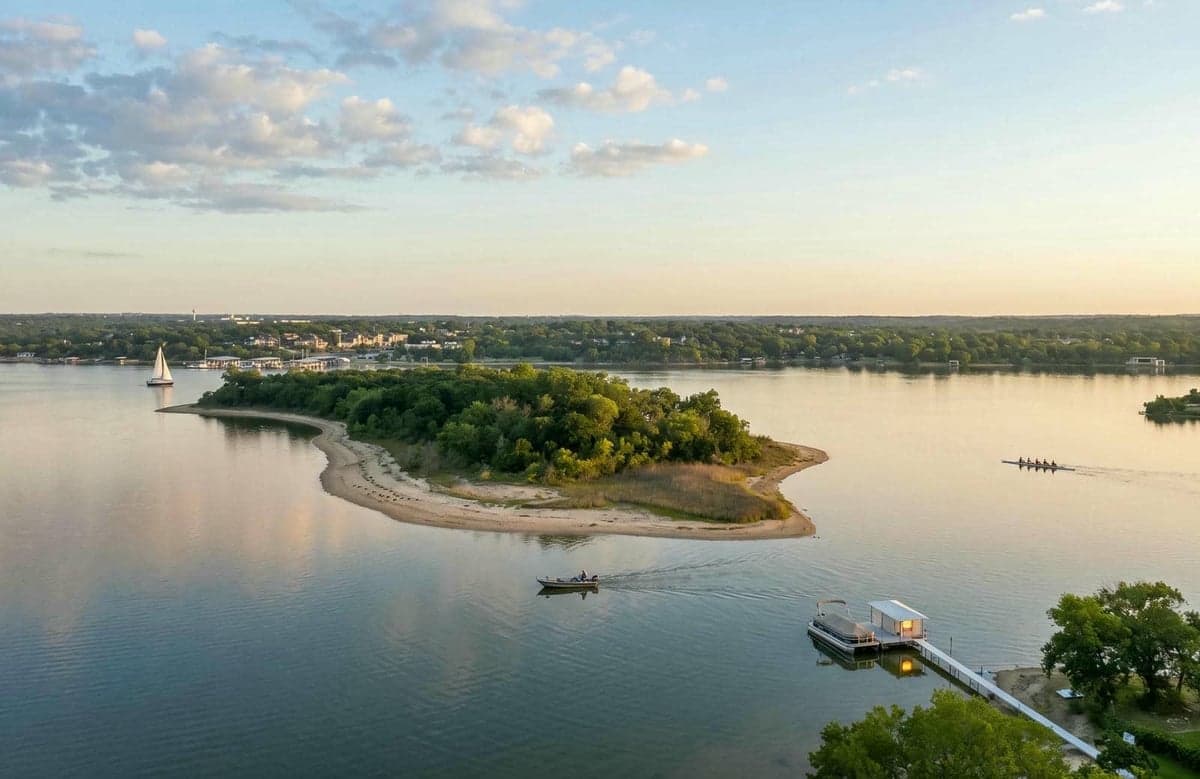
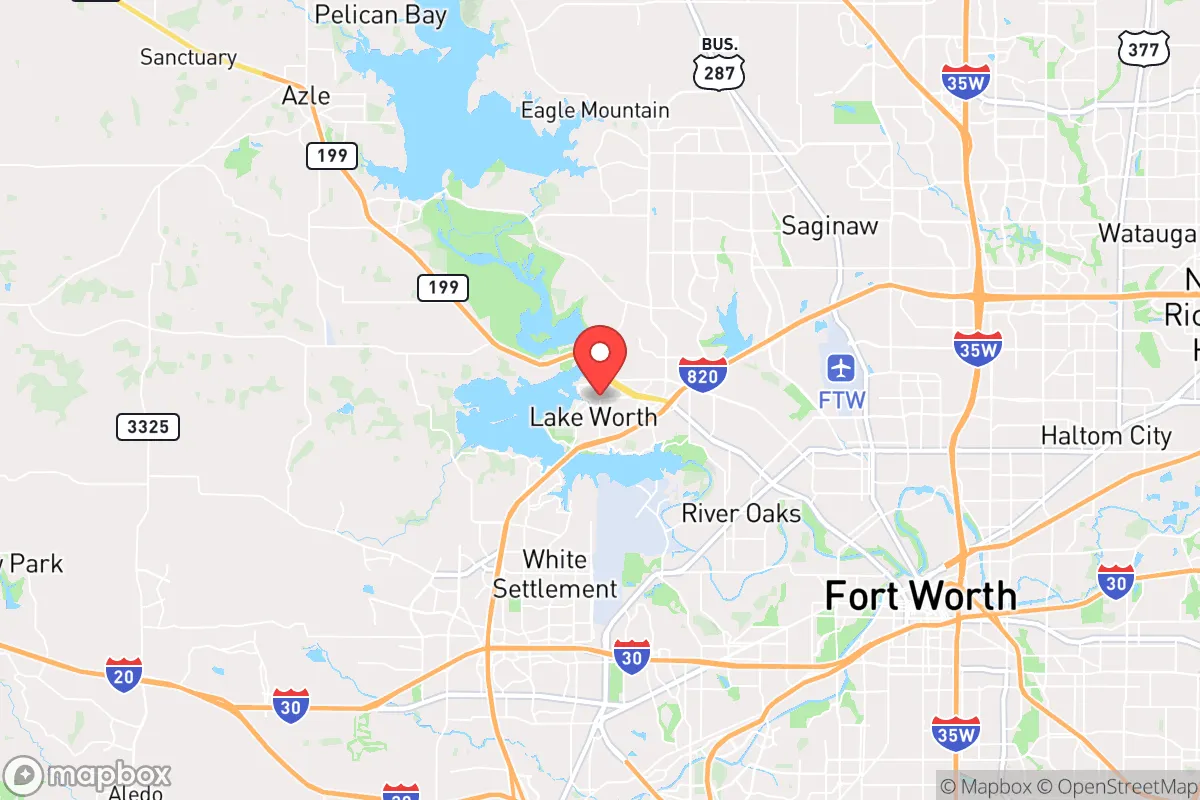
For the individual or parent who views personal sovereignty as the bedrock of a free life, Lake Worth, Texas offers a notably permissive environment compared to the regulatory-heavy climates of the Northeast or West Coast. Located in Tarrant County, this small city of roughly 5,000 residents sits at the edge of the Dallas-Fort Worth metroplex, providing a buffer from urban overreach while still granting access to regional infrastructure. The prevailing ethos here is one of self-determination, reinforced by Texas state law preemptions that limit local government's ability to infringe on property rights, firearm ownership, and parental authority. However, the city's proximity to Fort Worth means some municipal ordinances exist, so understanding the precise balance of local versus state control is critical for anyone prioritizing maximum autonomy.
Tax burden and regulatory posture for individuals and families
Texas imposes no state income tax, which is the single most impactful policy for preserving personal earnings and reducing government dependency. For a family or single earner in Lake Worth, this means every dollar earned stays in your pocket, directly supporting self-reliance rather than funding state programs. The trade-off is a reliance on property taxes, which in Tarrant County average around 2.3% of assessed value — higher than the national median but typical for Texas. Lake Worth itself does not levy a city property tax, which is a distinct advantage over many surrounding municipalities. Sales tax in the city is 8.25%, the state maximum, but this is a consumption-based tax you can partially control through purchasing habits. On the regulatory front, Texas has strong preemption laws that prevent cities from enacting their own paid sick leave mandates, rent control, or local energy codes that exceed state standards. Lake Worth's small size means fewer zoning overlays and bureaucratic hurdles compared to Fort Worth proper, making it easier to operate a home-based business, park a work truck, or keep livestock without endless permitting.
Self-defense rights and specific gun law environment
Texas is a constitutional carry state, meaning no permit is required to carry a handgun openly or concealed for anyone legally allowed to possess a firearm. This is a foundational sovereignty right that Lake Worth residents enjoy without local infringement. The city has no standalone gun ordinances that restrict magazine capacity, ban specific firearm types, or impose waiting periods — such local restrictions are explicitly prohibited by state law under Texas Government Code Section 229.001. For the prepper-minded, this means you can legally own, store, and carry standard defensive rifles like AR-15s and high-capacity magazines without fear of local confiscation or registration schemes. Stand-your-ground and castle doctrine laws are fully in effect, removing any duty to retreat before using deadly force in your home, vehicle, or workplace. The Tarrant County Sheriff's Office, which provides primary law enforcement for unincorporated areas near Lake Worth, is generally supportive of Second Amendment rights. For parents, this legal framework allows you to train your children in firearms safety and self-defense without the state inserting itself into your household decisions.
Self-reliance and homesteading viability in Lake Worth
Lake Worth's residential lots vary widely, with many older homes sitting on quarter-acre to half-acre parcels, while newer subdivisions trend toward smaller lots around 7,000 to 10,000 square feet. This is not rural acreage, but it is sufficient for a substantial garden, small orchard, or chicken coop. The city's zoning code permits keeping chickens and other small livestock on residential lots, though roosters may be restricted. For those seeking true off-grid capability, Lake Worth's location within the ERCOT power grid means you are subject to the same rolling blackout risks as the rest of Texas, but the city does not prohibit solar panel installation or battery storage systems. Rainwater harvesting is legal and encouraged by state law, with no permit required for collection systems. The climate supports year-round growing seasons, and the local soil is workable for raised beds. Water rights are a consideration — well drilling is possible but regulated by the Tarrant Regional Water District, and most residential properties are on municipal water. For the serious homesteader, the nearby unincorporated areas of Parker County offer larger parcels with fewer restrictions, but Lake Worth provides a viable middle ground for those who want suburban proximity with a self-reliant lifestyle.
Personal liberties: parental rights, medical autonomy, speech, and property
Texas has some of the strongest parental rights laws in the country, including the Texas Parental Rights Act, which affirms that parents have the fundamental right to direct their children's education, healthcare, and moral upbringing. Lake Worth ISD, while a small district, operates under state law that prohibits mask mandates, vaccine requirements for school attendance, and curriculum that infringes on parental authority. Medical autonomy is similarly protected — Texas law prohibits COVID-19 vaccine mandates by private employers in most cases and bans local health authorities from closing businesses or churches without due process. Free speech is robustly protected under the Texas Religious Freedom Restoration Act, which applies to both public and private entities. Property rights are secured by the Texas Property Code, which limits homeowners' association overreach and prohibits local governments from restricting short-term rentals or imposing burdensome rental registration schemes. For the survivalist or prepper, this means you can stockpile supplies, store fuel, and maintain a defensive posture on your own property without fear of "public nuisance" citations that are common in more restrictive states.
In the broader context of American personal sovereignty, Lake Worth represents a stronghold of individual liberty within striking distance of a major metropolitan area. The combination of no state income tax, constitutional carry, strong parental rights, and limited local government overreach places it well ahead of cities in California, New York, or Illinois for anyone prioritizing freedom from state control. The primary trade-offs are the property tax burden and the need to navigate Tarrant County's growth pressures, which may bring more regulation over time. For the strategic relocator who values self-reliance, firearm rights, and the ability to raise a family without government interference, Lake Worth is a solid choice — not the most libertarian enclave in Texas, but far more sovereign than the vast majority of American suburbs.

* Values derived from national, state, county, city and local statistics and may differ in a specific area. Last updated: 2026-04-19T07:26:42.000Z
Narrative content on this page is AI-generated and may contain mistakes. Verify any details that matter before acting on them.
ReloMaps may earn a commission from affiliate links at no extra cost to you.

