Strategic Assessment of Lake Worth, TX
Multiple tactical vulnerabilities. Population density, target proximity, or disaster risk are likely compounding. A retreat property and exit planning is required.
What does the Strategic Assessment tell us?
Our Strategic Assessment grades tactical survivability of an area. Major population centers, military targets, fallout zones, natural disasters, and border exposure all drive risk — lower exposure means a more defensible position in a crisis.
This is heavily inspired by Joel Skousen's Strategic Relocation book. Highly recommended you checkout the book ($)What does this tell us?
Our Strategic Assessment grades tactical survivability of an area. Major population centers, military targets, fallout zones, natural disasters, and border exposure all drive risk — lower exposure means a more defensible position in a crisis.
This is heavily inspired by Joel Skousen's Strategic Relocation book. Highly recommended you checkout the book ($)Strategic Pillars

Key Distances
Regional Safe Places
Below is our recommended "safe zones" in Texas and the surrounding area based on our strategic heuristics. For most people, it's unrealistic to live in a “safe zone” full-time due to work, family or other personal reasons. They tend to be more rural. However, many of these areas are perfect for second homes and retreat properties that double as a vacation home or even a short-term rental.

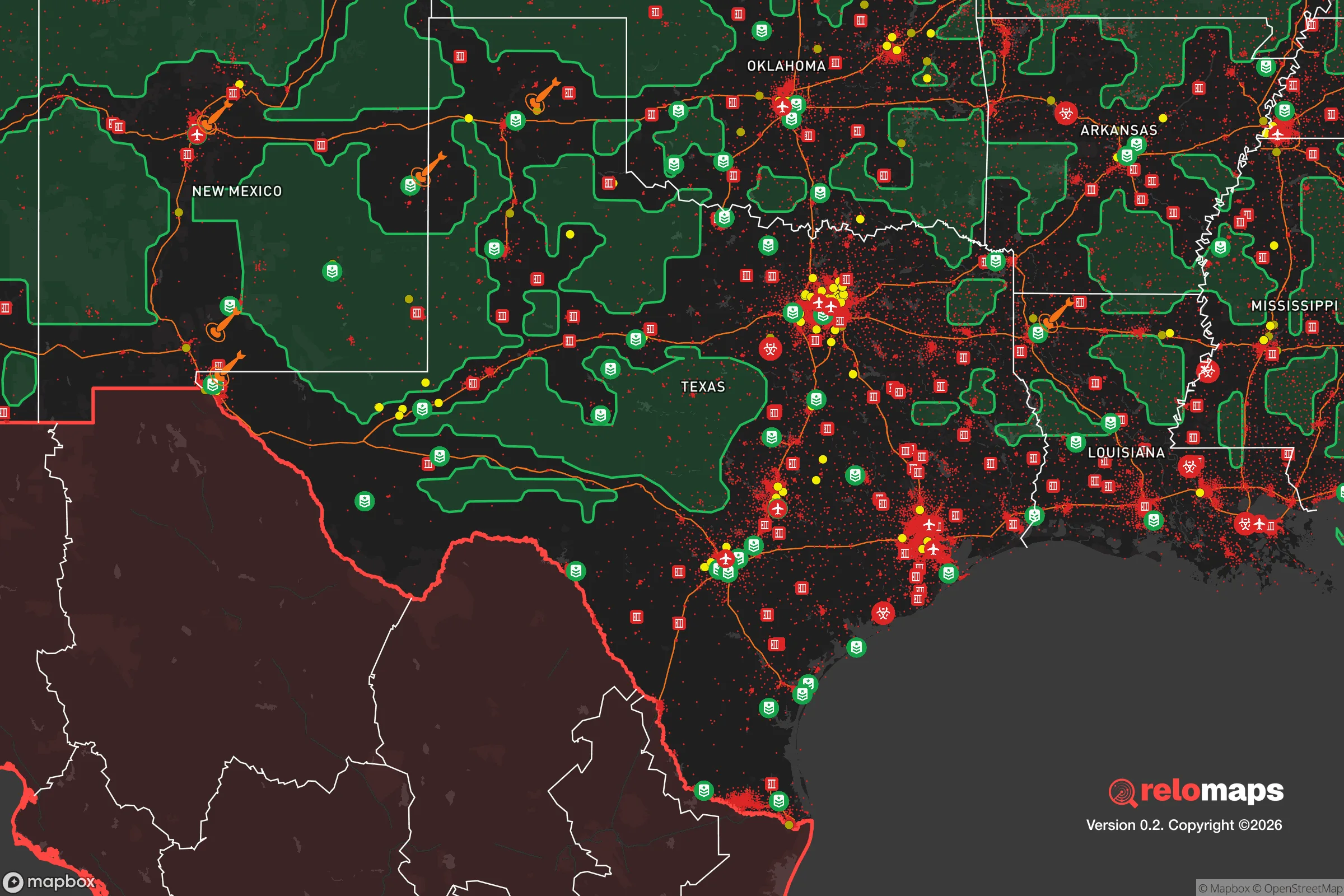


Important Note: For informational purposes only. This does not mean nothing bad ever happens in the green zones. Please use common sense. This is based on public data and modeled with AI. We tried to take a conservative approach but mistakes happen. We update this regularly as new information becomes available.
Solar Generator Recommendations
Backup power matters more here than in safer locations. We've picked three solar generators across budgets and capacity tiers — start with the budget unit if you only need a few essentials, or step up if you want to run a fridge and HVAC for days at a time.

Jackery Portable Power Station Explorer 300
Budget OptionPower on the Go: Weighing only 11 lbs, it's convenient to set up and store with book-sized foldable solar panels

BLUETTI Portable Power Station AC180
Designed for both indoor and outdoor scenarios, AC180 is highly capable as it has a robost capacity and continuous output power.

EF ECOFLOW DELTA Pro Ultra Power Station
Upgraded PickEcoFlow DELTA Pro Ultra is a whole-home energy system designed to grow with your family. Integrated with the Smart Home Panel 2, it scales to meet your evolving energy needs — keeping your home powered, intelligent, and secure through every stage of life.
We earn a commission, at no additional cost to you.
Strategic Assessment Analysis
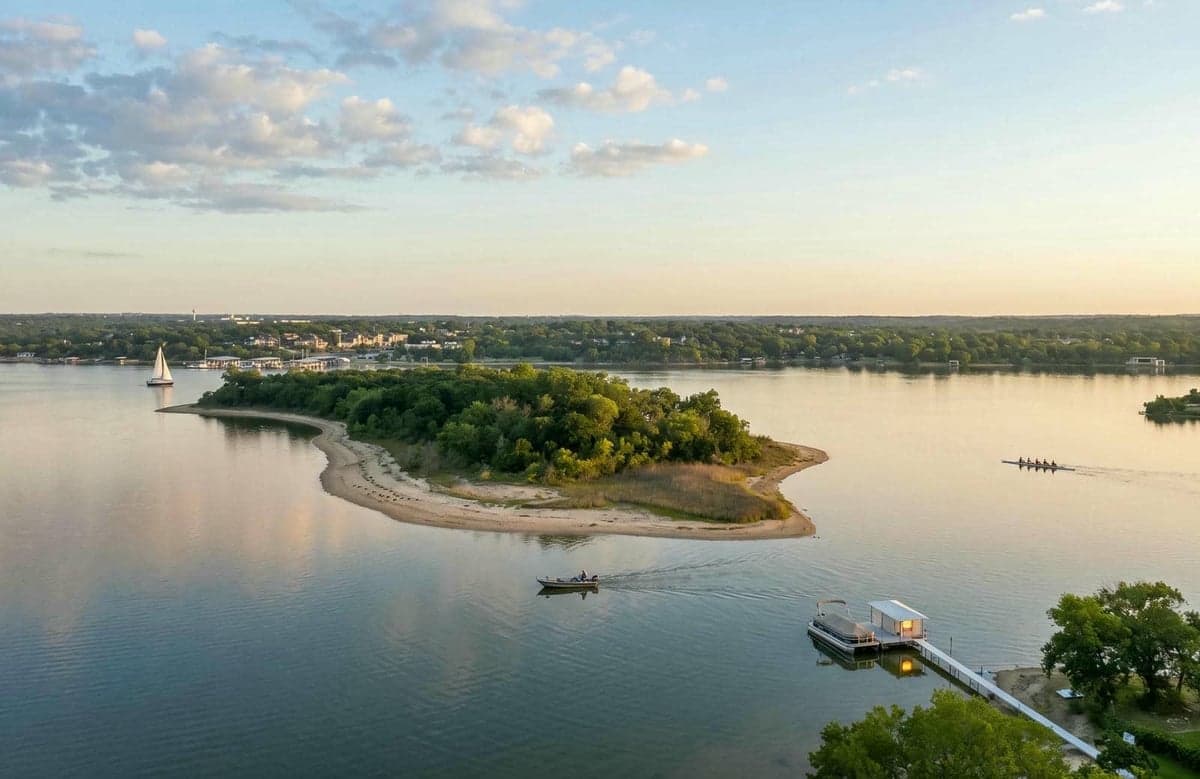
Lake Worth, Texas, offers a surprisingly resilient strategic position for those prioritizing self-reliance and security, sitting just outside the immediate blast and fallout zones of the Dallas-Fort Worth metroplex while still providing access to its logistical resources. Its location on Eagle Mountain Lake and proximity to less-dense rural areas to the west give it a defensible buffer that many closer-in suburbs lack. For a relocator with a prepper mindset, this is not a bug-out cabin in the wilderness—it's a calculated forward operating base with a realistic balance of isolation and supply-chain access. The key is understanding that Lake Worth’s value lies in its ability to function as a semi-autonomous node during disruptions, not as a fortress.
Geographic position and natural advantages for long-term security
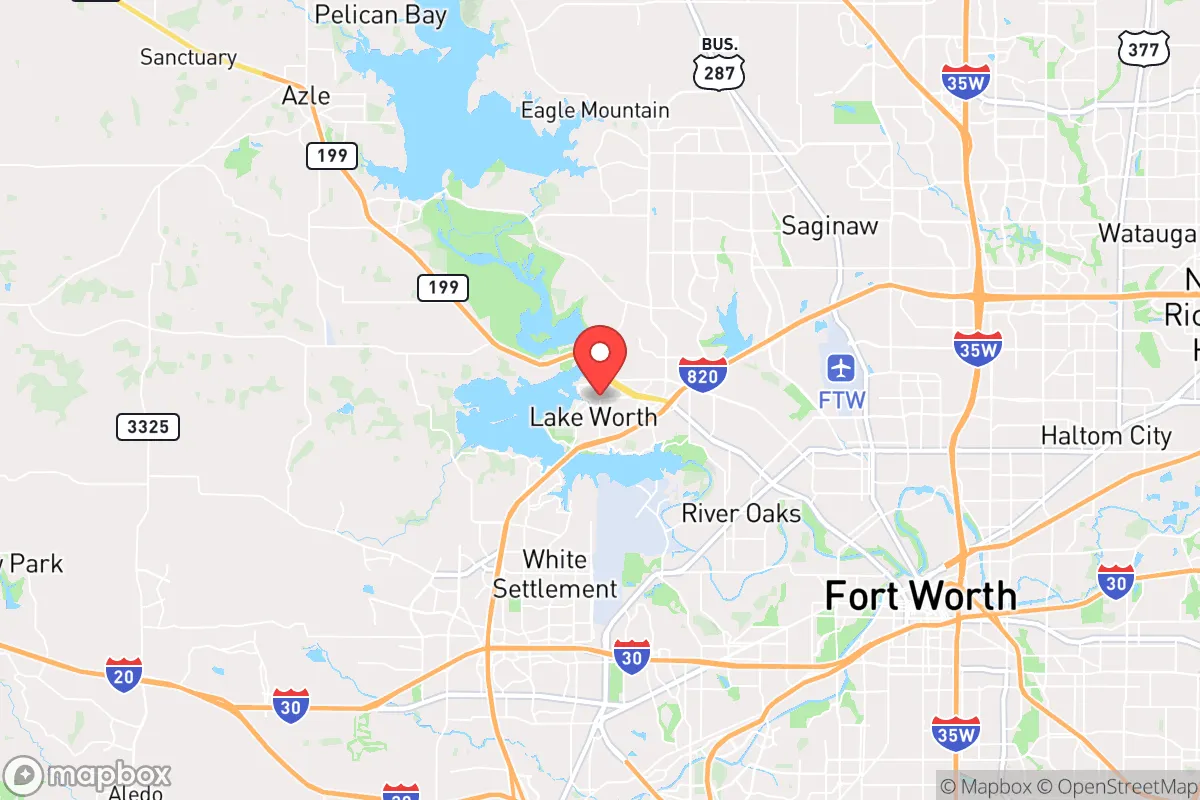
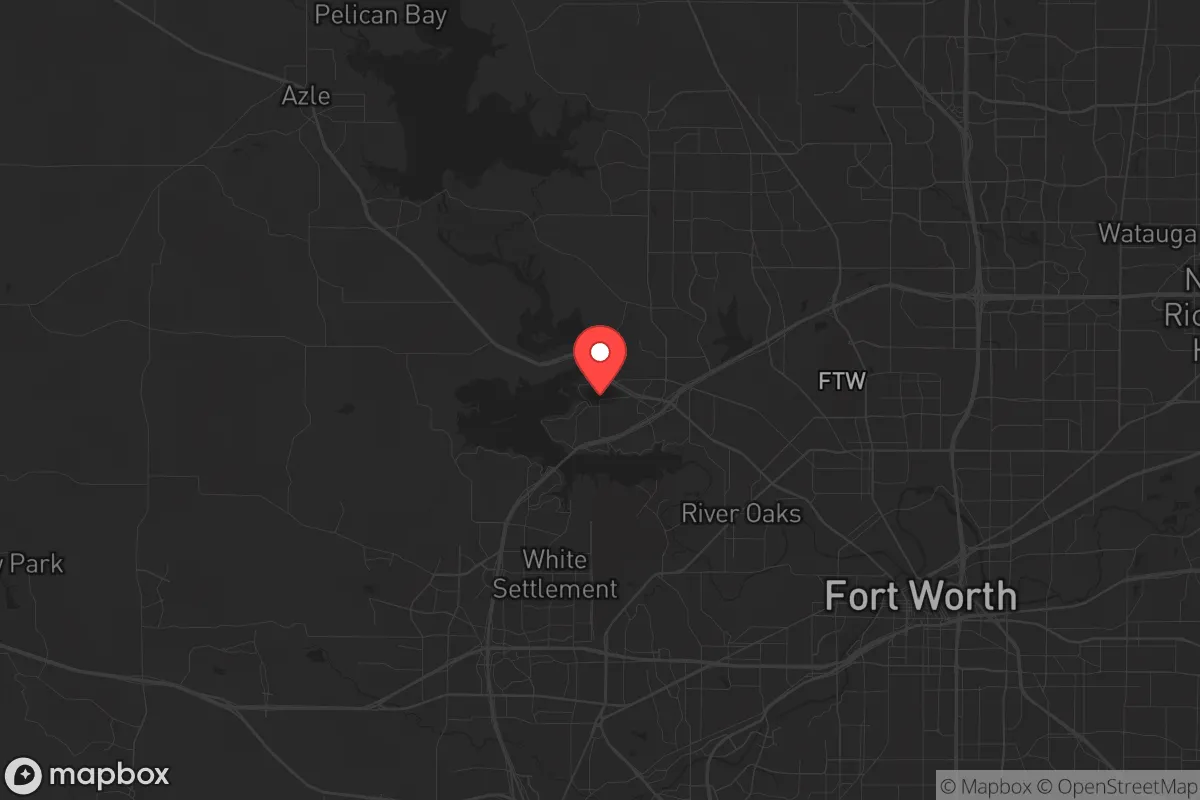
Lake Worth sits at the western edge of Tarrant County, roughly 10 miles northwest of downtown Fort Worth, placing it in a transitional zone between suburban sprawl and the sparsely populated Cross Timbers region. The city’s primary natural asset is Eagle Mountain Lake, a 9,200-acre reservoir that provides a reliable freshwater source—critical for any extended grid-down scenario. The lake is fed by the West Fork of the Trinity River, and while it’s not a pristine wilderness water source, it’s large enough to sustain small-scale fishing and emergency draw if municipal systems fail. The surrounding terrain is rolling hills with mixed hardwood forest, offering decent natural cover and line-of-sight breaks that complicate any large-scale movement through the area. This is not mountainous terrain, but it’s far more defensible than the pancake-flat plains east of I-35. The city’s position also places it near the western edge of the Barnett Shale natural gas fields, meaning local energy infrastructure—including gas-fired power plants and pipeline hubs—is denser here than in most of the state. For a relocator, that translates to a higher likelihood of grid stabilization during regional blackouts, though it also introduces a target risk discussed below.
Risks, exposures, and proximity to fallout-relevant landmarks
The most significant strategic liability for Lake Worth is its proximity to the Dallas-Fort Worth metroplex, a population center of over 7.5 million people that would be a primary target for any large-scale attack or civil unrest event. The city lies roughly 20 miles from the Fort Worth Stockyards and 30 miles from DFW International Airport—both plausible ground-zero zones for a coordinated strike. In a nuclear scenario, prevailing winds from the south and southwest would carry fallout directly over Lake Worth from a detonation in downtown Dallas or Fort Worth. The city is also within 15 miles of the Naval Air Station Joint Reserve Base Fort Worth, a major military installation that would be a high-priority target in any conflict. Additionally, the Pantex Plant in Amarillo, while 300 miles away, is a nuclear weapons assembly and disassembly facility that, if compromised, could produce regional fallout patterns affecting North Texas. On the civil unrest front, Lake Worth’s location along Highway 199—a primary evacuation route from Fort Worth—means that any mass exodus from the metroplex would funnel directly through the city. This creates a dual-edged scenario: the highway provides quick egress for residents, but it also makes the area a chokepoint for refugees and looters during a breakdown. The city’s population of roughly 5,000 is small enough to avoid the worst of urban chaos but large enough that local resources—grocery stores, fuel stations, medical clinics—would be depleted within 48 hours of a major event.
Practical resilience for a relocator: food, water, energy, and defensibility
For a relocator serious about self-sufficiency, Lake Worth offers a mixed bag. The Eagle Mountain Lake water source is the standout asset—any property with direct lake access or a well drilled into the Trinity Aquifer provides a sustainable water supply that most suburban homes lack. The city’s municipal water comes from the lake, so even grid-down scenarios may see gravity-fed flow for a period, though treatment plants would fail without power. Rainwater catchment is viable here, with annual precipitation averaging 34 inches, though summers are hot and dry, requiring storage capacity of at least 1,000 gallons for a family of four. Food production is limited by the rocky, clay-heavy soil common to the area, but raised beds and greenhouse setups can yield decent harvests of heat-tolerant crops like okra, peppers, and sweet potatoes. Local hunting is possible—white-tailed deer and wild hogs are present in the wooded areas west of the city—but pressure from suburban sprawl has reduced populations. Energy resilience is more promising: the area’s position near natural gas infrastructure means that a relocator with a dual-fuel generator and a 500-gallon propane tank can maintain power for months, provided they have a secure fuel supply. Solar is viable but less reliable due to frequent spring storms and hail that can damage panels. Defensibility is the weakest link. Lake Worth is not a natural fortress—it’s a flat lakeside community with open sightlines from Highway 199 and limited natural barriers. A single-family home on a standard lot offers little standoff distance. The best defensive posture is to choose a property on the western or northern edges of the city, where lot sizes increase and tree cover thickens, or to consider a rural property in nearby Parker County (e.g., Brock or Garner) as a secondary retreat. The city’s police force is small—roughly 15 officers—and would be overwhelmed in a widespread event, so community defense networks among like-minded neighbors are essential.
The overall strategic picture for Lake Worth is one of calculated compromise. It is not a remote survivalist haven, nor is it a high-risk urban core. For the conservative relocator who wants to stay within striking distance of a major job market while maintaining a credible baseline of preparedness, it works—provided you accept the metroplex’s shadow. The lake gives you water, the gas fields give you energy options, and the small-town character gives you a chance to build a trusted network. But the highway proximity, the military base, and the fallout exposure are real liabilities that require active mitigation—not passive hope. If you’re looking for a place to ride out a short-term disruption while keeping your corporate job, Lake Worth is a solid bet. If you’re planning for a long-term collapse, you’ll want to push another 30-50 miles west, toward Mineral Wells or Graham. Either way, come with a plan, not just a moving truck.

* Values derived from national, state, county, city and local statistics and may differ in a specific area. Last updated: 2026-04-19T07:26:42.000Z
Narrative content on this page is AI-generated and may contain mistakes. Verify any details that matter before acting on them.
ReloMaps may earn a commission from affiliate links at no extra cost to you.

