Photo: Wikipedia
Political ClimatePolitical Climate in Lebanon, OR
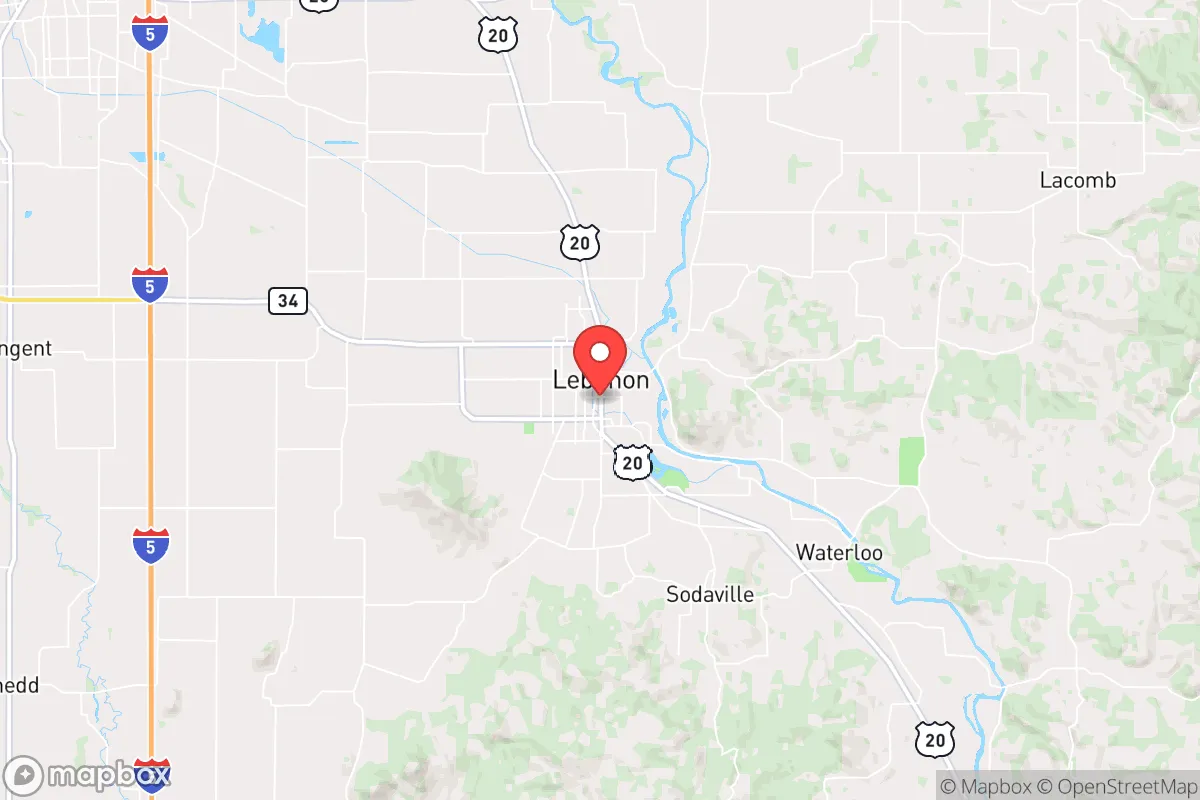
District shown is the primary district for this city’s centroid. Cities may span multiple districts.
Local Political AnalysisPolitical Analysis of Lebanon, OR
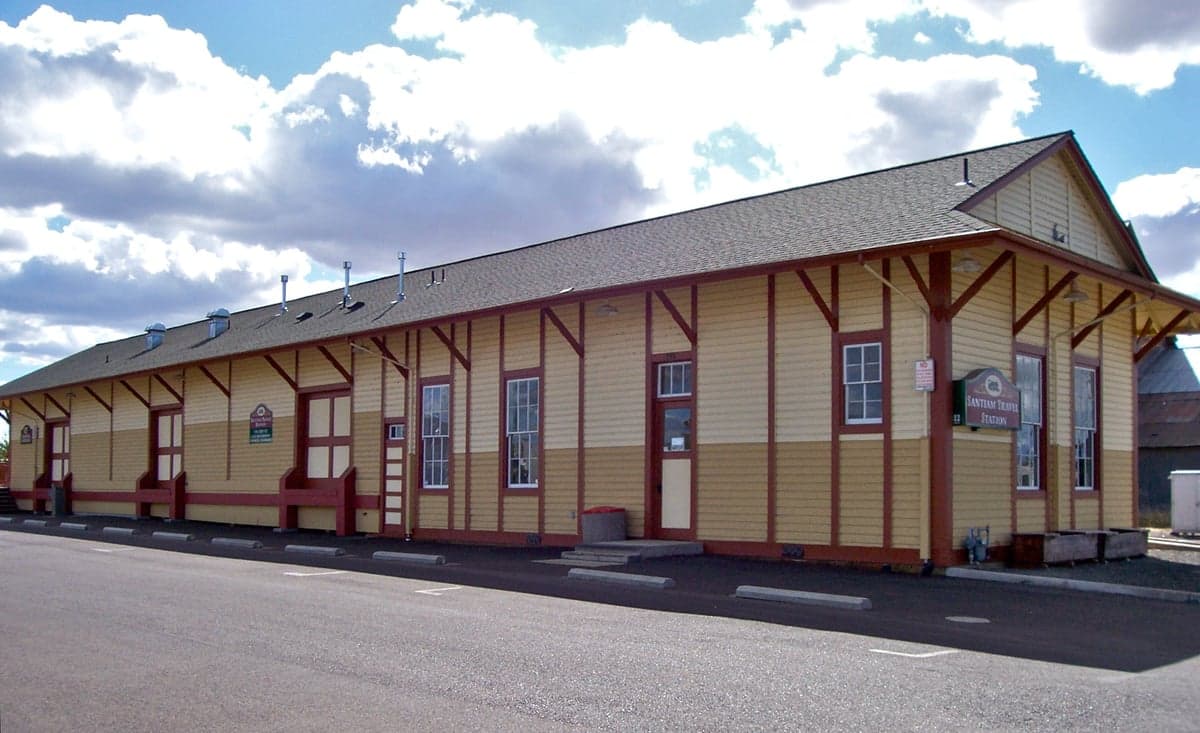
Lebanon, Oregon, has long been a place where folks value their independence and don't take kindly to being told how to live their lives. While the state of Oregon as a whole leans pretty hard to the left—with a Cook PVI of D+8—Lebanon and the surrounding Linn County have historically been a bit of a redoubt for more traditional, common-sense values. You'll find a lot of people here who work with their hands, hunt, fish, and go to church, and that's reflected in the local politics. The city itself is a bit of a mixed bag, but the county as a whole has consistently voted for conservative candidates, even as the state has drifted further and further away from that. The shift you see in Portland and Salem just doesn't resonate here, and that's a big part of why people move to Lebanon in the first place.
How it compares
The difference between Lebanon and the rest of Oregon is stark, and it's not just a matter of a few percentage points. The state's D+8 rating means it's solidly blue, driven by the massive populations in the Willamette Valley cities like Portland, Eugene, and Salem. But drive just 20 miles east of Salem, and you're in a completely different world. Lebanon sits in Linn County, which voted for Trump by a double-digit margin in 2020. Compare that to nearby Corvallis, home to Oregon State University, which is a deep blue island with a D+15 lean. It's like two different countries. The contrast is even sharper when you look at the state legislature, which has been passing more and more progressive policies—from strict land-use laws to new taxes and mandates—that feel like they're designed to squeeze the life out of small towns. Lebanon's local government tends to be more pragmatic, but they're constantly fighting an uphill battle against Salem's overreach.
What this means for residents
For folks living here, the political climate means you have to be more vigilant about what's coming down from the state capitol. You can't just assume your way of life is protected. The constant push for higher minimum wages, stricter environmental regulations, and new housing mandates all sound good on paper in Portland, but they often land like a ton of bricks on a town like Lebanon, where small businesses are already struggling. It means you have to pay close attention to who you're voting for at the state level, because those folks have a lot of power over your property rights, your gun rights, and your kids' education. The local school board and city council races are also critical, because that's where you can still have a real say in how things are run. It's not all doom and gloom, though—the community is tight-knit, and people look out for each other. You just have to be willing to get involved and push back when the state tries to tell you what to do.
One of the biggest cultural distinctions you'll notice is the attitude toward personal freedom. In Lebanon, the general feeling is that you should be able to do what you want on your own property, as long as you're not hurting anyone else. That's a stark contrast to the state's growing tendency to regulate everything from the type of stove you can buy to how much water you can use. The local gun culture is strong, and the Second Amendment is taken very seriously. You'll also see a lot more flags, a lot more trucks, and a lot less of the kind of performative activism you see in the bigger cities. The long-term trajectory is uncertain, but as more people flee the high costs and overreach of places like California and Portland, Lebanon is likely to see an influx of folks who are looking for the same things the long-time residents have always valued: peace, quiet, and the freedom to live their own lives.

State Political ClimatePolitical Climate in Oregon
State Political AnalysisPolitical Environment in the State
Oregon is a state of stark political contrasts, with a Cook PVI of D+8 that masks a deeply divided landscape. The Willamette Valley’s urban core—Portland, Salem, and Eugene—drives the state’s blue lean, but vast stretches east of the Cascades and even some southern coastal counties vote reliably red. Over the past 20 years, the state has shifted leftward, driven by in-migration to Portland’s metro area and a growing progressive activist base, but that trend has slowed as conservative-leaning transplants discover places like Bend, Medford, and the Columbia Gorge. The result is a state where a single-party Democratic supermajority in Salem often clashes with a stubborn, rural Republican minority that feels increasingly unheard.
Urban vs. rural divide
The political map of Oregon is essentially a battle between the wet, liberal west and the dry, conservative east. Multnomah County (Portland) alone casts about 20% of the state’s vote and delivers margins of +30 to +40 points for Democrats. Washington County (suburban Portland) and Lane County (Eugene) add another deep-blue bloc. But drive 30 minutes east of Portland and you hit Clackamas County, which has been trending purple—it voted for Biden by only 8 points in 2020, down from Obama’s 12-point win there. The real red strongholds are east of the Cascades: Deschutes County (Bend) is a classic swing county that went for Trump in 2020 by 4 points, while Jackson County (Medford) and Klamath County are reliably Republican. The rural coast—Tillamook, Lincoln, and Coos counties—has historically been more moderate but is shifting right as timber and fishing communities feel abandoned by Salem’s environmental policies. The urban-rural divide isn’t just about votes; it’s about culture. Portland’s bike lanes and food carts feel like a different country from the ranching towns of Harney County.
Policy environment
Oregon’s policy environment is a textbook case of progressive governance with real-world consequences for personal freedom. The state has no sales tax, which sounds great, but it’s replaced by some of the highest income and property taxes in the nation—top marginal income tax rate hits 9.9%, and property taxes are capped by Measure 50 but still climb with assessed values. The regulatory posture is heavy: Oregon’s land-use laws, unique in the nation, tightly control urban growth boundaries, making housing scarce and expensive in desirable areas like Portland and Bend. Education policy is dominated by the teachers’ union; the state spends above the national average per pupil but ranks near the bottom in graduation rates and test scores. Healthcare is heavily regulated, with a state-run insurance exchange and Medicaid expansion under the Oregon Health Plan. Election laws are among the most progressive: automatic voter registration, no-excuse mail-in voting (which has been the norm since 1998), and same-day registration. The result is a system that prioritizes access over security—voter ID is not required to cast a ballot, which concerns many conservatives. The state also has a “sanctuary” law dating to 1987 that limits local cooperation with federal immigration enforcement, and in 2021, it decriminalized possession of small amounts of all drugs via Measure 110—a policy that has since been walked back due to overdose crises.
Trajectory & freedom
Oregon is becoming less free by any conservative measure, and the trend accelerated after 2020. The most glaring example is gun rights: in 2022, voters passed Measure 114, which requires a permit to purchase a firearm, bans magazines over 10 rounds, and mandates a background check for private sales. The law is tied up in court, but it represents a major infringement on Second Amendment rights. On parental rights, Oregon has some of the most permissive laws in the country regarding gender-affirming care for minors—no parental notification is required for a child to access certain medical procedures, which has sparked fierce backlash. Medical autonomy took a hit during COVID when Governor Kate Brown imposed some of the longest-lasting emergency orders in the nation, including mask mandates that lasted into 2022. Property rights are constrained by the aforementioned land-use laws, which make it nearly impossible to build on rural land without years of permitting. On the tax front, Measure 110’s failure led to a 2024 recriminalization of drug possession, but the regulatory apparatus remains intact. The state’s trajectory is toward more government control, not less, and the legislature’s Democratic supermajority means little check on that impulse.
Civil unrest & political movements
Oregon has been a flashpoint for political violence and activism. The 2020 Portland protests—which lasted for months and involved federal agents—were a national symbol of left-wing unrest. The city saw nightly clashes between Antifa-aligned groups and police, with the Justice Center and federal courthouse repeatedly attacked. On the right, the Pacific Northwest has a history of militia activity, particularly in rural areas like Josephine County and Harney County, where the 2016 Malheur National Wildlife Refuge standoff occurred. Immigration politics are tense: Portland’s sanctuary policy means ICE is not welcome, but border-crossing is less of an issue than in southern states. Election integrity is a hot-button topic—Oregon’s mail-in system has been in place for decades, but the 2020 election saw isolated incidents of ballot harvesting concerns, particularly in Clackamas County. The most visible flashpoint for a new resident would be the homeless crisis, which is both a humanitarian and political issue. Portland’s tent encampments and the state’s permissive camping laws (struck down in 2024 but still creating chaos) are a daily reminder of policy failures. The divide between urban activists and rural conservatives is so deep that there have been serious secession movements—the “Greater Idaho” proposal would move 13 eastern Oregon counties into Idaho, a plan that has gained traction in several county commissions.
Projection
Over the next 5-10 years, Oregon will likely become more polarized, not less. Demographic trends favor Democrats: Portland’s suburbs are growing, and younger, college-educated transplants from California and Washington continue to arrive. But there’s a counter-current: conservative-leaning families are moving to places like Bend, Redmond, and Medford for lower housing costs and a more traditional lifestyle. The state’s population growth has slowed dramatically since 2020, and some rural counties are actually losing people. The political math suggests Democrats will hold the legislature and governor’s office for the foreseeable future, but the margins could narrow if the homeless crisis and drug decriminalization backlash continue. The “Greater Idaho” movement won’t succeed—it requires approval from both state legislatures—but it will keep the rural-urban tension alive. A new resident moving in now should expect a state where their vote may feel meaningless in statewide races but where local elections in conservative counties can still deliver results. The key battleground will be the state supreme court and ballot measures, where progressives have the advantage. Expect more fights over gun control, parental rights, and land use.
For a conservative considering relocation, Oregon offers stunning natural beauty and a slower pace of life in its rural areas, but the political climate is hostile to traditional values. Your property taxes will be high, your gun rights are under active assault, and your children’s education will be shaped by a union-dominated system that prioritizes progressive ideology over academic outcomes. If you move to a red county like Deschutes or Jackson, you’ll find like-minded neighbors and local representation, but you’ll still be subject to Salem’s one-party rule. The bottom line: Oregon is a beautiful place to live if you’re willing to fight for your freedoms at the ballot box and in the courts, but it’s not a state where you can expect the government to leave you alone.
* Values derived from national, state, county, city and local statistics and may differ in a specific area. Last updated: 2026-05-05T08:08:35.000Z
Narrative content on this page is AI-generated and may contain mistakes. Verify any details that matter before acting on them.
ReloMaps may earn a commission from affiliate links at no extra cost to you.

