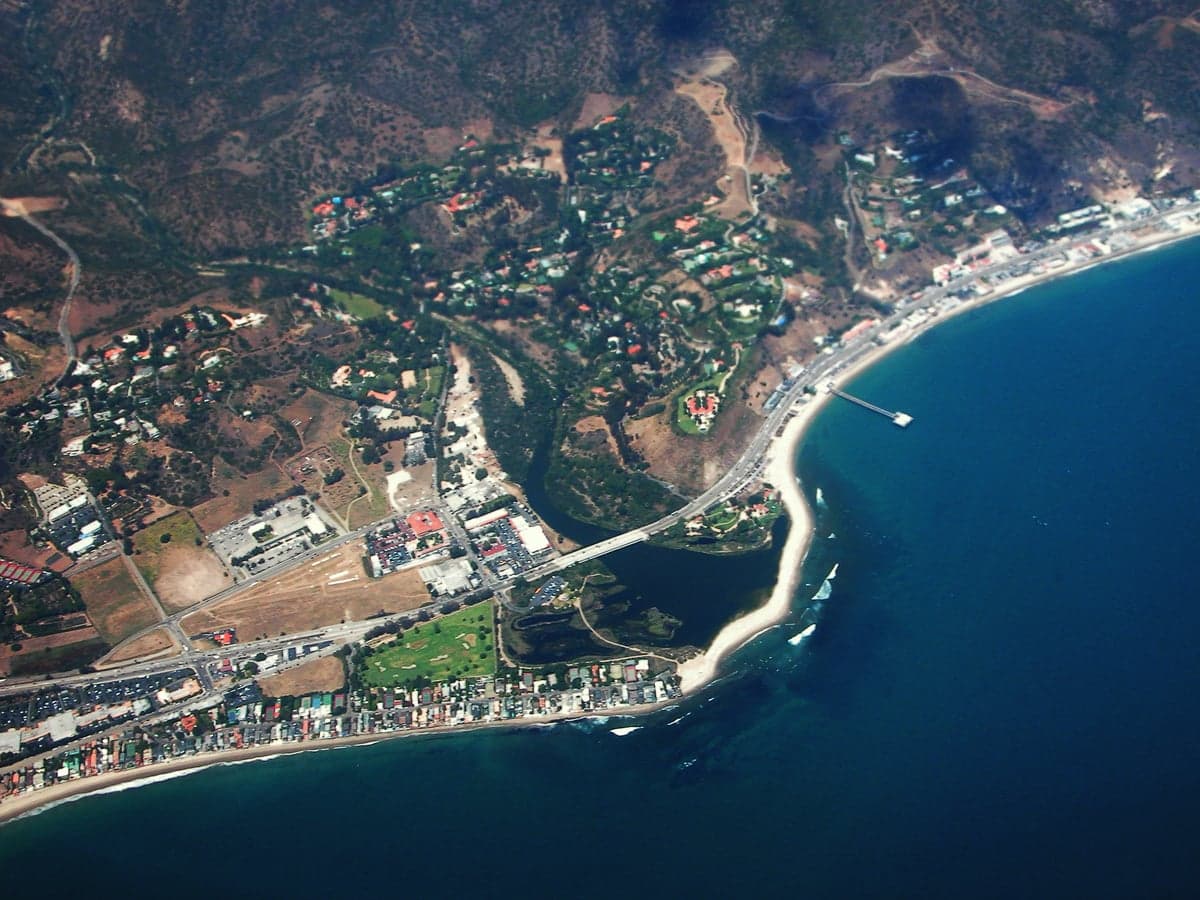
Photo: Wikipedia
Political ClimatePolitical Climate in Malibu, CA
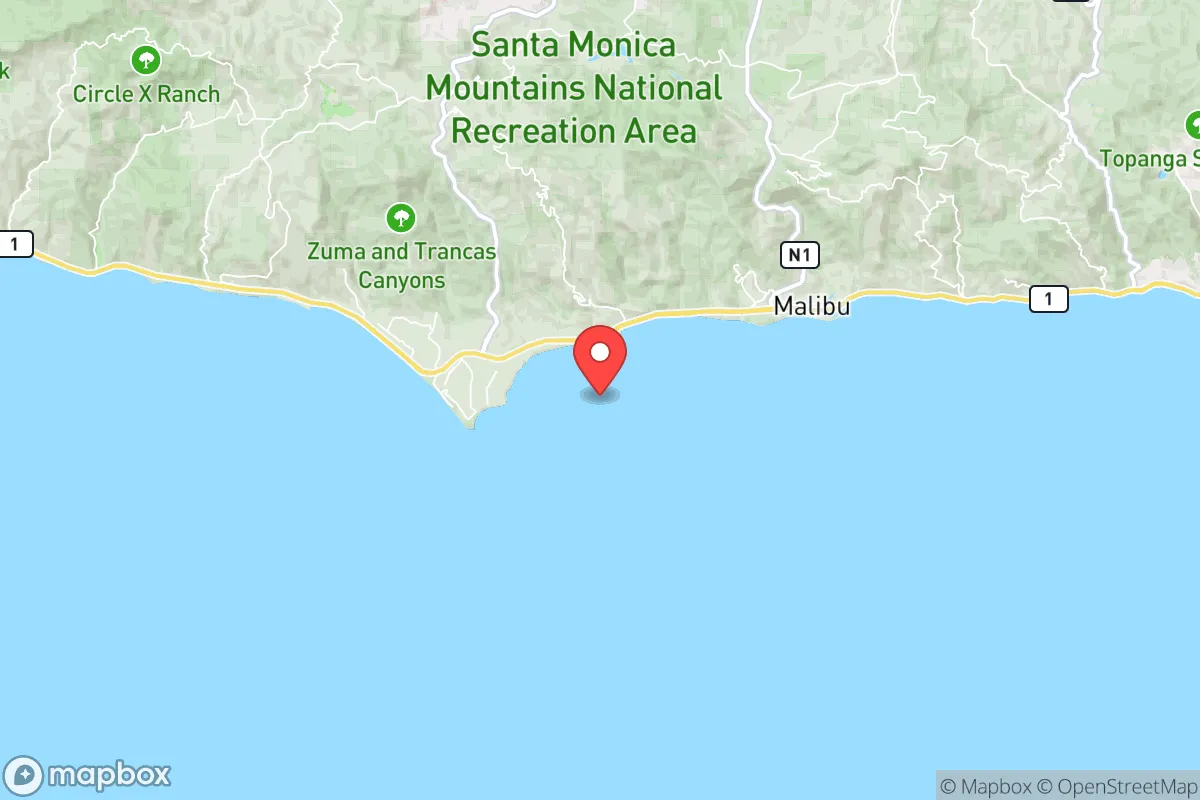
District shown is the primary district for this city’s centroid. Cities may span multiple districts.
Local Political AnalysisPolitical Analysis of Malibu, CA
Malibu is one of the most reliably liberal communities in Southern California, with a Cook Partisan Voting Index of D+17—five points more Democratic than the state of California as a whole (D+12). That gap has widened over the past decade as the city’s wealthy, environmentally conscious electorate has shifted further left, even as some nearby inland areas like Agoura Hills and Thousand Oaks have trended more moderate. In the 2024 presidential election, Malibu precincts delivered roughly 75% of the vote to the Democratic candidate, a margin that has held steady since 2016. The local political identity is shaped less by party machinery and more by a deep, almost reflexive commitment to coastal preservation, wildfire resilience, and land-use restrictions—issues that cut across traditional partisan lines but consistently pull the city leftward.
How it compares
Compared to California’s D+12 baseline, Malibu’s D+17 PVI places it in the same league as ultra-blue enclaves like Berkeley (D+28) or Santa Monica (D+22), but with a distinct flavor. The city’s politics are less about urban progressivism and more about localism: residents vote for state and federal Democrats, but they also fiercely support city council candidates who promise to limit development, block new chain stores, and keep the Pacific Coast Highway from becoming a freeway. This creates a tension that neighboring cities like Calabasas (D+8) or Westlake Village (D+6) don’t experience to the same degree—those communities are more mixed, with a visible Republican minority that can influence local school board and city council races. In Malibu, the GOP presence is negligible; the last Republican to win a city council seat was in 2012, and no Republican has carried a Malibu precinct in a presidential race since 1988. The real political fights here are between moderate Democrats and progressive Democrats, often over how aggressively to regulate short-term rentals or whether to allow a new hotel near the beach.
What this means for residents
For liberal residents, Malibu’s political climate is largely comfortable. Local government aligns with their priorities on environmental protection, public access to beaches, and opposition to oil drilling—the city was an early adopter of a plastic-bag ban and a ban on single-use polystyrene. Conservative residents, however, face a practical reality: they are a small minority with little influence over local policy. That doesn’t mean they’re unwelcome—many long-time conservative families still live in the Malibu hills—but they tend to keep their political views private in social settings and focus their civic energy on nonpartisan issues like fire safety and traffic. The city’s tax structure (no local sales tax increase, relatively low property tax rates for longtime homeowners) means that even fiscal conservatives can find common ground with their neighbors on keeping government lean. The biggest cultural friction point is land use: conservatives often favor more housing and commercial development to ease the cost of living for middle-class workers, while the liberal majority prioritizes open space and low-density zoning, which keeps housing prices among the highest in the state.
One policy distinction worth noting: Malibu has a city-run emergency alert system and a mandatory brush-clearing ordinance that are more aggressive than state requirements, reflecting a local consensus that wildfire risk trumps property rights. This pragmatic, safety-first approach sometimes surprises outsiders who expect a purely ideological city. In practice, Malibu’s politics are less about national culture wars and more about the daily reality of living in a fire-prone, landslide-vulnerable, traffic-choked coastal paradise. The result is a place where Democrats dominate the ballot box, but the conversation at the farmers’ market is just as likely to be about evacuation routes as it is about presidential politics.

State Political ClimatePolitical Climate in California
State Political AnalysisPolitical Environment in the State
California is a solidly Democratic state with a Cook Partisan Voting Index of D+12, meaning it votes about 12 points more Democratic than the national average in presidential elections. The state hasn't voted Republican in a presidential race since George H.W. Bush in 1988, and the Democratic margin has widened from about 10 points in 2000 to over 30 points in 2020. That said, the state is far from a monolith — it's a patchwork of deep-blue coastal metros, purple inland valleys, and red rural counties that together create one of the most politically complex landscapes in the country.
Urban vs. rural divide
The political map of California is essentially a story of the coast versus the interior. The major population centers — Los Angeles, the San Francisco Bay Area, and San Diego — are overwhelmingly Democratic. Los Angeles County alone accounts for about a quarter of the state's vote and delivers margins of 60-70% Democratic. The Bay Area, including San Francisco, Oakland, and San Jose, is even more lopsided, often hitting 80-85% Democratic in presidential races. These metros are the engine of the state's blue lean. In contrast, the Central Valley and inland regions lean heavily Republican. Bakersfield in Kern County votes about 60% Republican, while Redding in Shasta County is closer to 70% Republican. The Inland Empire — Riverside and San Bernardino counties — has become a key battleground, trending blue in recent cycles as suburban voters shift left, but still hosting competitive races. A notable exception is Orange County, once a GOP stronghold, which flipped to Democratic in 2018 and 2020, driven by suburban moderates and Asian-American voters. The political divide isn't just urban vs. rural — it's coastal vs. inland, with the coastal metros pulling the state left and the interior pushing back.
Policy environment
California's policy environment is defined by high taxes, heavy regulation, and expansive government services. The state has a progressive income tax with rates up to 13.3%, the highest in the nation, and a state sales tax of 7.25% that can climb to over 10% with local add-ons. Property taxes are capped at 1% of assessed value under Proposition 13, but reassessment upon sale can lead to significant jumps. The regulatory posture is among the strictest in the country, particularly in housing, environmental review (CEQA), and labor law. Education policy is centralized: the state funds K-12 through a formula that directs more money to low-income and English-learner districts, and it has a robust public university system (UC, CSU, community colleges). Healthcare is heavily regulated, with the state running its own insurance exchange (Covered California) and expanding Medi-Cal to cover all low-income adults regardless of immigration status. Election laws are among the most accessible: universal mail-in voting, same-day registration, and automatic voter registration at the DMV. For conservatives, the policy environment can feel stifling — high taxes, strict gun laws, and aggressive climate regulations. For liberals, it's a model of progressive governance, though affordability and homelessness remain major challenges.
Recent policy direction
California's recent legislative trajectory has been aggressively progressive, with a focus on expanding rights and regulating industry. On gun and self-defense law, the state has passed some of the nation's strictest measures: a 2023 law bans carrying firearms in most public places, and a 2024 law requires microstamping on all new handguns. Parental and education rights have been a flashpoint: a 2023 law prohibits school boards from banning books, and a 2024 law requires schools to notify parents if a child changes their gender identity — a move that split the Democratic coalition. Speech and privacy: the state passed a strong data privacy law (CCPA) in 2018, but also restricts hate speech and disinformation in ways that have drawn First Amendment challenges. Medical and bodily autonomy: California has enshrined abortion rights in the state constitution (Proposition 1, 2022) and expanded access to gender-affirming care for minors, including a 2024 law that shields families traveling to California for such care from out-of-state legal action. Property rights are constrained by rent control (AB 1482) and strict tenant protections, while a 2024 law limits corporate ownership of single-family homes. Taxation: a 2024 ballot measure (Proposition 5) would lower the threshold for local tax increases, but failed. Voting access has been expanded: universal mail-in ballots became permanent in 2021, and a 2024 law allows non-citizens to vote in school board elections in certain cities. The overall direction is toward more regulation, more rights for marginalized groups, and more state intervention in daily life — a trend that will continue as long as Democrats hold supermajorities in the legislature.
Civil unrest & political movements
California has a long history of political activism, from the 1960s Free Speech Movement at UC Berkeley to the 2020 George Floyd protests that saw widespread property damage in Los Angeles and San Francisco. The state is home to organized movements on both sides. On the left, the California Democratic Party is split between establishment moderates and a progressive wing that has pushed for single-payer healthcare and defunding police, though these efforts have largely stalled. On the right, the California Republican Party has struggled to gain traction, but grassroots groups like the California Rifle and Pistol Association and the California Family Council are active in litigation and ballot initiatives. Immigration politics are a constant flashpoint: California is a sanctuary state (SB 54, 2017), limiting local law enforcement cooperation with federal immigration authorities. This has led to tensions with the Trump administration and periodic protests from both sides. Secession rhetoric — the "Calexit" movement — flares up occasionally but has no real political momentum. Election integrity controversies have been minimal compared to other states, though some rural counties (like Shasta) have seen local disputes over voting machines and ballot counting. Visible flashpoints for a new resident: homeless encampments in major cities, frequent protests on university campuses, and occasional clashes at school board meetings over curriculum and LGBTQ+ policies. The political temperature is high, but it's mostly expressed through litigation and legislation rather than street violence.
Projection
Over the next 5-10 years, California is likely to remain solidly Democratic, but the margin may narrow slightly as the state's high cost of living drives out lower-income and younger residents — groups that lean left — while attracting higher-income professionals who tend to be more moderate. The in-migration pattern is notable: the state lost population for three consecutive years (2020-2023), with net out-migration to Texas, Arizona, and Nevada. Those leaving tend to be middle-income families and conservatives, while those arriving are often tech workers and immigrants. The Central Valley and Inland Empire will continue to be battlegrounds, but the coastal metros will keep the state blue. The biggest wildcard is housing: if the state can't build enough units, the affordability crisis will accelerate out-migration, potentially flipping a few competitive districts. For a new resident moving in now, expect to find in a decade: higher taxes, stricter regulations on everything from gas cars to AI, continued expansion of social services, and a political environment where the left sets the agenda and the right fights rear-guard actions through ballot initiatives and local government. The state will not flip red, but it may become more internally divided between a progressive coastal core and a more moderate-to-conservative interior.
For a conservative-leaning relocator, California offers a challenging political environment: high taxes, strict gun laws, and a regulatory culture that can feel intrusive. But it also offers world-class natural beauty, a diverse economy, and pockets of conservative community in places like Bakersfield, Redding, and parts of Orange County. For a liberal relocator, the state is a policy laboratory where their values are enacted into law, but they'll face high costs and a housing crisis. The bottom line: California is not a place to move if you want low taxes or limited government, but if you value the amenities of a global economy and are willing to navigate the political landscape, it remains a place of opportunity — just know that the political winds are blowing in one direction, and they're not likely to shift anytime soon.
* Values derived from national, state, county, city and local statistics and may differ in a specific area. Last updated: 2026-06-08T04:57:00.000Z
Narrative content on this page is AI-generated and may contain mistakes. Verify any details that matter before acting on them.
ReloMaps may earn a commission from affiliate links at no extra cost to you.

