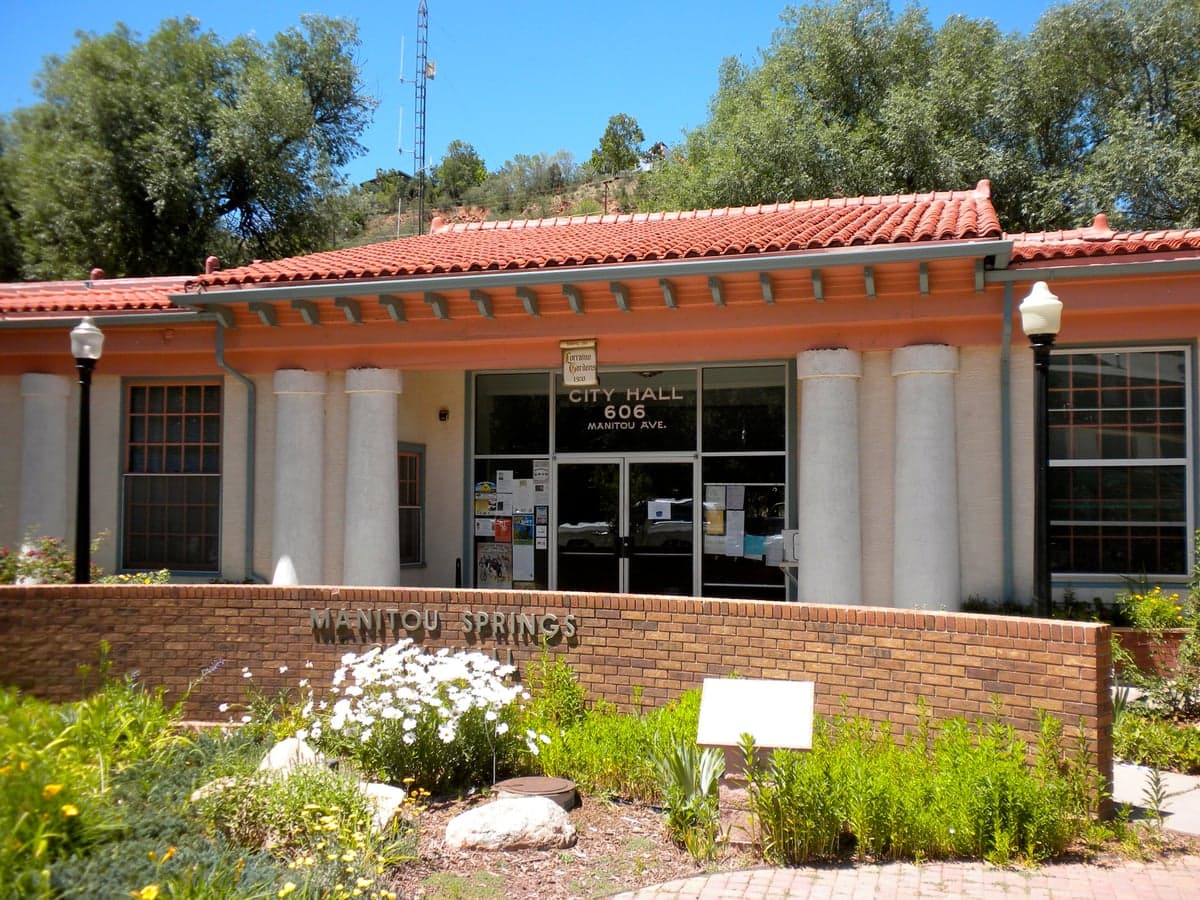
Photo: Wikipedia
Demographics of Manitou Springs, CO
Affluence Level in Manitou Springs, CO
An upper-middle-class area. Household wealth, education levels, and homeownership run ahead of national benchmarks.
People of Manitou Springs, CO
Today, Manitou Springs is a small, tight-knit community of 4,796 residents that blends historic charm with a distinctly independent, outdoors-oriented character. The population is overwhelmingly White (88.2%) with a small Hispanic minority (6.1%) and a notable East/Southeast Asian presence (2.7%), while the foreign-born share is just 1.1% — well below national averages. Over half of adults (53.4%) hold a college degree, reflecting a well-educated populace drawn by the area’s natural beauty, tourism economy, and proximity to Colorado Springs. The city’s identity is shaped by its Victorian-era architecture, mineral springs, and a reputation as a haven for artists, retirees, and families seeking a slower pace without sacrificing urban access.
How the city was settled and grew
Manitou Springs was founded in the 1870s as a health resort and tourist destination, capitalizing on its natural mineral springs and stunning location at the base of Pikes Peak. The original population consisted largely of Anglo-American settlers from the eastern United States, many of whom were drawn by the promise of restorative waters and the emerging railroad connection via the Denver and Rio Grande Railway. The Historic Downtown district, centered on Manitou Avenue, became the commercial and social hub, lined with hotels, bathhouses, and spring-fed pavilions. Early residents also settled in the West End neighborhood, where modest Victorian cottages housed workers from the nearby mines and railroad yards. By the early 1900s, the city had attracted a small number of European immigrants, particularly German and Irish laborers, who built homes in the North End area near the base of the mountain. The population remained overwhelmingly White and native-born through the mid-20th century, with the 1950 census recording less than 1% non-White residents. Tourism and seasonal work drove modest growth, but the city never experienced the industrial boom that diversified other Colorado towns.
Modern era (post-1965)
After the 1965 Hart-Cellar Act, Manitou Springs saw little direct impact from new immigration waves, as the city’s small size and limited economic base did not attract large foreign-born populations. Instead, the post-1965 period was defined by domestic in-migration from other parts of Colorado and the broader United States. The Mesa Avenue corridor and the Ruxton Avenue area absorbed many of the new arrivals — young families and professionals seeking affordable housing near Colorado Springs’ growing job market. The Hispanic population, which stood at roughly 3% in 1970, grew modestly to 6.1% by 2020, concentrated in the Old Town and South Side neighborhoods, where older, more affordable housing stock remains. The East/Southeast Asian community (2.7%) is a more recent addition, largely composed of professionals working in tech and healthcare in the Colorado Springs metro area, with no single neighborhood dominating. The Black population remains minimal at 0.6%, and the Indian subcontinent population is effectively zero. The city’s college-educated share has risen sharply from 28% in 1990 to 53.4% today, reflecting a broader trend of educated professionals displacing lower-income residents — a pattern visible in the Historic Downtown and West End, where home values have more than doubled since 2010.
The future
Manitou Springs is likely to continue homogenizing along educational and economic lines, with the population becoming whiter, older, and more affluent. The Hispanic share is plateauing near 6%, as younger Hispanic families are priced out of the city’s tight housing market and move to more affordable areas in El Paso County. The East/Southeast Asian community, while small, may grow slightly as remote work and tech employment draw more professionals to the region, but the city lacks the ethnic infrastructure — temples, grocery stores, language schools — to sustain a large enclave. The foreign-born share is expected to remain below 2%, as the city’s high cost of living and limited rental inventory discourage new immigrant settlement. The most likely demographic shift is a continued influx of retirees and remote workers from higher-cost states like California and the Northeast, accelerating the displacement of working-class families. The North End and Ruxton Avenue areas are already seeing tear-downs and new construction aimed at luxury buyers, while the South Side remains the last affordable pocket for younger families and service workers.
For a conservative-leaning individual or family considering relocation, Manitou Springs is becoming a more exclusive, culturally homogenous community — safe, educated, and politically moderate to liberal, but with little ethnic or economic diversity. The city offers strong schools, low crime, and unmatched outdoor recreation, but newcomers should expect high housing costs and a population that is increasingly older and wealthier. The next decade will likely see the city solidify its reputation as a boutique mountain town for the professional class, with fewer opportunities for those seeking a diverse or working-class environment.

* Values derived from national, state, county, city and local statistics and may differ in a specific area. Last updated: 2026-04-29T00:41:38.000Z
Narrative content on this page is AI-generated and may contain mistakes. Verify any details that matter before acting on them.
ReloMaps may earn a commission from affiliate links at no extra cost to you.

