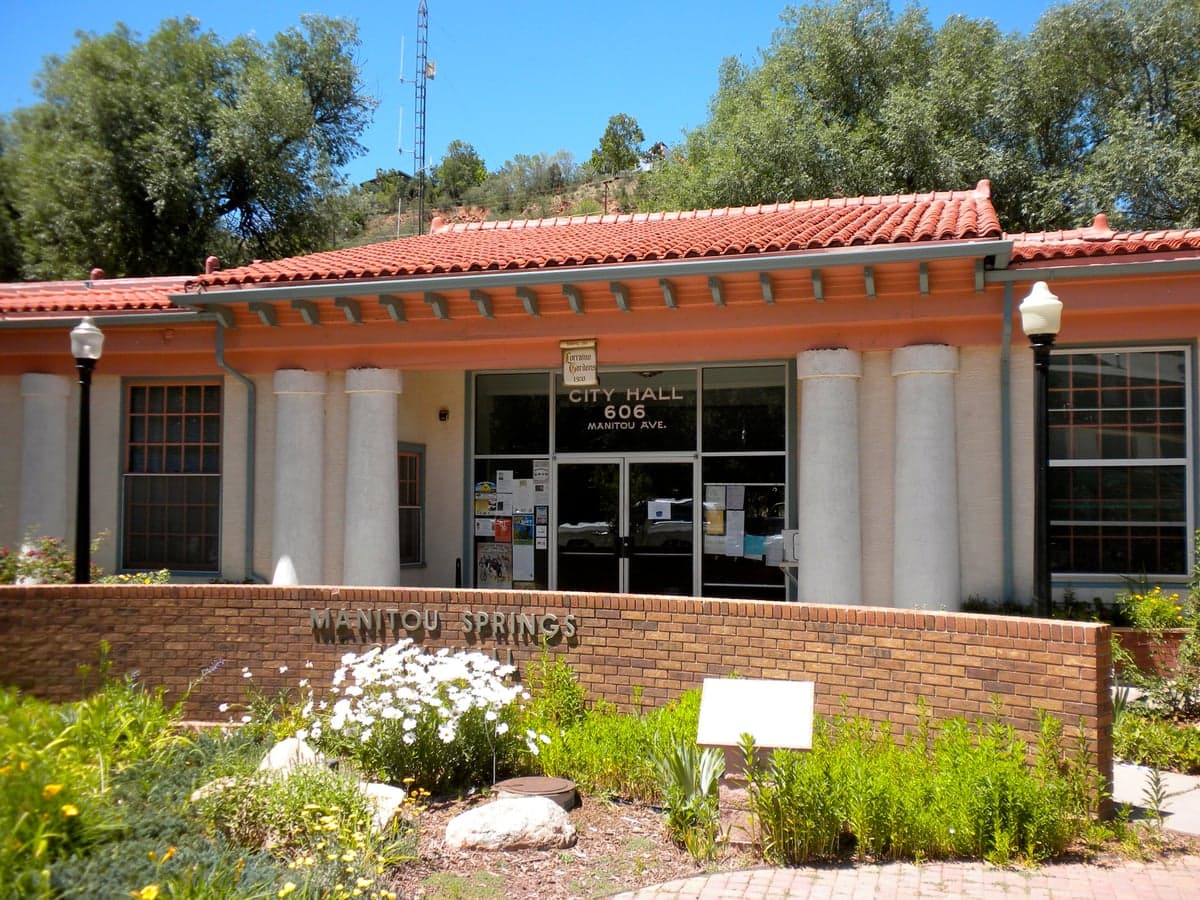
Photo: Wikipedia
Political ClimatePolitical Climate in Manitou Springs, CO
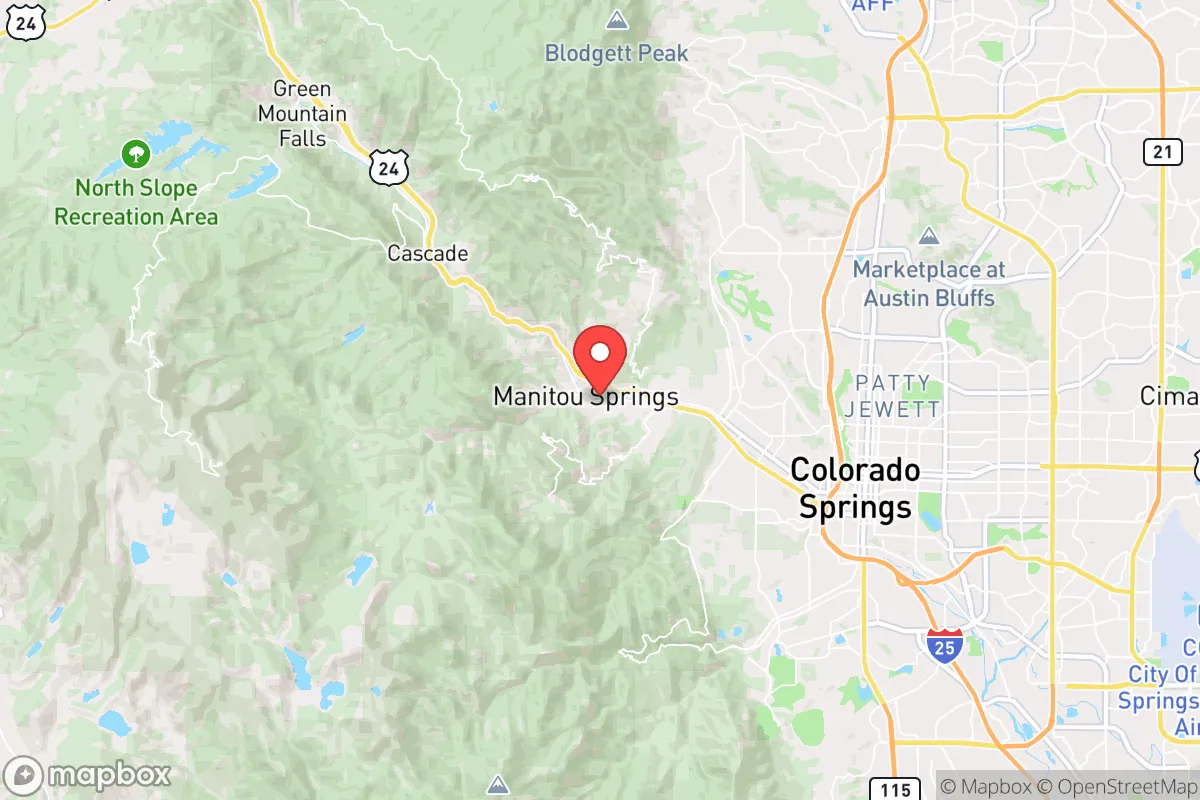
District shown is the primary district for this city’s centroid. Cities may span multiple districts.
Local Political AnalysisPolitical Analysis of Manitou Springs, CO
Manitou Springs has always been a bit of an outlier politically, but the direction it's heading is something worth keeping an eye on. The area sits in El Paso County, which overall leans conservative with a Cook PVI of R+5, but Manitou itself has drifted noticeably left in recent years. You used to have a pretty even mix of folks here—libertarian-leaning types who valued personal freedom above all else, along with more traditional conservatives. Now, the progressive influence is growing, and it's starting to show in local policy and the general vibe of the town.
How it compares
If you drive just a few miles east to Colorado Springs, you'll find a much more conservative atmosphere—lower taxes, fewer regulations, and a general respect for individual rights. Places like Monument and Falcon are even more solidly red, with strong Second Amendment protections and a business-friendly environment. But Manitou Springs? It's become the progressive pocket of the county. The city council has pushed things like stricter environmental ordinances and zoning rules that can feel like government overreach, especially if you're used to the hands-off approach of surrounding towns. The contrast is stark: you can be in a neighborhood where people fly "Don't Tread on Me" flags, then cross into Manitou and see signs for local initiatives that feel more like Boulder or Denver.
What this means for residents
For those who value personal freedoms, the shift is concerning. Local government has gotten more involved in things that used to be left to individuals—like property use, business operations, and even how you can enjoy your own land. There's been talk of tighter rental regulations and more oversight on short-term rentals, which hits property owners hard. The school board has also leaned into progressive curriculum changes, which might not sit well if you want your kids taught traditional values and critical thinking without ideological slant. If you're a conservative or libertarian, you'll find yourself increasingly at odds with the local political class. It's not impossible to live here, but you'll need to be vocal and engaged to push back against the creeping overreach.
One thing that hasn't changed much is the strong sense of community among long-time residents. Many of us remember when Manitou was more about small-town independence and less about government mandates. The local culture still has that quirky, artistic edge, but it's being co-opted by a more activist, progressive crowd. The annual events and festivals are still fun, but you'll notice more political messaging creeping in. For now, the best advice is to stay informed, vote in every local election, and connect with like-minded neighbors. The political climate here is shifting, but it's not a done deal—there's still room to keep Manitou from becoming just another progressive enclave.

State Political ClimatePolitical Climate in Colorado
State Political AnalysisPolitical Environment in the State
Colorado has shifted from a classic purple swing state to a solidly blue-leaning state over the past two decades, with Democrats now controlling the governorship, both U.S. Senate seats, and both chambers of the state legislature. The state voted for Hillary Clinton by 5 points in 2016, Joe Biden by 13 points in 2020, and Kamala Harris by roughly 11 points in 2024, reflecting a durable leftward tilt driven almost entirely by explosive growth in the Denver-Boulder-Aurora metroplex. For a conservative considering relocation, the state’s trajectory is unmistakable: the rural and exurban areas that once balanced the Front Range have been overwhelmed by a tide of in-migration from blue states, and the policy environment now reflects that shift.
Urban vs. rural divide
The political map of Colorado is a tale of two worlds. The Denver metro area—including Denver County, Boulder County, Jefferson County, and Arapahoe County—generates roughly 60% of the state’s votes and leans heavily Democratic. Boulder County, home to the University of Colorado, is one of the most liberal jurisdictions in the nation, routinely voting 80%+ Democratic. Denver County itself is similarly deep blue. Meanwhile, the rural eastern plains, the Western Slope, and the southern mountain counties remain reliably Republican. El Paso County, anchored by Colorado Springs, is the state’s largest red county, voting for Trump by 12 points in 2024. Weld County, north of Denver, is another GOP stronghold, voting for Trump by 20 points. But these rural and exurban redoubts are losing relative influence as the Front Range grows. The suburbs that once were swing areas—like Jefferson County and Arapahoe County—have moved decisively left over the last decade, with Jefferson County flipping from a Bush win in 2004 to a Biden win by 14 points in 2020. The only real bright spot for conservatives is Douglas County, south of Denver, which remains a reliably red suburban bastion, voting for Trump by 8 points in 2024, though even there the margin is shrinking.
Policy environment
Colorado’s policy environment is now unmistakably progressive. The state has a flat income tax rate of 4.4%, which is relatively low by national standards, but that’s where the good news ends. Property taxes are moderate, but the state has aggressively pursued a green energy agenda, including a mandate for 100% renewable electricity by 2040 and a clean cars rule that effectively bans new gas-powered vehicle sales by 2035. The state also has a paid family and medical leave program funded by payroll taxes, a $15.30 minimum wage indexed to inflation, and some of the nation’s strictest gun control laws, including a 2023 law raising the purchase age for all firearms to 21 and a 2024 law banning so-called “assault weapons.” On education, Colorado has a complex school funding formula that relies heavily on local property taxes, leading to wide disparities between wealthy and poor districts. School choice is robust, with charter schools and open enrollment widely available, but the state’s education bureaucracy is heavily union-influenced. Election laws are among the most liberal in the country: Colorado automatically mails ballots to every registered voter, allows same-day registration, and has no voter ID requirement at the polls (though a signature match is required). This system has been praised for turnout but criticized by conservatives for lacking basic security measures.
Trajectory & freedom
Colorado is clearly becoming less free from a conservative perspective, with a steady drumbeat of legislation expanding government control over personal choices. The most glaring example is gun rights: the 2023 “safe storage” law mandates that firearms be locked up when not in use, and the 2024 assault weapons ban effectively outlaws many popular semi-automatic rifles. On parental rights, the state passed a 2023 law requiring schools to allow students to use names and pronouns without parental notification, a direct blow to family authority. Medical autonomy has also been curtailed: Colorado was one of the first states to legalize assisted suicide (2016) and has no parental consent requirement for minors seeking abortions. Property rights are under pressure from a 2024 law that allows local governments to impose rent control, a policy previously banned by state statute. On the tax front, voters approved Proposition HH in 2023, which temporarily reduced property tax rates but also allowed the state to keep more revenue under TABOR (Taxpayer Bill of Rights) limits, effectively weakening the state’s historic tax restraint mechanism. The only bright spot for freedom advocates is the continued legalization of recreational marijuana, which remains a libertarian-friendly policy, but that’s cold comfort when the state is actively restricting so many other liberties.
Civil unrest & political movements
Colorado has seen its share of political flashpoints. The 2020 George Floyd protests in Denver turned violent, with property damage and clashes between protesters and police. The state has a vocal and organized progressive activist infrastructure, particularly around environmental and immigration issues. Colorado is a sanctuary state, with a 2019 law limiting local law enforcement cooperation with federal immigration authorities. This has led to tensions with the Trump administration and periodic controversies over criminal illegal immigrants released into the community. On the right, the Colorado Republican Party has been fractured between establishment and populist factions, with the state party itself endorsing a platform that includes calls for secession from the United States—a fringe position that has alienated mainstream conservatives. The “Greater Idaho” movement, which seeks to move rural eastern Oregon and parts of northern California into Idaho, has a parallel in Colorado’s “State of Jefferson” sentiment, but it remains a fringe idea. Election integrity is a hot-button issue: after the 2020 election, there were widespread concerns about the mail-ballot system, and a 2021 audit of Dominion voting machines in Mesa County (Grand Junction) became a national flashpoint, with the county clerk, Tina Peters, facing criminal charges for allegedly allowing unauthorized access to the machines. This episode has deepened distrust among conservatives, but the state’s Democratic majority has shown no interest in tightening election laws.
Projection
Looking ahead 5-10 years, Colorado’s political trajectory is clear: it will continue to move left, driven by continued in-migration from blue states like California, New York, and Illinois. The Denver metro area is projected to add another 500,000 residents by 2035, and those newcomers overwhelmingly vote Democratic. The rural counties will continue to lose population and political influence. The state’s Republican Party shows no signs of reversing its decline, and the party’s internal divisions make it unlikely to mount a serious statewide challenge. The only wildcard is a potential backlash against the state’s aggressive green energy mandates, which could drive up energy costs and spark a populist revolt, but that’s a long shot. For a conservative moving in now, the realistic expectation is that Colorado will be a one-party Democratic state within a decade, with policies that increasingly mirror California’s—high costs, heavy regulation, and a culture that is hostile to traditional values. The best a conservative can hope for is to find a red enclave like Douglas County or El Paso County and accept that statewide politics will be an uphill battle.
For a new resident, the bottom line is this: Colorado offers stunning natural beauty, a strong economy, and a relatively low tax burden compared to the coasts, but the political climate is increasingly hostile to conservative values. If you’re willing to live in a red pocket like Colorado Springs or Castle Rock and accept that your vote won’t matter much statewide, you can still enjoy the lifestyle. But if you’re looking for a state where your political views are reflected in policy, Colorado is not that place, and it’s only getting worse. Choose your county carefully, and don’t expect the state to turn around anytime soon.
* Values derived from national, state, county, city and local statistics and may differ in a specific area. Last updated: 2026-04-29T00:41:38.000Z
Narrative content on this page is AI-generated and may contain mistakes. Verify any details that matter before acting on them.
ReloMaps may earn a commission from affiliate links at no extra cost to you.

