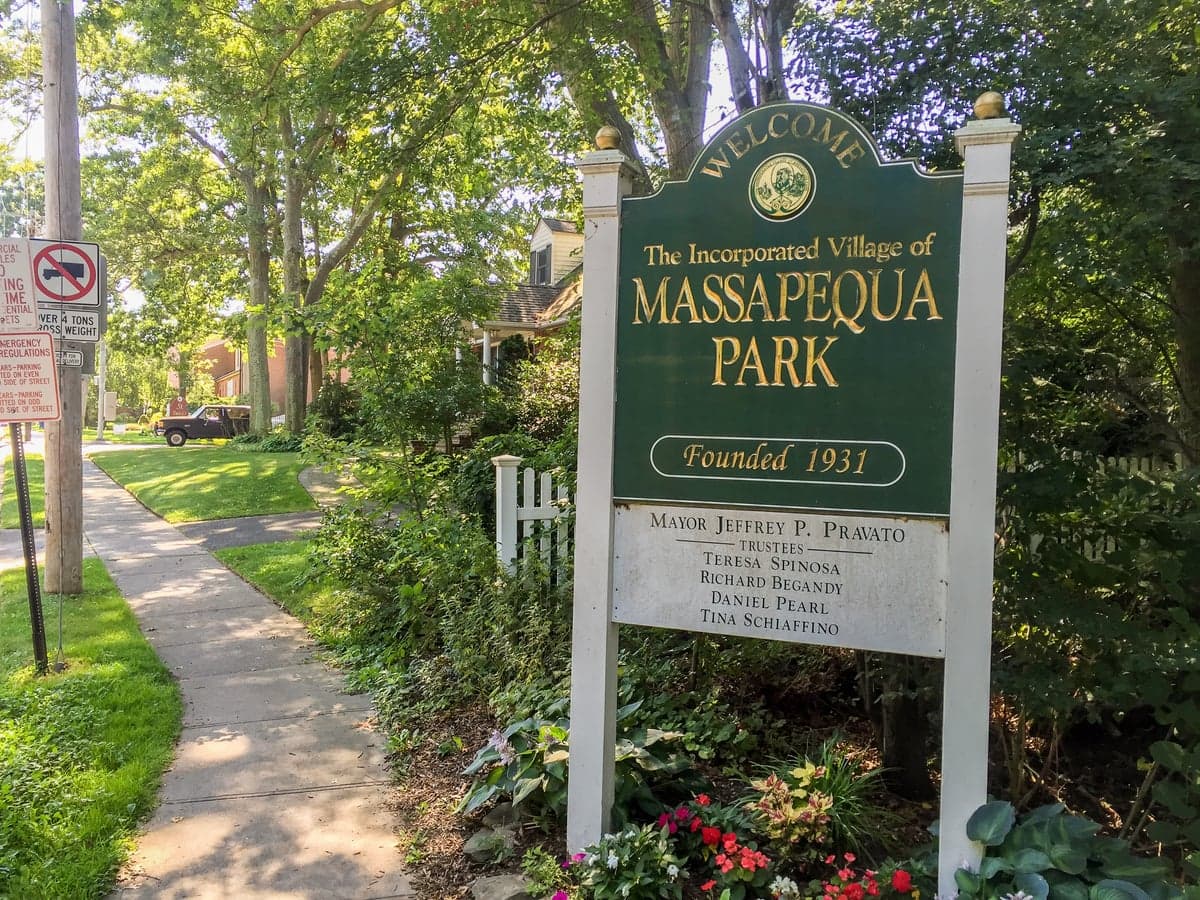
Photo: Wikipedia
Political ClimatePolitical Climate in Massapequa Park, NY
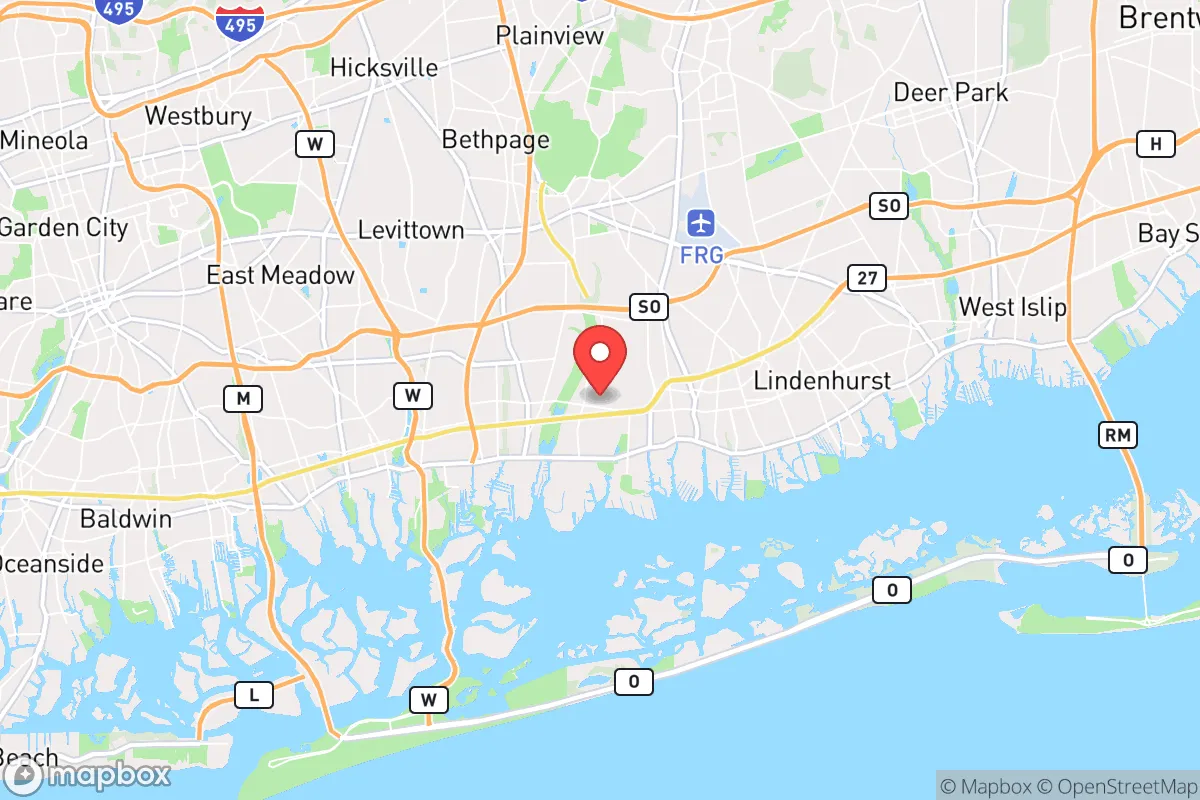
District shown is the primary district for this city’s centroid. Cities may span multiple districts.
Local Political AnalysisPolitical Analysis of Massapequa Park, NY
Massapequa Park has long been a reliably conservative stronghold on Long Island, and despite some demographic shifts in neighboring towns, it still leans solidly to the right. With a Cook Partisan Voting Index of R+6, this Nassau County village consistently votes Republican in local, state, and federal races—a pattern that has held steady for decades. You can feel it in the local chatter at the diner or the flags on front lawns: this is a place where people still believe in limited government, lower taxes, and the Second Amendment. But if you’ve lived here as long as I have, you’ve noticed the winds starting to shift just a little, especially as younger families move in from the city and progressive ideas creep into school board meetings and town hall discussions.
How it compares
Massapequa Park sits in a bit of a political bubble compared to its immediate neighbors. Head west into Wantagh or Bellmore, and you’ll find a similar conservative bent, but with a slightly more moderate edge—those areas have seen more independent and even Democratic wins in recent years. Go east into Amityville or Copiague, and you’re in territory that’s flipped blue in presidential elections, driven by a more diverse population and younger voters. Even within Massapequa itself, the unincorporated areas have a few more registered Democrats than the village proper. What keeps Massapequa Park red is its older, homeowning base—folks who remember when the village was farmland and who value their property rights above all else. The contrast is stark: while Nassau County as a whole has trended purple, Massapequa Park remains a place where a Republican candidate can still win by double digits in a local race.
What this means for residents
For those of us who moved here to escape the overreach we saw in the city or in more progressive suburbs, the political climate in Massapequa Park offers a measure of breathing room. You won’t see the same kind of heavy-handed zoning or business mandates that you get in places like Hempstead Village or Long Beach. The village government tends to keep its hands off your property and your wallet—property taxes, while still high by national standards, are lower than in many neighboring towns because the village fights to keep spending in check. That said, the pressure is mounting. School board elections have become battlegrounds over curriculum and parental rights, and there’s a growing push from some residents to adopt “sanctuary” policies or diversity initiatives that many of us see as government overreach into personal freedoms. If you value the ability to raise your kids without the state telling you what they can read or how you can use your backyard, Massapequa Park is still a safe bet—but you’ve got to stay engaged to keep it that way.
Culturally, Massapequa Park is a place where the local VFW hall still draws a crowd on Memorial Day, and the village’s annual street fair feels like a throwback to a simpler time. There’s no push for bike lanes or “complete streets” here—the focus is on keeping things functional, not fashionable. The biggest policy distinction is the village’s strong stance on home rule: they’ve resisted county-level attempts to impose rent control or energy mandates, and they’ve kept zoning laws tight to prevent overdevelopment. Looking ahead, the long-term concern is that as the older generation ages out and younger, more transient renters move in, the political balance could tip. But for now, if you’re looking for a place where the government stays out of your business and your neighbors share your values, Massapequa Park still delivers.

State Political ClimatePolitical Climate in New York
State Political AnalysisPolitical Environment in the State
New York State has long been a one-party Democratic stronghold, but the reality on the ground is far more fractured than the statewide numbers suggest. Over the past 20 years, the state has shifted from a moderate blue to a deep progressive blue, driven almost entirely by New York City and its immediate suburbs. The 2022 gubernatorial race saw Kathy Hochul win by only 6 points, a surprisingly narrow margin in a state where registered Democrats outnumber Republicans 2-to-1. The real story is the growing rural and suburban revolt against Albany’s one-party rule, with places like Erie County (Buffalo) flipping red in 2024 for the first time in decades, and the Hudson Valley suburbs of Orange and Putnam counties trending sharply right. If you’re a conservative looking at New York, you’re not moving into a monolith—you’re moving into a state where your vote matters more in local races than almost anywhere else in the Northeast.
Urban vs. rural divide
The political map of New York is a tale of two states. New York City’s five boroughs—Manhattan, Brooklyn, Queens, the Bronx, and Staten Island—deliver roughly 40% of the state’s total vote, and they vote 75-85% Democratic. The immediate inner-ring suburbs of Westchester, Nassau, and Suffolk counties on Long Island are also reliably blue, though Nassau and Suffolk have shown signs of life for Republicans in recent cycles, particularly in 2022 when Lee Zeldin carried both. The real conservative strongholds are Upstate: the Southern Tier (Binghamton, Elmira, Corning), the Finger Lakes region (Rochester suburbs like Monroe County’s eastern towns), the North Country (Plattsburgh, Watertown, and the Adirondack Park), and the western edge of the state (Chautauqua County, Niagara County). Erie County, home to Buffalo, flipped to Trump in 2024 after voting for Biden in 2020, a massive bellwether shift. The divide isn’t just urban vs. rural—it’s also suburban vs. exurban. Places like Saratoga Springs (Saratoga County) are purple, while the outer-ring suburbs of Albany County (Clifton Park, Halfmoon) are increasingly red. The rural-urban split is so stark that the state’s 63 Senate districts are gerrymandered to pack upstate Republicans into fewer seats, but the cultural divide is real: a farmer in Steuben County has almost nothing in common politically with a renter in Brooklyn.
Policy environment
New York’s policy environment is a textbook case of progressive governance run amok. The state has the highest combined state and local tax burden in the nation, with income tax rates topping 10.9% for high earners and property taxes among the highest in the country—especially in places like Westchester, Nassau, and Erie counties. The regulatory posture is hostile to business: the state’s Scaffold Law (unique to New York) holds contractors strictly liable for worker injuries, driving up construction costs, and the Climate Leadership and Community Protection Act mandates a 70% renewable energy grid by 2030, a target that’s already driving up electricity rates. On education, New York spends more per pupil than any other state ($28,000+), yet test scores are middling, and the state’s Board of Regents has pushed progressive curriculum mandates, including the controversial “Culturally Responsive-Sustaining Education” framework. Healthcare is dominated by the state’s Medicaid program, which covers one in four New Yorkers and consumes a third of the state budget. Election laws are among the most permissive in the country: no-excuse absentee voting, early voting, same-day registration, and automatic voter registration are all law. The state also passed the John R. Lewis Voting Rights Act in 2022, which gives the attorney general broad power to intervene in local election changes—a move critics say is designed to suppress upstate conservative counties.
Trajectory & freedom
New York is unquestionably becoming less free, and the trend has accelerated since 2019. The SAFE Act of 2013 was the first major gun control law after Sandy Hook, banning “assault weapons” and limiting magazine capacity to 10 rounds. In 2022, the state passed the Concealed Carry Improvement Act (CCIA) in response to the Supreme Court’s Bruen decision, which effectively turned New York into a “sensitive places” state—banning guns in Times Square, subways, parks, and even private businesses unless the owner explicitly posts a sign allowing them. The law is currently being litigated, but it’s already driven many gun owners to flee or simply ignore it. On parental rights, the state passed a law in 2024 requiring all K-12 schools to adopt “gender inclusion” policies, including allowing students to use preferred names and pronouns without parental notification—a direct blow to parental authority. Medical autonomy took a hit with the state’s COVID-19 vaccine mandates for healthcare workers, which remain in effect for many facilities, and the state’s strict abortion law (the Reproductive Health Act of 2019) removed almost all restrictions, including late-term limits. Property rights are under assault from the state’s rent stabilization laws, which now cover over a million units in New York City and have been expanded to upstate cities like Albany and Rochester, effectively capping rent increases and making it harder for landlords to evict problem tenants. The state’s tax cap (the 2% property tax cap) has been made permanent, but it’s routinely overridden by school districts and municipalities, so it’s more of a speed bump than a wall.
Civil unrest & political movements
New York has been a flashpoint for political activism on both sides. The 2020 Black Lives Matter protests in New York City were among the largest in the country, and the city’s response—including the defunding of the NYPD by $1 billion—set a national template. The state’s sanctuary policies are among the strongest in the nation: the “Green Light Law” of 2019 allows undocumented immigrants to obtain driver’s licenses and prohibits state and local law enforcement from cooperating with federal immigration authorities except in narrow circumstances. This has created tension with upstate counties like Rensselaer and Niagara, which have passed resolutions declaring themselves “non-sanctuary” counties, though they lack the legal authority to override state law. The election integrity debate has been fierce: the 2020 election saw widespread use of mail-in ballots under a temporary COVID law, and the state’s 2022 law making absentee voting permanent without an excuse has fueled ongoing distrust among conservatives. The “New York State of Mind” secession movement—calling for upstate counties to break away and form a new state—has gained traction in places like Steuben, Chemung, and Allegany counties, though it’s purely symbolic. More practically, the Working Families Party has become a major force in Democratic primaries, pushing the party further left, while the Conservative Party remains a potent third-party vehicle that often cross-endorses Republicans, giving them a crucial ballot line in close races.
Projection
Over the next 5-10 years, New York is likely to become even more polarized. The demographic trends are clear: New York City and its inner suburbs are growing younger, more diverse, and more progressive, while upstate is aging, shrinking, and getting redder. The 2020 Census cost the state a congressional seat, and the 2030 Census is expected to cost another, as population continues to shift to the Sun Belt. In-migration from other states is overwhelmingly from blue states (California, New Jersey, Connecticut), reinforcing the progressive tilt. However, there are countercurrents: the post-COVID remote work boom has driven an influx of New York City refugees to upstate towns like Hudson, Kingston, and Beacon, which are turning purple or even red in some cases. The state’s fiscal situation is precarious—the budget deficit is projected to hit $10 billion by 2027—which could force tax increases or service cuts, accelerating the exodus of high earners. The most likely scenario is that New York remains a solidly blue state for presidential elections, but with a growing conservative minority that can win local offices in upstate counties and occasionally flip a congressional seat (like NY-19 and NY-22 in 2022). The state’s gun laws will likely be further tightened, rent control expanded, and parental rights eroded, but the courts—especially the Supreme Court—may provide some check. A conservative moving to New York today should expect to live in a state where their vote is often irrelevant at the presidential level but can be decisive in local school board, county legislature, and state assembly races.
For a conservative considering a move to New York, the bottom line is this: you can find a community that shares your values, but you’ll be swimming against a strong progressive current. The best bets are the outer-ring suburbs of Albany (Clifton Park, Halfmoon), the Southern Tier (Corning, Elmira), the North Country (Plattsburgh, Watertown), and the western counties (Chautauqua, Niagara). Avoid New York City, Long Island, and Westchester unless you’re prepared for high taxes, progressive policies, and a constant cultural battle. Your vote will matter most in local races—school board, county legislature, town council—where you can push back against Albany’s overreach. But be prepared: the state government will continue to impose policies you disagree with, from gun control to sanctuary laws to education mandates. If you value low taxes, gun rights, and parental control, New York is a tough place to live. If you’re willing to fight for your values in a blue state, it’s a place where your voice can actually make a difference in the margins.
* Values derived from national, state, county, city and local statistics and may differ in a specific area. Last updated: 2026-04-23T02:48:44.000Z
Narrative content on this page is AI-generated and may contain mistakes. Verify any details that matter before acting on them.
ReloMaps may earn a commission from affiliate links at no extra cost to you.

