
Photo: Wikipedia
Political ClimatePolitical Climate in Mauldin, SC
District shown is the primary district for this city’s centroid. Cities may span multiple districts.
Local Political AnalysisPolitical Analysis of Mauldin, SC
Mauldin, South Carolina, has long been a solidly conservative community, and that hasn't changed much, even as the Greenville metro area has grown like crazy. The Cook PVI rating of R+11 tells you the real story—this isn't a purple town or a swing district; it's a place where Republican candidates can reliably count on winning by double digits. But if you've lived here as long as I have, you've noticed the political winds shifting in the broader region, and while Mauldin itself still feels like a safe bet for traditional values, there's a creeping unease about what the next decade might bring.
How it compares
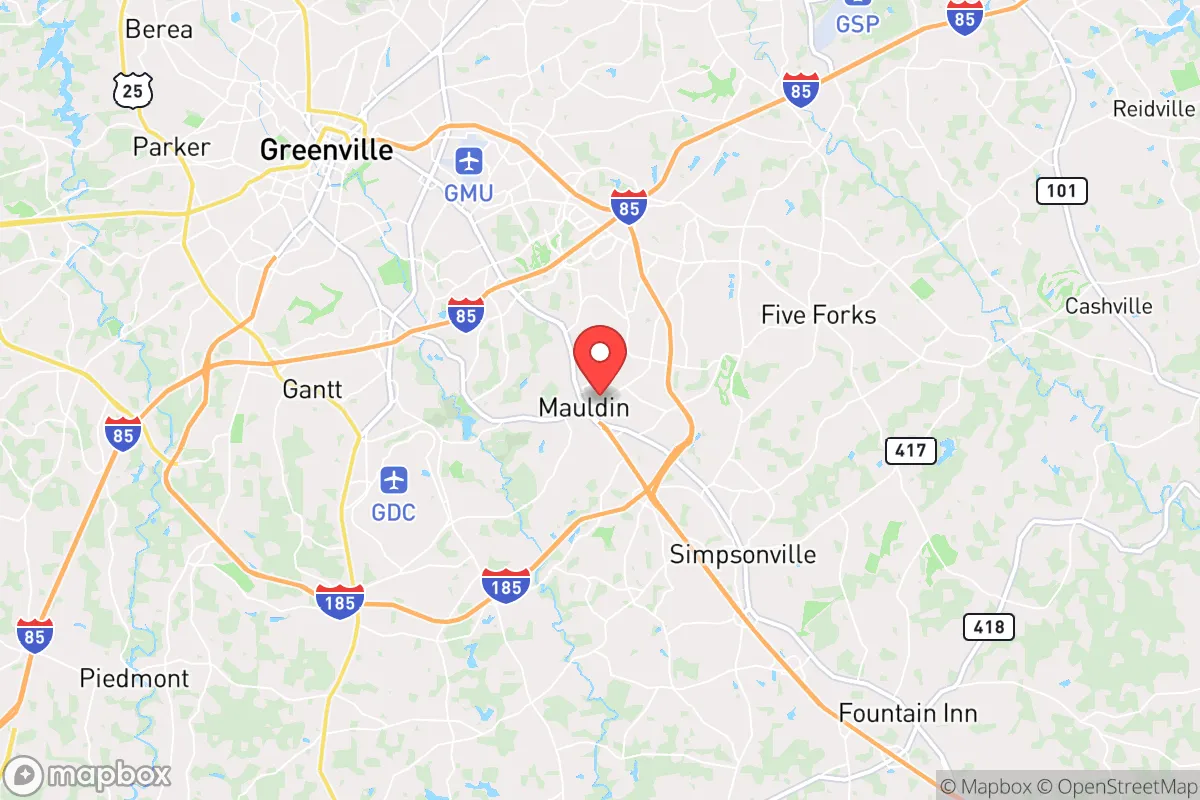
To really understand Mauldin's politics, you have to look at the towns around it. Drive five miles north into Greenville proper, and you'll see a much more progressive vibe—especially in the downtown core and around the university. Greenville County as a whole is still red, but the city council there has been flirting with left-leaning policies on zoning and social issues that would never fly here. Meanwhile, head south toward Simpsonville or Fountain Inn, and you're back in deep-red territory, where folks are more skeptical of government overreach and new regulations. Mauldin sits right in the middle, but it's closer to Simpsonville's mindset than Greenville's. The difference is that Mauldin's growth is bringing in new residents from places like New York and California, and some of them bring their politics with them. So far, the old guard has held the line, but you can feel the tension at city council meetings when housing density or tax incentives come up.
What this means for residents
For the average Mauldin resident who values personal freedom and limited government, the current climate is still pretty good. Property taxes are reasonable, there's no city income tax, and the local government generally stays out of your business. But the warning signs are there. You see it in the push for more "affordable housing" mandates, which sound nice but often mean government picking winners and losers in the housing market. You see it in the slow creep of zoning changes that make it harder to run a small business out of your home or keep a workshop in your backyard. And you see it in the school board, where debates about curriculum transparency and parental rights are getting louder every year. The concern isn't that Mauldin will flip blue overnight—it won't. It's that the steady drip of progressive policies, often sold as "modernization" or "inclusivity," can erode the freedoms that made this area attractive in the first place.
One thing that sets Mauldin apart from some of its neighbors is its strong sense of local identity. We don't have the flashy downtown of Greenville or the historic charm of Simpsonville, but we've got a no-nonsense, work-hard attitude that's hard to fake. The city has resisted the kind of heavy-handed HOA-style regulations that plague some newer subdivisions, and there's still a healthy skepticism of any plan that requires more permits or fees. That said, the long-term trend is something to watch. If the influx of out-of-state transplants continues, and if the local GOP doesn't stay engaged, Mauldin could slowly drift toward the kind of suburban progressivism that's already taken hold in places like Charlotte or Atlanta's northern suburbs. For now, though, it's still a place where you can live your life without the government looking over your shoulder—and that's worth holding onto.

State Political ClimatePolitical Climate in South Carolina
State Political AnalysisPolitical Environment in the State
South Carolina has long been a reliably red state, but the flavor of that conservatism has shifted noticeably over the past 15-20 years. The old-school, establishment Republicanism that dominated Columbia and Charleston is increasingly giving way to a more populist, liberty-minded strain, especially in the fast-growing Upstate and along the coast. While the state hasn't flipped blue in a presidential race since 1976, the margins have tightened in some suburban areas, even as rural counties have become more deeply red. The 2024 election saw Trump win the state by about 18 points, a slight dip from 2020's 12-point margin, driven largely by explosive growth in the Charleston and Greenville metros, which are becoming more politically mixed.
Urban vs. rural divide
The political map of South Carolina is a tale of three distinct regions. The Upstate, anchored by Greenville and Spartanburg, is the state's conservative engine. Greenville County itself has become a national symbol of conservative governance, with a county council that has fought mask mandates, critical race theory, and property tax hikes. The rural counties in between—like Laurens, Union, and Cherokee—are deeply red, often voting 70-80% Republican. The Lowcountry, centered on Charleston and Mount Pleasant, is the state's political battleground. Charleston County has trended blue in recent cycles, with the city itself and its inner suburbs voting Democratic, while the outer suburbs like Summerville and Goose Creek remain solidly red. The Midlands, including Columbia and Lexington, are a microcosm of the state: Richland County (Columbia) is reliably blue, while Lexington County is a conservative stronghold. The rural Pee Dee region, around Florence and Myrtle Beach, is reliably red but with a strong populist streak that often breaks with establishment Republicans on trade and immigration.
Policy environment
South Carolina's policy environment is broadly conservative, but with some notable wrinkles. The state has a flat income tax that was recently cut from 7% to 6.2%, with a path to 6% by 2027. Property taxes are among the lowest in the nation, thanks to a 2006 law that capped assessment increases. The regulatory climate is business-friendly, with a right-to-work law and no state-level minimum wage (federal $7.25 applies). On education, the state passed a universal school choice program in 2023, allowing any family to use state funds for private or homeschool expenses. Healthcare is a mixed bag: the state did not expand Medicaid under the ACA, but it has a robust network of federally qualified health centers. Election laws are strict: voter ID is required, and the state has a 30-day residency requirement. There is no early voting by mail without an excuse, though in-person early voting was expanded in 2022. The state also has a "constitutional carry" law for firearms, passed in 2021, allowing permitless concealed carry.
Trajectory & freedom
Over the past five years, South Carolina has moved decisively in the direction of personal liberty, particularly on gun rights and education. The 2021 Constitutional Carry Act was a landmark, removing the requirement for a permit to carry a concealed firearm. The 2023 Education Scholarship Trust Fund created a universal school choice program, giving parents control over their children's education. On medical freedom, the state passed a law in 2022 prohibiting vaccine mandates by private employers, though it was later struck down in court. Property rights were strengthened with a 2023 law limiting the use of eminent domain for private development. However, there are concerns: the state's abortion ban, passed in 2023, is one of the strictest in the nation, prohibiting the procedure after six weeks with no exceptions for rape or incest. This has sparked ongoing legal battles and could be a flashpoint for future political shifts. The state also has a broad "stand your ground" law and no red flag law, which is seen as a positive by Second Amendment advocates.
Civil unrest & political movements
South Carolina has seen its share of political activism, but it's generally been more orderly than in other states. The 2020 Black Lives Matter protests in Charleston and Columbia were large but largely peaceful, though there were isolated incidents of property damage. The state's Confederate flag removal from the Statehouse grounds in 2015, following the Charleston church shooting, was a watershed moment that reshaped the state's political identity. More recently, the parental rights movement has been a major force, with groups like "Moms for Liberty" gaining significant influence in school board elections, particularly in Lexington and Greenville counties. Immigration politics are less heated than in border states, but there is a strong undercurrent of concern about illegal immigration, with the state legislature considering a bill in 2024 that would require local law enforcement to cooperate with ICE. Election integrity remains a hot topic, with the state's 2020 election results being certified without major controversy, but ongoing debates about mail-in voting and ballot drop boxes.
Projection
Looking ahead 5-10 years, South Carolina is likely to remain a red state, but the nature of that redness will evolve. The in-migration from blue states—particularly from New York, New Jersey, and California—is accelerating, with the state adding about 100,000 new residents per year. Many of these newcomers are conservative-leaning, but they bring a more suburban, libertarian flavor of politics that may clash with the state's traditional, rural conservatism. The Greenville-Spartanburg corridor will continue to be the state's conservative anchor, while Charleston will likely become more purple, potentially electing a Republican mayor in the near future but with a Democratic-leaning city council. The Myrtle Beach area, with its heavy tourism and retirement population, will remain a swing area. The biggest wildcard is the education choice movement: if it succeeds in improving outcomes, it could solidify the state's conservative coalition; if it falters, it could open the door to a more moderate, pro-public education faction. The state's abortion ban will likely remain a political lightning rod, but given the state's strong pro-life sentiment, it's unlikely to be repealed.
For someone moving to South Carolina today, the bottom line is this: you are choosing a state that is firmly conservative but not static. The political culture is shifting from a "good ol' boy" establishment to a more populist, liberty-oriented conservatism. If you value low taxes, gun rights, school choice, and a business-friendly environment, you'll feel at home. But be prepared for a state that is still wrestling with its identity—the tension between the old guard and the new wave of conservative transplants will define the next decade. The best places for a conservative family are the Upstate suburbs (Greenville, Simpsonville, Greer) or the Lexington area near Columbia. If you prefer coastal living, stick to the Mount Pleasant or Summerville areas, where the politics are more mixed but still lean right. Avoid the city centers of Charleston and Columbia if you want a reliably conservative environment.
* Values derived from national, state, county, city and local statistics and may differ in a specific area. Last updated: 2026-04-30T02:47:21.000Z
Narrative content on this page is AI-generated and may contain mistakes. Verify any details that matter before acting on them.
ReloMaps may earn a commission from affiliate links at no extra cost to you.

