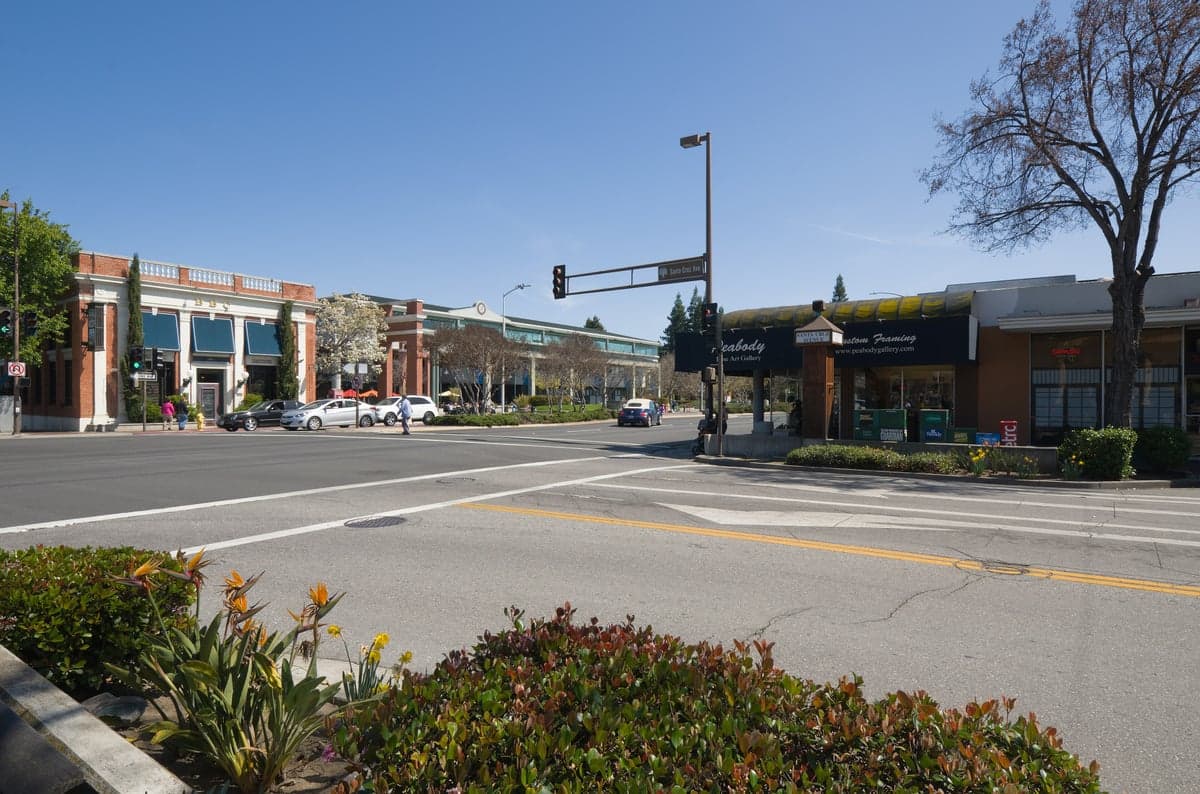
Photo: Wikipedia
Political ClimatePolitical Climate in Menlo Park, CA
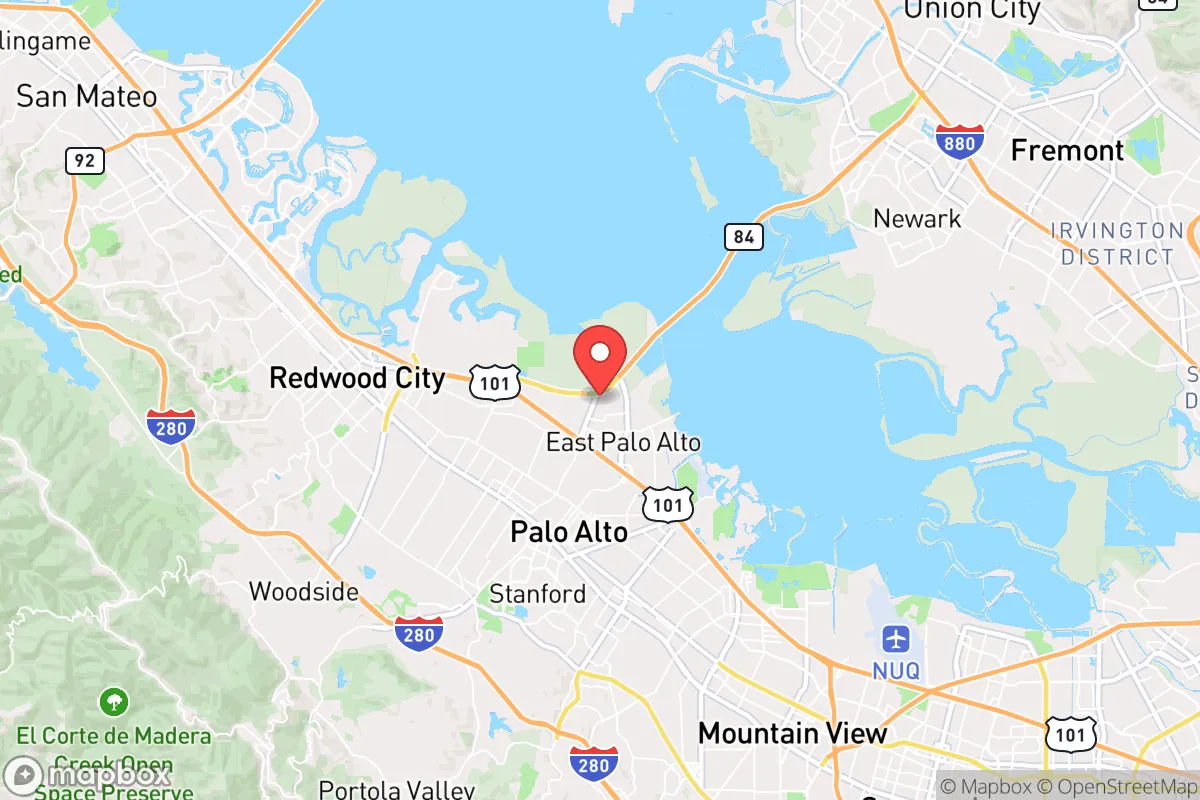
District shown is the primary district for this city’s centroid. Cities may span multiple districts.
Local Political AnalysisPolitical Analysis of Menlo Park, CA
Menlo Park leans heavily Democratic, with a Cook PVI of D+26, meaning it votes about 26 points more Democratic than the national average. This wasn't always the case—I remember when this town was more of a quiet, middle-of-the-road place where folks kept their politics to themselves and the local government focused on keeping the streets clean and the schools good. Over the last decade or so, though, the shift has been dramatic. The 2020 election saw Biden win here by a landslide, and the city council has moved steadily left, with progressive candidates often running unopposed or winning by wide margins. The trajectory is clear: Menlo Park is becoming a one-party town, and that’s concerning for anyone who values a diversity of thought or worries about government overreach.
How it compares
If you drive just a few miles south to Atherton, you’ll find a similar deep-blue tilt, though Atherton’s wealthy residents tend to be more fiscally conservative while still voting Democrat socially. Head east across the bay to Fremont or Union City, and you’ll see a more moderate, working-class Democratic vibe—less ideological, more pragmatic. But the real contrast is north and west: up in Woodside or Portola Valley, you get a mix of libertarian-leaning tech folks and old-guard Republicans who still fly the flag. Even closer, East Palo Alto is reliably Democratic but with a different flavor—more focused on local economic issues than the culture-war stuff that dominates Menlo Park’s council meetings. The bottom line? Menlo Park is an outlier even in a blue region, and that isolation from political competition worries me.
What this means for residents
For those of us who live here, the political monoculture has real consequences. The city council has pushed through policies like rent control and “just cause” eviction rules that sound good on paper but have made it harder for small landlords to operate and have driven up costs for everyone. There’s also a growing push for “sanctuary city” policies that limit cooperation with federal immigration enforcement—something that sounds compassionate but can strain local resources and create tensions. More troubling is the trend toward overregulation: new housing mandates from Sacramento are being embraced here, meaning more density and less local control over what our neighborhoods look like. If you value personal freedom—like the right to build an ADU without endless permits, or to speak your mind without being labeled—you’ll find the atmosphere increasingly stifling.
Culturally, Menlo Park has become a place where progressive orthodoxy is the default. The local school board has debated critical race theory and gender identity policies, and the public library hosts drag story hours that some parents find inappropriate for young kids. It’s not that these things are inherently bad—it’s that there’s very little room for dissent. If you’re a conservative or even a moderate who questions the direction, you’ll likely feel like an outsider at neighborhood gatherings or PTA meetings. The long-term trend is toward more of the same: as tech wealth continues to pour in, the political center will keep shifting left, and the few remaining independent voices will be squeezed out. For now, it’s still a beautiful place to live—but the political climate is something you’ll have to navigate carefully if you don’t fit the mold.

State Political ClimatePolitical Climate in California
State Political AnalysisPolitical Environment in the State
California is a deep blue state dominated by a progressive coalition that has held unified control of the governorship, legislature, and most statewide offices for over a decade. The state’s overall partisan lean is roughly D+25 in presidential elections, but this masks a dramatic 20-year trajectory: the state has shifted from a competitive purple state in the 1990s and early 2000s to one of the most reliably Democratic states in the nation. The 2024 presidential election saw Kamala Harris win California by a 58-38 margin, a slight tightening from Joe Biden’s 63-34 win in 2020, driven largely by a rightward shift in the Central Valley and Inland Empire. However, the coastal metros—Los Angeles, San Francisco, San Diego, and the Bay Area—continue to produce massive Democratic margins that overwhelm any rural or suburban gains for Republicans.
Urban vs. rural divide
The political map of California is a tale of two states. The coastal urban corridor from San Francisco down through Los Angeles and San Diego is overwhelmingly Democratic, with precincts routinely voting 70-80% for the party. Los Angeles County alone delivers over 3 million Democratic votes, more than the entire population of 20 states. The Bay Area, including San Francisco, Oakland, and San Jose, is the epicenter of progressive activism, with policies like rent control, sanctuary city status, and defund-the-police movements originating there. In contrast, the Central Valley—cities like Bakersfield, Fresno, and Modesto—has been trending red, with Bakersfield’s Kern County voting +20 for Trump in 2024. The Inland Empire, including Riverside and San Bernardino counties, has also shifted right, with San Bernardino County flipping from a 7-point Clinton win in 2016 to a 5-point Trump win in 2024. The rural north, from Redding to the Oregon border, is deeply conservative, with Shasta County voting +30 for Trump. Orange County, once a Republican stronghold, has become a competitive suburban battleground, flipping blue in 2018 and staying there, though its more conservative inland cities like Yorba Linda and Huntington Beach still lean red.
Policy environment
California’s policy environment is defined by high taxes, heavy regulation, and a progressive social agenda. The state has the highest income tax rate in the nation at 13.3% for top earners, plus a 7.25% state sales tax that can exceed 10% with local add-ons. Property taxes are capped at 1% of assessed value under Proposition 13, but reassessment upon sale can create massive tax hikes for new buyers. The regulatory posture is aggressive: California has its own environmental standards (CARB), its own labor laws (including a $16/hour minimum wage that will hit $18 in 2026), and its own energy grid that has led to rolling blackouts. Education policy is dominated by the California Teachers Association, with school choice limited and charter schools facing new restrictions under AB 1505. Healthcare is heavily regulated, with the state running its own Covered California exchange and considering a single-payer system. Election laws are among the most liberal in the nation: universal mail-in ballots, same-day registration, and no voter ID requirement. The state also has a “sanctuary state” law (SB 54) that limits local law enforcement cooperation with federal immigration authorities.
Trajectory & freedom
California is becoming less free by nearly every measure of personal liberty, particularly for conservatives. The state has enacted some of the strictest gun control laws in the nation, including an assault weapons ban, a 10-day waiting period, and a 2024 law (SB 2) that effectively bans concealed carry in most public places. Parental rights have been eroded: California was the first state to ban school notification of a child’s gender identity change (AB 1955, 2024), and it prohibits schools from requiring parental consent for LGBTQ+ clubs. Speech is increasingly regulated: the state’s AB 587 (2023) requires social media platforms to report on “hate speech” moderation, and AB 2655 (2024) targets “election misinformation” with potential liability. Medical autonomy has been expanded for abortion and gender transition care, with the state becoming a “sanctuary” for out-of-state patients, but COVID-era mandates (vaccine passports, school mandates) were among the longest-lasting in the nation. Property rights are constrained by rent control (AB 1482), strict zoning laws, and a new “builder’s remedy” that allows developers to bypass local zoning if cities don’t meet housing targets. The state’s tax burden is the highest in the nation, and a 2024 ballot measure (Prop 5) to lower the supermajority requirement for local tax increases failed, but the legislature continues to push for new taxes on wealth and property.
Civil unrest & political movements
California has been a flashpoint for civil unrest and political movements. The 2020 George Floyd protests in Los Angeles, San Francisco, and Oakland resulted in billions in property damage and a lasting “defund the police” movement that saw the LAPD budget cut by $150 million before being partially restored. The state’s sanctuary policies have created tension with federal immigration enforcement, with cities like Los Angeles and San Francisco refusing to cooperate with ICE. The secession movement (Calexit) has fizzled, but a more serious “State of Jefferson” movement in the rural north—covering counties like Siskiyou, Modoc, and Shasta—continues to push for a separate, conservative state. Election integrity controversies have been muted due to California’s deep blue status, but the 2021 recall election of Governor Gavin Newsom saw him survive by a 62-38 margin, with the effort driven by frustration over COVID lockdowns and business closures. Immigration politics are a daily reality: the border crisis has overwhelmed San Diego and Imperial County, with the state spending billions on migrant services. Visible flashpoints include homeless encampments in San Francisco and Los Angeles, which have become symbols of failed progressive policies, and the ongoing battle over parental rights in school boards, particularly in conservative suburbs like Temecula and Huntington Beach.
Projection
Over the next 5-10 years, California is likely to become more progressive demographically, but with growing internal friction. The state’s population has declined for three consecutive years (2020-2023), losing over 500,000 residents, with many leaving for Texas, Arizona, and Nevada. Those leaving are disproportionately middle-class and conservative-leaning, while the state continues to attract high-skilled immigrants and young progressives to coastal cities. The Central Valley and Inland Empire will continue to shift right, potentially flipping a few congressional seats, but the coastal metros will remain overwhelmingly blue. The state’s fiscal situation is precarious: a $68 billion deficit in 2024 forced spending cuts, and the high cost of living is driving out the tax base. Expect more tax hikes on the wealthy (a wealth tax is being discussed), more housing mandates that override local control, and continued expansion of progressive social policies. A new resident moving in now should expect to find a state where personal freedom is increasingly constrained by government regulation, where the cost of living is among the highest in the nation, and where political dissent is increasingly marginalized. The state’s trajectory is toward a European-style social democracy, with all the benefits and drawbacks that entails.
For a conservative-leaning individual or family considering relocation, the bottom line is clear: California offers unmatched natural beauty, economic opportunity in tech and entertainment, and a climate that is hard to beat. But it comes at the cost of high taxes, heavy regulation, and a political environment that is actively hostile to traditional values, gun rights, parental authority, and economic freedom. If you can afford the financial and cultural price, and you’re willing to live in a blue bubble or a red enclave like Bakersfield or Redding, it’s possible to carve out a life here. But for most conservatives, the trajectory is clear: the state is moving further left every cycle, and the freedoms you take for granted elsewhere are being steadily eroded. Choose accordingly.
* Values derived from national, state, county, city and local statistics and may differ in a specific area. Last updated: 2026-05-02T04:55:45.000Z
Narrative content on this page is AI-generated and may contain mistakes. Verify any details that matter before acting on them.
ReloMaps may earn a commission from affiliate links at no extra cost to you.

