Photo: Wikipedia
Demographics of Livingston County
Affluence Level in Livingston County
An upper-middle-class area. Household wealth, education levels, and homeownership run ahead of national benchmarks.
People of Livingston County
Livingston County, Michigan, is one of the most demographically stable and culturally homogeneous counties in Metro Detroit, with a population of 195,143 that is 92.8% white and just 0.9% foreign-born. This is a county defined by its deep-rooted Yankee and German Protestant heritage, its rapid late-20th-century suburbanization, and a distinctly conservative, family-oriented civic culture that sets it apart from its more diverse neighbors to the east. The people here are overwhelmingly native-born Michiganders, many of whom moved outward from Detroit and Oakland County in search of larger lots, lower taxes, and a rural-suburban lifestyle that remains the county's primary identity marker.
Settlement & growth (pre-1960)
Before American settlement, the land that is now Livingston County was the domain of the Anishinaabe peoples, specifically the Ojibwe (Chippewa) and Odawa (Ottawa) nations, who used the region's chain of lakes and the Huron River headwaters for fishing, hunting, and seasonal encampments. The area was ceded to the United States through a series of treaties in the early 19th century, most notably the 1807 Treaty of Detroit, which opened the interior of southeast Michigan to white settlement. French and British fur traders passed through but left no permanent settlements, making Livingston County a genuinely post-Revolutionary American creation.
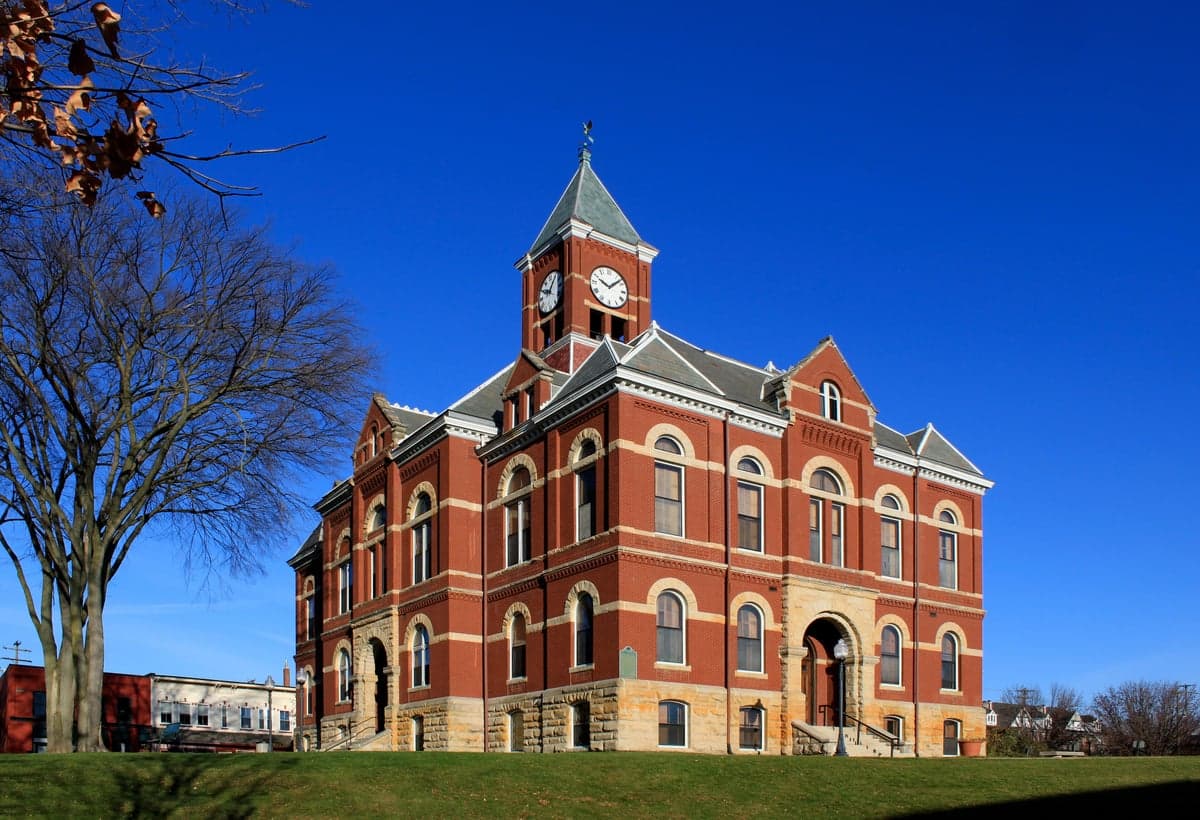
The first permanent American settlers arrived in the mid-1830s, a wave of Yankees from upstate New York and New England who were drawn by cheap federal land offered at $1.25 per acre under the Preemption Act. These were largely subsistence farmers and small-scale speculators who founded the county's earliest villages: Howell (1834), which became the county seat, and Brighton (1832), which grew around a mill on the Huron River. The Yankee character of these founding families — Congregationalist, abolitionist, and fiercely localist — set a cultural template that persists in the county's politics and social institutions to this day.
A second significant wave came with the construction of the Detroit and Milwaukee Railroad through the county in the 1850s, which connected Livingston County to Detroit's booming economy. This brought a smaller but meaningful influx of German immigrants, many of whom were skilled tradesmen and farmers who settled in the townships around Fowlerville and Pinckney. The Germans, largely Lutheran and Catholic, established their own churches and mutual-aid societies, and their descendants remain a visible presence in those communities' church rosters and family names. Unlike the Yankees, however, the German population never dominated; they were a distinct minority within an overwhelmingly Anglo-American county.
From the Civil War through the 1950s, Livingston County's population grew slowly and steadily, driven primarily by natural increase rather than new immigration. The county remained overwhelmingly agricultural, with Howell serving as a market town and Brighton as a small resort community centered on its lakes. The automobile industry's rise in Detroit had a modest early effect — some workers commuted to factories in Pontiac and Flint — but the county's population in 1950 was still just 26,725, a figure barely larger than it had been in 1900. The people who lived here were, overwhelmingly, the descendants of the original Yankee and German settlers, and the county's ethnic character in 1960 was nearly identical to what it had been in 1860.
Modern era (post-1965)
The 1965 Hart-Cellar Act, which abolished national-origin quotas, had almost no direct effect on Livingston County — its foreign-born population remains a minuscule 0.9% today, one of the lowest figures in the entire state. The county's modern transformation was instead driven entirely by domestic migration, specifically the white flight and suburban expansion that reshaped Metro Detroit in the 1970s and 1980s. As Detroit's population declined and racial tensions escalated, middle-class white families — many of them second- and third-generation Polish, Italian, and Appalachian migrants from Detroit's ethnic neighborhoods — moved steadily outward along the I-96 corridor, and Livingston County became the outermost ring of that exodus.
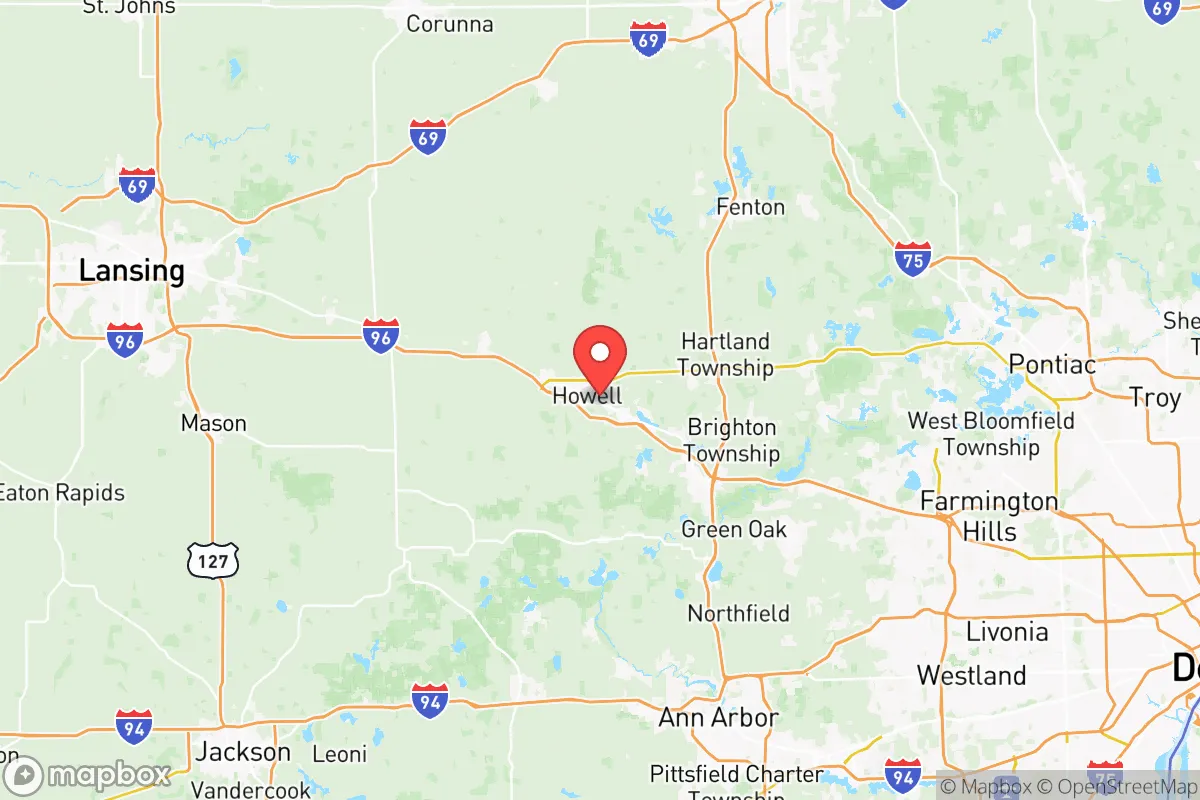
This wave was explosive. Between 1970 and 2000, Livingston County's population more than tripled, from 38,233 to 156,951, as new subdivisions and strip malls transformed former farmland into bedroom communities. Brighton became the county's commercial hub, its population and retail base expanding dramatically to serve the influx of commuters working in Detroit, Ann Arbor, and the Oakland County tech corridor. Howell retained its role as the governmental and cultural center, but also absorbed significant growth, while Hartland, Fowlerville, and the townships around Pinckney saw their rural character give way to sprawling residential development. The newcomers were overwhelmingly white, and the county's racial composition today — 92.8% white, 2.9% Hispanic, 0.5% Black, 0.6% East/Southeast Asian, and 0.3% Indian — reflects the fact that this was a destination for white domestic migrants, not international immigrants.
The Hispanic population, while small, is the county's fastest-growing minority group, concentrated in the agricultural and light-industrial areas around Fowlerville and the southern townships. These are largely Mexican-American families, some of whom arrived as migrant farmworkers in the 1990s and settled permanently, and others who moved from established Hispanic communities in Lansing and Detroit for cheaper housing and work in warehousing and food processing. The East/Southeast Asian and Indian populations, by contrast, are almost entirely professionals — engineers, physicians, and IT workers — who have settled in the newer executive subdivisions around Brighton and Hartland for the school districts and the commute to Ann Arbor's tech and medical sectors. These communities are small, dispersed, and highly integrated, with no visible ethnic enclaves or commercial districts.
The future
Livingston County is projected to continue growing at a moderate pace, reaching roughly 220,000 residents by 2040, but its demographic trajectory points toward slow diversification rather than radical change. The Hispanic share is expected to rise to 4-5% over the next two decades, driven by both natural increase and continued domestic migration from other Michigan communities, while the East/Southeast Asian and Indian populations will likely grow modestly as Ann Arbor's knowledge economy continues to spill westward. The county's white share will decline gradually, but it will remain above 85% for the foreseeable future — a level of homogeneity that will continue to distinguish Livingston County from nearly every other county in Metro Detroit.
The more significant demographic shift is generational and geographic. Younger families are increasingly choosing the southern and western townships — Genoa Township, Hamburg Township, and the areas around Pinckney — where land is still relatively affordable and the commute to Ann Arbor is manageable, while the older subdivisions around Brighton are seeing an aging population and slower turnover. The county's cultural identity is evolving from a purely rural, agricultural heritage toward a hybrid of exurban conservatism and Ann Arbor-adjacent professionalism, a tension visible in local school board races and zoning debates. The political character, however, shows no sign of shifting: Livingston County remains one of the most reliably Republican counties in Michigan, and its voters consistently prioritize low taxes, gun rights, and local control over regional cooperation.
For someone moving to Livingston County today, the bottom line is this: you are entering a community that is overwhelmingly white, native-born, and politically conservative, with a strong culture of church attendance, youth sports, and outdoor recreation centered on its lakes and state recreation areas. The schools are excellent, the commute to Detroit and Ann Arbor is practical, and the cost of living remains below the Metro Detroit average. But the county's homogeneity is not accidental — it is the product of a specific history of Yankee settlement, German farming, and white suburban flight, and it will remain the defining feature of the population for decades to come. If you are looking for a safe, stable, family-oriented community where your neighbors are likely to share your background and values, Livingston County delivers exactly that. If you are seeking demographic diversity or a cosmopolitan cultural scene, you will find it in short supply here.

* Values derived from national, state, county, city and local statistics and may differ in a specific area. Last updated: 2026-10-13T12:16:39.000Z
Narrative content on this page is AI-generated and may contain mistakes. Verify any details that matter before acting on them.
ReloMaps may earn a commission from affiliate links at no extra cost to you.

